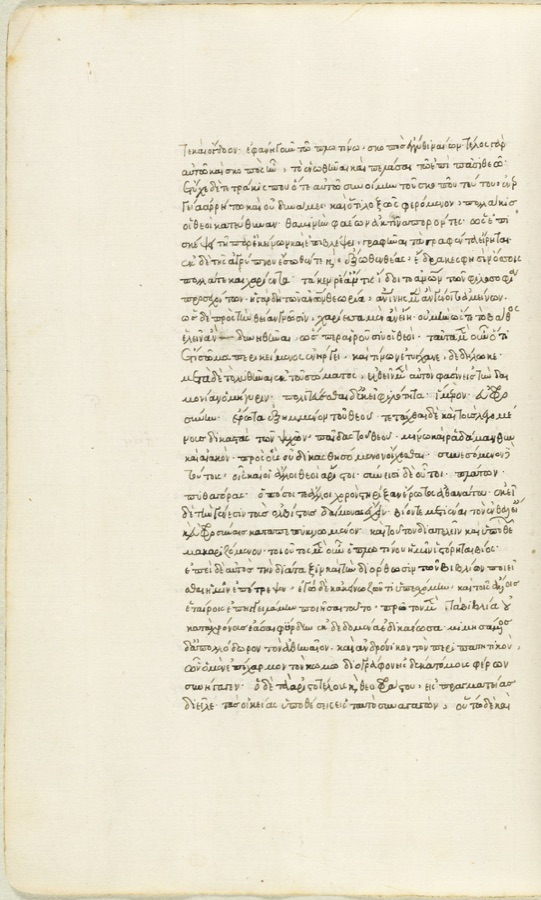
Plotinos, III. yüzyılda yaşamış, Yeni Platonculuğun kurucusu sayılan filozoftur. Öğrencisi Porphyrios tarafından derlenip düzenlenen Enneadlar, onun ders ve söyleşilerinin dokuzarlı gruplar halinde toplanmasıyla oluşmuş dokuz risalelik altı kitaptan meydana gelir. Aşağıda Birinci Enneada'nın en tanınmış risalesi olan Güzellik Üzerine'nin tam metni (I.6, bölüm 1-9) yer alır. Plotinos burada güzelliğin nerede göründüğünü, gözü kendine çeken şeyin ne olduğunu sorar; güzelliği yalnızca parçaların orantısına indirgeyen yaygın görüşü çürütür ve güzelliği duyulur dünyadan Ruh'a, Akıl'a ve nihayet İyi'ye doğru yükselen bir basamaklar dizisi olarak sunar. Çeviri, Stephen MacKenna'nın kamu malı olan İngilizce çevirisine (The Six Enneads, Boston: Charles T. Branford, 1918) dayanmaktadır.
§ 1
Güzellik en çok görme duyusuna seslenir; ama işitmede de bir güzellik vardır, gerek sözlerin belli bileşimlerinde gerekse bütün musikide, çünkü ezgiler ve ritimler de güzeldir. Duyular âleminin üstüne yükselen zihinler ise yaşayışta, eylemlerde, karakterde, aklın uğraşlarında bir güzellik sezerler; bir de erdemlerin güzelliği vardır. Bundan daha yüce bir güzellik olup olmadığını ise tartışmamız ortaya koyacaktır.
Öyleyse maddi biçimlere zarafet veren, kulağı seslerde duyulan tatlılığa çeken ve Ruh'tan gelen her şeyde bulunan güzelliğin sırrı nedir?
Her şeyin zarafetini kendisinden aldığı Tek bir İlke mi vardır, yoksa bedenliye özgü bir güzellik ile bedensize özgü başka bir güzellik mi vardır? Sonuçta, bir mi çok mu, böyle bir İlke ne olurdu?
Düşünün ki bazı şeyler, örneğin maddi biçimler, kendilerinde içkin olan bir şeyle değil aktarılan bir şeyle zariftirler; başkaları ise, örneğin Erdem gibi, kendiliğinden sevimlidir.
Aynı bedenler kimi zaman güzel kimi zaman güzel değil görünür; demek ki beden olmakla güzel olmak arasında hayli mesafe vardır.
Öyleyse belirli maddi biçimlerde kendini gösteren bu şey nedir? Araştırmamızın doğal başlangıcı budur.
Güzel bir nesneyle karşılaşanların gözünü çeken, onları kendine çağıran, kendine çeken ve onları görüşün sevinciyle dolduran nedir? Bunu ele geçirirsek, daha geniş bir bakış için hemen bir dayanak noktamız olur.
Neredeyse herkes der ki parçaların birbiriyle ve bütünle orantısı, buna bir de hoş bir renk eklendiğinde, gözün tanıdığı güzelliği oluşturur; görünür şeylerde, hatta genel olarak her şeyde, güzel olanın özünde orantılı, ölçülü olduğunu söylerler.
Ama bunun ne anlama geldiğini düşünün.
Yalnızca bileşik bir şey güzel olabilir, parçalardan yoksun hiçbir şey değil; ve yalnızca bir bütün olabilir; tek tek parçalar kendi başlarına değil, ancak hoş bir bütünü ortaya çıkarmak üzere birlikte çalışarak güzel olurlar. Yine de bütündeki güzellik, ayrıntılarda da güzellik ister; çirkinlikten kurulamaz; yasası baştan sona işlemelidir.
Rengin bütün güzelliği, hatta güneşin ışığı bile, parçalardan yoksun olduğu ve dolayısıyla orantıyla güzel olmadığı için, güzellik alanının dışında bırakılmalıdır. Peki altın nasıl oluyor da güzel bir şey oluyor? Ya geceleyin şimşek, ya yıldızlar, bunlar neden bu kadar güzel?
Seslerde de yalın olan dışarıda bırakılmalıdır, gerçi soylu bir bestenin bütününde her bir ton çoğu zaman kendi başına da hoştur.
Yine, aynı yüz, orantısı sabit kaldığı hâlde kimi zaman güzel kimi zaman değil göründüğüne göre, güzelliğin orantıdan daha fazla bir şey olduğundan, orantının kendisinin güzelliğini daha uzak bir ilkeden aldığından kuşku duyabilir miyiz?
Yaşayış biçimlerinde ya da düşüncenin dile gelişinde çekici olana bakın; burada orantıyı mı çağıracağız? Soylu bir davranışta, mükemmel yasalarda, herhangi bir zihinsel uğraşta ne orantısı bulunur?
Soyut düşüncenin noktalarında ne orantı olabilir?
Birbiriyle uyum içinde olmanın orantısı mı? Ama hiçbir çirkinlik bulunmadığı hâlde de uyum, hatta tam bir özdeşlik olabilir: dürüstlüğün yalnızca cömert bir saflık olduğu önermesi, ahlakın irade zayıflığı demek olduğu önermesiyle en kusursuz uyum içindedir; uyum tamdır.
Yine, bütün erdemler Ruh'un bir güzelliğidir, bunların hepsinden daha gerçek bir güzellik; ama burada orantı nasıl işe karışır? Ruh, doğrusu, yalın bir birlik değildir, ama yine de erdemi, büyüklüğün ya da sayının orantısına sahip olamaz: Ruh'un yetilerinin ya da amaçlarının uzlaşmasına ya da kaynaşmasına hangi ölçü başkanlık edebilir?
Son olarak, bu kurama göre, özünde yalnız olan Akıl-İlkesi'nde nasıl güzellik bulunabilir?
§ 2
Öyleyse kaynağa dönelim ve maddi şeylere güzellik bahşeden İlke'yi hemen gösterelim.
Kuşkusuz bu İlke vardır; ilk bakışta algılanan, Ruh'un eski bir bilgiden geliyormuşçasına adlandırdığı ve tanıyarak karşıladığı, onunla uyum içine girdiği bir şeydir.
Ama Ruh Çirkin olanla karşılaşırsa hemen kendi içine çekilir, o şeyi yadsır, ondan yüz çevirir, uyumsuzdur, ona kızar.
Yorumumuz şudur: Ruh, doğasının gerçek özü gereği, Varlık hiyerarşisindeki en soylu Varolanlarla akrabalığı gereği, o soydan bir şey ya da o akrabalığın bir izini gördüğünde ansızın bir sevinçle ürperir, kendine ait olanı kendine katar ve böylece yeniden kendi doğasının ve bütün akrabalığının bilincine uyanır.
Ama bu dünyanın sevimliliği ile Yüce'deki görkemler arasında böyle bir benzerlik var mıdır? Ayrıntılardaki böyle bir benzerlik iki düzeni birbirine benzer kılardı: ama buradaki güzellik ile Orada'ki güzellik arasında ortak olan nedir?
Biz deriz ki bu dünyanın bütün sevimliliği İdeal-Form'a katılmakla gelir.
Türü biçim ve form kabul eden her biçimsizlik, Akıl ve İdea'nın dışında kaldığı sürece, tam da bu Tanrısal-Düşünce'den yalıtılmışlığı yüzünden çirkindir. Mutlak Çirkin işte budur: çirkin bir şey, biçim tarafından, yani Akıl tarafından tümüyle ele geçirilmemiş, Madde'nin bütün noktalarda ve bakımlardan İdeal-Form'a boyun eğmediği bir şeydir.
Ama İdeal-Form nereye girmişse, çeşitli parçalardan bir birlik olması gereken şeyi bir araya toplamış ve düzenlemiştir: kargaşayı iş birliğine dönüştürmüştür: toplamı tek bir uyumlu bütünlük hâline getirmiştir: çünkü İdea bir birliktir ve biçimlendirdiği şey de, çokluk elverdiğince, birliğe ulaşmalıdır.
Ve böylece birliğe getirilmiş olan üzerine Güzellik tahtını kurar, kendini parçalara da toplama da verir: doğal bir birliğe, benzer parçalardan oluşan bir şeye rastladığında, kendini o bütüne verir. Böylece, örnek olarak, bütün parçalarıyla bir evin zanaatla kazandığı güzellik vardır, bir de tek bir taşa doğal bir niteliğin verebileceği güzellik.
İşte maddi şey böyle güzelleşir: Tanrısal olandan akan düşünceye katılarak.
§ 3
Ve Ruh, Güzellik'e özellikle yönelmiş bir yeti içerir; kendine ait olanı değerlendirmede eşsiz ölçüde emindir, önüne herhangi bir sevimli şey konduğunda hiç kuşkuya düşmez.
Ya da belki Ruh'un kendisi dolaysızca hareket eder, kendi içindeki İdeal-Form'la uyumlu bir şey bulduğunda Güzel'i onaylar, bu İdea'yı kararında bir doğruluk ölçütü olarak kullanır.
Ama madde ile bütün Madde'den önce gelen şey arasında ne uyum olabilir?
Mimar, önündeki evi kendi içindeki ev ideasıyla örtüşür bulduğunda, hangi ilkeye dayanarak onu güzel diye ilan eder? Önündeki ev, taşlar bir yana bırakılırsa, dışsal maddenin yığını üzerine damgalanmış iç ideanın, çeşitlilik içinde sergilenen bölünmezin ta kendisi değil midir?
Algılama yetisi de böyledir: bazı nesnelerde, biçimsiz, İdea'ya karşıt doğadaki maddeyi bağlayıp denetleyen İdeal-Form'u sezerek, ayrıca sıradan biçimler üzerine damgalanmış sıradanın üstünde bir biçim gördüğünde, hâlâ parçalı kalanı bir birlik içinde toplar, onu kavrayıp içine alır ve İdeal-İlke'ye uyumlu, akraba, doğal bir dost olarak sunar: buradaki sevinç, bir gencin içinde, kendi ruhundaki tamamlanmış erdeme uygun bir erdemin ilk belirtilerini sezen iyi bir insanın sevincine benzer.
Rengin güzelliği de bir birleştirmenin sonucudur: biçimden, Madde'de içkin karanlığın, cisimsiz olan ve bir Akli-İlke ile bir İdeal-Form olan ışığın içine dökülmesiyle yenilgiye uğratılmasından doğar.
İşte bu yüzden Ateş, öteki öğelere göre İdeal-İlke mertebesinde olarak, bütün maddi bedenlerin ötesinde parlaktır, hep yukarı doğru gider, bütün cisimlerin en incelmişi ve en canlısıdır, cisimsize çok yakındır: kendisi tek başına başka hiçbir şeyi kabul etmez, ötekilerin hepsi onun içine işler: çünkü onlar ısıyı alırlar ama o hiçbir zaman soğuk değildir; rengi baştan beri kendindedir; ötekiler rengin Form'unu ondan alırlar: işte bu yüzden onun ışığının görkemi, İdea'ya ait olan görkemdir. Onun ışığına direnmiş ve ancak belirsizce tutulmuş olan her şey ise, rengin Form'unun doluluğunu özümsemediği için, güzelliğin dışında kalır.
Ve seste duyulmayan uyumlar, duyduğumuz uyumları yaratır ve Ruh'u güzelliğin bilincine uyandırır, ona bir özü başka bir türde gösterir: çünkü duyulur musikimizin ölçüleri keyfi değildir, Madde'ye egemen olmayı ve düzeni var etmeyi görev bilen İlke tarafından belirlenir.
Şimdiye dek duyular âleminin güzelliklerinden söz ettik, Madde'nin içine girmiş görüntüler ve gölge-resimler, orada görüldükleri yeri süslemek ve büyülemek için gelmiş kaçaklar.
§ 4
Ama bunlardan daha önce gelen, daha yüce güzellikler vardır. Duyulara bağlı yaşayışta bunları artık tanıyamayız, ama Ruh, organlardan hiçbir yardım almaksızın, bunları görür ve ilan eder. Bunların görüsüne yükselmeliyiz, duyuyu kendi alçak yerinde bırakarak.
Maddi dünyanın zarif biçimlerini hiç görmemiş, hiç tanımamış olanların bunlardan söz edemeyeceği gibi -doğuştan kör insanları düşünelim- aynı şekilde, bu tür şeylere hiç değer vermemiş olanlar da soylu davranışın, öğrenmenin ve bu düzenin güzelliği üzerine susmalıdır; Akşam'ın ve Şafak'ın güzelliğinin ötesinde güzel olan Adalet'in ve Ahlaki-Bilgelik'in yüzünü hiç tanımamış olanlar da erdemin görkeminden söz edemez.
Böyle bir görü ancak Ruh'un gözüyle görenler içindir; bu görüde sevineceklerdir, üzerlerine bir huşu çökecektir, ötekilerin uyandırabileceğinden daha derin bir çalkantı, çünkü artık Hakikat'in diyarında hareket etmektedirler.
Güzellik'in her zaman uyandırması gereken ruh hâli budur: hayranlık, tatlı bir çalkantı, özlem ve sevgi, tümüyle haz olan bir titreme. Görünmeyen için de bütün bunlar, görünen için hissedildiği gibi hissedilebilir; ve bütün Ruhlar bunu bir ölçüde hisseder, ama bu yüce sevgiye gerçekten yatkın olanlar daha derinden hisseder -tıpkı herkesin bedenin güzelliğinden haz duyması, ama herkesin aynı keskinlikle yaralanmaması, yalnızca en keskin yarayı hissedenlerin Âşıklar diye bilinmesi gibi.
§ 5
Öyleyse bu Âşıklar, duyunun ötesindeki güzelliğin âşıkları, kendilerini açıklamaya zorlanmalıdır.
Eylemlerde, tavırlarda, sağlam ahlakta, erdemin bütün eserlerinde ve meyvelerinde, ruhların güzelliğinde sezdiğiniz zarafet karşısında ne hissedersiniz? Kendinizin içten güzel olduğunuzu gördüğünüzde ne hissedersiniz? Varlığınızı baştan başa saran bu Dionysos'a özgü coşku nedir, Ruh'unuzun bu yukarıya doğru gerilmesi, bedenden kopup gerçek benliğinizin içine gömülü yaşama özlemi nedir?
Bunlar sevginin büyüsü altındaki Ruhların duygularından başka bir şey değildir.
Ama bütün bu tutkuyu uyandıran nedir? Ne bir biçim, ne bir renk, ne bir kütlenin büyüklüğü: her şey bir Ruh için, güzelliği hiçbir renge dayanmayan bir şey içindir, Ruh'un barındırdığı ahlaki bilgelik ve erdemlerin öteki bütün rengsiz görkemi içindir. Kendinizde bulduğunuz ya da bir başkasında hayran olduğunuz şey, ruhun yüceliğidir; yaşamın doğruluğudur; disiplinli saflıktır; ulu yüzün cesaretidir; ağırbaşlılıktır; korkusuz, sakin ve tutkusuz yürüyen edeptir; ve hepsinin üzerine parlayan, tanrısal Akıl-Sezgisi'nin ışığıdır.
Bütün bu soylu nitelikler kuşkusuz saygı ve sevgi görmeye layıktır, ama onları güzel diye adlandırmaya hak kazandıran nedir?
Var olurlar: bize kendilerini gösterirler: onları görenler Varlık gerçekliğine sahip olduklarını kabul etmek zorundadır; Gerçek-Varlık, gerçekten güzel değil midir?
Ama henüz onların hangi nitelikleriyle Ruh'u sevimliliğe eriştirdiğini göstermedik: erdemlerin hepsinin üzerinde dinlenen bu zarafet, bu Işık gibi görkem nedir?
Karşıtını, Ruh'un çirkinliğini ele alalım ve onu Ruh'un güzelliğiyle karşılaştıralım: bu çirkinliğin ne olduğunu ve Ruh'ta nasıl ortaya çıktığını anlamak, önümüzdeki yolu kesinlikle açacaktır.
Öyleyse çirkin bir Ruh düşünelim, sefih, adaletsiz: bütün hazlarla dolu; iç çekişmeyle parçalanmış; korkaklığının korkuları ve küçüklüğünün kıskançlıklarıyla kuşatılmış; sahip olduğu az düşünceyle yalnızca geçici ve bayağı olanı düşünen; bütün dürtülerinde sapkın; kirli hazların dostu; bedensel duyuma teslimiyet içinde yaşayan ve kendi çirkinliğinden haz alan bir Ruh.
Bütün bu utancın, Ruh'un çevresinde toplanmış, ona saldıran, onu kirleten yabancı bir bela olduğunu düşünmekten başka ne yapabiliriz, öyle ki her türlü alçaklıkla kuşatılmış olarak artık temiz bir etkinliği ya da temiz bir duyumu yoktur, yalnızca kötülüğün kabuğu altında sönük sönük için için yanan bir yaşamı sürdürür; öyle ki çok yönlü bir ölüme batmış olarak artık bir Ruh'un görmesi gerekeni görmez, kendi varlığında dinlenemez, hep dışarıya, aşağıya, karanlığa doğru sürüklenir?
Kirli bir şey, diyebilirim; duyu nesnelerinin çağrısıyla oraya buraya titreşen, bedenin lekesiyle derinden hastalanmış, hep Madde'yle uğraşan ve Madde'yi kendi içine çeken; Soysuz olanla alışverişinde kendi özsel İdeası'nı yabancı bir doğa uğruna satmış bir şey.
Bir insan pisliğe batmış ya da çamura bulanmışsa, doğuştan gelen sevimliliği kaybolur ve görünen yalnızca onu kaplayan pis maddedir: onun çirkin durumu, onu kabuk gibi saran yabancı maddeden ötürüdür, ve zarafetini geri kazanmak istiyorsa kendini ovup arındırması, kendini eski hâline getirmesi gerekir.
Öyleyse haklı olarak deriz ki bir Ruh, kendisine dayatılan bir şeyle, kendini yabancı olana batırmakla, bir düşüşle, bedene, Madde'ye inişle çirkinleşir. Ruh'un yüzkarası, temiz ve ayrı kalmayı bırakmasındadır. Altın, topraksı zerreciklerle karıştığında değersizleşir; bunlar ayıklanırsa altın geriye kalır ve güzeldir, yabancı olan her şeyden yalıtılmış, yalnızca altınla altındır. Ve Ruh da böyledir; bedenle fazla içli dışlı olmaktan gelen isteklerden arınsın, bütün tutkulardan özgür kılınsın, bedenlenmenin ona yüklediği her şeyden temizlensin, geri çekilip yeniden yalnız başına kendisine dönsün -o an, yalnızca yabancıdan gelen çirkinlik silinip gider.
§ 6
Çünkü, kadim öğretinin dediği gibi, ahlaki disiplin, cesaret ve Bilgelik'in kendisi de dahil olmak üzere her erdem, arınmadır.
Bu yüzden Gizemler, haklı olarak, arınmamışların, Yeraltı-Dünyası'nda bile, pisliğe daldırılışını simgesel olarak betimler, çünkü temiz olmayan, tam da pisliği için pisliği sever ve bedeni pis domuzlar pislikte sevinç bulur.
Öyleyse gerçek anlamıyla Ölçülülük, bedenin hazlarına katılmamak, onlardan temiz ve saygın olmayan, kirli şeyler diye kopmaktan başka nedir? Aynı şekilde Cesaret de, yalnızca Ruh'un bedenden ayrılışı olan ölümden korkmamaktır, kendi kendisiyle karışmamış olmaktan haz alan hiç kimsenin korkamayacağı bir olaydan. Ve Yücegönüllülük, buradaki şeylerin çekiciliğine aldırmazlıktan başka bir şey değildir. Ve Bilgelik, alçak yerlerden geri çekilmiş ve Ruh'u Yukarı'ya götüren Akıl-İlkesi'nin Edimi'nden başka bir şey değildir.
Böyle arınmış Ruh, tümüyle İdea ve Akıl'dır, bedenden tümüyle özgür, akılsal, Güzellik'in kaynağının ve bütün Güzellik soyunun kaynaklandığı o tanrısal düzenden tümüyle.
Bu yüzden Akıl-İlkesi'ne yükselmiş Ruh, bütün gücüyle güzeldir. Çünkü Akıl-Sezgisi ve Akıl-Sezgisi'nden çıkan her şey Ruh'un güzelliğidir, ona yabancı değil kendine özgü bir zarafettir, çünkü ancak bunlarla gerçekten Ruh'tur. Ve Ruh'un iyi ve güzel bir şey oluşunun, Tanrı'ya benzer olmak demek olduğunu söylemek doğrudur, çünkü Tanrısal olandan varlıkların içindeki bütün Güzellik ve bütün İyi gelir.
Hatta diyebiliriz ki Güzellik, Gerçek-Varolanlar'dır, Çirkinlik ise Varlığa karşıt İlke'dir: Çirkin olan da ilk kötülüktür; öyleyse onun karşıtı hem iyi hem güzeldir, ya da İyi ve Güzellik'tir: ve böylece tek bir yöntem bize İyi-Güzel'i ve Çirkin-Kötü'yü birlikte açığa çıkaracaktır.
Ve aynı zamanda İyi de olan bu Güzellik, İlk olarak konmalıdır: doğrudan bu İlk'ten türeyen, Güzellik'in en üstün belirtisi olan Akıl-İlkesi'dir; Akıl-İlkesi aracılığıyla Ruh güzeldir. Daha alt düzeydeki şeylerin, örneğin eylemlerin ve uğraşların, güzelliği, duyular âlemindeki güzelliğin de yaratıcısı olan biçimlendirici Ruh'un işleyişiyle gelir. Çünkü Ruh, tanrısal bir şey, İlk-Güzellik'in bir parçası olarak, kavradığı ve biçimlendirdiği her şeyi kapasitesinin doluluğuna kadar güzelleştirir.
§ 7
Öyleyse yeniden İyi'ye, her Ruh'un arzuladığı şeye yükselmeliyiz. Bunu görmüş olan herkes, bunu güzel dediğimde neyi kastettiğimi bilir. Onun arzusu bile bir İyi olarak arzulanmaya değer.
Ona ulaşmak, yukarı yolu tutacak, bütün güçlerini ona doğru yöneltecek, inişimizde üzerimize giydiğimiz her şeyi üzerlerinden atacak olanlar içindir -tıpkı Gizemler'in Kutsal Törenleri'ne yaklaşanlara arınmaların ve önceden giyilmiş giysilerin bırakılmasının, çıplak girişin buyurulması gibi- Tanrı'dan başka olan her şeyi geride bırakarak yukarı yolda ilerlerken, her biri kendi yalnızlığında, her şeyin kendisine bağlı olduğu, her şeyin kendisine baktığı ve onun sayesinde yaşadığı, eylediği ve bildiği, Yaşam'ın ve Akıl-Sezgisi'nin ve Varlık'ın Kaynağı olan, o tek başına duran, Ayrı, Karışmamış, Saf Varoluş'u görene dek.
Bu görüyü tanıyacak olan kişi, ne sevgi tutkusuyla sarsılmayacak, ne arzu sancısıyla, Bununla eriyip bir olma özlemiyle, ne şaşkın bir hazla! Bu Varlığı hiç görmemiş olan, bütün esenliği için ona aç kalmalıdır; onu tanımış olan ise onu gerçek Güzellik olarak sevmeli ve saymalıdır; huşu ve sevinçle dolup taşacak, iyileştirici bir dehşetle vurulacaktır; gerçek bir sevgiyle, keskin bir arzuyla sever; bundan başka bütün sevgileri küçümsemeli ve bir zamanlar güzel görünen her şeyi hor görmelidir.
Gerçekten de, Tanrıların ya da Semavi Varlıklar'ın tecellisine tanık olmuş olanların, maddi biçimlerin sevimliliğinde bir daha eski hazzı bulamayan kişilerin ruh hâli de budur: peki Mutlak Güzellik'i kendi özsel bütünlüğü içinde temaşa eden, etten ve maddeden hiçbir yığını olmayan, yeryüzünde ya da göklerde oturmayan -saflığı öylesine kusursuz- bunlardan çok daha yukarıda, çünkü onlar öz olmayan, bileşik, ilk olmayan ve Bundan inen şeylerdir, kişi için ne düşünmeliyiz?
Bu Varlığı görmek -bütün Varoluş'un Koregos'u, hep veren ve hiç almayan Kendi-İçinde-Amaç- öyle yüce bir sevimliliğin görüsünde ve mülkiyetinde dinlenmiş, kendinden geçmiş, Onun benzerliğine büyümüş olarak, Ruh'un artık eksik olabileceği ne Güzellik kalır? Çünkü bu, üstün Güzellik, mutlak ve ilk olan, kendi âşıklarını da Güzellik'e biçimlendirir ve onları da sevgiye layık kılar.
Ve Bunun için, Ruhların önüne konan en sert ve en uç mücadele budur; bütün emeğimiz Bunun içindir, bu en soylu görüden yoksun kalmayalım diye, ki ona ulaşmak kutlu görüde kutsanmak demektir, ondan yoksun kalmak ise büsbütün başarısız olmak demektir.
Çünkü rengin ya da görünür biçimlerin sevincinden yoksun kalan değil, güçten ya da onurlardan ya da krallıktan yoksun kalan değil, yalnızca Bundan yoksun kalan başarısız olmuştur, ki onu kazanmak için, ayaklarının altındaki duyular âlemini hor görüp Buna gererek görebilecekse, krallıkları, kara ve deniz ve gök üzerindeki egemenliği bile bırakmalıdır.
§ 8
Ama ne yapmalıyız? Yol nasıl uzanır? Herkesin, hatta bayağı olanların bile görebildiği ortak yolların dışında, sanki kutsanmış bir alanda oturan, ulaşılmaz Güzellik'in görüsüne nasıl varılır?
Gücü olan, kalksın ve kendi içine çekilsin, gözlerle bilinen her şeyi bırakarak, bir zamanlar sevincini oluşturan maddi güzellikten sonsuza dek uzaklaşarak. Bedende görünen o zarafet biçimlerini algıladığında, peşlerinden gitmesin: onları kopya, iz, gölge olarak tanısın ve anlattıkları Şeye doğru koşsun. Çünkü birisi suyun üzerinde oynayan güzel bir biçimin ardına düşerse -bu tür bir aldanmışın akıntının derinliklerine batıp hiçliğe sürüklendiğini simgesel olarak anlatan bir söylence yok mudur?- öyleyse maddi güzelliğe tutulup ondan kopamayan kişi de, bedende değil Ruh'ta, Akılsal-Varlık'ın nefret ettiği karanlık derinliklere fırlatılacaktır, orada, Alt-Dünya'da bile kör olarak, yalnızca gölgelerle alışveriş edecektir, tıpkı burada olduğu gibi.
"Öyleyse sevgili Vatan'a kaçalım": en sağlam öğüt budur. Ama bu kaçış nedir? Açık denize nasıl varırız? Çünkü Odysseus, Kirke'nin ya da Kalypso'nun büyülerinden kaçışı buyurduğunda bize gerçekten bir örnektir -gözlerine sunulan bütün haz için, günlerini dolduran bütün duyu zevki için oyalanmaya razı olmayarak.
Bizim için Vatan, geldiğimiz yerdir, ve Orada Baba'dır.
Öyleyse yolumuz nedir, kaçışımızın biçimi nedir? Bu ayaklarla yapılan bir yolculuk değildir; ayaklar bizi yalnızca topraktan toprağa götürür; sizi uzağa taşıyacak bir araba ya da gemi de düşünmenize gerek yok; bütün bu düzeni bir yana bırakmalı ve görmeyi reddetmelisiniz: gözlerinizi kapamalı ve içinizde uyandırılmayı bekleyen, herkesin doğuştan hakkı olan ama pek azının kullandığı başka bir görüyü çağırmalısınız.
§ 9
Peki bu iç görü, nasıl işler?
Yeni uyanmışken, en son görkemi taşımaya fazlasıyla güçsüzdür. Bu yüzden Ruh eğitilmelidir -önce bütün soylu uğraşları fark etme alışkanlığına, sonra sanatların emeğiyle değil iyilikleriyle tanınan insanların erdemiyle üretilen güzellik eserlerine: son olarak, bu güzel biçimleri şekillendirmiş olanların ruhlarını araştırmalısınız.
Ama erdemli bir ruhun içine bakıp onun sevimliliğini nasıl bilebilirsiniz?
Kendi içinize çekilin ve bakın. Ve kendinizi henüz güzel bulmuyorsanız, güzel yapılacak bir heykelin yaratıcısı gibi davranın: burasını keser, orasını düzeltir, bu çizgiyi hafifletir, ötekini daha arı kılar, ta ki üzerinde sevimli bir yüz belirene dek. Siz de öyle yapın: fazlalığı kesip atın, eğriyi doğrultun, karanlığı aydınlığa boğun, her şeyi tek bir güzellik parıltısı hâline getirmek için çalışın ve heykelinizi yontmayı hiç bırakmayın, ta ki ondan size erdemin tanrısal görkemi parlayana, lekesiz mabedde sağlam kurulmuş kusursuz iyiliği görene dek.
Bu kusursuz esere dönüştüğünüzü, varlığınızın saflığında kendi içinizde toplandığınızı, o içsel birliği parçalayabilecek hiçbir şeyin kalmadığını, gerçek insana dışarıdan yapışan hiçbir şeyin bulunmadığını bildiğinizde, kendinizi özünüze bütünüyle sadık, uzayla ölçülmeyen, hiçbir sınırlı biçime daraltılmayan ne de sınırsız bir şey olarak yayılan, her ölçüden ve her nicelikten daha büyük bir şey olarak hep ölçüsüz kalan yalnızca o gerçek Işık olarak bulduğunuzda -buna eriştiğinizi kavradığınızda, artık bizzat görü olmuşsunuzdur: şimdi bütün güveninizi toplayın, bir adım daha ileri atın -artık bir rehbere gerek yoktur- gerin ve görün.
Bu, yüce Güzellik'i gören tek gözdür. Bu görüye kalkışan göz, kötülükle kararmışsa, kirliyse ya da zayıfsa, korkak sinişiyle en uç parlaklığı göremiyorsa, bir başkası önünde açıkça duran şeyi işaret etse bile hiçbir şey görmez. Herhangi bir görüye, görülecek şeye uyarlanmış, ona bir benzerlik taşıyan bir göz getirilmelidir. Hiçbir göz güneşe benzemedikçe güneşi görmedi ve hiçbir Ruh kendisi güzel olmadıkça İlk Güzellik'in görüsüne erişemez.
Öyleyse, Tanrı'yı ve Güzellik'i görmek isteyen herkes önce tanrısal, önce güzel olsun. Böylece, yükselerek, Ruh önce Akıl-İlkesi'ne varacak ve Yüce'deki bütün güzel İdeaları görecek ve bunun Güzellik olduğunu, İdeaların Güzellik olduğunu ilan edecektir. Çünkü bütün öteki Güzellik onların etkinliğinden gelir, Akıl-Varlığı'nın soyu ve özü olarak. Akıl-İlkesi'nin ötesinde olanın, önünde Güzellik'i yayan İyi'nin doğası olduğunu ileri sürüyoruz. Öyle ki, Akılsal-Evren'i bir olarak ele alırsak, ilk olan Güzel olandır: orada bir ayrım yaparsak, İdealar Alanı Akılsal Küre'nin Güzelliği'ni oluşturur; ve ötesinde bulunan İyi, Güzellik'in hem Pınarı hem İlkesi'dir: İlk İyi ve İlk Güzellik aynı meskeni paylaşır ve böylece, hep, Güzellik'in tahtı Oradadır.
Bedenin dünyasından yukarıya yükselenler için güzellik soylu uğraşlarda, eylemlerde ve ilimlerin temaşasında görünür.
Özgün metin (İngilizce)
Beauty addresses itself chiefly to sight; but there is a beauty for the hearing too, as in certain combinations of words and in all kinds of music, for melodies and cadences are beautiful; and minds that lift themselves above the realm of sense to a higher order are aware of beauty in the conduct of life, in actions, in character, in the pursuits of the intellect; and there is the beauty of the virtues. What loftier beauty there may be, yet, our argument will bring to light.
What, then, is it that gives comeliness to material forms and draws the ear to the sweetness perceived in sounds, and what is the secret of the beauty there is in all that derives from Soul?
Is there some One Principle from which all take their grace, or is there a beauty peculiar to the embodied and another for the bodiless? Finally, one or many, what would such a Principle be?
Consider that some things, material shapes for instance, are gracious not by anything inherent but by something communicated, while others are lovely of themselves, as, for example, Virtue.
The same bodies appear sometimes beautiful, sometimes not; so that there is a good deal between being body and being beautiful.
What, then, is this something that shows itself in certain material forms? This is the natural beginning of our enquiry.
What is it that attracts the eyes of those to whom a beautiful object is presented, and calls them, lures them, towards it, and fills them with joy at the sight? If we possess ourselves of this, we have at once a standpoint for the wider survey.
Almost everyone declares that the symmetry of parts towards each other and towards a whole, with, besides, a certain charm of colour, constitutes the beauty recognised by the eye, that in visible things, as indeed in all else, universally, the beautiful thing is essentially symmetrical, patterned.
But think what this means.
Only a compound can be beautiful, never anything devoid of parts; and only a whole; the several parts will have beauty, not in themselves, but only as working together to give a comely total. Yet beauty in an aggregate demands beauty in details; it cannot be constructed out of ugliness; its law must run throughout.
All the loveliness of colour and even the light of the sun, being devoid of parts and so not beautiful by symmetry, must be ruled out of the realm of beauty. And how comes gold to be a beautiful thing? And lightning by night, and the stars, why are these so fair?
In sounds also the simple must be proscribed, though often in a whole noble composition each several tone is delicious in itself.
Again since the one face, constant in symmetry, appears sometimes fair and sometimes not, can we doubt that beauty is something more than symmetry, that symmetry itself owes its beauty to a remoter principle?
Turn to what is attractive in methods of life or in the expression of thought; are we to call in symmetry here? What symmetry is to be found in noble conduct, or excellent laws, in any form of mental pursuit?
What symmetry can there be in points of abstract thought?
The symmetry of being accordant with each other? But there may be accordance or entire identity where there is nothing but ugliness: the proposition that honesty is merely a generous artlessness chimes in the most perfect harmony with the proposition that morality means weakness of will; the accordance is complete.
Then again, all the virtues are a beauty of the soul, a beauty authentic beyond any of these others; but how does symmetry enter here? The soul, it is true, is not a simple unity, but still its virtue cannot have the symmetry of size or of number: what standard of measurement could preside over the compromise or the coalescence of the soul's faculties or purposes?
Finally, how by this theory would there be beauty in the Intellectual-Principle, essentially the solitary?
Let us, then, go back to the source, and indicate at once the Principle that bestows beauty on material things.
Undoubtedly this Principle exists; it is something that is perceived at the first glance, something which the soul names as from an ancient knowledge and, recognising, welcomes it, enters into unison with it.
But let the soul fall in with the Ugly and at once it shrinks within itself, denies the thing, turns away from it, not accordant, resenting it.
Our interpretation is that the soul—by the very truth of its nature, by its affiliation to the noblest Existents in the hierarchy of Being—when it sees anything of that kin, or any trace of that kinship, thrills with an immediate delight, takes its own to itself, and thus stirs anew to the sense of its nature and of all its affinity.
But, is there any such likeness between the loveliness of this world and the splendours in the Supreme? Such a likeness in the particulars would make the two orders alike: but what is there in common between beauty here and beauty There?
We hold that all the loveliness of this world comes by communion in Ideal-Form.
All shapelessness whose kind admits of pattern and form, as long as it remains outside of Reason and Idea, is ugly by that very isolation from the Divine-Thought. And this is the Absolute Ugly: an ugly thing is something that has not been entirely mastered by pattern, that is by Reason, the Matter not yielding at all points and in all respects to Ideal-Form.
But where the Ideal-Form has entered, it has grouped and co-ordinated what from a diversity of parts was to become a unity: it has rallied confusion into co-operation: it has made the sum one harmonious coherence: for the Idea is a unity and what it moulds must come to unity as far as multiplicity may.
And on what has thus been compacted to unity, Beauty enthrones itself, giving itself to the parts as to the sum: when it lights on some natural unity, a thing of like parts, then it gives itself to that whole. Thus, for an illustration, there is the beauty, conferred by craftsmanship, of all a house with all its parts, and the beauty which some natural quality may give to a single stone.
This, then, is how the material thing becomes beautiful—by communicating in the thought that flows from the Divine.
And the soul includes a faculty peculiarly addressed to Beauty—one incomparably sure in the appreciation of its own, never in doubt whenever any lovely thing presents itself for judgement.
Or perhaps the soul itself acts immediately, affirming the Beautiful where it finds something accordant with the Ideal-Form within itself, using this Idea as a canon of accuracy in its decision.
But what accordance is there between the material and that which antedates all Matter?
On what principle does the architect, when he finds the house standing before him correspondent with his inner ideal of a house, pronounce it beautiful? Is it not that the house before him, the stones apart, is the inner idea stamped upon the mass of exterior matter, the indivisible exhibited in diversity?
So with the perceptive faculty: discerning in certain objects the Ideal-Form which has bound and controlled shapeless matter, opposed in nature to Idea, seeing further stamped upon the common shapes some shape excellent above the common, it gathers into unity what still remains fragmentary, catches it up and carries it within, no longer a thing of parts, and presents it to the Ideal-Principle as something concordant and congenial, a natural friend: the joy here is like that of a good man who discerns in a youth the early signs of a virtue consonant with the achieved perfection within his own soul.
The beauty of colour is also the outcome of a unification: it derives from shape, from the conquest of the darkness inherent in Matter by the pouring-in of light, the unembodied, which is a Rational-Principle and an Ideal-Form.
Hence it is that Fire itself is splendid beyond all material bodies, holding the rank of Ideal-Principle to the other elements, making ever upwards, the subtlest and sprightliest of all bodies, as very near to the unembodied; itself alone admitting no other, all the others penetrated by it: for they take warmth but this is never cold; it has colour primally; they receive the Form of colour from it: hence the splendour of its light, the splendour that belongs to the Idea. And all that has resisted and is but uncertainly held by its light remains outside of beauty, as not having absorbed the plenitude of the Form of colour.
And harmonies unheard in sound create the harmonies we hear and wake the soul to the consciousness of beauty, showing it the one essence in another kind: for the measures of our sensible music are not arbitrary but are determined by the Principle whose labour is to dominate Matter and bring pattern into being.
Thus far of the beauties of the realm of sense, images and shadow-pictures, fugitives that have entered into Matter—to adorn, and to ravish, where they are seen.
But there are earlier and loftier beauties than these. In the sense-bound life we are no longer granted to know them, but the soul, taking no help from the organs, sees and proclaims them. To the vision of these we must mount, leaving sense to its own low place.
As it is not for those to speak of the graceful forms of the material world who have never seen them or known their grace—men born blind, let us suppose—in the same way those must be silent upon the beauty of noble conduct and of learning and all that order who have never cared for such things, nor may those tell of the splendour of virtue who have never known the face of Justice and of Moral-Wisdom beautiful beyond the beauty of Evening and of Dawn.
Such vision is for those only who see with the Soul's sight—and at the vision, they will rejoice, and awe will fall upon them and a trouble deeper than all the rest could ever stir, for now they are moving in the realm of Truth.
This is the spirit that Beauty must ever induce, wonderment and a delicious trouble, longing and love and a trembling that is all delight. For the unseen all this may be felt as for the seen; and this the Souls feel for it, every soul in some degree, but those the more deeply that are the more truly apt to this higher love—just as all take delight in the beauty of the body but all are not stung as sharply, and those only that feel the keener wound are known as Lovers.
These Lovers, then, lovers of the beauty outside of sense, must be made to declare themselves.
What do you feel in presence of the grace you discern in actions, in manners, in sound morality, in all the works and fruits of virtue, in the beauty of souls? When you see that you yourselves are beautiful within, what do you feel? What is this Dionysiac exultation that thrills through your being, this straining upwards of all your Soul, this longing to break away from the body and live sunken within the veritable self?
These are no other than the emotions of Souls under the spell of love.
But what is it that awakens all this passion? No shape, no colour, no grandeur of mass: all is for a Soul, something whose beauty rests upon no colour, for the moral wisdom the Soul enshrines and all the other hueless splendour of the virtues. It is that you find in yourself, or admire in another, loftiness of spirit; righteousness of life; disciplined purity; courage of the majestic face; gravity; modesty that goes fearless and tranquil and passionless; and, shining down upon all, the light of god-like Intellection.
All these noble qualities are to be reverenced and loved, no doubt, but what entitles them to be called beautiful?
They exist: they manifest themselves to us: anyone that sees them must admit that they have reality of Being; and is not Real-Being, really beautiful?
But we have not yet shown by what property in them they have wrought the Soul to loveliness: what is this grace, this splendour as of Light, resting upon all the virtues?
Let us take the contrary, the ugliness of the Soul, and set that against its beauty: to understand, at once, what this ugliness is and how it comes to appear in the Soul will certainly open our way before us.
Let us then suppose an ugly Soul, dissolute, unrighteous: teeming with all the lusts; torn by internal discord; beset by the fears of its cowardice and the envies of its pettiness; thinking, in the little thought it has, only of the perishable and the base; perverse in all its impulses; the friend of unclean pleasures; living the life of abandonment to bodily sensation and delighting in its deformity.
What must we think but that all this shame is something that has gathered about the Soul, some foreign bane outraging it, soiling it, so that, encumbered with all manner of turpitude, it has no longer a clean activity or a clean sensation, but commands only a life smouldering dully under the crust of evil; that, sunk in manifold death, it no longer sees what a Soul should see, may no longer rest in its own being, dragged ever as it is towards the outer, the lower, the dark?
An unclean thing, I dare to say; flickering hither and thither at the call of objects of sense, deeply infected with the taint of body, occupied always in Matter, and absorbing Matter into itself; in its commerce with the Ignoble it has trafficked away for an alien nature its own essential Idea.
If a man has been immersed in filth or daubed with mud his native comeliness disappears and all that is seen is the foul stuff besmearing him: his ugly condition is due to alien matter that has encrusted him, and if he is to win back his grace it must be his business to scour and purify himself and make himself what he was.
So, we may justly say, a Soul becomes ugly—by something foisted upon it, by sinking itself into the alien, by a fall, a descent into body, into Matter. The dishonour of the Soul is in its ceasing to be clean and apart. Gold is degraded when it is mixed with earthy particles; if these be worked out, the gold is left and is beautiful, isolated from all that is foreign, gold with gold alone. And so the Soul; let it be but cleared of the desires that come by its too intimate converse with the body, emancipated from all the passions, purged of all that embodiment has thrust upon it, withdrawn, a solitary, to itself again—in that moment the ugliness that came only from the alien is stripped away.
For, as the ancient teaching was, moral-discipline and courage and every virtue, not even excepting Wisdom itself, all is purification.
Hence the Mysteries with good reason adumbrate the immersion of the unpurified in filth, even in the Nether-World, since the unclean loves filth for its very filthiness, and swine foul of body find their joy in foulness.
What else is Sophrosyny, rightly so-called, but to take no part in the pleasures of the body, to break away from them as unclean and unworthy of the clean? So too, Courage is but being fearless of the death which is but the parting of the Soul from the body, an event which no one can dread whose delight is to be his unmingled self. And Magnanimity is but disregard for the lure of things here. And Wisdom is but the Act of the Intellectual-Principle withdrawn from the lower places and leading the Soul to the Above.
The Soul thus cleansed is all Idea and Reason, wholly free of body, intellective, entirely of that divine order from which the wellspring of Beauty rises and all the race of Beauty.
Hence the Soul heightened to the Intellectual-Principle is beautiful to all its power. For Intellection and all that proceeds from Intellection are the Soul's beauty, a graciousness native to it and not foreign, for only with these is it truly Soul. And it is just to say that in the Soul's becoming a good and beautiful thing is its becoming like to God, for from the Divine comes all the Beauty and all the Good in beings.
We may even say that Beauty is the Authentic-Existents and Ugliness is the Principle contrary to Existence: and the Ugly is also the primal evil; therefore its contrary is at once good and beautiful, or is Good and Beauty: and hence the one method will discover to us the Beauty-Good and the Ugliness-Evil.
And Beauty, this Beauty which is also The Good, must be posed as The First: directly deriving from this First is the Intellectual-Principle which is pre-eminently the manifestation of Beauty; through the Intellectual-Principle Soul is beautiful. The beauty in things of a lower order—actions and pursuits for instance—comes by operation of the shaping Soul which is also the author of the beauty found in the world of sense. For the Soul, a divine thing, a fragment as it were of the Primal Beauty, makes beautiful to the fulness of their capacity all things whatsoever that it grasps and moulds.
Therefore we must ascend again towards the Good, the desired of every Soul. Anyone that has seen This, knows what I intend when I say that it is beautiful. Even the desire of it is to be desired as a Good.
To attain it is for those that will take the upward path, who will set all their forces towards it, who will divest themselves of all that we have put on in our descent:—so, to those that approach the Holy Celebrations of the Mysteries, there are appointed purifications and the laying aside of the garments worn before, and the entry in nakedness—until, passing, on the upward way, all that is other than the God, each in the solitude of himself shall behold that solitary-dwelling Existence, the Apart, the Unmingled, the Pure, that from Which all things depend, for Which all look and live and act and know, the Source of Life and of Intellection and of Being.
And one that shall know this vision—with what passion of love shall he not be seized, with what pang of desire, what longing to be molten into one with This, what wondering delight! If he that has never seen this Being must hunger for It as for all his welfare, he that has known must love and reverence It as the very Beauty; he will be flooded with awe and gladness, stricken by a salutary terror; he loves with a veritable love, with sharp desire; all other loves than this he must despise, and disdain all that once seemed fair.
This, indeed, is the mood even of those who, having witnessed the manifestation of Gods or Supernals, can never again feel the old delight in the comeliness of material forms: what then are we to think of one that contemplates Absolute Beauty in Its essential integrity, no accumulation of flesh and matter, no dweller on earth or in the heavens—so perfect Its purity—far above all such things in that they are non-essential, composite, not primal but descending from This?
Beholding this Being—the Choragos of all Existence, the Self-Intent that ever gives forth and never takes—resting, rapt, in the vision and possession of so lofty a loveliness, growing to Its likeness, what Beauty can the soul yet lack? For This, the Beauty supreme, the absolute, and the primal, fashions Its lovers to Beauty and makes them also worthy of love.
And for This, the sternest and the uttermost combat is set before the Souls; all our labour is for This, lest we be left without part in this noblest vision, which to attain is to be blessed in the blissful sight, which to fail of is to fail utterly.
For not he that has failed of the joy that is in colour or in visible forms, not he that has failed of power or of honours or of kingdom has failed, but only he that has failed of only This, for Whose winning he should renounce kingdoms and command over earth and ocean and sky, if only, spurning the world of sense from beneath his feet, and straining to This, he may see.
But what must we do? How lies the path? How come to vision of the inaccessible Beauty, dwelling as if in consecrated precincts, apart from the common ways where all may see, even the profane?
He that has the strength, let him arise and withdraw into himself, foregoing all that is known by the eyes, turning away for ever from the material beauty that once made his joy. When he perceives those shapes of grace that show in body, let him not pursue: he must know them for copies, vestiges, shadows, and hasten away towards That they tell of. For if anyone follow what is like a beautiful shape playing over water—is there not a myth telling in symbol of such a dupe, how he sank into the depths of the current and was swept away to nothingness? So too, one that is held by material beauty and will not break free shall be precipitated, not in body but in Soul, down to the dark depths loathed of the Intellective-Being, where, blind even in the Lower-World, he shall have commerce only with shadows, there as here.
"Let us flee then to the beloved Fatherland": this is the soundest counsel. But what is this flight? How are we to gain the open sea? For Odysseus is surely a parable to us when he commands the flight from the sorceries of Circe or Calypso—not content to linger for all the pleasure offered to his eyes and all the delight of sense filling his days.
The Fatherland to us is There whence we have come, and There is The Father.
What then is our course, what the manner of our flight? This is not a journey for the feet; the feet bring us only from land to land; nor need you think of coach or ship to carry you away; all this order of things you must set aside and refuse to see: you must close the eyes and call instead upon another vision which is to be waked within you, a vision, the birth-right of all, which few turn to use.
And this inner vision, what is its operation?
Newly awakened it is all too feeble to bear the ultimate splendour. Therefore the Soul must be trained—to the habit of remarking, first, all noble pursuits, then the works of beauty produced not by the labour of the arts but by the virtue of men known for their goodness: lastly, you must search the souls of those that have shaped these beautiful forms.
But how are you to see into a virtuous soul and know its loveliness?
Withdraw into yourself and look. And if you do not find yourself beautiful yet, act as does the creator of a statue that is to be made beautiful: he cuts away here, he smooths there, he makes this line lighter, this other purer, until a lovely face has grown upon his work. So do you also: cut away all that is excessive, straighten all that is crooked, bring light to all that is overcast, labour to make all one glow of beauty and never cease chiselling your statue, until there shall shine out on you from it the godlike splendour of virtue, until you shall see the perfect goodness surely established in the stainless shrine.
When you know that you have become this perfect work, when you are self-gathered in the purity of your being, nothing now remaining that can shatter that inner unity, nothing from without clinging to the authentic man, when you find yourself wholly true to your essential nature, wholly that only veritable Light which is not measured by space, not narrowed to any circumscribed form nor again diffused as a thing void of term, but ever unmeasurable as something greater than all measure and more than all quantity—when you perceive that you have grown to this, you are now become very vision: now call up all your confidence, strike forward yet a step—you need a guide no longer—strain, and see.
This is the only eye that sees the mighty Beauty. If the eye that adventures the vision be dimmed by vice, impure, or weak, and unable in its cowardly blenching to see the uttermost brightness, then it sees nothing even though another point to what lies plain to sight before it. To any vision must be brought an eye adapted to what is to be seen, and having some likeness to it. Never did eye see the sun unless it had first become sunlike, and never can the soul have vision of the First Beauty unless itself be beautiful.
Therefore, first let each become godlike and each beautiful who cares to see God and Beauty. So, mounting, the Soul will come first to the Intellectual-Principle and survey all the beautiful Ideas in the Supreme and will avow that this is Beauty, that the Ideas are Beauty. For by their efficacy comes all Beauty else, by the offspring and essence of the Intellectual-Being. What is beyond the Intellectual-Principle we affirm to be the nature of Good radiating Beauty before it. So that, treating the Intellectual-Kosmos as one, the first is the Beautiful: if we make distinction there, the Realm of Ideas constitutes the Beauty of the Intellectual Sphere; and The Good, which lies beyond, is the Fountain at once and Principle of Beauty: the Primal Good and the Primal Beauty have the one dwelling-place and, thus, always, Beauty's seat is There.
Bu metin neden önemli
Plotinos için güzellik yalnızca gözle görülen bir hoşluk değil, Ruh'un kendi kaynağını tanıdığı bir işarettir. Risale, güzelliği parçaların ölçülü orantısına indirgeyen yaygın Stoacı görüşü önce ortaya koyar, sonra çürütür: altın, güneş ışığı ya da tek bir saf ses gibi bölünmez, yalın şeyler de güzeldir ve bunların güzelliği orantıdan gelemez. Plotinos buradan, güzelliğin orantının kendisi değil, orantının üzerine konan daha yüksek bir şey, yani maddeye biçim veren Akıl-İlkesi'nin, Form'un izi olduğu sonucuna ilerler. Sonraki bölümlerde bu izlek Ruh'un güzelliğine, erdemin arınma olduğu öğretisine ve nihayet Akıl-İlkesi'ni de aşan İyi'ye, güzelliğin nihai kaynağına doğru yükselir. Bu metin, güzelliğin duyulur dünyadan başlayıp akla ve İyi'ye doğru yükselen ruhsal bir tırmanış olduğu yönündeki Yeni Platoncu estetiğin temel taşıdır ve Rönesans'ta Ficino aracılığıyla Batı düşüncesine yeniden taşınmıştır.
Bu eser Neoplatonizm Koleksiyonu'nun parçasıdır →
- Kaynak eser
- Plotinus, Enneads I-VI; Porphyry, Vita Plotini (Birinci Enneada, Güzellik Üzerine risalesi)
- Neşir
- 1464 tarihli Yunanca el yazması (Plotinus; Porphyry), SourceLibrary.org dijital nüshası; Türkçe çeviri İngilizce olarak Stephen MacKenna'nın The Six Enneads (Boston: Charles T. Branford, 1918) çevirisi esas alınarak yapılmıştır (kamu malı)
- Konum
- Birinci Enneada, Güzellik Üzerine (Ennead I.6), tam metin, bölüm 1-9
- Çeviren
- Şira Nur Uysal
- Dijital nüsha
- Source Library
Uysal, Ş. N. (Çev.). (2026). Güzellik Üzerine. Kadim Kütüphane. https://kadimkutuphane.com/plotinos-guzellik-uzerine-enneadlar-i-6@misc{kk_plotinos_guzellik,
author = {Uysal, Şira Nur},
title = {{Güzellik Üzerine}},
year = {2026},
publisher = {Kadim Kütüphane},
url = {https://kadimkutuphane.com/plotinos-guzellik-uzerine-enneadlar-i-6},
note = {Türkçe çeviri, özgün eser: y. 250 (III. yüzyıl)},
}Yeni metinlerden ilk sen haberdar ol
Tam çeviriler, PDF'ler ve yeni eklenen kaynaklar hazırlandıkça e-postana düşsün.