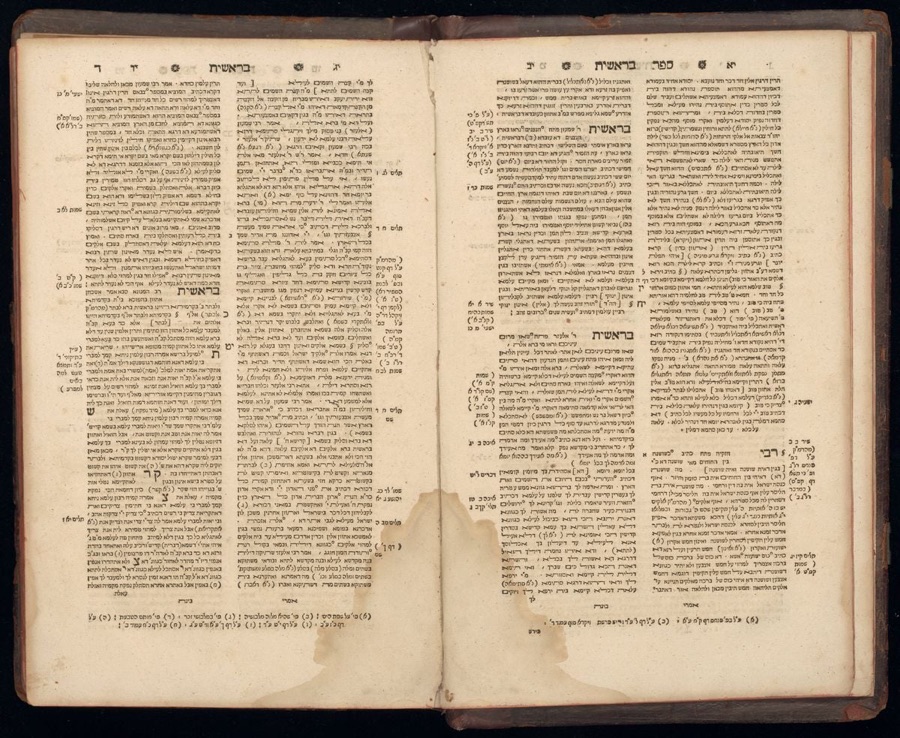
Zohar'ın Bereşit bölümü, Yaratılış kitabının ilk bölümlerinin sırlarını açar: Sonsuz'un (Eyn Sof) ilk kıvılcımı, kırk iki harfli Ad, gizlenen ilk ışık, yedi gök, Âdem'in yaratılışı, Kabil ile Habil ve Hanok. Aşağıda Jean de Pauly'nin Fransızca çevirisinden bölümün tamamı yer alır. Köşeli parantezdeki [15 a] işaretleri Mantua baskısının folio numaralarıdır; de Pauly'nin dipnotları alınmamıştır.
BEREŞİT BÖLÜMÜ
[1 a] Şöyle yazılmıştır, "Bereşit", yani başlangıç ile. Her şeyden önce Kral, boşluğun saydam bir esire, fosforlu cisimlerden yayılan ışığa benzer ağırlıksız bir akışkana dönüşmesine izin verdi. Ardından Sonsuz'un en gizli bir sırrıyla bu akışkan, havamsı hiçbir biçimi olmayan, ne beyaz ne siyah ne kırmızı ne yeşil ne de herhangi bir renkte olan bir gaza dönüştü. Tanrı ancak maddeye belirli hatlar kazandırdığında bu renk çeşitliliğini var etti; oysa gerçekte bunlar maddede bulunmaz, yalnızca ışığın aydınlattığı cisimlere göre uğradığı değişikliklerden kaynaklanır. Işığın içinde, bu aşağı dünyadaki renk çeşitliliğinin etkin sebebi olan bir dalga vardır. Böylece Sonsuz, en gizli bir sırla, ses dalgaları boşlukta hiç iletilmediği halde, Kelam'ın sesiyle boşluğa vurdu. Demek ki Kelam'ın sesi, boşluğun maddileşmesinin başlangıcını oluşturuyordu. Fakat boşluğa vurduğu anda Kelam'ın sesi, yüce sırrı oluşturan ve özü kavranamaz olan ışığın kaynağını, o kıvılcımlı noktayı fışkırtmasaydı, bu maddileşme daima ağırlıksızlık halinde kalırdı. Bütün yaratılışın kökeni olduğundan Kelam'a "Başlangıç" denmesinin sebebi budur.
Şöyle yazılmıştır, "Bilgeler gökkubbenin parıltısı gibi parlayacaklar, birçoklarını doğruluğa iletenler sonsuza dek yıldızlar gibi ışıyacaklar." (Daniel 12:3). "Parıltı" (Zohar) sözcüğü, Gizemli Olan'ın boşluğa vurduğu anda fışkırttığı ve Gizemli Olan'ın izzeti için inşa edilmiş bir saray olan evrenin kökenini teşkil eden kıvılcımı belirtir. Bu kıvılcım bir bakıma dünyanın kutsal tohumunu oluşturur. Bu sır Kutsal Yazı'nın şu sözlerinde dile getirilmiştir, "Ve varlığını borçlu olduğu tohum kutsaldır." Böylece "parıltı" (Zohar) sözcüğü, O'nun kendi izzeti için saçtığı tohumu belirtir, zira yaratılışın gayesi Tanrı'nın yüceltilmesidir. Kabuğuna bürünmüş, erguvan rengi çıkarılan bir yumuşakça gibi, ilahi tohum da Tanrı'nın izzeti ve dünyanın iyiliği için kurulmuş bir saray işlevi gören madde ile kuşatılmıştır. İlahi tohumun büründüğü bu saraya "Elohim" (Rab) denir. "Başlangıç ile Elohim'i yarattı" sözlerinin mistik anlamı işte budur, yani bütün Kelamların (Maamarot) kaynağı olan "parıltı" (Zohar) aracılığıyla Tanrı, "Elohim"i (Rab) yarattı. Elohim ilahi özden olmasına rağmen, Kutsal Yazı'nın Elohim'in tezahürünü belirtmek için "yarattı" terimini kullanmış olmasına şaşılmasın, çünkü Kutsal Yazı aynı zamanda şöyle der, "Ve Elohim insanı kendi suretinde yarattı" (Tekvin 1:27). Kutsal Yazı "parıltı" (Zohar) sözcüğüyle, her şeyin başlangıcı olduğu için "Bereşit" (Başlangıç) olarak adlandırılan Gizemli Olan'ı belirtir. Musa Tanrı'ya adının ne olduğunu sorduğunda, O şöyle cevap verdi, "Ehyeh Aşer Ehyeh" (Ben olan Ben'im) (Çıkış 3:14). Kutsal "Ehyeh" adı iki yanda yer alırken, "Elohim" adı tacı oluşturur, çünkü ortada yer alır; zira "Aşer", "Elohim" ile eşanlamlıdır, çünkü "Aşer" adı "Roş" (baş, taç) sözcüğünü oluşturan aynı harflerden meydana gelir. "Elohim" ile aynı olan "Aşer", "Bereşit"ten türer. [1 b] İlahi kıvılcım yüce sarayda kapalı kaldığı sürece, yani tezahür etmeden önce, ilahi özde herhangi bir adla anılacak hiçbir belirginlik oluşturmuyordu; Bütün, "Roş" adı altında yalnızca Bir'i oluşturuyordu. Fakat Tanrı, kutsal tohum ("Aşer") aracılığıyla madde sarayını yarattığında, "Aşer" ilahi özde belirdi; ancak o zaman "Aşer", ilahi özde ortada yer alarak (Ehyeh Aşer Ehyeh) bir taç başı ("Roş") biçimini aldı. Oysa "Bereşit" sözcüğü, "Aşer"in eşanlamlısı olan "Roş" sözcüğünü içerir; "Roş" ve "Bayit" sözcüklerini oluşturur, yani bir sarayda ("Bayit") kapalı bulunan "Roş". Dolayısıyla "Bereşit bara Elohim" sözleri şu anlama gelir: "Aşer"in eşanlamlısı olan "Roş", madde sarayına ilahi tohum olarak hizmet ettiğinde, "Elohim" yaratıldı; yani Elohim Tanrı'nın özünde belirdi. Bu ilahi öz her türlü doğurganlığın kökeni olduğu gibi, bilgeler de doğurgandır. Peki bu doğurganlık ne niteliktedir? Bütün harfleri doğuran bir noktaya benzer. Madde sarayının tohumu olan o kıvılcımlı nokta belirdiğinde, Bütün, birbiri içinde kaynaşan Holem, Şurek ve Hirek sesli harf noktalarıyla temsil edilen üç noktanın biçimini aldı.
ve tek bir gizem oluştururlar. Tanrı'nın Kelamı'nın sesi yankılandığı anda, tüm harfleri (Alef'ten Tav'a kadar, nitekim şöyle yazılmıştır: "Et ha-şamayim", "gökleri", burada Alef ve Tav'dan oluşan Et kelimesi doğurucu özü belirtir) kucaklayan doğurucu öz de aynı şekilde tezahür etti. Öyle ki, ilahi tohumu oluşturan ve "Aşer" olarak adlandırılan Kelam, dölleyici öz olan ilk "Ehyeh" ile doğurucu öz olan son "Ehyeh" ("Ehyeh aşer Ehyeh") arasında, tam ortada yer alır. "Parıltı" (Zohar) da aynı şekilde bütün harfleri kucaklayan doğurucu özü belirtir. Bu nedenle Kutsal Yazı, bilgeleri bu parıltıya benzetir, çünkü onlar da bütün öğretiyi kucaklarlar. Şu ayetin anlamı da aynıdır: "Dinle, ey İsrail, Yehova Tanrımızdır, Yehova birdir." Bu üç ilahi isim, Tekvin'in ilk ayetinde ifade edilen ilahi özün üç mertebesini belirtir: "Bereşit bara Elohim et ha-şamayim." "Bereşit" ilk gizemli hipostazı belirtir; "bara" yaratılışın gizemine işaret eder; "Elohim" tüm yaratılışın temeli olan gizemli hipostazı belirtir; "et ha-şamayim" doğurucu özü belirtir. "Elohim" hipostazı, asla birbirinden ayrılmayan ve yalnızca tek bir Bütün oluşturan diğer iki hipostaz, yani dölleyici ve doğurucu olanlar arasında bir bağ kurar. Elohim'in ardından "et" kelimesi gelir, çünkü O her şeyin başlangıcı ve sonudur, tıpkı alfabenin ilk ve son harfinden oluşan "et" kelimesi gibi. "Et" kelimesine, bir sonraki kelime olan "ha-şamayim"ın harf-i tarifini oluşturan "he" harfi eklenirse, "Ata" (sen) kelimesi elde edilir. Kutsal Yazı'nın şu sözleri, "Elohim" ya da "Ata" olarak adlandırılan hipostaza telmihte bulunur: "Sen (Ata) bütün yaratılanlara hayat verirsin." Kutsal Yazı'nın "Et ha-şamayim v'et ha-arets" (gökleri ve yeri) demesinin sebebi budur; ta ki "et" kelimesiyle belirtilen ve diğer iki hipostaz, yani dölleyici ve doğurucu olanlar arasında bir bağ vazifesi gören hipostazın, gökler ile yer arasında da bir bağ vazifesi gördüğüne işaret edilsin. "Et", göklerle ortak olarak ilahi bir özden olma vasfını, yerle ortak olarak da onun kadar bereketli olma vasfını taşır; zira gözün gördüğü üç unsurdan, yani gökkubbe, yer ve sudan yalnızca yer bitkiler ve meyveler verir. Az önce açıklanan husus, yaratılışın en yüce gizemini teşkil eder. Fakat devam edelim: "Bereşit", Kutsal Yazı'nın "göğün bir ucundan göğün öbür ucuna kadar" sözlerinde saklı olan gizeme telmihte bulunmak üzere, "bara şit" (altıyı yarattı) kelimelerini oluşturan harflerden meydana gelmiştir. Zira yukarıda altı semavi yön vardır ve buradaki altı yön bunlara tekabül eder; hepsi de ilahi özü temsil eden ve kendi sıralarında bir ve aynı olan üç noktaya doğru yönelir. Kırk iki harfli ilahi isimde saklı olan gizem işte budur.
Şöyle yazılmıştır: "Bilgeler göğün parıltısı gibi parlayacaklar." Kutsal Yazı bilgeleri, kelimelerin ezgilenmesine yarayan kutsal metin vurgularına benzetir. Nasıl ki harfler ve sesli harf noktaları ezgiye yarayan vurgulara itaat edip melodinin gereklerine boyun eğerlerse, tıpkı krallarının buyruğu altında düzene giren ordular gibi, harfler kelimelerin yalnızca bedenini oluşturup sesli harf noktaları da onların yalnızca canını teşkil ettiğinden, bunların ruhu olan ezgi vurgularına zorunlu olarak tâbidirler, aynı şekilde bilgeler de anlayışlarıyla harflere ve sesli harf noktalarına can verirler. Kutsal Yazı'nın şu sözlerinin anlamı budur: "Bilgeler göğün parıltısı gibi parıldatırlar", yani onlar, harfleri ve sesli harf noktalarını anlayışlarıyla, "göğün parıltısı" olarak adlandırılan melodi gibi parıldatırlar. Kutsal Yazı ekler: "Ve birçoklarını doğruluğun yolunda eğitenler, sonsuza dek yıldızlar gibi parlayacaklar." Kutsal Yazı "yıldızlar" kelimesiyle, bir cümlenin öğelerini ayırmaya yarayan ve kelimeleri anlaşılır kılan noktalama işaretlerini kasteder. Kutsal Yazı, birçok kimseyi doğruluğun yolunda eğiten, yani onları ezoterik öğretinin gizli patikalarından geçiren bilgelerin, "yıldızlar" diye anılan noktalama işaretlerinin metin üzerine yaydığı aydınlık kadar bu öğreti üzerine aydınlık yaydıklarını söyler. Böylece bilgeler, bu aşağı âlemde, semavi sarayın sütunlarıdır; avamın semavi âlemin ihtişamını hayal meyal görebilmesi onların anlayışı sayesindedir. "Bilgeler" veya "anlayışlılar" (maskilim) kelimesi aynı zamanda "iyilikseverler" fikrini de ifade eder, nitekim şöyle yazılmıştır: "Ne mutlu yoksulu anlayan insana." Kutsal Yazı, bilgelerin göğün ihtişamını parlattığını söyler, zira onların öğretisi olmasa hiçbir göz bu güzellikleri seçemezdi. Kutsal Yazı ekler: "Göğün parıltısı gibi", yani bu bilgelerin üzerine gerilmiş olan gökkubbenin parıltısı gibi, [1 a] nitekim şöyle yazılmıştır: "Haya'nın başları üzerinde, parıldayan ve bakılması dehşet veren bir kristal gibi görünen, yayılmış bir gökkubbe vardı." Hezekiel'in görümünde gördüğü o kıvılcımlar saçan ışık, ezoterik öğretiyi aydınlatmaya yarar ve aydınlanan Haya başları, Hezekiel'in hayal meyal gördüğü gökkubbenin durup dinlenmeksizin aydınlatmaya devam ettiği bilgelerdir.
Şöyle yazılmıştır: "Ve yeryüzü tohu ve bohu idi." Kutsal Yazı, yaratılışın ilk durumunu bize bildirmek için geçmiş zaman kipini, "idi" sözcüğünü kullanır. Kar halindeyken su pislikle birbirine karışmıştır, eridiğinde en belirgin pislik sudan ayrılır, fakat erime henüz tam bir arınma sağlamaz. Pislik sudan ancak büyük bir ateşin etkisiyle tamamen ayrılır. "Tohu", dünyanın pisliğini oluşturan cinleri belirtir. "Bohu", cinlerden arındırılmış dünyanın saf kısmını belirtir. Yeryüzünün "tohu" ve "bohu" olduğunu söyleyerek Kutsal Yazı bize öğretir ki, yaratılan madde başlangıçta "tohu" halindeydi, yani cinin ruhu maddeyle öylesine karışmıştı ki, tıpkı içinde pislik barındıran bir kar topu gibi tek bir beden oluşturuyorlardı.
demek ki "ne mutlu yoksula merhamet eden insana".
Maddenin saf kısmı ancak bundan sonradır ki cinlerden ayrıldı. Maddenin bu durumu "bohu" adıyla belirtilir. Fakat bu arınma hangi gücün etkisiyle gerçekleşti? Kutsal Yazı yanıt verir: "Karanlık enginin yüzü üzerindeydi." Kutsal Yazı "karanlık" sözcüğüyle, göksel kökenli olmasına karşın yaratılışın ilk zamanlarında yalnızca dumanlı ve kararmış olan kutsal ateşi belirtir. Bu nedenle Kutsal Yazı şöyle der: "Karanlık engini (tehom) kaplıyordu"; tehom sözcüğü, "tohu" sözcüğünü oluşturan harflere "m" harfinin eklenmesiyle meydana gelmiştir, bu da bize yaratılışın ilk zamanlarında egemen olan kutsal fakat dumanlı ateşin, "tohu" sözcüğüyle belirtilen cinleri olduğu kadar, "m" harfiyle belirtilen maddenin saf kısmını da kapladığını gösterir. Maddenin tam arınmaya ulaşması için, sonsuzluk boyunca yaşayan Elohim'den sadır olan Kutsal Ruh'un suların yüzü üzerinde dalgalanması gerekmiştir. Nitekim Kutsal Yazı şöyle der: "Ve Elohim'in Ruhu suların yüzü üzerinde dalgalanıyordu." Bu ruh dünyanın üzerine üfledikten sonra, ısıtılmış sıvıların yüzeyinden alınan köpük misali, cinlerin ruhu maddeden ayrıldı. Böylece cinin ruhu, kesin olarak boyun eğdirilmeden önce birkaç evreden geçti. Başlangıçta, göksel kutsallığın çevresinde esen korkunç bir rüzgar biçiminde kendini gösteriyordu; zira başlangıçta her türlü bedenden ve her türlü renkten yoksundu. Yaratılış anında maddeyle karıştı, ona tamamen egemen oldu ve egemenliği altında onu titretti. Ardından, kutsal fakat dumanlı ateşin kendini göstermesi gerekti ki, onun etkisiyle cinin ruhu maddeden ayrılsın. Fakat maddenin tam olarak arınması henüz gerçekleşmemişti ve cinin ruhu, insanı Tanrı'nın saf görümünden yoksun bırakmak için gök ile maddenin arasına girmeyi sürdürüyordu. Ancak Elohim'in Kutsal Ruhu suların yüzü üzerinde dalgalandığı vakittir ki,
[1 b] Şöyle yazılmıştır: "Ve Elohim dedi: Işık olsun." Bu ayetten itibaren Kutsal Yazı, önceki ayetlerde yalnızca genel bir biçimde işaret edilmiş olan yaratılışın gizemlerini ayrıntılı olarak açıklar. Kutsal Yazı önce yaratılışı genel bir biçimde belirtmekle başlar, ardından yaratılışın işlerini ayrıntılı olarak sergiler ve sonunda yaratılışı genel bir biçimde belirtir. Yaratılışın işlerinin bu şekilde bir genellemenin öncesinde ve sonrasında ayrıntılandırılmasının amacı, Kutsal Kitap yorumlama kuralını yaratılış anlatısına uygulamaktır; bu kurala göre, Kutsal Yazı'da bir türün öncesinde ve sonrasında bir cins yer aldığında (yani Kutsal Yazı bir şeyi genel biçimde belirttiğinde, ardından onu ayrıntılandırdığında ve sonunda yeniden genellediğinde), cinsi belirleyen şey türdür. Yaratılış, gizemli Sonsuz'un iradesiyle gerçekleşti. "Söz" sözcüğü ilk kez ancak işlerin ayrıntılı yaratılışı için telaffuz edilir, nitekim şöyle yazılmıştır: "Ve Elohim dedi: Işık olsun." Dolayısıyla Kelam yalnızca ayrıntıların yaratılışı için ortaya çıkar, oysa genel maddenin yaratılışı Kelam'ın tezahüründen önce gerçekleşmiştir. Bu nedenle genel olarak maddenin yaratılışının sergilendiği Tekvin'in ilk iki ayetinde "dedi" anlamına gelen "Vayomer" sözcüğü bulunmaz. "Bereşit bara Elohim" sözleri, "Elohim gökleri ve yeri Kelam aracılığıyla yarattı" anlamına gelse de, maddenin Kelam aracılığıyla yaratılmış olmasından, Kelam'ın yaratılıştan önce zaten tezahür etmiş olduğu sonucu çıkarılmamalıdır. Kuşkusuz o ezelden beri vardır, fakat ilk kez ancak madde yaratıldıktan sonra tezahür etmiştir. Öncesinde, gizemli Sonsuz mutlak gücünü ve engin iyiliğini, gizemli Kelam ile aynı cevherden olan fakat sessiz duran gizemli Düşünce vasıtasıyla tezahür ettiriyordu. Maddenin yaratılışı çağında tezahür eden Kelam, daha önce Düşünce biçiminde mevcuttu; zira söz maddi olan her şeyi ifade edebilse de, gayrimaddi olanı tezahür ettirmekte acizdir.
İşte bu yüzden Kutsal Yazı şöyle der: «Ve Elohim dedi» (Va-yomer Elohim), yani Elohim Kelam suretinde tezahür etti; yaratılışın kendisiyle icra edildiği bu ilahi tohum henüz filizlenmişti ve Düşünce'den Kelam'a dönüşerek dışarıdan duyulan bir ses çıkardı. Kutsal Yazı ekler: «Işık olsun» (Yehi or); zira her ışık Kelam'ın gizeminden neşet eder. «Yehi» kelimesi üç harften oluşur: Başta ve sonda bir Yod, ortada ise bir He. Bu kelime, Yod ve He harfleriyle gösterilen semavi Baba ile Anne'nin ve bu ikisinden neşet edip «Yehi» kelimesinin sonundaki Yod harfiyle gösterilen üçüncü ilahi cevherin sembolüdür; bu son harf ilkiyle özdeştir, ta ki bize her üç uknumun [hipostazın] tek bir varlık olduğunu göstersin. İlk Yod ile gösterilen Baba, bütün semavi ışıkların dağıtıcısıdır. Boşluğun maddileşmesi He ile gösterilen Kelam'ın sesiyle vuku bulunca, maddeyle bağdaşmayan semavi ışık gizlendi. Sesinden maddenin yaratılışının meydana geldiği Kelam henüz telaffuz edilmemişti, zira yalnızca Kutsal Yazı'da zikredilen muhtelif eserlerin yaratılışı için tezahür etmişti. Kelam tezahür ettiğinde, yalnızca Baba'dan neşet ettiği sürece maddeyle bağdaşmayan, fakat Baba'dan ve Kelam'dan neşet ettiği andan itibaren madde için erişilebilir hale gelen ışığın dağıtılması amacıyla Baba ile birleşti. «Yehi» kelimesinin ilk Yod'u Baba'yı gösterir; son Yod ise semavi ışığı gösterir; bu Yod, He harfinden sonraya yerleştirilmiştir, çünkü işaret ettiği semavi ışığın madde tarafından erişilebilir kılınması için Baba'dan ve Kelam'dan, yani ilk Yod'dan ve He'den neşet etmesi gerekmiştir. Tıpkı üç sesli harf noktasının da üç ilahi uknumu göstermesi gibi: Holem Baba'yı, Şurek Kelam'ı ve Hirek de Işık'ı gösterir.
Kutsal Yazı'nın şu sözlerinin manası şudur: «Ve Elohim ışığın iyi olduğunu gördü; ve ışığı karanlıktan ayırdı.» İlahi cevherde Orta Sütun'u oluşturan uknum iyidir, zira yukarıdaki alem ile aşağıdaki alem arasında bir bağ vazifesi görür ve böylece Yehova'nın ismini kemale erdirir. Elohim, maddenin karanlığına belirli bir sınıra kadar ışığa dönüşme kabiliyeti vererek ve semavi ışığa da inebileceği aynı sınırı çizerek, gök ile yer arasındaki bağı böylece kurmuştur.
Şöyle yazılmıştır: «Ve Elohim ışığa gündüz adını verdi.» Kutsal Yazı neden «adını verdi» tabirini kullanır? Elohim, orta uknumdan yayılan o kusursuz ışığı getirdi, yani ortaya çıkardı; bu uknum ki alemin temelini teşkil eder ve bütün alemler onun üzerine kurulmuştur. Ezelden ebede Diri Olan'ın temeli, Orta Sütun'dan sudur eden bu kusursuz ışıktan yapılmıştır; bu ışık sağ tarafın «gündüz»ünü oluşturur. Kutsal Yazı ekler: «Ve karanlığa gece adını verdi.» Karanlık tarafından pasif bir ışık getirdi, yani ortaya çıkardı; tıpkı geceleyin görünen ayın ışığı gibi; bu pasif ışığa «gece» adı verilir. Bu gizem şu sözlerde saklıdır: «Efendim, bütün yeryüzünün Efendisi.» Sağ taraftaki Sütun'un ışığı kusursuz olan Orta Sütun'a girer; sol taraftaki Sütun'un pasif ışığı da aynı şekilde Orta Sütun'da toplanır; sol tarafın pasif ışığı, Orta Sütun'da Yüce Nokta'dan sudur eden ışıkla işte böyle temas eder; ve bu iki ışık [1 a] birleştiğinde Kelam bunlardan çıkar. Üç sesli harf noktasıyla simgelenen gizem budur: Holem, Şurek ve Hirek. Ortadaki Nokta kutsal tohumu oluşturur, onsuz verimlilik mümkün olmazdı. Böylece sağ tarafın aktif ışığı ile sol tarafın pasif ışığının Orta Sütun'da gerçekleşen birleşmesiyle,
alemin temeli görünür; buna «Bütün» adı verilir, zira sağ taraftakilerle sol taraftakiler olmak üzere tüm ışıkları birleştirir. Sol tarafın ışığı yansımalardan meydana gelmiştir ve ayın pasif ışığı da benzer bir tabiata sahiptir; karanlık bir cisimden geldiği için bu ışığa karanlık denir. Böylece ilahi cevherin iki ışığı şu hususiyete sahiptir ki, biri, yani aktif ışık erildir; diğeri, yani pasif ışık ise dişildir. Orta Sütun'da birleştiklerinde eril ışık kendi aşırı etkinliğiyle dişil ışığın pasifliğinin oluşturduğu boşluğu doldurduğunda denge kurulur; etkinlik ile pasiflik arasında ne zaman denge kurulsa, bu denge hem fazlasını veren varlığa hem de pasifliğini gidermek için onu alan varlığa sevinç verir; bu sevinçten üçüncü bir varlık doğar. Aynı şekilde iki semavi ışığın birleşmesi de muazzam bir sevinç doğurmuştur; bu muazzam sevinçten alemlerin temelini oluşturan ve «Artış» (Musaf) olarak adlandırılan üçüncü bir ışık sudur etmiştir. Bütün alt kudretler, bütün ruhlar ve bütün kutsal canlar bu son ışıktan sudur eder. Kutsal Yazı'nın şu sözlerinde dile getirilen gizem budur: «Tsebaot Yehova, ruhların Tanrısı ve Efendisi, bütün yeryüzünün Efendisi.» Gündüz ile gece, semavi ışıkların suretidir. Işık hüküm sürdüğü müddetçe, pasif olan karanlık uzakta durur. Fakat günün sonunda zayıflayan ışık alacakaranlıkta karanlıkla birleştiğinde, denge kurulmuş olur ve gece gündüzün yerini alır. Demek ki
tohumu oluşturan alacakaranlıkta gündüz ile gecenin birleşmesinden ertesi gün doğmuştur; gece olmasaydı ertesi gün de olmazdı. Günün kısımları ile semavi ışıklar arasındaki tek fark şudur: Günün kısımları art arda gelir, alacakaranlık gündüzü, gece ise alacakaranlığı izler; üç semavi ışık ise aynı anda tezahür eder. Fakat doğurganlığı sağlamak için erilin katkısının dişininkini aşması gerektiğinden, Orta Sütun'u oluşturan Elohim, sağ taraftaki etkin ışık ile sol taraftaki edilgen ışıkla aynı özdedir, ancak birincisinden ikincisine kıyasla daha fazla pay alır. Bu nedenle Kutsal Yazı şöyle der: "Ve Elohim çağırdı", yani bir taraftan gündüz ile simgelenen ışığı, yani sağ taraftaki etkin ışığı getirdi ve çağırdı, yani diğer taraftan karanlığı, yani gece ile simgelenen ve "karanlık" olarak adlandırılan edilgen ışığı getirdi; başka bir deyişle Elohim, sağ taraftaki ışık ile sol taraftaki ışığın birleştiği Orta Sütun'u şekillendirdi. Fakat Elohim sağ taraftaki ışıktan daha fazla pay aldığından, Kutsal Yazı Elohim'in gündüze yaptığı çağrıyı ifade etmek için "Vayikra" (ve çağırdı) sözcüğünü kullanırken, geceye yaptığı çağrıyı ifade etmek için iki harfi eksik olan bir sözcüğü, yani "Kara" sözcüğünü kullanır. Yüce taçta kazılı olan yetmiş iki kutsal harfin hikmeti bu sırda saklıdır.
Şöyle yazılmıştır: "Ve Elohim dedi: Suların ortasında bir kubbe olsun ve suları sulardan ayırsın." Burada Kutsal Yazı, cinsten önce gelen ve onu izleyen türe ilişkin yorumbilgisi kuralına yer açmak amacıyla yaratılışı ayrıntılı bir şekilde açıklar. Suların ayrılmasının sırrı şöyle açıklanır:
Âdem'in kitabında şu sır yer alır: Kutsal Yazı'da "karanlık" sözcüğüyle anılan sol taraftaki edilgen ışık, Orta Sütun'da sağ taraftaki etkin ışıkla birleştiğinde, iki ışık arasında bir karşıtlık olduğunu sanan pek çok semavi ordu, sol taraftaki ışıktan yana tavır aldı ve sağ taraftaki ışığa karşı isyan etmeye hazırlandı. Orta Sütun Tanrı'nın kusursuz birliğini aşikâr kıldığında, iyi ordular savaşı bırakıp boyun eğdiler. Fakat kötü ordular çekişmelerinde direttiler ve cehennemi doğurdular. Çekişme başlangıçta iyi semavi ordularda dahi var olduğundan, dünyaya nifak girmiş oldu. Fakat,
diğer yandan, iyi orduların başlangıçtaki çekişmesinde hiçbir isyan duygusu bulunmadığından, dünyaya soktukları nifak da buna benzer; tek amacı göğün yüceliğidir ve dolayısıyla, kendisini doğuran semavi ordularınki gibi, nihayetinde daima ortadan kalkar. Ancak dünyada, gerçeğin apaçıklığına rağmen çekişmelerinde direten kötü semavi orduların isyanından doğan başka bir çekişme türü daha vardır. Bu çekişme de kendisini doğuran semavi ordularınkine benzer; göğe karşı bir isyandır ve dolayısıyla asla ortadan kalkmayacaktır. Doğrular kötülerden işte bu iki nifak türüyle ayırt edilir; doğrular arasındaki nifak daima birinci türdendir, kötülerin nifakı ise ikincidendir. Korah'ın kavgası öfkeden kaynaklanmıştı ve nihayetinde onu cehenneme sürükledi; oysa Şamay ile Hillel arasındaki kavganın sebebi göğün yüceliğiydi ve nihayetinde ortadan kalktı. Bu nedenle Kutsal Yazı şöyle der: "Ve Elohim kubbeyi yaptı ve kubbenin altındaki suları kubbenin üzerindeki sulardan ayırdı", yani yukarıda kalan semavi orduların yol açtığı nifakı, dipsiz kuyuya atılan kötü semavi orduların dünyaya soktuğu nifaktan ayırdı; başka bir deyişle, Şamay ile Hillel arasındaki çekişme gibi Tanrı sevgisinden kaynaklanan kavga ile Korah'ın kavgası gibi kibir ve öfkeden doğan kavgayı birbirinden ayırdı. Bu sonuncu kavga türü daima sol taraftan neşet eder.
Burada Kutsal Yazı "ayırdı" sözcüğünü kullanır: "Ve suları ayırdı" vb. Korah'ın kavgası için de Kutsal Yazı yine "ayırdı" sözcüğünü kullanır: "İsrail'in Tanrısı'nın sizi bütün topluluktan ayırmış olması sizin için az şey midir?" (Sayılar 16:9) ve başka bir yerde Kutsal Yazı şöyle der:
Efendilerine isyan eden meleklerin cezalandırılması, İsrailoğullarının Şabat’ın sonunda litürjik "Ayrılma" duasını okumalarından sonra gerçekleşir; zira isyankar meleklerin sonsuza dek yakıldığı yukarıdaki Şeol, Korah’ın indiği aşağıdaki Şeol’e benzer; çünkü aşağıdaki Şeol, yukarıdakinin örneğine göre yapılmıştır. Kutsal Yazı şöyle der: "Suların ortasında bir kubbe olsun." "Elohim" kelimesi, "Tanrı" ve "deniz" anlamına gelen "El" ve "hayam"dan oluşur. "Hayam" kelimesi "yamah" kelimesiyle aynı harflerden meydana geldiği için, Kutsal Yazı bize bununla, denizle simgelenen her çekişmenin, şayet göğün yüceliğini amaçlıyorsa Tanrı’dan geldiğini gösterir; çünkü "El", "hayam" ile birleştiğinde "Elohim" elde edilir; fakat Tanrı’nın yüceliğinin çekişmede hiçbir payı olmadığında, "El" "Elohim"den ayrılır ve geriye yalnızca, derinliği kötü ruhların meskeni olan Şeol’ü gizleyen büyük okyanusu belirten "yamah" kalır. Suların ayrılması gerçekleştiğinde çekişme sona erdi; çünkü Elohim aralarına girerek onlar için bir bağ vazifesi gördü. Yukarıdaki sular eril kısmı, aşağıdaki sular ise dişil kısmı oluşturur. İlki "Elohim", ikincisi ise "Adonay" olarak adlandırılır; ilki kutsal YHVH isminin ilk "He" harfiyle, ikincisi ise ikinci "He" harfiyle simgelenir. "Elohim" adıyla anılan yukarıdaki sular ile [1 a] "Adonay" adıyla anılan aşağıdaki sular arasında birleşmenin sağlanması için, Elohim eril sular ile dişil suların arasına girdi ve onlar için bir bağ oluşturdu. Bu araya giriş yaratılışın ikinci gününde gerçekleşmiş olsa da, uyuşmazlık üçüncü güne kadar dinmedi. Ve yaratılışın ikinci gününde uyuşmazlık hala var olduğu içindir ki Kutsal Yazı o gün için, yaratılışın diğer tüm günlerinde olduğu gibi, "Ve Tanrı
bunun iyi olduğunu gördü" demez. İkinci günün işi, yani uyuşmazlığın tamamen sona ermesi ancak üçüncü günde tamamlandığı için, "iyi" kelimesi yalnızca üçüncü günde kullanılır; burada "Vav" harfi kutsal YHVH isminin iki "He" harfi arasına girmiş ve kutsal ile hakkedilmiş ismin birliği kusursuz hale gelmiştir. Elohim’in yukarıdaki sular ile aşağıdaki sular arasına girmesi, Şeria Nehri sularının ayrılmasıyla simgelenir; orada "yukarıdan gelen sular tek bir yerde durdu, aşağıdakiler ise ortadan İsrailoğullarına yol açmak için denize doğru aktı". Suların ayrılışını belirtmek için Kutsal Yazı "kubbe" kelimesini beş kez yineler, çünkü sonsuzluk boyunca yaşayan O Varlık onları boydan boya geçer ve yönetir; zira aralarına Orta Sütun girmemiş olsaydı, yukarıdaki sular ile aşağıdaki suların birleşmesi ve dolayısıyla bereketi asla gerçekleşemezdi. Oysa bu birliği bereketli kılmak için gereken süre beş yüz yıldır; bu süre zarfında yukarıdaki sular ve aşağıdaki sular, aralarında bir bağ vazifesi gören hayat ağacına bağlı kalmalıdır. Yaratılışın bütün suları, hayat ağacı tarafından kendilerine çizilen akışı ve yönleri izlemiştir. Suları taksim etmeye girişmeden önce onları ilk olarak birleştirmek gerekirdi, zira ancak birleşmiş olan bir şey taksim edilir; nitekim Davud da önce bütün erzakı ellerinde topladı ve taksimi ancak bundan sonra gerçekleştirdi, yazılmış olduğu gibi: "Ve bütün bu İsrail topluluğuna paylaştırdı" vb. ve başka bir yerde: "Sen onlara verdiğinde onlar toplarlar" ve nihayet yazılmıştır: "Geceden kalkar ve evindekilere rızıklarını paylaştırır." Sol taraftan neşet eden bir çekişme dünyada vuku bulduğunda, ilahi şiddet dünyada kendini hissettirir; ve sol tarafın suları, her türlü nemden yoksun, kuru bir unsura dönüşerek biri eril diğeri dişil iki şeytani ruh doğurur; bunlar da bu kötü çekişmeyi çıkaranları kuşatmak üzere cin lejyonları meydana getirirler.
Bu iki cin, sünnetle kesilip atılması gereken sünnet derisiyle simgelenir. Bu ruhlardan birine "Efeh" (Engerek), diğerine "Nahaş" (Yılan) denir; her ikisi yalnızca bir tek bütün oluşturur. Efeh, Nahaş ile birleştikten sonra, yedi yıllık bir gebeliğin ardından dölünü doğurur. Cehennemin ve Baştan Çıkarıcı Ruh’un taşıdığı yedi ismin sırrı da buradadır. Böylece, sol taraftan neşet eden her şey iyi ile kötünün bir karışımıdır; iyinin, kötülüğün hiçbir karışımı olmaksızın saf kalabilmesi için, dünyanın temelini oluşturan taraftan, lütuf çiyinin ve bu dünyanın bütün bereketlerinin neşet ettiği on sekiz harfli hakkedilmiş isimden neşet etmesi gerekir.
Şöyle yazılmıştır: "Ve Elohim dedi: Göğün altındaki sular tek bir yerde toplansın." Toplanma fikrini ifade etmek için Kutsal Yazı, aynı zamanda "ip ile çizilsinler" [ölçü ipiyle hizalansınlar] anlamına da gelen "yikkavu" kelimesini kullanır. Kutsal Yazı, "sular" kelimesiyle, içinde erili ve dişili barındıran en yüce Nokta'nın ikamet ettiği üst saraya çıkan sefirotik basamakları kasteder. Ve bu kimdir? O, ezelden ebede yaşayandır. Kutsal Yazı, göğün altındaki sulardan söz eder; bu da Yehova'nın kutsal adının ikinci "He" harfinden tecelli eden sefirotik basamakları belirtir. Ve en yüce Nokta'ya ulaşmak için hem birinci "He" harfinden hem de ikincisinden tecelli eden sefirotik basamaklardan geçmek gerektiğinden, Kutsal Yazı, birinci ve ikinci "He" harfinin sefirotik basamaklarına karşılık gelmek üzere iki "Vav" harfi içeren "yikkavu" kelimesini kullanır. Kutsal Yazı'nın anlamı şudur: Sefirotik basamaklar bir iple çekilip hizalandığında, yani belirlenen düzene göre takip edildiklerinde, her türlü bakıştan gizlenmiş olan en yüce nokta belli belirsiz görülecektir. Kutsal Yazı'nın "tek bir yerde" ifadesinden kastettiği budur, yani sefirotik basamaklar izlenerek her şeyin birleştiği ve dolayısıyla her şeyin yalnızca Bir olduğu o en yüce makama varılır. Şöyle yazılmıştır: "O gün Rab 'Bir' olacak ve adı 'Bir' olacak." Kutsal Yazı biri yukarıda, diğeri aşağıda olmak üzere iki birlikten söz eder. Yukarıda, ezelden ebede yaşayan O'nun birliği aşikârdır, çünkü yukarıda ve aşağıda var olan her şey orada toplanmıştır. Fakat ilahi öz yalnızca sefirotik basamaklar aracılığıyla görülebildiğinden, zihin Sefirot'un çeşitliliğiyle yanılabilir ve en yüce özde herhangi bir bölünme olduğuna inanabilir. Oysa bu yanılgı, ancak Sefirot'un en yüce basamağı bu aşağıda gizli kaldığı sürece ortaya çıkabilir; zira bu basamak açığa çıkar çıkmaz, ilahi özün birliği yukarıda olduğu gibi aşağıda da aşikâr olacaktır. Kutsal Yazı'nın anlamı şudur: "O gün Rab Bir olacak ve adı Bir olacak", yani ilahi öz, yukarıda apaçık olduğu gibi aşağıda da aşikâr bir biçimde Bir olacaktır. Kutsal Yazı'nın şu sözlerinin anlamı da budur: "ve Rab'bi gördüm" ve başka bir yerde: "ve İsrail'in Tanrısı'nı gördüler", ve başka bir yerde: "Rab'bin izzeti göründü", ve başka bir yerde: "Rab'bin izzeti herkese göründü", ve yine: "ve yağmurlu bir günde buluttaki gökkuşağı gibi, Rab'bin izzetini çepeçevre saran ışık da öyleydi", yani gökkuşağının ışığı nasıl yalnızca görünüşte çeşitli renklerden oluşuyorsa, en yüce Nokta'yı çevreleyen sefirotik basamakların ışığı da aynı şekilde tektir. Kutsal Yazı'nın "ve kuru toprak görünsün" sözlerinin gizemi de böyledir; "kuru toprak" (Yabaşa) sözcüğüyle ezelden ebede yaşayan O kastedilir.
"tecelli dünyası", "yaratılış dünyası", "oluşum dünyası" ve "eylem dünyası". Sefirot ağacı çiziminin açıklaması için ilerisine bakınız.
Kutsal Yazı şöyle der: "Yayımı bulutlara koydum." Kutsal Yazı, "yay" terimiyle "Malkut" sefirotik basamağını belirtir. "Yayımı koydum", yani onu dünyanın yaratılışından itibaren koydum demektir. Gökkuşağının [1 b] göründüğü bulutlu bir günde, sol taraf isyana hazırlanır. O vakit Tanrı'nın İzzeti görünür. Ancak sol taraf üstünlük arzusunda diretince, Kutsal Yazı'nın şu sözünde belirtilen durum başına gelir: "Ve Rahel doğum yaparken çok zorlandı." (Tekvin 35:16). Mikael meleği en yüce sefirotik basamağın bir yanında, Rafael meleği diğer yanında ve Gabriel meleği de üçüncü bir yanında durur. Gökkuşağında ayırt edilen üç ana renk buradan gelir: beyaz, kırmızı ve yeşil. Gözbebeği nasıl çeşitli renklerdeki halkalarla çevriliyse, görüntüsü de...
Tanrı’nın izzeti, söz konusu üç ana renkle çevrilidir; bu renkler, "YHVH Elohenu YHVH" sözleriyle işaret edilen eşsiz yüce Işığın yansımasından başka bir şey değildir. Bu üç üst ışık derecesi gizli ve görünmezdir ve yukarıda tek bir birlik oluştururlar. Gökkuşağının söz konusu üç ana rengi, birliklerine rağmen gösterdikleri çeşitlilikle, yüce Işığın birliğini simgeler; beyaz, kırmızı ve yeşil, yüce Işığın üç gizemli derecesine karşılık gelir. Aşağıdaki bu üç derecenin birliği, "Onun görkemli krallığının adı sonsuza dek mübarek olsun" ayetinde saklıdır; yukarıdaki bu üç derecenin birliği ise "Dinle, ey İsrail, YHVH Elohenu, YHVH Birdir" ayetinde saklıdır. Aşağıdaki Birlik, yukarıdakinin örneğine göre biçimlendirilmiştir. Bu nedenle Kutsal Yazı, aşağıdaki birleşme ile yukarıdaki arasındaki simetriyi belirtmek amacıyla, ölçü ipini ifade eden "kav" sözcüğünden türeyen "yikkavu" sözcüğünü kullanır. Yukarıdaki birliği içeren ayet altı sözcükten oluşur ve aşağıdaki birliği içeren ayet de aynı şekilde altı sözcükten oluşur. Şeffaf ışığın ölçü ipi işte orada fark edilir, nitekim şöyle yazılmıştır: "Suları avucunun çukurunda kim (Mi) ölçtü?" (İşaya 40:12). "Sular toplansın [çizilsin]" (Yikkavu ha-mayim) sözlerinin anlamı budur. Burada alemlerin Yaratıcısının ölçü ipinin gizi ifade edilmiştir: "Yod, He, Vav, He; Kadoş, Kadoş, Kadoş." "Sular toplansın [çizilsin]" sözlerinin anlamı işte budur, yani "YHVH" ve "Sebaot" adları daha önce anılan adda saklı gizem içinde birleşsin; o zaman "bütün yeryüzü Tanrı’nın izzetiyle dolacaktır". "Kuru toprak görünsün" sözü de o zaman gerçekleşir, yani birliği ifade eden ada kazınmış olan giz: "Kuzu bemohsas kuzu."
Kutsal Yazı daha sonra şöyle der: "Toprak yeşillik ve ot versin, vb." Semavi sular toplandıktan sonra
Kutsal Yazı şöyle der: "Meyve veren meyve ağaçları..." "Meyve" sözcüğünün yinelenmesi erili ve dişili gösterir. Nasıl ki bir meyve ağacı başka bir meyve ağacıyla döllenirse, dişi de eril tarafından öyle döllenir. Melekler arasındaki bu eriller ve dişiler kimlerdir? Bunlar "Kerubim" ve "Timrot" adı verilen meleklerdir. Timrot ne anlama gelir? Bunlar kurbanların dumanında yükselen meleklerdir; bu yüzden onlara "Timrot aşan" (duman sütunları) denir. Bu melekler insana faydalıdır. Tüketilmek üzere var olan ve "ot" (hasir) adı verilen melekler için durum böyle değildir; nitekim şöyle yazılmıştır: "İşte seninle birlikte yaptığım Behemot; öküz gibi hasir yer" (Eyüp 40:15). Kutsal Yazı, "Meyve veren meyve ağaçları" der, yani eril ve dişi suretindeki melekler. Meleklerin suretleri insanınkine benzese de hepsi birbirine benzemez; nitekim yukarıda adı geçen meleklerin sakallı büyük yüzleri varken "Kerubim" çocukların küçük yüzlerine sahiptir. Kutsal Yazı, "İnsan suretindeydiler" der, yani dünyanın dört ana yönüne, Doğu, Batı, Güney ve Kuzey yönlerine karşılık gelen dört harfle kazınmış kutsal Adın mührünü taşıdığından, bütün suretlerin sentezi olan yetişkin bir insan suretindedirler. Melek Mikail Kuzeyde durur ve meleklerin bütün yüzleri ona dönüktür. Kutsal Yazı, meleklerin insan suretine, aslan suretine, öküz suretine ve kartal suretine sahip olduklarını söyler. Kutsal Yazı, "insan sureti" ifadesiyle eril ve dişi suretlerini birlikte kasteder; zira bu birleşme olmaksızın, "insan" adı bir bireye uygulanamaz. On binlerce melekle çevrili Tanrı’nın arabasına kazınmış olan da yine eril ve dişiden oluşan insan suretidir; nitekim şöyle yazılmıştır: "Tanrı’nın arabası kat kat on binlerce melekle (şinan) çevrilidir" (Mezmurlar 68:17). Kutsal Yazı "şinan" sözcüğüyle meleklerin dört suretine işaret eder: Sözcüğün ilk harfi "şor" (öküz sureti) sözcüğünün baş harfini oluşturur; ikinci harf "neşer" (kartal sureti) sözcüğünün baş harfini oluşturur; üçüncü harf ise baş harfini oluşturur
«aryeh» (aslan sureti) kelimesinden gelir, ve son olarak, sondaki «N» (Nun) harfinden oluşan dördüncü harf, bedeninin duruşu [1 a] dikey olan insanı gösterir. Fakat «insan sureti» ile daima erkek ve dişinin birlikte oluşturduğu suret kastedilir. Mezmur yazarının sözünü ettiği binlerce meleğin tümü, suretlerini «şinan» sözcüğüyle ifade edilen gizemden alır. Kendine has surete sahip her melek topluluğu, kendisine ayrılmış olan tarafa yerleştirilmiştir. Suretlerinin farklılığına rağmen meleklerin ortak bir vasfı vardır ve bu vasıf onlara, insan suretine sahip olan ve bütün suretlerin kendisine dönük olduğu Mikail’den gelir, böylelikle öküz, kartal, aslan veya insan suretinde olsun, bütün melekler insana özgü bir ortak vasfa sahiptir ve Tanrı’nın arabası üzerine kazınmış dört gizemli isimden birini yansıtırlar. Öküz suretindeki melekler insan suretindeki Mikail’e döndüklerinde, «El» adı verilen güç vasfını yansıtırlar, bu yansıma silinmez kaldığından, Tanrı’nın tahtının arkasında yerlerini almaya gittiklerinde bir bakıma iki sureti muhafaza ederler, ilkin kendilerine has olan suret ve ardından ona bakarak insandan ödünç aldıkları suret. Kartal suretindeki melekler insan suretindeki Mikail’e döndüklerinde, «gadol» adı verilen büyüklük vasfını yansıtırlar, bu yansıma silinmez kaldığından, Tanrı’nın tahtının arkasında yerlerini almaya gittiklerinde bir bakıma iki sureti muhafaza ederler, ilkin kendilerine has olan suret ve ardından ona bakarak insandan ödünç aldıkları suret. Aslan suretindeki melekler insan suretindeki Mikail’e döndüklerinde, «gibor» adı verilen kudret vasfını yansıtırlar, bu yansıma silinmez kaldığından, Tanrı’nın tahtının arkasında yerlerini almaya gittiklerinde bir bakıma iki sureti muhafaza ederler, ilkin kendilerine has olan suret ve ardından ona bakarak insandan ödünç aldıkları suret. İnsan suretinde Olan hepsine baktığından ve hepsi de O’na baktığından, hepsinin insana özgü olan ve dehşet uyandırdığı için «nora» adı verilen izi alması neticesi doğar, öyle ki bütün suretler, vasıflarını yansıttıkları insanın suretinde birleşir, nitekim şöyle yazılmıştır:
«Ve suretleri insan suretine benziyordu», yani, bütün suretler insanınkini yansıtır ve bu suret hepsinin birleşimidir. Kutsal Olan, O mübarektir, Kutsal Yazı’da bundan ötürü «Güçlü, büyük, kudretli ve heybetli» olarak adlandırılır, zira bu dört isim Tanrı’nın arabası üzerine kazınmıştır ve YHVH isminin dört harfiyle simgelenen dört suretin gizemi bu arabadan neşet eder. Dört suretle damgalanmış Tanrı’nın bu arabası dışarı çıktığında parlak bir ışık saçar, ondan çıkan alev huzmeleri, sonsuz sayıda kıvılcım halinde geri dökülen ışık demetleri yayar. Meyveyle yüklü dallı budaklı bir ağaç gibi, dört suretle damgalanmış Tanrı’nın arabası, dünyanın tohumunu oluşturan bütün ruhları doğurur. Kutsal Yazı’nın şu sözlerinin anlamı budur (Tekvin 1:11): «Tohum veren ot», yani «ot» adı verilen melekler, Tanrı’nın arabasının etrafına, sureti diğer bütün suretlerin birleşimi olan insanları doğuran bu parlak ışıkları saçarlar. Şu sözlerin anlamı da aynıdır: «...Yeryüzünde tohumu kendisinde olup cinsine göre meyve veren meyve ağaçları.» Bu sözler, tohumunu yalnızca faydalı şekilde sarf eden insanı gösterir. Kutsal Yazı bundan ötürü, «Yeryüzünde tohumu kendisinde olup» der, buradan insanın tohumunu boş yere sarf etmesine izin verilmediği anlaşılır. «Çimen» olarak adlandırılanlarla eşanlamlı olan «kuru ot» adlı meleklerin tohumu yoktur, bundan ötürü yok olurlar ve Tanrı’nın arabası üzerine suretleri kazınmış diğer meleklerin sebatına asla sahip olamazlar. «Kuru ot» adı verilen meleklerin belirli bir şekli yoktur, ve
belirli hatları ve suretleri olmayan bütün melekler yalnızca geçici bir süreye sahiptir, ateşi tüketen o ateş tarafından tüketilirler, ardından yeniden doğarlar ve tekrar tüketilirler, bu her gün yenilenir. Aşağıdaki insan, belirli hatlara ve bir surete sahip olmasına rağmen, belirli suretlere sahip meleklerin sahip olduğu sebatın tadını çıkaramaz, zira melekler herhangi bir kılıfa ihtiyaç duymaksızın sureti taşırlar, oysa insan ruhunun sureti bedenin kılıfına muhtaçtır, çünkü ruh bedenin suretini ancak ona bağlı olduğu ölçüde taşır. Bundan ötürü insan ruhu her gece bedeni terk ederek yukarı çıkar ve ateşi tüketen ateş tarafından tüketilir. Uyanış anında ruh yeniden doğar, bedene geri döner ve yeniden onun suretini alır. Bu nedenle insanların ruhları, suret sahibi semavi varlıkların sebatına asla sahip değildir. Kutsal Yazı’nın şu sözlerinin anlamı budur (Mersiyeler 3:23): «Her sabah yenilenir», yani, insanın ruhu her sabah yenidir. [1 b] Ve bundan öncekini açıklamak için Kutsal Yazı şunu ekler: «Sadakatin büyüktür.» Gerçekten de Tanrı’nın sadakati büyüktür ve bizzat kendi büyüklüğüyle orantılıdır. Tanrı büyük olduğundan, bütün ruhları ve yukarıda ve aşağıda ne varsa hepsini, enginliği bunlarla dolup taşmaksızın yutabilirdi, yine de ruhları insanlara geri verir ve ateşiyle tüketilen suretsiz melekleri yeniden doğurur. Bu gizem Kutsal Yazı’nın şu sözlerinde ifade edilmiştir (Vaiz 1:7): «Bütün ırmaklar denize akar, yine de deniz dolmaz. Irmaklar çıktıkları yere döner, yine akmak için.» Böylece bütün ırmaklar, kendileriyle taşmayan ve onları yutan denize gider, ardından deniz onları daha önce oldukları gibi geri verir. Bundan ötürü Kutsal Yazı şöyle der: «Sadakatin büyüktür.» Bu üçüncü günün yaratılış eserinde,
Kutsal Yazı, "Ve Tanrı bunun iyi olduğunu gördü" ifadesini iki kez kullanır; çünkü o gün, sağ taraf ile sol taraf arasındaki çekişme sona erdi ve bu durum iki tarafın birleşmesini sağladı. Böylece Tanrı, sağ tarafa "iyi" ve sol tarafa "iyi" dedi; bu sözler barışı tesis etti. Kutsal Yazı'nın o gün için "Vayomer" (ve dedi) sözcüğünü iki kez kullanmasının sebebi de yine budur. On iki dönüşüme elverişli olan ve kutsal arabanın dört yanında kazılı dört surete tekabül eden dört harfli ismin sırrı burada gizlidir.
Şöyle yazılmıştır: "Ve Elohim dedi: Işıklar olsun." "Meorot" (ışıklar) sözcüğü eksik olarak yazılmıştır; çünkü çocuklardaki sara rahatsızlığının sebebi o gün yaratılmıştır. İlksel ışık gizlendiğinde, beynin etrafında bir kabuk oluştu. Bu kabuk gelişerek ikinci bir kabuk meydana getirdi. Bu ikinci kabuk ortaya çıktığında "Küçük Suret"in yanına kadar vardı; o zaman "Küçük Suret"e bağlanma, onda kendi izini bırakma ve ondan asla ayrılmama arzusuna kapıldı. Kutsal Olan, kutsansın O, onu "Küçük Suret"ten ayırdı ve aşağıya fırlattı. Tanrı, bu dünyada "Küçük Suret"in gelişini hazırlamak amacıyla insanı yarattığında, güzel sureti yukarıdakinin bir sureti olan insana Havva'nın bağlandığını gören kabuk, vaktiyle görmüş olduğu kusursuz Sureti hatırladı. Yeryüzünden havalandı ve yeniden "Küçük Suret"e bağlanmaya çalıştı; fakat yukarıdaki kapıların bekçileri içeri girmesine izin vermedi. Kutsal Olan, kutsansın O, onu şiddetle geri püskürttü ve okyanus uçurumunun dibine fırlattı. Âdem ve karısının günah işlediği güne dek orada kaldı. O gün Kutsal Olan, kutsansın O, onu okyanus uçurumunun dibinden çıkardı ve küçük suretlere sahip olup atalarının günahları yüzünden cezalandırılabilir durumda olan çocuklar üzerinde ona yetki verdi. Uçarak dünyayı dolaşır. Yeryüzündeki cennetin kapılarına yaklaşır ve cennet kapılarını bekleyen "Kerubim"i görünce, o parıldayan kılıcın yanına oturur; zira varlığını bu kılıcın bir kıvılcımından almıştır. Bu kılıcın döndüğünü görünce kaçar, dünyada uçuşa geçer; orada cezalandırılabilir çocukları bularak onları öldürür. Bu durum, ayın küçülmekte olduğu dönemde gerçekleşir. "Meorot" sözcüğünün eksik yazılmasının sebebi budur. Kabil'in doğumuna dek kabuk Âdem'e yaklaşamadı; fakat sonrasında ona yaklaştı ve kötü ruhlar ile uçan cinler doğurdu. Kutsal Yazı'nın "Tanrı oğulları" olarak adlandırdığı "Aza" ve "Azael" meleklerini güzelliğiyle baştan çıkaran "Naama"nın gelişine dek, Âdem yüz otuz yıl boyunca dişi cinlerle münasebette bulundu. Naama onların eylemlerinden gebe kaldı ve dünyada kaynaşan kötü ruhlar ile cinleri doğuran da bu oldu. "Naama" geceleyin dünyayı dolaşır; süslenip erkekleri tahrik eder, öyle ki onlarda meni kaybına yol açar. Bir evde tek başına uyuyan bir adam nerede olursa olsun, ona musallat olur; günahkâr arzular onun için dölleyici madde teşkil eder. Hastalık sırasında da erkeklere musallat olur. Bütün bunlar ayın küçüldüğü dönemde cereyan eder. Fakat ay büyüdüğünde "Meorot" sözcüğü "İmrat" (Kelam) sözcüğüne dönüşür, nitekim şöyle yazılmıştır: "Tanrı'nın Kelamı, ateşten geçmiş altın gibi saftır; O, kendisine umut bağlayan herkesin koruyucusudur", yani ayın küçülmesi esnasında dünyayı dolaşan tüm bu kötü ruhlara ve cinlere karşı Kutsal Olan'ın, kutsansın O, inancında birleşen herkesin koruyucusudur. Kral Süleyman ceviz bahçesine indiğinde, nitekim şöyle yazılmıştır: "Ceviz bahçesine indim", eline bir ceviz kabuğu aldı; bu kabuk, cinlerin kutsal olan her şeyin etrafını sararak kabuğunu oluşturduğu düzeni ona fark ettirdi. Üstelik bütün bu kabukların yalnızca hazlardan doğduğunu gördü; zira bu kabuklar ancak hazlar vasıtasıyla insanlara musallat olmaya ve onları kirletmeye çalışırlar; nitekim şöyle yazılmıştır: "Ve insanların hazları erkek ve dişi cinler doğurur", çünkü erkek ve dişi cinleri doğuran şey, insanların uyku anında duydukları hazdır. Kutsal Olan'ın, kutsansın O, onları dünyada yaratması ve dünyanın tamamlayıcısı kılması gerekliydi. Her şeyde beyin ortadadır ve birçok kabuk onu çevreler. Bütün dünya, yukarıda olduğu gibi aşağıda da bu şekilde biçimlenmiştir. En gizemli Yüce Nokta'dan yaratılışın en alt derecesine kadar her şey [2 a] başka bir şeye giysi vazifesi görür ve bu diğer şey de daha üstün bir şeye giysi vazifesi görür, bu böylece sürüp gider. Öyle ki kabukla çevrili olan beyin, kendisi de daha üstün bir beyne kabuk vazifesi görür; dolayısıyla her şey kendisinden aşağıda olana beyin, kendisinden yukarıda olana ise kabuktur. Yüce Nokta öyle berrak, öyle saydam ve öyle latif muazzam bir ışık yayıyordu ki her yere nüfuz etti. Bu suretle söz konusu Nokta'nın etrafında, ona giysi vazifesi gören bir saray oluştu. Yüce Nokta'nın ışığı akıl almaz bir letafette olduğundan,
kendisine göre daha aşağıda olan saray, böylelikle onun çevresinde karanlık bir daire oluşturur. Fakat ilk sarayın ışığı, Yüce Nokta’nınkinden daha aşağıda olsa da yine de muazzam bir parlaklığa sahip olduğundan, nihayetinde bu sarayın çevresinde ona bir nevi giysi işlevi gören bir başka saray oluşturdu ve bu böylece sürüp gitti; böylece Yüce Nokta’dan itibaren yaratılışın bütün basamakları birbirinin kabuğundan başka bir şey değildir; üst basamağın kabuğu, alt basamağın beynini oluşturur. Yukarıdaki bu düzen, yazılmış olduğu üzere aşağıda da aynı şekilde kurulmuştur: «Ve Elohim insanı kendi suretinde yarattı»; zira insan beyin ve beyin zarlarından, ruh ve bedenden oluşur; bütün bunlar dünyanın düzeni için gereklidir. Ay güneşe eşit olduğu sürece kendi ışığıyla parladı; fakat güneşten ayrılıp kendi görevine tayin edildiği anda kendini küçülttü ve ışığı azaldı; böylece beyni gizleyen kabuklar üstüne kabuklar oluştu. Bütün kabuklar beynin menfaati için oluştuğundan, ayın çevresindekiler de aynı şekilde yeryüzünün menfaati için oluşturulmuştur. Bu yüzden Kutsal Yazı şöyle der: «Işıklar olsun»; eksik şekilde yazılmış olan «Meorot» kelimesi kabukları belirtir; ve ekler: «Yeryüzünü aydınlatmak için», yani bu kabuklar yeryüzüne faydalıdır.
Şöyle yazılmıştır: «Elohim iki büyük ışığı yaptı.» «Ve yaptı» (Vayaas) kelimesi genel bir şeyi, bütünsel bir yaratılışı ifade eder. Başlangıçta birbirine sıkıca bağlı olan iki ışık, eşit bir aydınlık saçıyordu. Gizemli «YHVH» ve «Elohim» isimleri o vakit tam bir eşitlik içindeydi, gerçi bu iki isimden biri, yani «Elohim» ismi henüz yalnızca gizemli bir biçimde tecelli etmişti. Bu yüzden Kutsal Yazı, her ikisi de mutlak surette isimler taşıdığı için harf-i tarifle çoğul olarak «büyük ışıklar» der,
yani: «El» Tanrı anlamına geldiğinden ve «yam» (deniz) maddeyi simgelediğinden, «Elohim» kelimesinin «El» ile «yam» arasına yerleştirilmiş olan He harfinin hem birinden hem diğerinden pay aldığı sonucu çıkar. Yukarıda oluşturulan derecelere «gündüze hükmedenler», aşağıda oluşturulan derecelere ise «geceye hükmedenler» denir. Kutsal Yazı ekler: «Ve yıldızları da yaptı.» Bu sözler, hepsi gök kubbede, yani tüm ebediyet boyunca yaşayan O Varlıkta asılı duran sayısız diğer göksel orduları ve lejyonları belirtir; nitekim şöyle yazılmıştır: «Ve Elohim onları, yeryüzünü aydınlatmak üzere gök kubbesine koydu», yani: «Yukarıdaki yeryüzünü (Erets)» oluşturan bu gizemi buraya, aşağıya indirdi. Tüm ebediyet boyunca yaşayan Varlık benzer bir şekilde hareket etti, nitekim Kutsal Yazı şöyle der: «Yeryüzünü aydınlatmak için», yani aşağıdaki yeryüzü de yukarıdakine benzer bir ışıkla aydınlansın diye; o gün Davud’un Krallığı kurulmuştu, göksel tahtın dördüncü ayağı tamamlanmıştı ve kutsal ismin harfleri kendilerine uygun sıraya dizilmişti. Bütün bunlara rağmen taht, insanın suretinin biçimlendirildiği altıncı güne kadar henüz tamamen tamamlanmamıştı; ancak o zaman yukarıdaki taht ile aşağıdaki taht kuruldu, dünyalar yerli yerine kondu ve bütün harfler yaratılışın ilk halini oluşturan havadar gazın teşkil ettiği dairede [2 b] işgal etmeleri gereken sıraya göre dizildi. Dördüncü gün, Kutsal Yazı’da «yapıcıların reddettiği gün» olarak adlandırılır, nitekim şöyle yazılmıştır: «Yapıcıların reddettiği taş»; ve başka bir yerde: «Annemin çocukları
annemin oğulları bana karşı öfkelendi." Çünkü ayın ışığı o gün azaltıldığından kabuklar meydana geldi. Parlayan bütün ışıklar, Davud'un tahtını pekiştirmek için gökkubbeye asılmıştır. Bütün bu ışıklar, kendilerinden sudûr ettikleri suretlere benzer suretleri aşağıda meydana getirirler ve bütün bu suretler, insanın sureti olan iç surette kapsanır; zira bu ortadaki surete İnsan denir ve işte bu yüzden sureti ortadakine benzeyenlerin hepsine insan adı verilir. Bu sebeple şöyle yazılmıştır (Hezekiel 34:31): "Sizler insansınız", yani: Sizlere insan adı verilir, fakat diğer putperest kavimlere verilmez. Her ruha insan denir, zira o kutsal tarafın ruhundan sudûr eder, onu çevreleyen beden ise yalnızca bir giysiden ibarettir. Bu sebeple şöyle yazılmıştır: "Bana deri ve et giydirdin"; bu da kanıtlar ki insanın eti yalnızca giysidir. Kutsal Yazı her yerde "insanın eti" terimini kullanır; demek ki et insanı oluşturmaz, insan içeridedir ve et onun giysisini teşkil eder. Bu dünyada hayvan bedenlerine geçen ruhlar, kendilerini çevreleyen giysinin suretini, Kutsal Yazı'da sayılan temiz hayvanların suretini alırlar: bir öküz, bir koyun, bir keçi, bir geyik, bir yaban keçisi, bir manda, bir dağ keçisi, bir karaca, bir oriks veya bir zürafa. Böylece, bir insan bedeniyle çevrelenmek üzere yaratılmış olan ruhlar, bir hayvan bedeni kuşandıkları anda onun adını alırlar. Nitekim öküz eti denir, çünkü öküzün içinde barınan ruh, öküz suretine ve adına sahiptir. Öküz, bu bedenin içinde barınan ruhtur, et ise bu ruhun yalnızca giysisidir; diğer tüm hayvanlar için de durum böyledir. İşte bu yüzden, kutsal olmayan taraftan sudûr eden diğer putperest kavimlerin ruhları insan adını taşımaz. Yine bu yüzden bu murdar ruhların, insan adını taşıyan o ortadaki ruh ile hiçbir ortak yanı yoktur. Putperestlerin, ruhlarının giysisini teşkil eden bedenlerine murdar et denir, zira içeride barınan murdar ruh, kendisini çevreleyen bedeni de kirletir. Bu sebeple putperestin bedeni, ancak içinde o ruh barındığı sürece murdardır; fakat ruh bedenden ayrıldığı anda artık murdar değildir ve yalnızca bir giysi olduğundan, vaktiyle çevrelemiş olduğu ruhun adını artık taşımaz. Bu dünyaya göç eden putperestlerin ruhları, Kutsal Yazı'da murdar hayvanlar bahsinde sayılan, domuz gibi murdar hayvanların suretlerini alırlar. İçlerinde kötü tarafın ruhlarını taşıyan murdar kuşlar ve hayvanlar yalnızca bir giysi olduklarından, domuzun etten ibaret olmadığı, asıl domuzun içerideki ruh olduğu sonucu çıkar; giysi, çevrelediği ruhun adını almak zorundadır. Bu sebeple bu iki taraf birbirinden ayrılmıştır: bir taraftakiler, yani bir taraftan sudûr eden ruhlar, İnsan adı verilen sırda birleşirler, diğerleri ise Murdar adı verilen sırda birleşirler; her ruh, kendisinden sudûr ettiği ve kendisine geri döneceği tarafın eğilimlerini taşır. Gökyüzünün kubbesine yeryüzünü aydınlatmak üzere asılan semavi ışıkların gayesi, aşağıda suretleri gereğince nakşetmektir; nitekim şöyle yazılmıştır: "Ve Elohim, yeryüzünü aydınlatmak, gündüze ve geceye hükmetmek için onları gökkubbeye koydu." Kutsal Yazı, "gündüze hükmeden ışık" ile olduğu kadar "geceye hükmeden ışık" ile de suretleri gereğince kasteder. Kutsal Yazı, "gündüze hükmeden büyük ışık" ile, evin ihtiyaçlarını karşılamakla yükümlü olmaları bakımından gündüze hükmeden erillleri kasteder. Fakat gece gelir gelmez kadının hükümranlığı başlar; zira ev idaresi işleri münhasıran kadına bırakılmıştır, nitekim şöyle yazılmıştır: "Geceleyin kalkar ve evindekilere yiyecek paylaştırır." Kutsal Yazı "o erkek" değil, "o kadın" der. Böylece "gündüze hükmeden ışık" eril varlığı, "geceye hükmeden ışık" ise dişil varlığı gösterir. Kutsal Yazı ekler: "Ve yıldızları." Kadın geceleyin evin işlerini bırakıp kocasıyla sohbet etmeye çekildiğinde, evin yönetimi münhasıran, ev işleriyle ilgilenmek üzere evde kalan genç kızlara bırakılır. Fakat gündüz olur olmaz, her şeyin yönetimini yeniden koca devralır.
Şöyle yazılmıştır: «Ve Elohim iki büyük ışığı yaptı.» Çünkü iki ışık vardır: Yukarıya yükselen ışığa «ışık meşalesi», aşağıya inen ışığa ise «ateş meşalesi» denir. Zira bu ikinci ışık, tüm iş günleri boyunca hüküm sürer; Şabat’ın sonunda ışık üzerine bir dua okunmasının sebebi budur; bu liturjik duada şu sözler yer alır: «Kutlu olasın Efendim, ateş meşalesini yaratan.» Çünkü bu andan itibaren ateş meşalesine hükmünü yürütme izni verilir. İnsanın parmakları, semavi sırrın derecelerini simgeleyecek şekilde biçimlendirilmiştir. Parmaklar bir iç ve bir dış kısımdan oluşur; dış kısım tırnaklarla donatılmıştır; işte bu yüzden [2 a] Şabat’ın sonunda tırnaklara bakmak caizdir. Zira hükümranlığı o anda başlayan ateşten kaynaklanan ışık, yalnızca parmakların dış kısmını seyretmeye layıktır, oysa bu ışığın aydınlığında parmakların iç kısmına bakmak caiz değildir. Bu sır Kutsal Yazı’nın şu sözlerinde dile getirilmiştir: «Yalnızca ardımı göreceksin, ama yüzüm görülemez.» (Çıkış 33:23). İnsanın, Şabat’ın sonunda «ateş meşalesini yaratan» sözleriyle biten liturjik duayı okurken parmaklarının iç kısmına bakmaması bu yüzdendir. Kutsal Yazı, «yalnızca ardımı göreceksin» sözleriyle parmakların tırnaklarla donatılmış dış kısmını kasteder; «ama yüzüm görülemez» sözleriyle ise parmakların iç kısmını kasteder. Parmakların iç kısmının seyredilmesini sağlayan ışık yalnızca Şabat gününde hüküm sürer; tırnakların parıltısında seyredilmesi gereken ışık ise sıradan günlerde hüküm sürer. Şabat günü boyunca, Kutsal Olan, kutlu olsun O, yüce tahtın iç kısmına tek başına hükmeder; her şeyi kendisinde toplar ve her şeyin yönetimini üstlenir. Bu günde bütün dünyalara bir dinlenme bahşedilmesinin sebebi budur. Yeryüzündeki tek halk olarak adlandırılan kutsal halk, sağ taraftan sadır olan bu «ışık meşalesi»ni miras almıştır; bu ışık başlangıçta parıldamış ve daha sonra Şabat gününe ayrılmıştır. Yeryüzünün bütün ışıkları bu «ışık meşalesi»nden sadır olur. Fakat Şabat biter bitmez ışık meşalesi gizlenir ve görünmez hale gelir; o vakit ateş meşaleleri hükümlerini icra etmeye başlar. Hükümlerini ne kadar süre icra ederler? Şabat’ın bitiminden sonraki Şabat’ın başlangıcına kadar. Şabat’ın sonunda bir ışığın aydınlığında tırnaklara bakılmasının sebebi budur. Şöyle yazılmıştır: «Ve Hayot, parıldayan şimşekler gibi gidip geliyordu.» (Hezekiel 1:14). Hiçbir göz bu melekleri seyredemez, zira onlar durmaksızın gidip gelirler. Peygamber Hezekiel’in gördüğü «Hayot», aralarında «tekerlek»in (Ofan) bulunduğu meleklerdendi. «Tekerlek» ne anlama gelir? Bu, bütün meleklerin en güçlüsü ve en yücesi olan Metatron’dur. Metatron’un üzerinde, beş yüz fersah mesafede, iki yüce harf olan
Yod ve He’nin altında gizlenmiş «Hayot» bulunur; zira bu iki harf Vav ve He harflerinin üzerindedir. Bu «Hayot» görünmezdir. Ve en gizli sır, kavranamaz olan, her şeye hükmeder ve «Hayot»un üzerinde süzülür. Görünen «Hayot», gizli olan ilkinin altındadır; aşağıdaki «Hayot» ışığını yukarıdakilerden alır. Böylece «Hayot»un hepsi «gökkubbe» denilen bölgeye yerleştirilmiştir. Kutsal Yazı’nın «Gökkubbede ışıklar olsun» (Tekvin 1:14) sözleriyle kastettiği bunlardır, yani «gökkubbe» denilen bölgede bulunan «Hayot»tur. Zira «Hayot»un üzerinde başka bir gök vardır, nitekim şöyle yazılmıştır: «Hayot’un başları üzerinde, parıldayan ve bakılması ürkütücü bir kristal gibi görünen bir gökkubbe vardı» (Hezekiel 1:22); bu, üzerinde hiçbir şeyin görülemeyeceği yüce gökkubbedir, çünkü oradaki her şey kavrayışın ötesindedir. Neden? Çünkü oradaki her şey Düşünce’nin içine kapatılmıştır; ve Kutsal Olan’ın, kutlu olsun O, Düşüncesi gizlidir, sırdır ve bir insanın kavrayışının ulaşıp kavrayamayacağı kadar yücedir. Kaldı ki, yüce Düşünce’ye bağlı olan şeyler bile erişilmez ise, Düşünce’nin kendisi çok daha erişilmezdir. Düşünce’nin içinde herhangi bir şeyi kavrayabilecek hiç kimse yoktur; el sürülemez olan Sonsuz’u (Ayn Sof) bilmek ise çok daha imkansızdır; her şeyin merkezi, sırların sırrı, başlangıçsız ve sonsuz olan yüce Düşünce’nin özünü kavramak için her türlü soru ve tefekkür boşuna kalır; O’ndan yalnızca bir iğnenin ucu kadar küçük bir ışık parçacığı görülür; üstelik bu parçacık ancak büründüğü maddi biçim sayesinde görülebilir; zira Kelam, hepsi Yüce Nokta’dan sadır olan alfabe işaretlerinin biçimini almıştır. Alef harfi başlangıcın ve sonun simgesidir; yaratılışın bütün basamakları onda toplanmıştır. Alef birkaç kısımdan oluşsa da tek bir harf teşkil eder. Bu harf, içinden...
Yukarıdaki ve aşağıdaki âlemler asılı durur. Alef'in üst çizgisi, yüce Düşünce'nin sırrının simgesidir; bu çizginin altında yüce gökkubbeyi simgeleyen bir hat bulunur. Bu gökkubbenin üzerinde kavranamaz Düşünce yer alır; üst çizgi ile alt çizgi arasında ayrım oluşturan hat, sayısal değeri altı olan Vav harfini temsil eder; bu da yüce Düşünce ile gizli Hayot'un üzerindeki gökkubbe arasında var olan altı dereceyi simgeler. Yüce Düşünce'den yayılan ışık gizlenmiştir; bu ışık "Bereşit" sözcüğünde ifade bulur. "Bereşit" sözcüğünün "bara" kısmı İbrahim'in adının başlangıcıyla aynı harflerden oluştuğu için, Kutsal Yazı buna telmihte bulunur; nitekim şöyle yazılmıştır, "RAB, günün en sıcak vaktinde, çadırının kapısında otururken Mamre meşeliğinde İbrahim'e göründü." Bu sözler şu anlama gelir, İbrahim çadırının kapısına, yani yukarı âlem ile aşağı âlem arasında bulunan kapıya, Alef harfinin hattıyla simgelenen kapıya yerleştiğinde, günün şiddetli sıcağını hissetti, yani semavi Işık tarafından aydınlatıldı. Böylece İbrahim, üç uknumun ilk ışığını sezmiştir. İkinci ışık, günün alçaldığı ve akşamın yaklaştığı saatte İshak tarafından sezilmiştir. İshak bu ışığın zuhur etmesi için işte o vakit dua etmiştir, nitekim şöyle yazılmıştır, "Akşama doğru tarlaya derin düşünceye dalmaya çıkmıştı." Günün alçalmaya başladığı o anda İshak, Yakup'un Esav'ın meleğiyle güreşindeki yenilgisini önceden görmüştür. İkisinden çıkan üçüncü ışık...
...burada aşağıda bulunan, ölümünden sonra gökte ilk kocasıyla birlikte yaşayacaktır. Yaşamı boyunca Musa, Yakup'unkinden daha büyük bir lütfa mazhar olmuştur. Yakup Şehina ile yalnızca gökte birlikte olmuşken, Musa onunla burada, aşağıda birlikte olmuştur. Musa'nın durumunda olduğu gibi, Şehina ile burada aşağıda birlikte olmanın, onunla gökte birlikte olmaktan daha küçük bir lütuf olduğu düşünülmesin diye şunu belirtelim ki, Mısır'dan çıkışta İsrailoğulları "Yovel" cihetine aitti; öyle ki, Mısır'dan çıkan altı yüz bin kişinin tümü yukarı âleme aitti. [22 a] Onlardan hiçbiri Filistin'e girmek için çölden ayrılmadı, çünkü "Yovel" suretine ait olan insanların Kutsal Topraklar'a girmemesi gerekiyordu. Yalnızca çocukları bu lütfa erdi. Musa, ruhu henüz bedeninde iken bile ay ile simgelenen Şehina ile birlikte oldu ve onu arzularına tabi kıldı. Bu dünyadan ayrıldığında, Kutsal Ruh'un en yüce yükselişine erişti ve Ruh aracılığıyla yüce Jübile (Yovel) derecesine yükseldi. Mısır'dan çıkan ve kendisine ait olan altı yüz bin İsrailoğulu da oraya bağlandı. Yakup bu dereceye ulaşamadı; Ruh aracılığıyla yalnızca Sebt yılı (Şemita) derecesine kadar yükseldi. Yakup, başka bir evi muhafaza ettiği için yaşamı boyunca Şehina ile birlikte olma saadetini paylaşmadı. Kutsal Topraklar ancak yukarıdan gelen güçle elde edilebilir. Bu nedenle, tamamen ruhtan ibaret oldukları için yalnızca yukarı âleme mensup olanlar oraya bağlanabilir; aşağı âleme mensup olanlar ise ayrı dururlar,
Şöyle yazılmıştır: "Ve Elohim dedi: İnsanı yapalım." Ve başka bir yerde şöyle yazılmıştır: "Rab sırrını kendisinden korkanlara bildirir." İhtiyarların İhtiyarı sesini duyurdu: "Şimon, Şimon," dedi, "bu ayet ne anlama gelir? Elohim'e, insanı yapalım, diyen kimdir? Bu yerde Elohim kelimesi ne anlama gelir?" İhtiyarların İhtiyarı sözünü bitirir bitirmez kayboldu ve Rabbi Şimon onu artık göremedi. Rabbi Şimon sesin kendisine "Rabbi Şimon" diye değil de "Şimon, Şimon" diye seslendiğini işittiğinden, arkadaşlarına şöyle dedi: "Belli ki az önce seslenen, Kutsal Olan'dır, O mübarektir, hani Kutsal Yazı'nın O'nun hakkında şöyle dediği: 'Ve Kadim Günler oturdu' (Daniel 7:9). Demek ki Tekvin'deki bu ayetin içerdiği gizemi incelemenin vaktidir; bu sır bugüne kadar kesinlikle ifşa edilmemeliydi. Fakat şimdi onu ifşa etme iznini aldık." Rabbi Şimon konuşmasına şu meselle başladı: "Birçok bina inşa etmek isteyen bir kral vardı. Bu kralın bir mimarı vardı ve bu mimar, kralının izni olmadan hiçbir şey yapmazdı; nitekim şöyle yazılmıştır: 'Ben onun mimarıydım' (Süleyman'ın Özdeyişleri 8:30). Kral, yukarıdaki yüce 'Hikmet'tir [Hokma]. Aşağıdaki kral ise Orta Sütun'dur. Elohim, 'Yukarıdaki Anne' [Bina] olarak adlandırılan semavi mimardır. Elohim aynı zamanda aşağıdaki mimardır ve 'Aşağıdaki Şehina' adıyla anılan da odur. Bir kadının kocasının izni olmadan hiçbir şey yapmaya yetkisi olmadığı gibi, bütün binalar da 'sudûr' yoluyla yaratılmıştır. Baba, Kelam'ı Anne'ye yöneltti: Şu ve şu şey yapılsın, ve o şey derhal yapıldı; nitekim şöyle yazılmıştır: 'Ve Elohim dedi: Işık olsun ve ışık oldu' (Tekvin 1:3); yani Kelam, Elohim'e dedi: 'Işık olsun'; sarayın efendisi emreder ve mimar derhal itaat eder. Bütün binalar da aynı şekilde sudûr yoluyla yaratıldı; nitekim şöyle yazılmıştır: 'Gök kubbe olsun' ve devamında: 'Işık saçan cisimler olsun' ve her şey derhal yapıldı. 'Ayrılık dünyası'na, yani şeylerin birbirinden ayrı göründüğü bu dünya haline gelindiğinde mimar, Binaların Efendisi'ne dedi: 'Kendi suretimizde, benzerliğimizde insanı yapalım.' Binaların Efendisi ona cevap verdi: 'Kuşkusuz, onu yapmak iyidir, fakat sonunda sana karşı günah işleyecektir, çünkü o akılsızdır ve şöyle yazılmıştır: 'Bilge oğul babasını sevindirir, akılsız oğul ise annesinin kederidir' (Süleyman'ın Özdeyişleri 10:1).' Anne cevap verdi: 'Mademki insanın günahı Babayı değil de Anneyi kederlendirecektir, o halde onu kendi suretimde yaratmak istiyorum.' İşte bu yüzden Kutsal Yazı şöyle der: 'Ve Elohim insanı kendi suretinde yarattı', Baba buna ortak olmak istememişti. İnsan günah işlediğinde Kutsal Yazı ne der?
Kutsal Yazı şöyle der: [2 b] 'Size bildiriyorum ki, Annnizin kovulması sizin günahlarınız yüzündendir' (İşaya 50:1). Kral, Anne'ye dedi: 'Sana insanın sonunda günah işleyeceğini söylememiş miydim?' O anda insan kovuldu ve Anne de onunla birlikte kovuldu. Bu yüzden şöyle yazılmıştır: 'Bilge oğul babasını sevindirir, akılsız oğul ise annesinin kederidir.' Kutsal Yazı, 'bilge oğul' sözleriyle 'sudûr' yolundaki insanı, 'akılsız oğul' sözleriyle de 'yaratılış' yolundaki insanı kasteder." Bu sözler üzerine Rabbi Şimon'un bütün arkadaşları ayağa kalkıp haykırdılar: "Rabbi, Rabbi, insanın Baba tarafından sudûr yolunda, Anne tarafından ise yaratılışta olması için Baba ile Anne arasında bir ayrılık mı vardır?" Rabbi Şimon onlara cevap verdi: "Dostlar, dostlar, maksadım bu değildir; zira 'sudûr' insanı, Baba'dan ve Anne'den sudûr eden bir erkek ve bir dişiden meydana gelir; nitekim şöyle yazılmıştır: 'Ve Elohim dedi: Işık olsun ve ışık oldu.' Kutsal Yazı, 'ışık olsun' sözleriyle insanın Baba'dan sudûr eden kısmını, yani erkeği; 've ışık oldu' sözleriyle de insanın Anne'den sudûr eden kısmını, yani dişiyi kasteder. İşte bu yüzden insan iki yüzlü olarak yaratılmıştır. Fakat 'sudûr' insanı suret ve benzerlikten yoksundur; 'yaratılış dünyası'nın insanına bir suret ve bir benzerlik bahşetmek isteyen semavi Anne idi. Oysa Baba ile Anne'den sudûr eden iki semavi ışığa Kutsal Yazı'da 'ışık' ve 'karanlık' dendiğinden, suretin, yani insanın bedeninin de Baba'dan sudûr eden faal ışıktan ve Anne'den sudûr eden, 'karanlık' olarak adlandırılan edilgen ışıktan meydana gelmesi gerekirdi. Fakat Baba, Anne'ye insanın 'yaratılış dünyası'nda eninde sonunda günah işleyeceğini söylediğinden, kisvenin, yani insanın bedeninin yaratılışında Anne'ye ortak olmayı reddetti. İşte bu yüzden Yaratılış'ın ilk gününde yaratılan ışık, Kutsal Olan, O mübarektir, tarafından salihler için gizlenmiştir ve yaratılan karanlık
Yaratılışın ilk gününde kötülerden gizlendi, nitekim şöyle yazılmıştır: «Ve kötüler karanlıkta sessizliğe gömülecekler.» Ve insanın sonunda «ışık»a karşı günah işlemesine karanlık sebep olacağı için, Baba aşağıdaki insanın yaratılışına ortak olmak istemedi. İşte bu yüzden Anne, Baba'ya şöyle dedi: «Suretimizde insan yapalım», yani «ışık»tan, ve «benzeyişimize göre», yani bedenin ruha giysi olması gibi etkin ışığa giysi vazifesi gören ve «karanlık» olarak adlandırılan edilgin ışıktan; nitekim şöyle yazılmıştır: «Bana deri ve et giydirdin.» Rabbi Şimon’un bütün dostları büyük bir sevinç duydular ve şöyle haykırdılar: Ne mutlu bizim payımıza, bugüne kadar kimsenin işitmediği bu sözleri işitmeye layık görüldüğümüz için ne mutlu bize!
Rabbi Şimon yeniden şu şekilde konuşmaya başladı: Şöyle yazılmıştır; «Görün ki ben, evet ben O'yum ve yanımda başka bir Elohim yoktur.» Rabbi Şimon haykırdı: Dostlar, artık konuşmak için Gökten izin almış olduğuma göre, size açıklayacağım çok eski zamanlara ait bu sözleri dinleyin. «Görün ki ben, evet ben O'yum» diyen kimdir? O, yücelerin en yücesidir, «Nedenlerin Nedeni» olarak adlandırılan O'dur, sonuçların izlediği tüm nedenleri var eden O'dur; O olmadan hiçbir şey yapılamaz ve hiçbir şey var olamaz, O'nun izni olmadan gökte hiçbir şey yapılmaz, tıpkı «Suretimizde insan yapalım» sözlerinin yorumunda daha önce belirttiğimiz gibi. Bu sözler gerçekte ilahi özde o anda birbirleriyle konuşan iki uknum [hipostas] olduğunu gösterir. İkincisi birincisine «Yapalım» der, çünkü birincisinin izni ve sözü olmadan hiçbir şey yapmamalıdır; aynı şekilde birincisi de ikincisine danışmadan hiçbir şey yapmaz. Fakat «Nedenlerin Nedeni» olarak adlandırılan, ne yukarıda ne de aşağıda bir benzeri olmayan O Varlık için şöyle yazılmıştır: «Beni kime benzeteceksiniz ki ona denk olayım? diyor Kutsal Olan.» İşte bu Varlık, dediğimiz gibi, şöyle demiştir: «Görün ki ben, evet ben O'yum ve yanımda başka bir Elohim yoktur», yani: «Görün ki insanın yaratılışında Elohim'in yaptığı gibi danıştığım başka bir Elohim yoktur.» Rabbi Şimon’un bütün dostları ayağa kalktılar ve ona şöyle dediler: Üstat, bu noktada sözünü kesmemize izin ver. Sen «Nedenlerin Nedeni»nin, Keter olarak adlandırılan ilk uknuma «İnsan yapalım» dediğini söylememiş miydin? Rabbi Şimon onlara cevap verdi: Ağzınızın söylediğini kulaklarınız işitsin. Ben size «Bütün nedenlerin Nedeni» olarak adlandırılan O Varlığın Elohim ile aynı olduğunu söylemedim, «Bütün nedenlerin Nedeni» olarak adlandırılan O Varlığın Elohim'den başka biri olduğunu da söylemedim. İlahi özde ne ortaklık ne de sayı vardır, orada her şey Bir'dir. İlahi özde var olan ortaklık, ancak bir olarak adlandırılan eril ile dişil arasındaki ortaklığa benzer, nitekim şöyle yazılmıştır: «Çünkü onları bir olarak çağırdım.» Fakat gerçekte ilahi öz birdir; ne ortaklık vardır ne de sayı. İşte bu yüzden Tanrı şöyle demiştir: «Görün ki ben, evet ben O'yum ve yanımda başka bir Elohim yoktur.» Yani: Elohim «benimle birlikte» değildir, fakat ben Elohim'im ve Elohim de benim. Rabbi Şimon’un bütün dostları ayağa kalktılar, Üstadın önünde secdeye vardılar ve şöyle haykırdılar: Meleklere bile açılmamış olan sırları açıklamasına Rabbin izin verdiği insana ne mutlu!
Rabbi Şimon onlara şöyle dedi: Bu ayetin yorumunu tamamlamalıyız, zira içinde daha pek çok sır barındırmaktadır. Şöyle yazılmıştır: "Öldüren de dirilten de benim; yaralayan da şifa veren de benim; elimden kimse bir şey kurtaramaz." Kutsal Yazı, "Öldüren de dirilten de benim" sözleriyle, dirilten Sefirot'un sefirotik ağacın sağ tarafında, öldüren Sefirot'un ise sol tarafında bulunduğunu kasteder. Şayet bu iki taraf Orta Sütun aracılığıyla birleşmeseydi, göksel adalet var olamazdı; zira her mahkeme bir araya gelmiş üç yargıçtan oluşur. [2 a] Üç hipostaz bir mahkeme oluşturacak şekilde bir araya geldiğinde, sağ el tövbekarları kabul etmek üzere uzatılır. Bu ele sefirotik ağaçta "YHVH" denir; o, Tanrı'nın sağ eli olan Şehina'dır, "Hesed" adı verilen Sefira'nın tarafında yer alır. Sol el ise "Gevura" adı verilen Sefira'nın tarafında bulunur. Sefirotik ağaçta YHVH diye anılan el, Orta Sütun'a aittir. Bir insan tövbe ettiğinde, bu el onu mahkemenin şiddetinden kurtarmak için uzatılır. Fakat bizzat "Bütün Nedenlerin Nedeni" tek başına hükmettiğinde, Kutsal Yazı şöyle der: "Ve elimden kimse bir şey kurtaramaz." Dahası bu ayet, üç kez "ani" (ben) kelimesini ihtiva eder; dolayısıyla YHVH isminin tam yazılışında bulunan Alef harfini üç kez ve Yod harfini üç kez içerir. Bu ayet ayrıca üç kez Vav harfini ihtiva eder: "Va-ahayeh, va-ani, v'en", bunlar da aynı şekilde YHVH isminde yer alır. Yol arkadaşları, bu ayetteki Elohim kelimesini "Elohim aherim", yani sahte ilahlar anlamında yorumlamışlardır. Bu yoruma göre ayetin manası şudur: "Görün ki ben benim", yani ben, Kutsal Olan, O kutlu olsun, hakkında "ani vaho" denilen Şehina'yım ve Elohim benimle değildir, yani Samael ve Nahaş denilen iblisler benimle değildir; "öldüren de benim, dirilten de benim", yani suçluları Şehina aracılığıyla öldürürüm ve doğru kişileri onun aracılığıyla diriltirim; "ve elimden kimse bir şey kurtaramaz", yani isimleri on dört harften oluşan üç hipostazın elinden hiçbir güç bir şey kurtaramaz: YHVH, Eloheynu, YHVH; bu harfler şuna dönüşür: Kuzuv, Bemuhsaz, Kuzuv. İşte böyledir.
Alimler tarafından öne sürülen başka bir açıklamaya göre Tekvin'in bu ayeti elçi meleklere uygulanır. Bunlar geçmişi ve geleceği bildiklerinden ve dolayısıyla insanın eninde sonunda günaha gireceğini öngördüklerinden, insanın yaratılmasına karşı çıktılar. Dahası da var; Şehina'nın, Kutsal Olan'a, O kutlu olsun, "İnsanı yapalım" dediği anda, Aza ve Azael adlı iblisler insana karşı çıkarak şöyle dediler: "İnsanı niçin yaratacaksın, mademki 'karanlık' adı verilen edilgen ışığın tarafından sudur eden karısıyla birlikte sana karşı günah işleyeceğini biliyorsun?" Zira erkek etken ışık tarafından sudur eder, oysa dişi, "yaratılış dünyasında" karanlığın hüküm sürdüğü sol taraftan sudur eder. Bunun üzerine Şehina onlara şu cevabı verdi: Siz insana kadın yüzünden sitem edip ona karşı çıkıyorsunuz, sizin düşüşünüze de bir kadın sebep olacaktır; nitekim şöyle yazılmıştır: "Tanrı oğulları insan kızlarının güzel olduğunu görünce, beğendiklerinden kendilerine eşler aldılar." (Tekvin 6:2) Bu melekler
kadınlara karşı arzu duyup baştan çıktıklarında, Şehina onları kutsallıklarından mahrum bırakarak kovdu. Yol arkadaşları Rabbi Şimon'a karşılık verdiler: Üstat, ama Aza ve Azael adlı iblisler, insanın bir kadınla günaha gireceğini söylerken yalan söylememişlerdi ki? Rabbi Şimon onlara şöyle cevap verdi: Tam da bu sebeple Şehina bu iblislere şöyle dedi: İnsanlara karşı çıkabilmeniz için onlardan daha iffetli olmanız gerekirdi. Oysa insan sadece tek bir kadınla günah işleyecek, siz ise birçok kadınla günah işleyeceksiniz; nitekim şöyle yazılmıştır: "Tanrı oğulları insan kızlarının güzel olduğunu görünce"; Kutsal Yazı tek bir kızdan değil, pek çoğundan bahseder. Ayrıca, dedi Şehina, insan günahından sonra tövbe edecek, oysa siz asla etmeyeceksiniz.
Yol arkadaşları Rabbi Şimon'a dediler: Mademki cinsel arzular tüm kötülüklerin kaynağıdır, o halde neden varlar? Rabbi Şimon yol arkadaşlarına şöyle cevap verdi: Şayet Kutsal Olan, O kutlu olsun, biri ışığın tarafından, diğeri ise karanlığın tarafından sudur eden İyi Ruh'u ve Kötü Ruh'u yaratmamış olsaydı, insan asla ne sevap ne de günah kazanabilirdi; Tanrı onu işte bu yüzden iki ruhtan müteşekkil olarak yarattı. Oysa cinsel arzular, kendilerine ilham veren ruha göre iyi ya da kötüdür; Kutsal Yazı bu yüzden şöyle der: "Bakın, bugün önünüze bir yanda Hayatı ve İyiliği, diğer yanda Ölümü ve Kötülüğü koydum." (Tesniye 30:15) Yol arkadaşları karşılık verdiler: İnsanın sevap ve günah kazanması neden gerekliydi? İnsanın yalnızca iyi ruhla donatılması ve hiçbir sevaba sahip olmaması daha iyi olmaz mıydı? Böyle yaratılsaydı, göksel alemlerde asla bu kadar yıkıma yol açmazdı! Rabbi Şimon onlara şöyle cevap verdi: İnsan, kanun gereği, bahsi geçen iki ruhtan müteşekkil olmak zorundaydı, zira yasa onun için yaratılmıştı;
oysa yasa, kötülerin cezalandırılmasını ve doğruların ödüllendirilmesini buyurur. Doğruların ödüllendirilebilmesi için kötülerin mutlaka cezalandırılması gerekir; zira Tanrı iyiliğin dünyada yayılmasını istedi, nitekim şöyle yazılmıştır: "Tanrı dünyayı boş yere yaratmadı, üzerinde oturulsun diye ona biçim verdi." Yoldaşları Rabbi Şimon'a şöyle karşılık verdiler: Şimdiye dek hiç işitmediğimiz bir şeyi işittik; çünkü Kutsal Olan, O mübarektir, hiçbir şeyi boş yere yaratmamıştır, bu apaçıktır. Fakat dahası da var. Yaratılan yasa [2 b] Şehina'nın giysisini oluşturur. Şayet insan günah işleme yetisine sahip olacak biçimde yaratılmamış olsaydı, Şehina bir yoksul misali giysisiz kalırdı. İşte bu yüzden günah işleyen kimse, Şehina'yı giysilerinden soymuş gibi olur ve insanın cezalara çarptırılmasına yol açan da budur; Kutsal Yazı'nın emirlerine uyan kimse ise Şehina'yı giysileriyle giydirmiş kadar erdem kazanır. Püsküllü bir örtüye (Çiçit) bürünülmesinin nedeni budur ve Kutsal Yazı'nın şöyle demesinin sebebi de budur: "Çünkü örtüneceği tek giysi odur, bedenini örtmek için kullandığı örtüdür; uyuduğu zaman üzerine örteceği başka bir şeyi yoktur." Kutsal Yazı bu sözlerle Şehina'yı kasteder; "uyuduğu zaman" sözleriyle de Şehina'nın sürgünde olduğu zamanı kasteder. Dikkat ediniz ki karanlık, harflerin çizgileriyle oluşan yazının siyah kısmıyla; ışık ise yazının beyaz kısmıyla, yani harflerin içinde ve çevresinde bulunan beyazlıkla simgelenir. Bir insan göğe samimi olmayan bir dua yönelttiğinde, birçok yıkım meleği bu duanın peşine düşer, nitekim şöyle yazılmıştır: "Onu kovalayanların hepsi onu yakaladı." İşte bu yüzden duada şöyle denir: "Fakat O, merhamet gösterir; günahları bağışlar ve tamamen yok etmez." "Günah" kelimesi, yılan olan Samael'i belirtir; "yok etmez" ifadesi yıkım meleğini belirtir; "öfkesi"
(Apo), "Af" (öfke) denen iblisi belirtir; "gazabı" (hamoto), "Hema" iblisini belirtir. Kutsal Yazı, Tanrı'nın iblislerin onların dualarını ele geçirmesine izin vermediğini anlatmak istemektedir. İnsanların dualarını ele geçirmeye çalışan yıkım melekleri yedi öndere itaat eder; bu önderlerin her birinin buyruğu altında yetmiş alt önder bulunur; bu melekler bütün göklerde insanların dualarına karşı dava açarlar; dua eden her kimsenin dudaklarına asılırlar ve toplam sayıları yüz milyondur. Fakat insanın duası göğe kusursuz bir biçimde yükseldiğinde, yani insan yasanın buyurduğu giysisini kuşanmış olarak, başının ve kolunun tefilinleri takılı halde duasını ettiğinde, o vakit Kutsal Yazı şöyle der: "Ve yeryüzünün bütün halkları senin Rabbin adını taşıdığını görecek ve senden korkacaklar." Daha önce açıkladığımız gibi, Rabbin adı başın tefilinidir; bu yüzden yıkım melekleri dua edenin başındaki Rabbin adını görür görmez kaçarlar, nitekim şöyle yazılmıştır: "Sol yanında bin, sağ yanında on bin kişi düşecek." Yakub, Kutsal Ruh sayesinde günlerin sonunda gerçekleşecek olan son sürgünün ağırlığını önceden gördüğünden bundan dehşete kapıldı, nitekim şöyle yazılmıştır: "Yakub çok korktu ve dehşet içinde kaldı." Bu yüzden kutsal halkı üç kısma ayırdı, nitekim şöyle yazılmıştır: "En öne iki cariyeyi çocuklarıyla birlikte, ikinci sıraya Lea ile çocuklarını, en arkaya da Rahel ile Yusuf'u koydu." Yakub'un maiyetinin bu şekilde üç sıraya ayrılması, üç sürgünün önceden bir işaretidir. Cariyeler ve çocuklarından oluşan sıra, Edom sürgününün temsilidir. Kutsal Yazı şunu ekler: "İkinci sıraya Lea ile çocuklarını, en arkaya da Rahel ile Yusuf'u"; bu sözler öteki sürgünleri belirtir.
Farklı sürgünlerde soyunu bekleyen yoksulluğu ve öteki azapları önceden gördüğü içindir ki Yakub şöyle demiştir: "Eğer Tanrı benimle olursa, yürüdüğüm bu yolda beni korur, bana yiyecek ekmek ve giyecek elbise verirse ve babamın evine esenlikle dönersem, Rab benim Tanrım olacaktır." Davud: "...Çünkü çölden yeni geçen halkın susuzluktan ve yorgunluktan bitkin düştüğü sanıldı" diyerek Şehina'nın sürgününe kinayede bulunuyordu; onun çekeceği acıları önceden görerek merhamet duydu. Fakat İsrail'in dönüşünü önceden gördüğünde, sevincini göstermek için on tür ilahi besteledi; bunların sonuncusu şu sözlerle başlar: "Dertli olanın, keder içinde kıvranırken yakarışını Rabbin huzuruna döktüğü andaki duası." Yoksulun duası Tanrı'nın huzuruna diğer bütün insanların dualarından önce ulaşır; bu yüzden Davud duasının başına yoksul unvanını koydu. Yoksulun duası nedir? Bu, ihtiyari olduğundan güvey olmadan kılınan akşam duasıdır; işte bu yüzden bir bakıma yoksuldur. Yoksul Doğru kişi, Yakub'un soyudur; onlar da öteki halkların egemenliği altındadır ve sürgünün gecesinde bulunmaları bakımından akşam duasına benzerler. Şabat gününün duası, yoksullara yapılan bir sadakadır. Bu yüzden, ayakta kılınması gereken dua sırasında, insan kralın kapısındaki yoksul gibi alçakgönüllü bir tavır takınmalıdır. Dua sırasındaki bu tavır, altı iş günü boyunca korunmalıdır ve bu
"Şabat", yani "Şe-bat", "çünkü o biricik kızdır" anlamına gelen bir kelimedir. O anda, Rabbin adıyla anılan üst mertebeden göksel varlıklar şu ayeti terennüm ederler: "Kaldırın başınızı ey kapılar; ve siz, ey kadim kapılar, kalkın ve açılın ki yücelik Kralı içeri girsin." (Mezmurlar 24:7). Derhal yedi sarayın kapıları açılır. Birinci saray sevgi sarayıdır, ikincisi korku sarayıdır, üçüncüsü merhamet sarayıdır, dördüncüsü yansımalı peygamberlik sarayıdır, [24*] beşincisi yansımasız peygamberlik sarayıdır, altıncısı adalet sarayıdır, yedincisi cezalar sarayıdır. Kutsal Yazı'nın "Bereşit bara Elohim" (Tekvin 1:1) sözleriyle işaret ettiği işte bu yedi saraydır. Bereşit kelimesi ikiye ayrıldığında Bara şit şeklini alır, bu da "altıyı yarattı", yani altı sarayı yarattı anlamına gelir. Elohim ise yedinci sarayı teşkil eder. Böylece, yukarıdaki yedi saraya tekabül etmek üzere aşağıda da yedi saray yaratılmıştır. "Rabbe sunun..." sözleriyle başlayan Mezmur'da tekrarlanan yedi ses de yine bu saraylara işaret eder (Mezmurlar 29:1). Aynı Mezmur'da YHVH adı on sekiz kez tekrarlanır; bu da Kutsal Olan'ın, O mübarektir, katettiği on sekiz âleme tekabül eder, nitekim şöyle yazılmıştır: "Tanrı'nın arabası on bin kere binlerle çevrilidir" (Mezmurlar 68:17); bu araba, Tanrı'nın on sekiz büyük âlemi katetmesine hizmet eder. Duaların yükseldiği sarayların kapıları pek çok muhafız tarafından korunur; hiçbir dua ölçülüp tartılmadan oraya giremez.
Fakat Şehina'nın sarayının kapısı hiçbir muhafız tarafından korunmaz; Mezmur yazarının şu sözleri bu saraya yöneltilen dualar hakkındadır: "Kapıda duran düşmanlar karşısında mahcup olmayacaklar." (Mezmurlar 127:5). Çünkü Şehina'nın kapısı bütün dualara doğrudan açılır; zira dua Kutsal Olan'dan, O mübarektir, sudûr eder, oysa Kutsal Olan'dan, O mübarektir, sudûr eden her şey Şehina'ya vasıtasız ulaşmalıdır. Duanın Kutsal Olan'dan, O mübarektir, sudûr ettiğini söyleriz, zira Tanrı'nın şu sözlerinde gizlenen sırrı açıkladığımız üzere, gerek emirler gerekse yasaklar olsun, bütün Kutsal Yazı ve bütün buyruklar YHVH adından sudûr eder: "Ezelden ebede adım budur ve nesiller boyunca bununla anılacağım." (Çıkış 3:15). Şöyle ki, "Şemi" (adım) kelimesine YHVH adının ilk iki harfi olan Yod ve He eklendiğinde üç yüz altmış beş sayısal değerini verir ki bu sayı yasaklayıcı buyrukların adedine denktir; "Zikri" (anılmam) kelimesine ise YHVH adının son iki harfi olan Vav ve He eklendiğinde iki yüz kırk sekiz sayısal değerini verir ki bu sayı emredici buyrukların adedine denktir. Şema ibadetinin iki yüz kırk sekiz kelimeden oluşması da yine bu sebeptendir. Şema okunmadan önce şu kutsamanın dile getirilmesi de bundandır: "İsrail kavmini sevgiyle seçen Rab, mübarek olasın." Oysa bütün İsrailoğulları, Tanrı'nın hakkında "Dostum İbrahim'in soyu" (İşaya 41:8) dediği İbrahim'de toplanmıştır; bu sözler İsrail'e işaret eder. Çünkü İsrail, açılımıyla yazılmış YHVH adının içinde yer alır ve bunun sayısal değeri kırk beştir; bu da "Adam" (İnsan) kelimesinin sayısal değerine eşittir. Nitekim ayet "İnsanı kendi suretinde yarattı" (Tekvin 1:27) dediğinde, dünyanın yaratılışından önce Tanrı'nın Düşüncesi'nde bulunan İsrail'e işaret etmektedir. "Mahşaba" (Düşünce) kelimesi "Haşab Ma"dan meydana gelir. Tanrı "Ma"yı, yani Adam'ı düşünür. Dolayısıyla Kutsal Yazı, insanı (Adam) kendi suretinde yarattığını söylediğinde, İsrail'e işaret etmektedir. Böylece İsrail'in yaratılışı zaten Düşünce'de mevcuttu; Yakub'un İsrail adını alması bu yüzdendir ve Kutsal Yazı'nın "Ve Elohim insanı kendi suretinde yarattı" demesi de yine bu yüzdendir, yani: Onu, Efendisinin Düşüncesi'nde bulunan surete göre yarattı. Çocuklar, hayat ve geçim vasıtaları, "ilk oğlum İsrail" (Çıkış 4:22) olan Orta Sütun'dan gelir. Hayat Ağacı odur, bütün âlemi besleyen ağaç odur. Bu sebeple İsrail'in gıdası, mabedin yıkılışından bu yana kurbanların yerini tutan dualarıdır. Kutsal Yazı'nın "Bana oğullar ver, yoksa ölürüm" (Tekvin 30:1) dediği dönem, işte bu sürgün dönemidir. Çünkü Şehina, Tanrı'nın sağına, soluna ve etrafına yerleştirdiği kurbandır. Ve Şehina O'na doğru yükseldiğinde, bütün on Sefirot'u da kendisiyle birlikte yükseltmelidir; zira hiçbir kutsal amel ondan az bir toplulukla icra edilmemelidir ve Şehina'nın yarısı kutsal bir amel teşkil eder. Bu sebeple, insan duasının melodinin tüm tatlılığıyla göğe ulaşmasını dilediğinde ya da duaları durmaksızın bulandırmaya çalışan ilk yılanın boyunduruğunu üzerinden atmak istediğinde, öncelikle Şehina ile birleşmeli ve yılana karşı onu bir sapan gibi kullanmalıdır. Bu sır, kelimelerin ezgisine yarayan vurgu işaretlerinin adlarında gizlidir: "Zarka,
Makef, Şofar, Holeh, Segolta.” Rabbi Şimon konuşmasına şöyle başladı, Dinleyin, yukarıdaki melekler; beni duymak için akın akın gelin, sizler, aşağıdakiler. Sözüm sizedir, göksel mekteplerin ve buradaki mekteplerin üstatları. Ve sen İlyas, aşağı inip buraya koşmak için izin almana yalvarıyorum; zira İyiliğin Kötülüğe karşı verdiği büyük savaşın ardından dünyayı altüst eden gizemi işittirmek niyetindeyim. Ve sen de, ey Hanok, göksel reis, buyruğun altındaki bütün göksel mektep reisleriyle birlikte buraya in; zira bu dileğim kendi şanım için değil, Şehina'nın şanı içindir. Rabbi Şimon daha sonra önceki sözlerine devam etti, Ey Zarka! Doğrusu dualarımızın yönelttiğimiz o belirlenmiş makama ulaşabilmesi senin sayendedir. Sapan taşının belirli bir hedefe fırlatılması gibi, dua esnasında da düşünce Zarka adı verilen sesli harf noktasıyla simgelenen, taçlarla çevrili bu temel taşa yöneltilmelidir. Gelenek bize bundan ötürü şunu öğretir, Dua sırasında yapılan bütün eğilmeler ilahi ad telaffuz edilmeden önce yapılmalıdır. Kutsal ad telaffuz edilirken, duayı yukarı yükseltmek için doğrulmak gerekir. Ve o anda Şehina göksel eşine doğru yükseldiğinden, insanın topuğuna bir yılan dolansa bile duasını kesmemesi gerekir; gerçi Tanrı ilk yılana topuktan ısırma gücü vermiştir, nitekim şöyle yazılmıştır, “O senin başını ezecek, sen de onun topuğunu ısıracaksın” (Tekvin 3:15). İnsanın düşüncesi Yakub’un adındaki yod ile simgelenen bu taşa yöneldiğinde, nitekim şöyle yazılmıştır, “Yayını sağlam tuttu, ellerinin kolları Yakub’un güçlüsünün eliyle güçlendi; İsrail’in Çobanı, temel taşı oradan çıktı” (Tekvin 49:24); insanın düşüncesi bu taşa çevrildiğinde diyoruz, yılan topuktan bile olsa insana saldırmakta çaresiz kalır; bu yüzden yılan topuğu ısırmaya kalkışsa bile dua kesilmemelidir. Duayı Sonsuz Olan’a doğru yükseltmek (kutsal ad telaffuz edilirken doğrularak) ve onu Sınırsız Olan’a kadar indirmek gerekir, nitekim gelenek bize şöyle der, Bütün diz çökmeler “Mübarek olasın, Rab” sözü telaffuz edilirken yapılmalıdır. İnsan ne yukarıda ne de aşağıda Şehina’dan asla ayrılmamalıdır. Şehina’nın göksel eşiyle birleşmesi, kimi zaman Sefirot ağacının iki uyluğu tarafındaki altı dereceden geçerek gerçekleşir; bu nedenle dua sırasında diz çökülür ki bacağın altı eklemi, Şehina’nın göksel eşiyle birleşmek için geçtiği altı Sefirot derecesinin simgesi olsun. Kimi zaman da Şehina göksel eşiyle Sefirot kollarının altı derecesinden geçerek birleşir. Fakat bazen de Baba ile Anne arasında, Yod ile He arasında yükselir ve yukarı çıkar. He’yi (Şehina veya Anne) yukarı yükseltmek gerekir; yukarı vardığında bazen eğik bir “Vav” şeklini alır ve bu Vav iki Yod (Baba) ile birleşerek birliğin simgesi olan Alef harfini meydana getirir. Onu, Kutsal Yazı’nın hakkında şöyle dediği Zat’ın katına yükseltmek gerekir, “Yapıcıların reddettiği taş, köşenin başı oldu” (Mezmurlar 118:22). Şehina yukarı çıktığında en yüksek makama yerleşir; meleklerin şöyle sorması bundandır, [2 b] “O’nun şanının makamı nerede?” Alef’in üzerine çıktığında, Alef’in başında bir taç (Taga) oluşturur. Bu taç “Keter” olarak adlandırılır. Şehina aşağı indiğinde ise Alef’in altında bir sesli harf biçimini alır; aksanların gizeminde Alef’in üzerindeki taca “Taga” denildiği gibi, bu sesli harfe de “Nekuda” denir.
Şehina ile birleştiğinde, yedinci Sefira’yı oluşturan antlaşmanın simgesi Zayin harfini meydana getirir; çünkü muhakkak ki bu taş bütün âlemlerin temel taşıdır. Kutsal Yazı’nın şöyle demesi bundandır, “Kusursuz ve doğru bir taşın olacak” (Tesniye 25:15). Bu ayet ağırlıkların ve ölçülerin doğruluğundan bahseder, zira bir Sefira’yı diğerinden ayıran mesafenin ölçüsüne tatbik edilir. Sesli harf noktalarında karşılığı bulunmayan hiçbir aksan yoktur. Nitekim Segolta aksanına Segol sesli harf noktası tekabül eder; Zakef aksanına Şeva sesli harf noktası tekabül eder. Aksanlarda saklı gizemleri bilenler, diğer bütün aksanların da karşılıklarını bulacaklardır, Zarka, Makef, Şofar, Holeh, Segolta.
Şöyle yazılmıştır: «Bunlar (Eleh), göklerin ve yerin çocuklarıdır.» Yazı'nın Eleh terimini kullandığı her yerde, ardından gelen pasajın bir öncekinden büsbütün kopuk olduğu öğretilmiştir. Dolayısıyla Yazı, «Göklerin ve yerin çocukları» derken, daha önce geçenlere değil, Tekvin'in birinci babının ikinci ayetinde anılan tohu'ya atıfta bulunur: «Ve yer tohu ve bohu idi.» Demek ki Yazı, göklerin ve yerin çocuklarının «tohu» adı verilen cinler olduğunu söylemek istemektedir. Bu durum şu geleneği açıklamaktadır: «Kutsal Olan, kutsansın O, dünyalar yaratır ve onları yok eder.» İşte bu yüzden Yazı şöyle der: «Ve yer tohu ve bohu idi»; oysa tohu ve bohu hali yeryüzünün yaratılışından önceydi; fakat bu durum şöyle açıklanır: Yazı «yer» sözcüğüyle, Tanrı'nın yok ettiği, önceden var olan yeri kastetmektedir. Kutsal Olan'ın, kutsansın O, dünyaları sırf sonradan yok etmek için yarattığı nasıl anlaşılmalıdır? Onları hiç yaratmamış olması daha iyi olmaz mıydı! Doğrusu bu gelenek bir sır barındırmaktadır; zira «...ve onları yok eder» sözleri başka nasıl açıklanabilir? İlkin, Kutsal Olan, kutsansın O, asla kendi ellerinin eserini
yok etmez; dahası, Yazı gökler hakkında şöyle der: «Çünkü gökler duman gibi dağılacak, yeryüzü bir giysi gibi eskiyecek ve üzerinde yaşayanlar da onunla birlikte helak olacak.» Bu ayetten, Tanrı'nın sadece üzerinde yaşayan varlıklara duyduğu öfke yüzünden önceden yaratılmış dünyaları yok etmekle kalmadığı, aynı zamanda Kutsal Olan'ın, kutsansın O, onları düzenli biçimde yaratıp yok ettiği sonucu çıkar! Hakikat şudur ki, Kutsal Olan, kutsansın O, dünyayı Bereşit sözcüğünde ifadesini bulan ezoterik öğretiyi katarak yarattı, nitekim şöyle yazılmıştır: «Rabb yolunun başında bana sahip oldu; hiçbir şeyi yaratmadan önce, o zamandan beri vardım.» Tanrı göğü ve yeri bu Başlangıç ile yarattı; bunlar, harfleri Bereşit sözcüğünde bulunan («Ber(eş)it» içindeki «Berit») Ahit'e (Berit) dayanır. Yazı'nın hakkında şöyle dediği bu Ahit'tir: «Eğer yapmış olduğum Ahit var olmasaydı, ne gündüz ne gece, ne gök ne de yer olurdu.» Yazı'nın şöyle demesi de yine bu Ahit sebebiyledir: «Gökler Rabb içindir; yeryüzünü ise insanoğullarına verdi.» Mezmur yazarı «yer» sözcüğüyle, Kral Davud'un hakkında şöyle dediği yedi yerin içinde yer alan bizim yerimizi kastetmektedir: «Rabbin huzurunda diriler diyarında yürüyeceğim.» Böylece Tanrı, göğü ve yeri, [25 a] dünyaları ayakta tutan yegane şey olan Ahit henüz yapılmadığı için, daha önce var olan dünyaları yok edip tohu haline getirdikten sonra yarattı. İşte bu yüzden, şimdiki dünya daha önce var olan dünyaların akıbetine uğramasın diye, Kutsal Olan, kutsansın O, önce sünnet ahdini önererek bu öğretiyi putperest kavimlere de emanet etmek istedi. Fakat onlar bunu kabul etmek istemeyince, yer verimsiz ve kurak kaldı. Bunun anlamı şudur:
yaratılıştan sonraki, birinci ve ikinci tapınağın yıkılışının vuku bulduğu kurak ve verimsiz dönem olan beşinci binyıl. İbrahim adının anagramı olan «behibaram» sözcüğündeki He harfinin Tevrat'ta diğer harflerden daha küçük yazılmasının sebebi budur. Putperestleri dine döndürmek ve Şehina'nın kanatları altına getirmek istediği için, bu kavimlerin He ile yaratılanlardan olduğunu sanan Musa düşüşe uğramış ve Tanrı'nın şu hitabına maruz kalmıştır: «Git, aşağı in, çünkü kavmin günaha girdi.» İsrailoğulları He harfini Yod'a borçlu olunan korku ve He'ye borçlu olunan sevgiyle kabul etmedikleri içindir ki, Yod ve He'den çıkan harf olan Vav niteliğindeki mertebelerinden düştüler. Hiçbir insan heba olmasın diye Vav, He ile aynı anda aşağı indi. Önceden var olan dünyalarda yaşayan insanların ruhları, İsrail'in sürgünü sırasında tenasüh etti. Yabancı Kalabalığın (Erev Rav) ruhları, Yazı'nın haklarında şöyle dediği kimselerin tarafından neşet eder: «Çünkü gök duman gibi dağılacak; yeryüzü bir giysi gibi eskiyecek ve üzerinde yaşayanlar da onunla birlikte helak olacak.» Böyle varlıkların cezalandırılması söz konusu olduğunda Nuh, Tanrı katında onlar için aracılık etmek istemedi, nitekim şöyle yazılmıştır: «Hepsi yeryüzünden silinip gitti.» Çünkü tufanla helak edilen insanlar, Yazı'nın haklarında şöyle dediği kimselerle aynı ruhlara sahipti: «Amalek'in anısını göğün altından büsbütün sileceksiniz.» Musa hiçbir şeyden kuşkulanmaksızın He'yi gökten bu insanların arasına indirdi. Bu yüzden Musa, He yeniden yerine dönene kadar Kutsal Topraklar'a girmemekle cezalandırıldı. İşte bundan ötürü, He gökten yere indiğinde Vav da aşağı indi. He'yi kim kaldıracak? Musa'da eksik olan Vav'dır (Musa adı Vav olmaksızın yazılır). İşte
İsrail'in dördüncü esareti. Bunlar İsrail'in düşmanlarının başında bulunanlar olup "kötülük aletleri" diye adlandırılırlar. "Yeryüzü Tanrı'nın huzurunda bozulmuştu ve kötülükle dolmuştu" (Tekvin 6:11) diye yazılanlar işte bu kudretlilerdir. Bunlar Amalekliler zümresinden olan ruhlardır. Nefilimler, Kutsal Yazı'nın haklarında şöyle dediği kimselerdir, "Tanrı oğulları insan kızlarının güzel olduğunu görünce..." (Tekvin 6:2). Bunlar, gökten kovulan ruhların ikinci zümresini oluşturur. Kutsal Olan, O mübarektir, "Suretimizde insan yapalım, vb." (Tekvin 1:26) dendiği üzere insanı yaratmak istediğinde, tıpkı Yusuf'un bütün Mısır'a buyurması gibi, "...bütün memleket üzerine buyurucular tayin etsin" (Tekvin 41:34) diye yazıldığı üzere, bütün göksel varlıkların insanın buyruğu altında olması amacıyla insanı bütün semavi orduların üzerine yerleştirmeyi tasarladı. Fakat toplanan melekler insana karşı çıkarak şöyle dediler, "İnsan nedir ki onu anasın? İnsan nedir ki buyurma hakkına layık olsun? İnsanın sana karşı günah işleyeceği muhakkaktır." Kutsal Olan, O mübarektir, onlara şu cevabı verdi, "Şayet siz aşağıda, onun yerinde olsaydınız, ondan daha suçlu olurdunuz." Bu ilahi cevabın hemen ardından Kutsal Yazı'nın söylediği gerçekleşti, "Tanrı oğulları insan kızlarının güzel olduğunu görünce..." Bu melekler bu günahkâr arzulara kapılır kapılmaz, Kutsal Olan, O mübarektir, onları zincirlenmiş olarak aşağıya fırlattı. Bu melekler [2 b] Aza ve Azael'dir; şehvet eğilimlerini doyurmak için kadınları kullanarak kendilerini alçalttıklarından "Düşenler" diye anılan Yabancıların ruhları bunlardan türer. İşte bu yüzden Kutsal Olan, O mübarektir, onları semavi âlemin dışına fırlattı, ebedi saadetteki her türlü paydan mahrum bıraktı ve onların mükâfatını bu aşağı dünyada verdi; nitekim şöyle yazılmıştır, "...Ve kendisinden nefret edenleri derhal yok etmek için onları hemen mükâfatlandırır." Giborim, Kutsal Yazı'nın haklarında şöyle dediği üçüncü zümrenin ruhlarıdır, "Onlardan çocuklar doğdu; bunlar Giborim (Kudretliler) ve büyük bir şöhret sahibi idiler" (Tekvin 6:4). Bu ruhlar, Kutsal Yazı'nın haklarında şöyle dediği kimselerle aynı taraftandır, "Gelin, kendimize bir şehir ve göklere erişecek bir kule inşa edelim ve adımızı meşhur kılalım" (Tekvin 11:4). Bu ruhlar, göğe erişme bahanesiyle fakat aslında kendilerine şöhret sağlamak için sinagoglar ve okullar inşa eden, Tevrat tomarları ve bu Tevrat tomarları için süsler yaptıran kimselerin bedenlerine can verir. "...Ve adımızı meşhur kılalım" ayetinin ima ettiği kimseler bunlardır. Bu durum, iblisin ruhunun İsrail'i ele geçirip ona bu şekilde davrandırmasıdır. İsrail, tufan anındaki yeryüzünün toprağına benzer; Kutsal Yazı'nın dediği gibi, "Sular yeryüzünün üzerinde olağanüstü biçimde yükseldi ve çoğaldı" (Tekvin 7:18); zira iblis İsrail'in işlerini ele geçirir ve hepsini silip süpürür. Refaim, dördüncü zümrenin ruhlarıdır. Bu ruhlarla can bulan insanların özelliği şudur ki, İsrail'i darlık içinde gördükleri her defasında, yardım etmeye güçleri yettiği halde onu terk ederler; öğretiyi ve o öğretiyi inceleyenleri de terk ederler; üstelik putperestlere iyilik yaparlar. Kutsal Yazı'nın haklarında şöyle dediği kimseler bunlardır, "Devler (Refaim) bir daha dirilmeyecekler" (İşaya 26:14). Ve İsrail için kurtuluş vakti geldiğinde, Kutsal Yazı'nın ilave ettiği şu söz gerçekleşecektir, "Onların anısı ebediyen silinecektir" (İşaya 26:14). Anakim, beşinci zümrenin ruhlarıdır; bu ruhlarla can bulan insanlar, Kutsal Yazı'nın haklarında, "Ve onlar başınıza bir süs, boynunuza da değerli kolyeler (Anakim) gibi olacaktır" (Süleyman'ın Meselleri 1:9) dediği kimseleri hor görürler. Kutsal Yazı'nın haklarında şöyle dediği bunlardır, "Refaim Anakim'e benzer" (Tesniye 2:11), yani biri diğerinden farksızdır. Dünyanın tohu ve bohu haline dönmesi bunlar yüzündendir. Mabedin yıkılışına sebep olan bu beş ruh zümresinin sırrı, Kutsal Yazı'nın şu sözlerinde ifade edilmiştir, "Ve yeryüzü tohu ve bohu idi" (Tekvin 1:2).
Fakat dünyanın kökü ve temeli görünür görünmez, ki bu kök Kutsal Yazı'da "ışık" terimiyle adlandırılmıştır, zira bu kök Kutsal Olan'ın, O mübarek olsun, bizzat özündendir, bütün bu canlar yeryüzünden silinecek ve yok edilecektir. Lakin kurtuluş (Fidye), daha önce söylediğimiz gibi Tanrı'nın yemininin yerine gelmesi için, yalnızca Amalek zümresine ait canların yok edilmesine bağlıdır. Başka bir açıklamaya göre, Kutsal Yazı'nın şu sözleri (Tekvin 2:4): "İşte (Éleh) göklerin ve yerin çocukları", Kutsal Yazı'nın haklarında şöyle dediği kimseleri belirtir: "Harun bunları ellerinden aldı, madeni eritti ve bundan bir buzağı biçimlendirdi. O zaman İsrailoğulları, 'İşte (Éleh) senin Tanrın, ey İsrail!' dediler." Bu insanların canlarının yok edileceği gün, tıpkı Kutsal Olan'ın, O mübarek olsun, göğü ve yeri yarattığı gün kadar ulu olacaktır, nitekim şöyle yazılmıştır: "Tanrı'nın yeri ve göğü yarattığı günde..." O devirde Kutsal Olan, O mübarek olsun, Şehina ile birleşecek ve dünya yenilenecektir, nitekim şöyle yazılmıştır (İşaya 66:22): "Çünkü yaratacağım yeni gökler ve yeni yeryüzü önümde nasıl duracaksa, diyor Rab..." "Tanrı'nın yarattığı günde..." sözlerinin anlamı işte budur. O devirde, der Kutsal Yazı (Tekvin 2:9): "...Elohim yeryüzünde görünüşü güzel ve meyvesi yemeye tatlı her tür ağacı bitirmişti." Fakat İsrailoğullarının arasına sızmış olan bu beş can zümresi yok edilmeden evvel, batıni öğretinin yağmuru İsrail'in üzerine yağmayacak, bitkilere ve ağaçlara benzetilen İsrail boy vermeyecektir. Bu sır, Kutsal Yazı'nın şu sözlerinde dile getirilmiştir (Tekvin 2:4-5): "Kırların hiçbir bitkisi henüz yerde bitmemiş, kırların hiçbir otu henüz yeşermemişken gök ve yer yaratılmıştı; çünkü Rab Tanrı yeryüzüne yağmur yağdırmamıştı ve toprağı işleyecek insan yoktu." "Toprağı işleyecek insan yoktu", yani kurbanlar sunmak için İsrail henüz orada değildi.
Başka bir yoruma göre, "kırların hiçbir bitkisi henüz yerde bitmemişken" sözleri birinci Mesih'i, "kırların hiçbir otu henüz yeşermemişken" sözleri ise ikinci Mesih'i belirtir. Peki neden? Çünkü Musa artık Şehina nezdinde onların lehine şefaat etmek (açığa vurmak) için İsrailoğulları arasında olmayacaktır; Kutsal Yazı'nın "Toprağı işleyecek insan yoktu" derken kastettiği budur. Bu sır şu ayette de ifade edilmiştir (Tekvin 49:10): "Şiloh gelene kadar krallık asası Yahuda'dan, hükümdarlık da soyunun arasından ayrılmayacaktır." "Yahuda'nın krallık asası" sözleri Davud oğlu Mesih'i; "soyunun arasındaki hükümdar" sözleri Yusuf oğlu Mesih'i; "Şiloh gelene kadar" sözleri ise Musa'yı belirtir; çünkü Şiloh ve Moşe (veya Musa) isimlerinin ebced değeri aynıdır. "Velo yikhath" (ve ulusların beklediği odur) sözleri, Musa'nın ataları olan "ve-Levi Kehat", yani Levi ve Kehat sözleriyle aynı harflerden oluşur. Başka bir açıklamaya göre, "kırların bütün bitkileri" sözleri, canları "Sonsuza dek yaşayan Adil Olan" diye adlandırılan Zat'tan sadır olan salihleri belirtir. "Siah" (bitkiler) sözcüğü, Şin harfi ile "hay" (yaşam) sözcüğünden oluşur; oysa Şin harfi üç dalıyla üç atayı simgeler ve "hay" (yaşam) sözcüğü ise Sonsuza dek Yaşayan'a işaret eder. Yine başka bir açıklamaya göre, "ve bütün otlar" (Eseb) sözleri, semavi ağacın yetmiş iki adet olan dallarının, ancak adı "Yehova" ismiyle eşit bir sayısal değere sahip olan İnsan'ın (Adam) gelişiyle Şehina'da birleşeceği anlamına gelir. "Eseb" sözcüğü Ayin harfinden meydana gelir
yazılmıştır: "Ve Rab Elohim insanı biçimlendirdi", yani İsrail'i biçimlendirdi. "Vayytser" (biçimlendirdi) sözcüğü iki yod ile yazılmıştır
Gramer açısından yalnızca bir tanesi gerekliyken iki Yod bulunması, Kutsal Olan, O mübarektir, insanın o anda hem bu aşağı dünyanın hem de gelecek dünyanın suretiyle biçimlendirdiğini bize bildirmek içindir. "Vayiçer" kelimesi, o anda Kutsal Olan'ın, O mübarektir, insana iki Yod ve ortada bir Vav biçimini vererek adını onun yüzüne kazıdığını gösterir; iki göz iki Yod'u, ortadaki burun ise Vav biçimini temsil eder. Oysa iki Yod ve Vav'ın sayısal değeri YHVH adına eşittir. Bu yüzden Kutsal Yazı şöyle der: "Onu kayaların tepesinden görüyorum"; nitekim "çurim" (kayalar) kelimesi aynı zamanda "suretler" anlamına da gelir; Balam, İsrail'in suretine baktığında orada YHVH'nin adını gördüğünü söylüyordu. İsrail'in ilahi ada olan bir başka benzerliği de iki Yod'u temsil eden iki yasa levhasında bulunur; levhalara kazınmış olan yazı ise Vav ile simgelenir. Tanrı ayrıca insanı, Yod ve He harfleriyle simgelenen ve Vav ile birleşen semavi güvey ve semavi gelini temsil edecek şekilde biçimlendirdi. Tanrı insanı, yukarıdaki Şehina ile aşağıdaki Şehina'yı kucaklayan, orta sütun olarak adlandırılan İsrail adlı o semavi suretle biçimlendirdi; yukarıdaki Şehina ve aşağıdaki Şehina, akşam ve sabah Şema dualarının okunmasıyla simgelenir. Kutsal Yazı'daki şu sözler bu iki Şehina'ya işaret eder: "Kemiklerimin kemiği, etimin eti." Hemen ardından Tanrı, İsrail'i mukaddes Aden bahçesine dikti, nitekim şöyle yazılmıştır: "Ve YHVH Elohim başlangıçtan itibaren Aden'de bir bahçe dikti ve biçimlendirdiği adamı oraya koydu." "YHVH Elohim" semavi Baba ve Anne'yi belirtir; "bir bahçe" aşağıdaki Şehina'yı belirtir; "Aden'de" semavi Anne'yi belirtir; "ve adamı oraya koydu" ifadesi ise orta sütunu belirtir; onu, kendisinden asla ayrılmaması gereken ve sevinç kaynağı olan eşi kıldı. O anda Kutsal Olan, O mübarektir, bu dünyanın mukaddes fidanlarını oluşturan İsrail'i dikti, nitekim şöyle yazılmıştır:
"Onlar diktiğim fidanlardır, bana yücelik getirmeleri için elimin yaptığı eserlerdir." Şöyle yazılmıştır: "Ve YHVH Elohim, topraktan görünüşü hoş ve yemesi iyi meyve veren her ağacı bitirdi." "YHVH Elohim" semavi Baba ve Anne'yi belirtir; "görünüşü hoş her ağaç" Salih'i belirtir; "ve yemesi iyi meyve veren" ise yeryüzündeki tüm varlıkların kendisiyle besleneceği orta sütunu belirtir; çünkü her şeyi gücü altında tutan odur; salihin Şehina'nın kendisine bahşedeceğinden başka bir yiyeceği olmayacaktır. Şehina'nın beslenmek için artık buradaki varlıklara ihtiyacı kalmayacaktır; bilakis buradaki herkes onun tarafından beslenecektir. İsrail'in sürgünü boyunca Şehina ve sonsuzluk boyunca yaşayan O, duanın on sekiz bereketinden başka hiçbir yiyeceğe sahip olmadı. Fakat kurtuluş anında, herkesin yiyeceğini oluşturacak olan Şehina'dır. İşte o zaman hayat ağacı bahçeye dikilecektir, nitekim şöyle yazılmıştır: "Elini uzatıp hayat ağacından da alsın, yesin ve sonsuza dek yaşasın." Zira İyi ve Kötü ağacından sudur eden, o öteki tarafın ruhları, yani karışık güruh (Erev Rav) adıyla anılan ruhlar, her türlü murdarlığın fevkinde olan Şehina üzerinde hiçbir hakka sahip değildir; nitekim şöyle yazılmıştır: "YHVH ona tek başına yol gösterdi ve onun yanında hiçbir yabancı ilah yoktu." Mesih çağında mühtedilerin kabul edilmemesi bu yüzdendir; çünkü o zaman Şehina, üzerine hiçbir yabancı türün aşılanamayacağı bir asma gibi olacaktır. O dönemde İsrail "görünüşü hoş bir ağaç" olacaktır. İsrail güzelliğini Şehina vasıtasıyla yeniden kazanacaktır, nitekim şöyle yazılmıştır: "İsrail'e güzelliğini geri verecek olanı gökten yere indirdi." İyi ve Kötü ağacı İsrail'den uzaklaştırıldı, onunla hiçbir münasebeti olmamalıdır; çünkü Tanrı buyruğunu İsrail'e yöneltmiştir: "İyi ve Kötü ağacından yeme; zira ondan yediğin anda mutlaka öleceksin, öleceksin." İyi ve Kötü ağacı karışık güruhu ifade eder; İsrail karışık güruha karıştığı için iki kez öldü; birincisi birinci mabedin yıkılmasıyla, ikincisi ise ikinci mabedin yıkılmasıyla. İsrail, birinci mabedin yıkılmasıyla yukarıdaki Şehina için öldü; ikinci mabedin yıkılmasıyla da aşağıdaki Şehina için ikinci kez öldü. Kutsal Yazı'daki şu sözler İsrail'in bu iki ölümüne işaret eder: "Ve ırmak kuruyup çoraklaşacak", yani aşağıdaki He harfinin doğurduğu ve Sonsuz'un simgesi olan Yod'a yükselen nur ırmağı, İsrail için kuruyup çoraklaşacaktır. Ancak tek mukaddes kavim olan İsrail'in sürgünden kurtuluşu anında, o zamana dek kuru ve çorak kalmış olan ırmak "bahçeyi sulamak için Aden'den çıkacaktır". "Irmak", yukarıdaki Anne olan Aden'den çıkacak orta sütunu belirtir; "bahçeyi sulamak için" ifadesi ise aşağıdaki Şehina'dır. Kutsal Yazı'nın Musa ve İsrail hakkında şöyle dediği dönem işte bu dönemdir: "O zaman Rab'den lezzet alacaksınız." "Oneg" (lezzet) kelimesi şu kelimelerin baş harflerinden oluşur: "Eden",
"Nahar" (ırmak), "Gan" (bahçe). Kutsal Yazı'nın şu sözleri işte o zaman gerçekleşecektir (İşaya 58:1, Çıkış 15:1): "O zaman Musa ve İsrailoğulları Rabbe bu ilahiyi söyleyecekler"; [2 b] Kutsal Yazı "söylediler" demez, "söyleyecekler" der, çünkü Musa ve İsrail bu ilahiyi ancak "oneg" sözcüğü, tıpkı Firavun ve Mısırlılar gibi felaketlere boğulacak olan "Yabancılar" ve dünyanın diğer putperest kavimleri için "nega"ya (bela) dönüştüğü, İsrail'in ise "oneg"e (hazlara) kavuştuğu zaman söyleyecektir. Kutsal Yazı'nın şu sözlerinin anlamı budur:
"Ve bahçeyi sulamak için Aden'den bir ırmak çıkıyordu." Kutsal Yazı ekler: "Ve oradan dört kola ayrılıyordu." Bu dört kol şunlardır: Sefirot ağacının sağ koluyla simgelenen "Hesed" Sefirası; gelenek bu yüzden şöyle der: Hikmet edinmek isteyen yüzünü Güneye çevirmelidir. Bu koldan Mikâil ve onun lejyonları, onlarla birlikte Yahuda kabilesi ve diğer iki kabile daha su içer. İkinci kol, Sefirot ağacının sol koluyla simgelenen "Gevura" Sefirasıdır; gelenek bu yüzden şöyle der: Zenginleşmek isteyen yüzünü Kuzeye çevirmelidir. Bu koldan Cebrail'in lejyonları, onlarla birlikte Dan kabilesi ve diğer iki kabile daha su içer. Üçüncü kol, Sefirot ağacının sağ uyluğuyla simgelenen "Netsah" Sefirasıdır. Bu koldan Nuriel'in lejyonları, onlarla birlikte Ruben kabilesi ve diğer iki kabile daha su içer. Dördüncü kol, Sefirot ağacının sol uyluğuyla simgelenen "Hod" Sefirasıdır; Kutsal Yazı Yakub hakkında bu Sefiradan söz eder: "Ayağı aksıyordu." Bu koldan, görevi sürgünün dertlerine şifa vermek olan İsrafil'in [Raphael] lejyonları, onlarla birlikte Efrayim kabilesi ve diğer iki kabile daha su içer. Başka bir yoruma göre, "Ve oradan bu ırmak dört kola ayrılıyordu" sözleri, gizemli bahçe "Pardes"e giren dört kişiyi önceden haber verir. Birincisi, "Pi shone halahot" (yasayı öğreten ağız) anlamına gelen "Pişon" koluna kadar varmıştır. İkincisi, Kutsal Yazı'nın "Karnı üzerinde yürüyen her şey" (Gihon) dediği kimsenin gömülü olduğu yer anlamına gelen "Gihon" koluna girmiştir. Bu koldan, adı Geber-El'den (insan-Tanrı) oluşan Cebrail su içer; Kutsal Yazı'nın şu sözleri buna işaret eder: "Yolu gizli olan ve Tanrı'nın etrafını çitle çevirdiği adama (geber)" ve başka bir yerde: "Ve bugüne kadar hiç kimse onun gömüldüğü yeri bilmedi"; bu ayet Targum tarafından şu şekilde tercüme edilir: "Ve o adam (geber) mezarını bilmedi", ta ki açığa çıkacağı güne kadar. Bu kol, "Remez" (ima) adı verilen öğretinin ikinci derecesini içerir; nitekim arif olana bir ima yeterlidir. Üçüncüsü, "Had kal" (kolay söz) anlamına gelen "Hidekel" adlı kola ulaşmıştır. Bu, öğretinin "Daraş" (vaaz) adı verilen üçüncü derecesidir. Dördüncüsü, Sefirot ağacının beynini oluşturan ve dölleyici özün kendisinden fışkırdığı "Perat" adlı dördüncü kola ulaşmıştır. Öğretinin kabuğuna giren Ben Zoma ve Ben Azay, kabuk yüzünden zarara uğradılar; fakat Sefirot ağacının beynine ulaşan Rabbi Akiva, geleneğe göre oraya esenlikle girdi ve oradan esenlikle çıktı. Rabbi Elazar babasına şöyle dedi: Baba, bir gün okuldaydım, dostlar Rabbi Akiva'nın öğrencilerine söylediği şu sözlerin anlamını tartışıyorlardı: Saydam ve ışıl ışıl parıldayan taşların yanına vardığınızda, "Sular! Sular!" diye bağırmayın, zira yazılmış olduğu üzere kendinizi büyük bir tehlikeye atabilirsiniz: "Yalan söyleyen gözümün önünde duramaz." Dostlar bu sözlerin anlamı üzerine tartışırken İhtiyarların İhtiyarı aşağı indi ve dostlara yönelerek onlara dedi: Üstatlar, tartışmanızın konusu nedir? Ona cevap verdiler: Rabbi Akiva'nın öğrencilerine yönelik, saydam ve ışıl ışıl parıldayan taşlara dair uyarısının anlamıdır. İhtiyarların İhtiyarı onlara dedi: Doğrusu, Rabbi Akiva'nın sözleri semavi okulda açıklanmış olan yüce gizemi saklamaktadır. Yanılgıya düşmeyesiniz diye bu yüce gizemi size açıklamak üzere buraya indim.
Rabbi Akiba’nın öğrencilerine şunları söylemesinin sebebi budur: Şeffaf ve ışık saçan taşların yanına vardığınızda sakın "Sular! Sular!" diye bağırmayın; yani ışık saçan ve şeffaf taşları, Hayatı ve Ölümü barındıran yasa levhalarının diğer taşlarıyla bir tutmayın; nitekim şöyle yazılmıştır: "Bilgenin yüreği sağda, ahmakın yüreği ise soldadır." Fakat dahası da var; böyle davranarak kendinizi büyük bir tehlikeye atarsınız; zira yasa İyilik ve Kötülük ağacından neşet eder, ayrılık bu yüzdendir, oysa şeffaf ve ışık saçan taşlar hiçbir ayrılığın bulunmadığı birliği meydana getirir. Ancak Musa’nın fırlatıp attığı ve Hayat ağacından neşet eden ilk yasa levhalarının artık var olmadığını ve şeffaf ve ışık saçan taşların yanında dahi ayrılık bulunduğunu düşünecek olursanız, Kutsal Yazı’nın haklarında şöyle dediği kimselere benzeme tehlikesine düşersiniz: "Yalan söyleyen gözüme hoş görünmez"; zira bu taşların yanında hiçbir ayrılık yoktur, çünkü bunlar Musa tarafından kırılan levhalarla aynıdır. İhtiyarların İhtiyarı sözlerini bitirdiğinde, dostlar onu kucaklamak için koştular; [2 a] fakat o uçup gözden kayboldu. Başka bir yoruma göre, "Aden’den bir ırmak çıkıyordu" sözleri, yukarıda Hayat ağacının kendi özüne yabancı kabuklarla çevrili olmadığını ifade eder; nitekim şöyle yazılmıştır: "Kötü olan senin yanında barınamaz"; fakat aşağıdaki ağaç kendi özüne yabancı kabuklarla çevrilidir. Aden’den çıkan ırmak, "Küçük Suret"in Aden’inden çıkan ve Metatron olarak da adlandırılan Hanok’u temsil eder; zira Kutsal Olan’ın, O mübarek olsun, yukarıdaki Aden bahçesi, bir bekçiye ihtiyaç duyacak şekilde cinlerin istilasına uğramış değildir. Bu yüzden Kutsal Yazı şöyle der: "Aden’den bir ırmak çıkıyordu"; bu, Metatron’un kendi Aden’inden çıktığını söylemekle eşdeğerdir; "bahçeyi sulamak için", yani Ben Azay, Ben Zoma ve Elişa’nın girdiği, "Pardes" olarak adlandırılan kendi bahçesini sulamak için. Bu bahçe kabuklarla çevrilidir; bundan ötürü bir tarafı iyi, diğer tarafı kötüdür, çünkü Yasa İyilik ve Kötülük ağacından neşet eder; bu yüzden şu türden buyruklardan meydana gelmiştir: "Bunu yemek yasaktır, şunu yemek serbesttir; bu eylem caizdir, şu diğeri caiz değildir; bu murdardır, şu temizdir." Bunun üzerine bir ihtiyar ayağa kalkarak şöyle haykırdı: Rabbi, Rabbi, sözlerin doğrudur, fakat bu aşağıdaki ağaç "Hayat ağacı" değildir. İşte "vayiçer" (ve yarattı) sözcüğündeki iki Yod harfinin gizemi şudur; bunlar, İyilik ve Kötülüğü bilme ağacıyla simgelenen İyiliğin ve Kötülüğün iki yaratılışına işaret eder. "Ağaç", "Küçük İnsan"a işaret eder; "İyilik ve Kötülük" ise Hayat tarafına ve Ölüm tarafına işaret eder. Gerçekten de yasaklanan şeyler ve serbest bırakılan şeylerle simgelenen iki yaratılış vardır. Şu ayetin ima ettiği şey budur: "İnsanı yerin toprağından yarattı, canına hayat nefesini üfledi", bu yukarıdaki Şehina’dır. "Aden" ise tövbedir. Şu ayetin ima ettiği şey de budur: "Ve bahçede Hayat ağacı vardı"; "Hayat ağacı" orta Sütundur; "bahçe" ise aşağıdaki Şehina’ya işaret eder. İnsan üç şeyden oluşur: Nefes (nefeş), ruh (ruah) ve can (neşama). İnsan bunlar aracılığıyla "yaşayan bir ruh" haline geldi; bu ruh, "yaşayan can" olarak adlandırılan Şehina’nın bizzat ağzından çıkmıştır. İhtiyar bu sözleri söyler söylemez göğe yükseldi. Rabbi Şimon şöyle haykırdı: Dostlar, az önce bize görünen şüphesiz bir melekti; nitekim onun sözleri pek çok Kutsal Kitap pasajıyla doğrulanmaktadır. Rabbi Şimon bunun üzerine şu ayetin yorumuna başladı:
"Ve YHVH Elohim insanı aldı ve baksın ve korusun diye onu Aden bahçesine koydu." "İnsanı aldı", onu nereden aldı? Onu, hakkında "Oradan bu ırmak dört kola ayrılıyordu" denilen dört unsurdan aldı. Kutsal Yazı şunu demek ister:
Tanrı insanı bu dört unsurdan ayırdı ve Aden bahçesine yerleştirdi; Kutsal Olan, O kutlu olsun, dört unsurdan şekillenmiş insanlara böyle davranır; bu insanlar tövbe edip kendilerini yasanın incelenmesine adadıklarında, Kutsal Olan, O kutlu olsun, onları şekillendirildikleri unsurlardan ayırır. Kutsal Yazı’nın, «Ve oradan bu ırmak dört kola ayrılır» dediği kimseler işte bunlardır; yani Tanrı onların canlarını maddi unsurlardan ayırır; başka bir deyişle, onları her türlü günahkâr arzudan korur ve kendi bahçesine, yani Şehina’ya yerleştirir. «Onu işlesin ve korusun diye»: «İşlesin» kelimesi buyrukları; «korusun» ise menedici kuralları ifade eder. İnsan yasaya uyduğunda, acı sularla değil, sulanacağı bir ırmağa dönüşen dört unsura bizzat hükmedecektir; bu ırmak, insanın şekillendirildiği unsurlara hâkim olmayı başardığına tanıklık edecektir. Fakat insan yasayı çiğnerse, Kötülük ağacından, yani baştan çıkarıcı Ruhtan çıkan acı sularla sulanacaktır. Dört unsurun boyunduruğu altında kalan herkes hakkında Kutsal Yazı şöyle der: «Ve onların hayatını acılaştırdı.» Oysa uzuvlarını ve bedenlerini İhsan tarafına koyarak ve onları dört unsurun üzerine çıkararak kutsayanlar hakkında Kutsal Yazı şöyle der: «Mara’ya vardılar ve Mara’nın sularından içemediler, çünkü sular acıydı.» Gelenek önceki ayeti şöyle açıklar. «Ağır işlerle onların hayatını acılaştırdı» sözü, yasanın sunduğu güçlükleri belirtir; «behomer» (harçtan) kelimesi, hafif bir yasa ile ağırlaştırılmış bir yasa (homer) arasındaki kıyasa ilişkin tefsir kuralını belirtir; «u-bilbenim» (ve kerpiçlerden) yasanın aydınlatılmasını (libon) belirtir; son olarak, «Kırdaki her türlü iş» sözleri Barayta’yı; «bütün işleri» ise Mişna’yı belirtir. Yasa döneminde İsrail’e yüklenen ağır işler bunlardır. Fakat İsrail tövbe ettiğinde Kutsal Yazı’nın şu sözleri gerçekleşecektir: «Tanrı ona bir odun gösterdi, o da bunu sulara attı; ve sular, acıyken tatlı oldu.» Kutsal Yazı’nın söz ettiği odun Hayat Ağacı’dır; sular onun sayesinde tatlılaşacaktır; ve Mesih’i simgeleyen bu ağacı İsrail’e sağlayacak olan Musa’dır; zira Kutsal Yazı Musa hakkında şöyle der: «Ve Tanrı’nın değneği onun elindeydi.» «Mate» (değnek) kelimesi Metatron’u belirtir; onun tarafından hem Hayat hem de Ölüm gelir. Bir değneğe dönüştüğünde insanlara karşı lütufkârdır, çünkü o zaman iyi tarafta yer alır; fakat bir yılana dönüştüğünde insana karşıdır. Bu yüzdendir ki yılana dönüştüğünde Musa korktu, nitekim şöyle yazılmıştır: «Ve Musa yılanın önünden kaçtı.» Kutsal Olan, O kutlu olsun, onu Musa’nın yetkisine verdi; böylece yasaklanmış ve helal kılınmış yiyeceklere ilişkin kurallardan oluşan sözlü yasa meydana geldi. Fakat Musa değneğiyle kayaya vurur vurmaz, Kutsal Olan, O kutlu olsun, değneği ondan geri aldı; nitekim şöyle yazılmıştır: «Mısırlı elinde değnekle göründü ve Benaya onu onun elinden çekip aldı.» Musa’nın değneği baştan çıkarıcı ruhtur, yılandır, İsrail’in esaretinin nedenidir. Kutsal Yazı’nın, «Oradan bu ırmak dört kola ayrılır» sözleri başka bir biçimde de açıklanabilir. Kendini yasanın incelenmesine adayan adama ne mutlu; zira Kutsal Olan, O kutlu olsun, böyle bir insanın ruhunu bedeninden aldığında, ruh dört unsurdan oluşan bedeni terk edecek ve [2 b] Hayot’un başına yerleştirilmek üzere göğe yükselecektir; nitekim şöyle yazılmıştır: «Seni elleri üzerinde taşıyacaklar.» Şöyle yazılmıştır: «Ve YHVH Elohim insana buyurdu ve ona dedi: Bahçenin her ağacından ye; fakat İyilik ve Kötülük ağacından yeme.» Bir gelenekten biliriz ki, Kutsal Yazı ne zaman «buyruk» (tsav) terimini kullansa, bunun putperestliğin yasaklanmasıyla bir ilişkisi vardır. Putperestlik eğilimi karaciğerden kaynaklanır;
"Kabad" (karaciğer) kelimesi aynı zamanda "sert" anlamına gelir; bu yüzden putperestlik "sert iş" tabiriyle anılır. Karaciğer öfkenin merkezidir; bu nedenle gelenek şöyle der: Öfkelenen kimse, putperestliğe sapmış kadar suçludur. "Ve Elohim buyurdu" sözlerinin anlamı da budur, yani Tanrı, insanı putperestliğin kaynağı olan öfkeye karşı uyararak bunu ona yasaklamıştır. "İnsana" sözleri cinayeti gösterir, nitekim şöyle yazılmıştır: "Kim insan kanı dökerse, onun da kanı insan tarafından dökülecektir." Cinayet eğilimi öd kesesinden gelir ki bu aynı zamanda ölüm meleğinin kılıcını oluşturur, nitekim şöyle yazılmıştır: "Ve sonu pelin otu gibi acı, iki ağızlı kılıç gibi keskindir." "Ve ona dedi" sözleri dalaktan gelen zinayı gösterir, nitekim şöyle yazılmıştır: "Yedikten sonra ağzını silip 'Kötülük etmedim' diyen zina eden kadının yolu böyledir." Kutsal Yazı "ağız" kelimesiyle zinaya meyil etmenin merkezi olan dalağı kasteder. Dalağın hiçbir açıklığı yoktur, buna rağmen karaciğerin kara kanını öyle çeker ki ilk bakışta bundan kimse şüphelenmez. Bu yüzden Kutsal Yazı zina eden kadını dalağa benzetir; bu kadının suçu da görünür hiçbir iz bırakmaz, oysa öd kesesinden gelen cinayet arkasında iz bırakan bir suçtur; katil kurbanının yürek kanını döker, tıpkı öd kesesinin karaciğerin kara kanının izini taşıması gibi. Bu yüzden insanlar cinayetten zinaya kıyasla daha çok kaçınırlar, bu da sırf birincisinin ardında bıraktığı izler yüzündendir, oysa ahlaki bakımdan bu suçlardan biri diğeriyle eşittir. Cinayet, putperestlik ya da zina suçunu işleyen kimse, ruhunu karaciğer, öd kesesi ya da dalak vasıtasıyla öldürür ve cehennemle cezalandırılır. Yukarıda anılan bu üç iç organda toplanan acılardan sorumlu cehennem reisleri şunlardır: "Maşhit", "Af" ve "Hema".
On beş zina durumu, YHVH adının ilk iki harfi olan Yod ve He harflerinin sayısal değerine karşılık gelir. Diğer altı zina durumu ise YHVH adının Vav harfine karşılık gelir. İsrail'in sürgününden önce, Şehina İsrail'in arasındayken, Kutsal Olan, O kutlu olsun, şöyle buyurdu: "Annende örtülü kalması gereken yeri açmayacaksın." İsrail, sürgünü hak edecek şekilde davranarak Şehina'da örtülü kalması gereken yeri açtı, nitekim şöyle yazılmıştır: "Anneleriniz sizin günahlarınız yüzünden gönderildi." İsrail, örtülü kalması gereken yeri açtığı Şehina ile birlikte zina suçu yüzünden sürgüne gönderildi. Lilith'ten ve Haricilerden (Erev ve Rav) Şehina'nın cinsel kısımlarının meydana geldiği rivayet edilmiştir. Kadim disiplinde haya öyle büyüktü ki kimse örtünmeden ortaya çıkmazdı. Zira bir kaza eseri cinsel kısımlar açılır da edebe aykırı şekilde görünür diye korkarlardı. İki He'yi bölen ve Vav'ın ortaya girmesine engel olanlar bu iblislerdir; bu yüzden Kutsal Yazı şöyle der: "Bir kadının ve kızının örtülü kalması gereken yerini açmayacaksın"; bu, iki He arasına sızmış olan "Nefilim, Giborim, Amalekim, Refaim ve Anakim"den oluşan İstilacılara bir telmihtir; onlar orada bulunduğu sürece, Kutsal Olan, O kutlu olsun, oraya yaklaşmaktan geri durur. Bu sır Kutsal Yazı'nın şu sözlerinde dile getirilmiştir: "Irmak kuruyup çoraklaşacak"; yani İstilacıların Hayat ağacı olan Vav'dan beslenmesini engellemek için, yukarıdaki Şehina'nın simgesi olan yukarıdaki He kuruyacak ve aşağıdaki Şehina'nın simgesi olan aşağıdaki He çoraklaşacaktır. İstilacılar orada bulunduğu sürece Vav'ın iki He'ye yaklaşmamasının nedeni budur; Yod ile simgelenen Kutsal Olan, O kutlu olsun, YHVH'nin son He'si ile birleşmekten geri durur, nitekim şöyle yazılmıştır: "Gelininin örtülü kalması gereken yerini açmayacaksın, çünkü o senin oğlunun karısıdır"; oysa İstilacılar Vav ile
He. Kutsal Yazı'nın şu sözlerinin anlamı da böyledir: «Babanın karısının örtülmesi gereken yerini açmayacaksın.» Çünkü Yod Baba'yı, He Anne'yi, Vav Oğul'u ve sondaki He ise Kız'ı simgeler. Kutsal Yazı babanın karısının, babanın kız kardeşinin, oğlun kızının ya da kızın kızının, yani ilk He'nin çocuğu olan son He'nin örtülmesi gereken yerini açma yasaklarıyla bunu kasteder. Son olarak Kutsal Yazı Baba'nın kardeşinin örtülmesi gereken yerini açmayı yasaklar; bu da Yod harfinin oğlu ve Vav harfinin kardeşi olan, tam harflerle yazılmış Yod'dur. Az önce söylediklerimizin özü şudur, Yabancılar İsrail'e karıştığı sürece, YHVH'nin adının harfleri arasında hiçbir yakınlaşma olmayacaktır; fakat onlar dünyadan silinir silinmez, Kutsal Olan, O mübarektir, adının harfleri hakkında Kutsal Yazı şöyle der: «O gün, YHVH bir olacak ve O'nun adı da bir olacak», yani birleşmiş olacaktır. Bu yüzden, İsrail olan insan, birliğini ezoterik öğretide bulur; Kutsal Yazı onun hakkında şöyle der: «O, kendisine sarılanlar için bir Yaşam ağacıdır; ona sımsıkı bağlı kalan ne mutludur.» Bu Yaşam ağacı, Malkut (Hükümranlık) Sefira'sı ile simgelenen «Matrona»dır; İsrail'e «Kralların oğulları» denmesinin sebebi budur. Bu yüzden Kutsal Olan, O mübarektir, şöyle demiştir: «İnsanın yalnız kalması iyi değildir; ona kendisine uygun bir yardımcı [karşısında duran bir yardımcı] yapalım.» Kutsal Yazı, «insanın karşısında duran bu yardımcı» ile Şehina'nın hizmetçisi olan «Mişna»yı kasteder; bu hizmetçi, gençliği sırasında İsrail'e eş olarak verilmiştir. O, kimi zaman onun yardımcısı, kimi zaman da karşısındaydı. Böylece Mişna, sürgün boyunca İsrail'e eşlik eder; kimi zaman «Tahir, yenmesi caiz, amel geçerlidir» hükümleriyle onun yardımcısı olur; kimi zaman da «Murdar, yenmesi yasak, amel geçersizdir» hükümleriyle onun karşısında yer alır. Tahir ve murdar adet kanamalarıyla ilgili yasa, Şehina'nın hizmetçisinin kararsızlığının suretidir.
Mişna olan bu eş, Tanrı'nın şu sözlerinde belirtilmiştir: «İnsanın karşısında duran bir yardımcı»; zira İsrail'in bu eşle olan birliği kusursuz değildir. İsrail gerçek eşle birliğe ancak Yabancılar dünyadan silindiği çağda ulaşacaktır. Bu yüzden Musa kutsal toprakların dışına gömülmüştür. «Ve bugüne dek mezarını kimse bilmedi.» Mezar, İsrail'in gençliği boyunca Musa'nın hayal meyal gördüğü «Matrona»ya üstün gelen Mişna'yı simgeler. Nitekim o dönem boyunca Kral ve «Matrona» [2 a] göksel Güvey'den ayrı düşmüştü. Bu yüzden Kutsal Yazı şöyle der: «Yeryüzü üç şey yüzünden sarsılır ve dördüncüsüne dayanamaz: Krallık eden bir köleye; ekmeğe doyan bir ahmağa; evlenilen nefretlik bir kadına; ve hanımının yerine geçen bir hizmetçiye.» Krallık eden köle, malum köleyi, yani Samael'i simgeler; hanımının yerine geçen hizmetçi, «Matrona»nın yerine geçen Mişna'yı simgeler; ve ekmeğe doyan ahmak ise «akılsız ve hiç de bilge olmayan kavim» olarak adlandırılan Yabancıları simgeler. Rabbi Şimon konuşmasına devam etti ve şöyle dedi: Şöyle yazılmıştır: «Ve YHVH Elohim topraktan bütün kır hayvanlarını ve göğün bütün kuşlarını biçimlendirdi.» Öğretinin sırlarını incelemeyen ve Kutsal Yazı'nın «kır hayvanları ve göğün kuşları» sözleriyle cahilleri kastettiğini bilmeyen gafil ve kör insanlara yazıklar olsun; can (nefeş) ve ruh (haya) ile donatılmış kişiler bile, ne sürgündeki Şehina için ne de Musa için bir fayda sağlamaz.
onunla birliktedir; çünkü Şehina sürgünde olduğu sürece Musa onu bir an bile terk etmez. Rabbi Elazar sordu: Musa döneminde, İsrailoğulları arasında insanın amellerinin konusu kimdi? Rabbi Şimon ona cevap verdi: Nasıl olur oğlum, böyle konuşan sen misin? Kutsal Yazı'nın şu sözlerini okumadın mı: "Sonu ta başlangıçtan, henüz vuku bulmamış şeyleri çok önceden bildiren benim." Rabbi Elazar ona cevap verdi: Sözlerin gerçekten doğrudur. İşte bu yüzden gelenek bize Musa'nın ölmediğini ve ona "insan" dendiğini öğretir. Kutsal Yazı'nın şu sözleri ona işaret eder: "Fakat insan için bir yardımcı bulunamadı ve hepsi ona karşıydı." Aynı şekilde, Orta Sütun hakkında da, insanın (Musa) Şehina'yı sürgünden çıkarmak için iblislere karşı hiçbir yardımcı bulamadığı söylenir, nitekim şöyle yazılmıştır: "Bir o yana baktı bir bu yana ve kimsenin olmadığını gördü", yani Orta Sütun'un sureti olan Musa, kendisine yardım edecek kimsenin bulunmadığını gördü. Bu anda Kutsal Yazı şöyle der: "Ve YHVH Elohim insanın üzerine derin bir uyku getirdi; o uyurken kaburgalarından birini aldı ve yerini etle kapattı." "YHVH Elohim" Baba ve Anne'yi belirtir; "derin bir uyku" sözleri ise sürgünü belirtir, nitekim şöyle yazılmıştır: "Abram'ın üzerine derin bir uyku çöktü." Aynı şekilde, "o uyurken" sözleri de sürgünü belirtir. Kutsal Yazı şöyle der: "Kaburgalarından birini aldı." Kimin kaburgalarından? Doğrusu, Baba ve Anne kendi kaburgalarından birini aldılar ki bunlar "Matrona"nın bakireleridir; Kutsal Yazı'nın "Ay gibi güzel olan" sözleriyle belirttiği beyaz taraftan bir bakire aldılar. Kutsal Yazı ekler: "...Ve yerini etle kapattı"; Kutsal Yazı "et" sözcüğüyle, semavi varlıkların insanların kızlarıyla birleşmesini belirtir, nitekim şöyle yazılmıştır: "Çünkü o yalnızca
nesilden nesle; Kutsal Yazı'nın şu sözlerle bahsettiği bu mabettir: "Bu sonraki evin görkemi öncekinden daha büyük olacak." İlk mabetler insan eliyle inşa edilmişti, oysa bu mabet Kutsal Olan'ın eliyle inşa edilecektir, O mübarektir. İşte bu yüzden Kutsal Yazı şöyle der: "Eğer evi Rab inşa etmezse, onu inşa edenler boşuna zahmet çeker." "Ve YHVH Elohim kaburgayı biçimlendirdi" sözleri Musa için de geçerlidir; o, toplanma çadırını inşa ederken Tanrı'nın "kaburga"dan biçimlendireceği son çadırı zaten önceden görmüştü, nitekim şöyle yazılmıştır: "Toplanma çadırının kuzeye bakan ikinci tarafında (tzela) da yirmi tahta bulunacak." Kutsal Yazı'nın bahsettiği "tzela", sefirot ağacının beyaz tarafı oluşturan ve bu yüzden kendisine "ay" adı verilen "Hesed" adlı kaburgasını belirtir. Kutsal Yazı ekler: "...Ve yerini etle kapattı." Sefirot ağacının sağ tarafındaki "Hesed" adlı beyaz, sefirot ağacının sol tarafındaki "Gevura" adlı kırmızı ile birleşti; o anda Kutsal Yazı'nın şu sözleri gerçekleşti: "Sol eli başımın altında, sağ eliyle de beni kucaklar." Kutsal Yazı ayrıca şöyle der: "İşte sonunda kemiklerimden kemik, etimden et." Bu, Orta Sütun'a nişanlanmış bakire olan Şehina'yı belirtir, nitekim Kutsal Yazı şöyle der: "İşte sonunda kemiklerimden kemik, etimden et." Tanrı bu bakireye şöyle der: "Kemiklerimden kemik, etimden et olduğunu biliyorum" ve Kutsal Yazı ekler: "Ona 'kadın' (işah) denecek, çünkü insandan (iş) alındı", yani bu bakireye anne denecek, çünkü Yod ile simgelenen baba denilen insandan, yahut yukarıdaki Suret'i burada aşağıda temsil eden Musa'dan alınmıştır. O dönemde İsrailoğulları, yaratılıştan beri her biri için takdir edilmiş olan eşi daima bulmaya liyakat kazanacaktır. İşte bu yüzden Kutsal Yazı şöyle der: "Size yeni bir yürek vereceğim ve içinize yeni bir ruh koyacağım" ve başka bir yerde: "Bundan sonra bütün insanların üzerine ruhumu dökeceğim;
oğullarınız ve kızlarınız peygamberlik edecek, yaşlılarınız düşlerle eğitilecek ve gençleriniz rüyetler görecek.» Bu, geleneğin belirttiği gibi İsrail’e yayılacak olan yeni ruhlara [2 b] bir telmihtir, «Davut’un oğlu, "Guf" (beden) adı verilen bölgede bulunan tüm ruhlar tükenmedikçe gelmeyecektir.» Ancak o vakit yeni ruhlar bu aşağı aleme varacaktır. O dönemde, Davetsiz Misafirler bu dünyadan yok edilecek ve Musa ile İsrail’in bundan böyle yaratılıştan beri her biri için tayin edilmiş olan eşi bulacağına dair gelenek gerçekleşecektir. Şöyle yazılmıştır, «Adam ve karısı her ikisi de çıplaktı ve bundan ötürü utanmıyorlardı.» Kutsal Yazı şunu demek ister, şehvetin sebebi olan Davetsiz Misafirler ortadan kalktığında, nefsine hakim olamama meyli de dünyadan bütünüyle silinecektir. Şöyle yazılmıştır, «Ve yılan, Yehova Elohim’in yeryüzünde yarattığı tüm hayvanların en kurnazıydı.» Kutsal Yazı «en kurnazı» sözleriyle kötülük yapmada en düzenbaz olanı kasteder, «tüm hayvanların» ifadesi ise Havva’yı ayartan ilk yılanın çocukları olan diğer putperest kavimlerin bütün yılanları demektir. Davetsiz Misafirler, yılanın Havva’ya aşıladığı bu murdarlığı teşkil eder, bu murdarlıktan koyunların çobanı Habil’i öldüren Kayin çıkmıştır, Kutsal Yazı onun hakkında şöyle der, «...Çünkü o ettir.» «Çünkü» (beşagam) sözcüğü Habil’i işaret eder. «Beşagam» sözcüğü aynı zamanda Mısırlıyı öldüren Musa’yı da işaret eder, Musa da Âdem’in ilk oğlu olarak kabul edilebilir. Musa enim verenda patris sui operuerat [Musa babasının avretini örtmüştü], bundan dolayı Kutsal Yazı şöyle der, «Keni’nin, yani Musa’nın kayınpederi Yitro’nun çocukları.» Ona neden Keni denmiştir? Çünkü Kayin’den ayrılmıştır, nitekim şöyle yazılmıştır, «Keni, Kayin’den ayrılmıştı.» Başka bir deyişle, Davetsiz Misafirleri imana getirmek istiyordu, «verenda patris sui operuerat» ifadesiyle kastedilen budur. Kutsal Olan, O mübarektir, iyi niyeti iyi bir amel saydığından ona şöyle dedi, Davetsiz Misafirlerin imana gelmesi imkansızdır, senin soyun bundan zarar görecektir, insana İyilik ve Kötülük ağacından yedirerek dünyaya kötülüğü getirenler onlardır ve İsrail’in sürgüne götürülmesine, Musa’nın vaat edilen topraklara girememesine sebep olanlar da onlardır, zira Musa’nın cezalandırılması Tanrı’nın buyurduğu gibi, «...Ve kayaya konuşacaksın» diyerek kayayla konuşmak yerine ona vurmuş olmasından kaynaklansa da, Musa’yı Tanrı’nın iradesine karşı davranmaya sevk edenler yine her zaman Davetsiz Misafirler olmuştur. Fakat Kutsal Olan, O mübarektir, iyi niyeti tıpkı iyi bir amel gibi mükafatlandırdığından Musa’ya şöyle dedi, «Seni bu kavimden daha büyük ve daha güçlü başka bir kavmin üzerine önder kılacağım», bundan ötürü Tanrı aynı zamanda şöyle demiştir, «Bana karşı günah işleyeni kitabımdan sileceğim», bu sözler Amalek soyunu işaret eder, onlar hakkında şöyle denmiştir, «Amalek’i yok edeceksiniz», zira yasanın ilk levhalarının kırılmasına sebep olanlar onlardır. Hemen ardından Kutsal Yazı ekler, «...Ve her ikisinin de gözleri açıldı, çıplak olduklarını anladılar.» İsrail, Mısır’ın balçığına hala batmış durumda olduğunu ve batıni öğretiden yoksun bulunduğunu fark etti, zira Kutsal Yazı İsrail hakkında şöyle der, «Çırılçıplaksın ve utançla dolusun.» Bundan dolayı Eyüp «çıplak» sözcüğünü iki kez tekrarlamıştır, nitekim şöyle yazılmıştır, «Anamın rahminden çıplak çıktım ve toprağın bağrına çıplak döneceğim.» Eyüp, ilk olarak Musa’nın Davetsiz Misafirleri imana getirmek için çabaladığını, ardından da Musa’nın Şehina’nın adını İsrail arasında ilan etmek üzere bu aşağı aleme geri döneceğini bize bildirmek için Musa’nın adıyla (Moşe) aynı harflerden oluşan «şammah» sözcüğünü kullanmıştır. Bundan dolayı Eyüp şunu eklemiştir, «Yehova verdi, Yehova aldı, Yehova’nın adı mübarek olsun.»
mübarek olsun!" Yasanın iki levhası, yani yazılı yasa ve sözlü yasa kırıldığı anda insan çıplak olduğunu anlayacaktır. Kutsal Yazı ekler, "...Ve incir yapraklarını birbirine dikip kendilerine önlükler yaptılar." İnsan, Yabancılardan neşet eden bu kabuklarla örtünecektir, çünkü çıplak olduğunu ve örtülmesi gereken yeri örtebilecek hiçbir şeyi olmadığını anlayacaktır. İsrail'in büründüğü giysi, püskülleri olan yasal giysiden, filakterilerden ve bunların kayışlarından oluşur; bu nedenle Kutsal Yazı şöyle der, "Ve Yehova Elohim Adem ile karısına deriden giysiler yaptı ve onları giydirdi." Kutsal Yazı, yasal giysiyi belirtmek için "hagorot" (kemer, önlük) kelimesini kullanır ve başka bir yerde de, "Kılıcını beline kuşan, görkemini ve yüceliğini göster" der. Bu sözler, yasal giysi giyilerek icra edilen Şema ibadetinin okunmasına işaret eder; nitekim şöyle yazılmıştır, "Tanrı'nın övgüleri ağızlarında ve iki ağızlı kılıçlar ellerinde olacaktır." Bu nedenle Adem ile Havva çıplaklıklarını fark ettiklerinde kendilerine kemerler (hagorot) yaptılar. Şöyle yazılmıştır, "Ve Yehova Elohim'in sesini işittiler." Bu sözler Tanrı'nın Sina Dağı'ndaki sesine telmihte bulunur; nitekim şöyle yazılmıştır, "...Bir halkın, alevlerin ortasından kendisiyle konuşan Elohim'in sesini işittiği görülmüş müdür?" Elohim'in bu sesi üzerine Yabancılar helak oldu, çünkü Musa'ya şöyle diyenler onlardı, "Ölmeyelim diye Efendi bizimle konuşmasın." Yasa ancak Yabancılar helak olduktan sonra verildi. Günümüzün cahilleri Yabancıların ruhlarını taşır ve Kutsal Yazı'nın haklarında şöyle dediği kimseler onlardır, "Her türlü hayvanla yatan lanetli olsun." "Hayvanlar" kelimesi, Tanrı'nın kendisine, "Bütün evcil hayvanlar ve bütün yabanıl hayvanlar arasında en lanetlisi sen olacaksın" dediği yılanın tarafında olan cahilleri belirtir. İsrail'e karışmış pek çok murdarlık vardır ve bu murdarlıklar yırtıcı hayvanlar ve yılanlar kadar tehlikelidir. İlkin, ilk yılanın tarafından gelen murdarlıklar vardır; ardından, yaban hayvanlarına ve yırtıcı canavarlara benzeyen putperest halkların tarafından gelen murdarlıklar vardır; ayrıca, kötü niyetli ruhların tarafından gelen murdarlıklar vardır; bunlar [29 a] kötü niyetli ruhlara dönüşen suçluların ruhlarıdır; nihayet, hepsi İsrail'e karışmış olan dişi ve erkek iblislerin, şeytani ruhların tarafından gelen murdarlıklar vardır. Bütün bu murdarlıklar arasında hiçbiri, "diğer Tanrı" olarak adlandırılan kötü yılan olan Amalek'in murdarlığı kadar yıkıcı değildir; dünyadaki bütün iffetsizliklerin sebebi bu yılandır. Kendisi bir katildir, karısı ise ölümcül bir zehirdir (sam), çünkü putperestliğe kışkırtır. Kendisine "öteki tanrı" (el), karısına ise "ölümcül zehir" (sam) dendiğinden, ikisinin ortak adının "Samael" (zehirleyen tanrı) olduğu sonucu çıkar. Birbirine pek benzemeyen "Samael" adında iki iblis vardır; ancak Tanrı'nın ilk yılana yüklediği lanet her ikisine de erişmiştir. Şöyle yazılmıştır, "Ve Yehova Elohim insana seslendi ve ona dedi, Neredesin (ayeka)?" Burada Tanrı insana Mabedin yıkılışını işaret etmiştir; bu yıkılış "ayeka" kelimesiyle başlayan ayette feryatla anılır; nitekim şöyle yazılmıştır, "Nasıl oldu da halkla dolu bu şehir yapayalnız kaldı?" "Ayeka" (neredesin) kelimesi, "eka" (nasıl) kelimesiyle aynı harflerden oluşur. Gelecek zamanlarda Kutsal Olan, O mübarek olsun, bütün kötü ruhları dünyadan yok edecektir; nitekim şöyle yazılmıştır, "Ölümü sonsuza dek yutacak ve Rab Tanrı bütün yüzlerden gözyaşlarını silecek ve halkının utancını bütün yeryüzünden kaldıracaktır." O vakit her şey olağan yerine dönecektir; nitekim şöyle yazılmıştır, "O gün, Yehova bir olacak ve O'nun adı da bir olacaktır."
Bir gelenekten biliyoruz ki, bütün "Şelomo" kelimeleri
Ezgiler Ezgisi'nde anılan (Süleyman), Barışın Kralı'nı, ikametgâhı aşağıda bulunan ama krallığı yukarıdan olan, dolayısıyla hem yukarının hem de aşağının Kralı olanı işaret eder. Sayısal değeri iki olan ve Kutsal Yazı'nın "Hokma" sözcüğünün başına yerleştirdiği Bet harfinin anlamı budur; nitekim şöyle yazılmıştır: "Hikmetle (be-Hokma) ev inşa edilir" ve başka bir yerde: "Kral Şelomo, Lübnan ağacından kendine bir tahtırevan yaptı." Kutsal Yazı "tahtırevan" ile bu aşağı dünyanın yukarıdaki dünya aracılığıyla kurtuluşunu kasteder. Çünkü Kutsal Olan, O kutlu olsun, dünyayı yaratmadığı sürece ilahi isim Tanrı'da gizli bulunuyordu, fakat Tanrı isminde gizli değildi, başka bir deyişle ilahi kutsiyete harflerle ulaşılamazdı. Dünya yaratıldığında Tanrı kavmini ayırt edici bir işaretle işaretledi ve mabetler kurdu. Fakat bütün bunlar ayakta kalamadı. İşte o zaman Tanrı, ışıktan bir cübbeye bürünerek "Düşünce dünyası"ndaki sağ tarafının özünü, yani sudûr dünyasındaki sefirot ağacında "Keter"in sağında bulunan "Hokma" sefirasını aldı ve dünyayı yeniden yarattı. İşte o zaman bu ışıktan Lübnan'ın ulu ağaçları çıktı ve yirmi iki harf Tanrı'nın arabası haline geldi. Dünyanın kendileriyle yaratıldığı on Kelam o vakit sebat kazandı. Kutsal Yazı bu yüzden şöyle der: "Kral Şelomo, Lübnan ağacından kendine bir tahtırevan yaptı" ve başka bir yerde: "Kırın ağaçları, Tanrı'nın diktiği Lübnan sedirleri gibi bolca beslenecektir." Bu Lübnan ağaçları Kral Şelomo tarafından kendi izzeti için ve onun bir olduğu, isminin de bir olduğu bilinsin diye dikilmiştir; nitekim şöyle yazılmıştır: "O gün YHVH bir olacak
ve ismi bir olacak" ve başka bir yerde: "...Ve bilsinler ki senin ismin YHVH'dir ve bütün yeryüzü üzerinde yalnız sen Yüceler Yücesisin." Tanrı'nın bu tecellisiyle semavi sarayların bütün kapıları insanın önünde açıldı. İster yukarı baksın, ister sağ tarafa uçsun, ister sol tarafa koşsun, ister bakışını dört ana yöne çevirsin, göreceği tek bir ışıktır: Kutsal Yazı'nın, "Bütün ırmaklar denize akar, yine de deniz dolup taşmaz" dediği ulu Okyanus gibi, aslında bir olan yukarının ışığı ve aşağının ışığı. Zira semavi ışık da bütün ışıkları kendine çeker ve kendi içine alır; nitekim şöyle yazılmıştır: "Ben kırların çiçeğiyim ve vadilerin zambağıyım"; oysa "şaron" (kırlar) sözcüğü, dünyadaki bütün suları yutan ulu Okyanusu işaret eder. Kutsal Yazı bu yüzden şöyle der: "Hikmetle (Hokma) ev inşa edilir"; "Hokma" sözcüğünün başına yerleştirilen "Bet" harfi, yukarının ve aşağının iki hükümranlığını işaret eder; çünkü yukarının hükümranlığı aşağıda kurulduğundadır ki Kral'ın evi birliğe kavuşur ve Kral bununla sevinir; nitekim şöyle yazılmıştır: "Ve Kral, Elohim'de sevinecektir." Elohim yukarıdaki hükümranlığı aşağıda kuracağından, Kral Elohim'de sevinecektir, çünkü iki hükümranlık yalnızca bir tek hükümranlık oluşturacaktır. Yukarının hükümranlığının tadına varmak için aşağının hükümranlığının tadına varmak yeterlidir; o zaman bunu almaya elverişli olan herkese yaşam bağışlanacaktır; zira Kral evin Efendisidir [2 b ] ve bu dünyanın bütün insanları onun ehlidir. Kutsal Yazı bu yüzden şöyle der: "Be-reşit bara Elohim", bunun anlamı şudur: İki hükümranlık Elohim tarafından yaratılmıştır. Çünkü Kutsal Yazı'nın "Reşit Hokma" (Hikmetin başlangıcı) sözlerinden ötürü hükümranlığa "reşit" (başlangıç) denir. Bütün ırmakların aktığı ulu Okyanus gibi bütün ışıkları yutarak Elohim, yukarının hükümranlığını burada aşağıda kurar. Elohim'in tecellisinden önce semavi ışık, suları olan bir okyanusa benziyordu
donmuş haldedir; böylesi bir okyanusa dökülen bütün nehir suları da aynı şekilde donar ve artık yataklarına geri dönemezler. Kutsal Yazı'nın şu sözleri böylesi bir okyanusa telmihte bulunur: "Buz kimin rahminden çıktı?" Okyanus donmuş kaldığı sürece, sularından kimse faydalanamaz ve Kuzey denizi donduğunda, buzları ancak oraya sıcaklık getiren bir Güney rüzgarının yardımıyla erir. İşte o vakit, buzlardan kurtulan sular, kendilerini Kuzeyin bağlarından azat eden Güneye bir bakıma şükranlarını sunmak üzere Kuzeyden Güneye doğru yönelir. Buzlar eridiğinde, nehirlerin bütün suları yataklarına girer ve böylece tüm hayvanlara susuzluklarını gidermeleri için gerekli unsuru sağlar; nitekim şöyle yazılmıştır: "Onlar kırın bütün hayvanlarını suvarırlar." Aynı şekilde, yukarıdaki hükümranlık burada aşağıda kurulduğunda bütün buzlar erimiştir ve buradaki, aşağıdaki bütün sesler, bu aşağı dünyayı hükümranlığıyla kurtardığı için göğe şükran sunmak üzere yükselir. Tekvin'in başındaki Bet harfi, tıpkı Güney ve Kuzey örneğinde olduğu gibi birbiriyle irtibat halinde bulunan iki hükümranlığı, yukarıdakini ve aşağıdakini belirtir; yukarıdaki hükümranlık aşağıdaki buzu eritir ve aşağıdaki hükümranlık yukarıdakine şükranlarını sunar. Bu sır, kurtuluşun başlangıcı olan borunun (şofar) sesiyle simgelenir. Yukarıdaki hükümranlık aşağıya diriltici sesini gönderir, aşağıdaki hükümranlık ise yukarıya şükran sesini yöneltir. Kutsal Yazı'nın "Tanrı, Elohim aracılığıyla gökleri ve yeri yarattı" diye eklemesi bundandır; zira iki hükümranlık birbirini tamamlar; Yüce Kral'ın hükümranlığı buradaki, aşağıdaki hükümranlıkla yüceltilir. Bu sırra dair bir ima Kutsal Yazı'nın şu sözlerinde bulunur: "Yişay'ın oğlu yeryüzünde yaşadıkça"; zira burada, aşağıda ebedi bir hayat ancak
Yişay'ın oğlu Mesih sayesinde mümkündür; her şeyin efendisi odur ve yeryüzü onun tarafından beslenir. Kutsal Yazı'nın "...Ve yeri" demesi bundandır. "Ve-et" kelimesindeki Vav, Elohim'den gelen bu dünyanın besinini belirtir. "Et" kelimesi, alfabenin yirmi iki harfinin ilki ile sonuncusundan meydana gelir; bu kelime, tıpkı yazıldığı gibi gökten ve yerden meydana gelen Elohim'i belirtir: "Çıkın, ey Siyon kızları, kral Şelomo'yu, düğün gününde annesinin başına koyduğu taçla görün." Elohim en yüce iki Sefirot'un, bir bakıma eril ve dişilin tesiriyle aşağıya indiği gibi, aynı şekilde göğün ve yerin de efendisidir. O, göğü yeryüzüne çeker ve Yüce Kral da yeryüzünü göğe doğru çeker; öyle ki her biri iki alem üzerinde de hüküm sürer ve her iki alem üzerinde aynı anda hüküm sürmek sayesinde, yukarıdaki hükümranlık aşağıdaki hükümranlık aracılığıyla bilinir; şu farkla ki, aşağıdaki hükümranlık geniş bir yola sahiptir, nitekim şöyle yazılmıştır: "Doğruların yolu parlayan ışık gibidir", oysa yukarıdaki hükümranlık sadece dar bir patikaya sahiptir, nitekim şöyle yazılmıştır: "Kuşun bilmediği patika..." Yukarıdaki ve aşağıdaki hükümranlığın yolları arasındaki farkın bu sırrı Kutsal Yazı'nın şu sözlerinde dile getirilmiştir: "Denizin ortasında bir yol ve derin sulardan bir patika açan." İki hükümranlık, biri diğerini tamamlayan eril ile dişile benzer. Gök erili temsil eder ve erilin sularını talep eden yeryüzü ise dişili temsil eder. Yeryüzü ancak gök ona sularını bahşettiği vakit verimli hale gelir. Az önce açıkladığımız üzere, Kutsal Yazı'nın "ve-et ha-aretz" (ve yeri) kelimelerine Vav harfini eklemesi bundandır. Şöyle yazılmıştır: "Gözlerinizi yukarı kaldırın ve görün, bunları (Eleh) kim (Mi) yarattı." Bu sözler [3 a] yaratılışın bütün amelini ifade eder; zira her şey yukarıdaki "Mi" ve aşağıdaki "Eleh" aracılığıyla yapılmıştır. Tekvin'in başlangıcında "Bet" harfinin tekrarlanması bundandır.
art arda iki kez, tıpkı Alef harfi gibi: "Bereshit bara Elohim et." Bet harfi dişil ilkeyi, Alef harfi ise eril ilkeyi gösterir. Alfabenin tüm harfleri bu iki harften çıkmıştır. "Ha-şamayim" kelimesi yirmi iki harfin tamamını gösterir. "Şamayim" kelimesinden önceki He harfi ile "et" kelimesinin Vav öneki bize aynı zamanda He'nin göğü doğurup ona hayat verdiğini, Vav'ın ise yeri doğurup ona besin ve ihtiyaç duyduğu her şeyi sağladığını gösterir. "Ve-et" kelimesi, Vav'ın başlangıcın ve sonun simgesi olan Alef ile Tav'ı aldığını ve yerin besinini bu birleşim sayesinde bulduğunu gösterir. Bu gizem Kutsal Yazı'nın şu sözlerinde dile getirilmiştir (Vaiz 1:7): "Bütün ırmaklar denize akar." Bu nedenle Kutsal Yazı "Ve-et ha-aretz" der, zira yer ancak gökle olan birleşmesinde besinini bulur. Nedensiz sonuç yoktur; çekiç örse vurduğunda işitilen ses örsten çıkıyor gibi görünür, oysa gerçekte çekicin örse indirdiği darbeden kaynaklanır. Aynı şekilde yanardağların dumanı da çıktığı topraktan değil, yerin içindeki ateşten kaynaklanır; bu yüzden Kutsal Yazı şöyle der (Çıkış 19:18): "Sina Dağı'nın her yanı tütüyordu, çünkü Rab oraya ateş içinde inmişti"; Kutsal Yazı burada bize yer ve göğün simgesi olarak ateşi ve dumanı verir. Yeryüzünde meydana gelen her şey yalnızca sonuçtur; neden ise göktedir. Bu yüzden gök sağ ele, yer ise sol ele benzetilir, nitekim şöyle yazılmıştır (Yeşaya 48:13): "Yerin temelini sol elim attı, gökleri sağ elim yaydı; onları çağırdığımda hep birlikte huzuruma gelirler." Gök eril ilkeyi, yer ise dişil ilkeyi temsil ettiğinden, birinin sağda diğerinin solda olarak Tanrı'nın huzuruna birlikte çıkmaları uygundur. İşte böyledir
"Ruhun seviyesine kadar" (bkz. Zohar, III, 282a), gök ile yerin Tanrı'nın huzuruna birlikte çıkmaları, yani aynı kutsallık derecesine yükseltilmeleri gayet doğaldır. Bkz. Mikdaş Meleh, fol. 1 k.
onun hoş kokusu", aşağı âlemin Kralı olan ve aşağıdaki âlemi yukarıdaki âlemin örneğine göre biçimlendiren Kelam'ı gösterir; "yaydığı hoş koku" ise göksel ışığı gösterir. Âlem iki şekilde yaratılmıştır; sağ tarafın gerçekleştirdiği yaratılış ve sol tarafın gerçekleştirdiği yaratılış vardı. Yerin yaratılış süresi göklerin yaratılış süresine karşılık gelir, zira gökler de aynı şekilde altı göksel gün zarfında yaratılmıştır, nitekim şöyle yazılmıştır (Çıkış 20:11): "Çünkü Rab gökleri ve yeri altı günde yarattı." Bu altı gün altı yola, dipsiz derinliğin altı açıklığına ve nihayet suları dipsiz derinliğe doğru ileten altı kanala karşılık gelir. Geleneğin şu sözlerinin anlamı budur: "Dökme sunular için sunağın altına açılan oyuklar (şitin), yaratılışın altı günü boyunca yaratılmıştır"; çünkü bu oyuklar dünyaya barış getirir. Şöyle yazılmıştır (Tekvin 1:2): "...Ve yer tohu ve vohu idi." Yaratılış anında kurucu unsurlar arınmış değildi; her unsurun en saf kısmı tortuyla karışmıştı. Bu yüzden, ucu mürekkep tortusuyla dolmuş bir kalemin çizdiği işaret gibi, her şey belirgin hatlardan yoksundu. İşte o zaman, kırk iki harfli kazınmış isim sayesinde dünya daha belirgin biçimler aldı. Dünyada var olan tüm biçimler, bir bakıma kutsal ismin tacı olan bu kırk iki harften kaynaklanır. Bunlar birbirleriyle birleşerek, üst üste binerek
[3 b]
ve böylece yukarıda belirli suretler, aşağıda ise başka suretler oluşturarak dört ana yöne ve dünyada var olan tüm biçimlere ve tasvirlere hayat verdiler. Dünyanın biçimlenişi kutsal ismin harflerini kalıp aldığından, bu harflerin dünyada gördüğümüz düzenin tersi bir yönde dizilmiş olması gerekir; tıpkı bir mühre kazınmış kelime gibi; kelimenin kendine uygun düzende görünmesi için, onu oluşturan harflerin ters yönde kazınmış olması gerekir.
Şöyle yazılmıştır (Tekvin 1:4): "Ve Elohim ışığın iyi olduğunu gördü." Gelenek bize öğretir ki, konusu Kutsal Yazı'nın "iyi" adıyla nitelediği bir nesneden ibaret olan tüm düşler, yukarıda ve aşağıda barışa delalet eder. Nitekim "Tov" (iyi) kelimesini oluşturan harfler, yukarıdaki ve aşağıdaki barışı gösterecek bir düzende dizilmiştir.
Düşünde "T" harfini gören kimse, bunu kendisi için ve tüm düşü için hayırlı bir işaret sayabilir, zira Kutsal Yazı "Ve Tanrı bunun iyi olduğunu gördü" sözleriyle başlar. Bu "iyi" kelimesi, yaratılış anında dünyayı bir ucundan diğerine aydınlatan ışığı gösterir. Düşte görülen "T" harfi, "Tov" kelimesiyle eşanlamlı olan ve barış anlamına gelen "Tav" kelimesini gösterir. "T" harfinin sayısal değeri dokuzdur; bu da Keter'den sonra gelen ve ışığını en yüce Sefira'dan alan dokuzuncu Sefira'nın simgesidir. Böylece Yod harfi en yüce Nokta'nın simgesidir; Vav harfi ilk iki Sefirot'tan çıkan ışığın simgesidir; "T", Keter'den sonraki dokuzuncu Sefira'nın simgesidir, bu Sefira "Malkut" olarak adlandırıldığından ikinci Sefira ile özdeştir. "B" harfi birinci Sefira'nın simgesidir, zira Kutsal Yazı onunla başlar.
Böylece her biri üç yüce Sefirot'tan birini simgeleyen "Tov" kelimesinin üç harfi, kendi şahsında göğü ve yeri birleştiren dünyanın Doğrusunu gösterir, nitekim şöyle yazılmıştır (Yeşaya 3:10):
"Doğru kişiye deyin ki, o iyidir", o iyidir çünkü kendisinde hem yukarıdan gelen iyiliği hem de aşağıdan gelen merhameti birleştirir, nitekim şöyle yazılmıştır (Mezmurlar 145:9): "Rab herkese karşı iyidir ve merhameti bütün eserlerinin üzerindedir." Kutsal Yazı şöyle der: "Rab herkese karşı iyidir", burada, bir gün herkesin gözlerini göksel ışığa açacağı kehaneti dile getirilmektedir. Yukarıda geçenlerin tamamı Kutsal Yazı'nın sözlerinin anagojik anlamıdır.
Şöyle yazılmıştır: "Bereşit bara Elohim" [Başlangıçta Tanrı yarattı]. Kutsal Yazı'nın bu sözleri şu ayette gizlenen sırra işaret eder (Çölde Sayım 15:18-20): "Size vereceğim ülkeye vardığınızda ve o diyarın ekmeğinden yediğinizde, yoğuracağınız hamurun ilk ürününü Rabbe takdim edeceksiniz." "İlk ürünler", ilk ürünleri oluşturan "Yüce Bilgelik"i (Hokma) gösterir. Dolayısıyla "Bereşit", Tanrı "ilk ürünler aracılığıyla" yarattı anlamına gelir. Bereşit kelimesindeki B harfi, Kutsal Yazı'nın (Tekvin 2:10) "Ve Bahçeyi sulamak için Aden'den bir ırmak çıkıyordu" dediği o gizemli ırmakla sulanan dünyayı gösterir. Kaynağını yukarıdaki gizli mekândan alan bu ırmak, aşağıda bulunan şeylere hayat getirmek için kesintisiz akmalıdır. Yukarıdaki bu gizli mekân, Tekvin'in ilk B harfiyle simgelenir. Tıpkı simgelediği ırmağın diğer bütün şeylere hayat vermesi gibi, B harfi de diğer bütün harfleri içinde barındırır. Gizli mekân, üzerinde ancak büyük bir güçlükle yürünebilen, fakat dünyanın bütün hazinelerinin saklı olduğu dar bir patikaya benzer. Bu gizli mekândan iki güç çıkar. Kutsal Yazı'nın "gökler" (şamayim) yerine "gökleri" (ha-şamayim) demesinin sebebi budur, çünkü Kutsal Yazı gizemli ırmağın aktığı gizli mekândan çıkan güçleri belirtmek istemiştir. Kutsal Yazı ekler: "...Ve yeri." Kutsal Yazı, "yeri" "göklerin" yanına koyarak bize,
o gizemli ırmağın yeryüzüne yukarıdan gelen kutsallığı getireceğini gösterir; ve göklerin krallığı yeryüzüne ilk ürünler biçiminde geldiğinde, yeryüzü yücelecek ve bir bakıma göğe eşit kılınacaktır. Yaratılış anında gök ile yer arasında hiçbir ayrım yoktu; yer ancak göğün yanından ayrıldığında [31 a] tohu ve bohu [ıssız ve boş] haline geri düştü; ta ki yeryüzünün göğe ancak yüce ışığın lütfuyla yükselebileceği, fakat kendi haline bırakıldığında yeryüzünün yer olarak kalacağı bilinsin. Yeryüzünü aydınlatma anında göksel ışık sağ tarafa, karanlık ise sol tarafa yöneldi; Tanrı onları sonradan birleştirmek üzere ayırdı, nitekim şöyle yazılmıştır (Tekvin 1:4): "Ve Elohim ışığı karanlıktan ayırdı." Fakat Kutsal Yazı'nın "ayırdı" sözüyle sonsuz bir ayrılığı kastettiği düşünülmesin, zira Kutsal Yazı şunu ekler (Tekvin 1:5): "Ve akşam oldu ve sabah oldu, birinci gün." Böylece Tanrı'nın ışığı karanlıktan ayırmışsa, bunu daha sonra onları birleştirmek amacıyla yaptığı görülür. Işık ile karanlık burada, aşağıda birbirini tamamlar; gecesiz gündüz, gündüzsüz gece olmaz; ve bu durum Mezmur yazarının şu sözleri gerçekleşene dek sürecektir: "Gece, tıpkı gündüz gibi aydınlık olacaktır." İlk olarak Rabbi Elazar ayağa kalktı ve söze başladı. Şöyle yazılmıştır (Mezmurlar 29:3): "Rabbin sesi suların üzerindedir; yüce Tanrı gürledi; Rab bol suların üzerindedir." Kutsal Yazı, yeryüzündeki her şeye hayat veren ve bir sulama kanalı gibi, Rabbin sesiyle oluşan birçok kola ayrılan göksel ırmağı gösterir. Kutsal Yazı "yüce Tanrı gürledi" sözleriyle, "O'nun büyüklüğünün gürlemesini kim anlayabilir?" sözlerinde ifade edilen ve "Gevura" olarak adlandırılan Sefira'yı gösteren gizeme işaret eder. Başka bir yoruma göre "yüce Tanrı gürledi" sözleri, sefirotik ağacın sol kolunun kendisinden türediği sağ kolunu gösterir. "Rab bol suların üzerindedir" sözleri ise,
gizli yerden çıkan göksel ırmağın üzerinde bulunan ve "Yod" olarak adlandırılan "yüce Hikmet"i (Hokma) işaret eder; nitekim şöyle yazılmıştır: "Yolunuz coşkun sulardadır." Rabbi Elazar'ın sözünü kesen Rabbi Şimon, şu ayeti tefsir etmeye başladı: "Masayı taşımaya yarayan sırıkları geçirmek için altın halkalar çerçevenin altında olacaktır." "Misgeret" [çerçeve] kelimesi ne anlama gelir? Bu, hiç kimsenin içine giremediği ve yalnızca tek bir kişiye açık olan o gizli yerdir. O içeri girmiş, girişi sağlamak için oraya kapılar koymuş ve orada kandiller yakmıştır. Gelecek dünyayı kastetmek üzere, bu yer öylesine gizli olduğu içindir ki ona "misgeret" denmiştir. Kutsal Yazı "halkalar" ile, üç halkadan oluşan kutsal zinciri kasteder; görünüşte ayrı olsalar da bu halkalar yalnızca bir bütün oluşturur: Su havadan gelir, hava ateşten ve ateş de sudan gelir. Böylece görünüşte farklı olan üç unsur, temelde yalnızca birdir. Bu halkalar, üç unsurdan meydana gelen farklı meskenleri ve yerleri içerir; sıradan bir insana ise ancak dışarıdan inceleme izni verilmiştir, içeriden değil. İçki içmeyen birine şöyle denir: "Bağın etrafında dolaş ama içine girme." İşte bu yüzden sıradan insan Buluşma Çadırı'nın yalnızca dış kısmına yaklaşabilir, oysa iç kısımdaki hizmet Tanrı'ya hizmet etmek üzere belirlenmiş olanlara ayrılmıştır. Bu nedenle Kutsal Yazı şöyle der: "Eğer sıradan biri yaklaşırsa, ölümle cezalandırılacaktır" (Çölde Sayım 1:51). "Bereşit" kelimesindeki "B" harfi, Tevrat'ın diğer harflerinden daha büyüktür. Rabbi Yose bunun sebebini sordu; şu sözlerle dile getirdi: Geleneğin bize bildirdiği üzere, "Bereşit" kelimesiyle ifade edilen altı gün ne anlama gelir? Rabbi Şimon ona şu cevabı verdi: Kutsal Yazı'nın bu sedirlerin Lübnan'dan geldiğini belirtmek için "Lübnan'ın sedirleri" demesi gibi, gelenek de yaratılışın altı gününün "Bereşit"ten çıktığını söylemek ister. Göksel altı günün açıklamasına gelince, Kutsal Yazı bunu bizzat üstlenerek şöyle demiştir: "Büyüklük, güç, ihtişam ve zafer sizindir ya Rab; övgüler de size aittir; çünkü gökte ve yerde olan 'Her Şey' sizindir. Hükümranlık sizindir ve siz bütün önderlerin üstüne yükseltilmişsinizdir." Kutsal Yazı "Her Şey" kelimesiyle Salih Olan'ı kasteder; Kutsal Yazı şöyle der: "Gökte ve yerde olan her şey"; o, "Tiferet" olarak adlandırılan sefirotik ağacın kalbi aracılığıyla göktedir ve aynı zamanda İsrail topluluğu aracılığıyla yeryüzündedir. Targum bu sözleri şu şekilde çevirir: "Göğü ve yeri birleştiren." Çünkü "Her Şey" olarak adlandırılan dünyanın temeli, gökle ve yerle birleşir: "Gök" olarak adlandırılan "Tiferet" Sefirasının yardımıyla ve
[3 b]
"yer" olarak adlandırılan İsrail topluluğu aracılığıyla. Bu yüzdendir ki Kutsal Yazı, "Be reşit", yani "ikinci Başlangıç aracılığıyla" anlamına gelen "Bereşit" kelimesiyle başlar; bu da "ezelî Hikmet" (Hokma) olarak adlandırılan en yüce üç Sefirot'un ikincisini gösterir. Yonatan'ın Targumu da "Bereşit" kelimesini "Hikmet" olarak bu şekilde tercüme eder. Bu ilahi öz "ikinci" olarak adlandırılır, çünkü en yüce üç Sefirot'un sayımında, yüce Taç'tan (Keter) sonra yer alır; Keter de bu sebepten ötürü "birinci" olarak adlandırılır. Ancak "ezelî Hikmet" (Hokma) olarak adlandırılan özün "ikinci" sıraya konulmuş olmasından, onun "birinci"den sonra geldiği sonucu çıkmaz; her ikisi de ezelden beri mevcuttur. Bu yüzden Kutsal Yazı, "Bereşit bara Elohim" der; bu da şu anlama gelir: "İkinci Başlangıç aracılığıyla Elohim göğü ve yeri yarattı." Zira yüce Taç "Başlangıç" olarak adlandırıldığı gibi, Kelam olan ezelî Hikmet de aynı şekilde "Başlangıç" olarak adlandırılır.
Böylece "Bereşit" sözcüğü, geleneğin bahsettiği altı günün kendisiyle yaratıldığı Kelam'ı belirtir. Bu altı gün, Kelam'dan yayılan ve dünyayı aydınlatan ışıkları ifade eder. Kutsal Yazı'nın şöyle demesi bundandır: "...Ve Bahçe'yi sulamak için Aden'den bir ırmak çıkıyordu", yani onu sulamak, beslemek ve ihtiyacı olan her şeyi ona sağlamak için. Kutsal Yazı "Elohim" der ki bu, sonsuzluk boyunca yaşayan Elohim'i belirtir. Oysa "bara Elohim" ifadesi, yukarıdaki Elohim'i belirten "Bereşit"in, aşağıdaki Elohim'i yarattığını gösterir gibidir. Doğrusu şudur ki, her şeyin kendisinden neşet ettiği göksel ırmak sayesinde, en yüce üç Sefirot'un birincisi ile üçüncüsü, bir bakıma eril ve dişil olarak birleşip aşağıdaki Elohim'i meydana getirmiştir; o da aynı şekilde eril ilkeyi temsil eden gökten ve dişil ilkeyi temsil eden yerden oluşur. Dünya yalnızca aşağıdaki Elohim tarafından yaratıldığından, Tanrı yerde olduğu gibi gökte de bütün yetkiyi ona emanet etmiştir. Kutsal Yazı "Et ha-şamayim", "gökleri" sözünü ekler; bu da bize, sonsuzluk boyunca yaşayan Elohim'in üç "Başlangıç"ın "ikincisi" olarak tezahür etmesinden sonradır ki, üçüncü "Başlangıç"ın gökten yere indiğini gösterir. En yüce üç İlke tam olarak o zaman birleşmiştir. Elohim'in tezahüründen sonra gökten yere inen üçüncü "Başlangıç", aşağıda olduğu gibi yukarıda da tüm ışığın kendisinden yayıldığı kutsal zincirin son halkasını oluşturur. Dolayısıyla Kutsal Yazı'nın şu sözleri: "Bereşit bara Elohim et ha-şamayim ve-et ha-aretz", şu anlama gelir: Tanrı yaratılış eylemini ikinci "Başlangıç" aracılığıyla gerçekleştirdi (Bereşit bara). Sonsuzluk boyunca yaşayan Elohim yeryüzünde tezahür ettiğinde ise, üçüncü "Başlangıç"ı gökten yere indirdi (Elohim et ha-şamayim ve-et ha-aretz). Rabbi Yehuda şöyle dedi: "Balta, kendisini kullanana karşı böbürlenir mi?" ayetinin anlamını şimdi kavrıyorum. Övgü kime aittir? Kullandığı baltaya değil, zanaatkâra ait değil midir? Aynı şekilde, yüce Elohim dünyayı aşağıdaki Elohim aracılığıyla yaratmış olsa da övgü yukarıdakine aittir. Rabbi Yose şöyle dedi: Kutsal Yazı'nın şu sözlerini de aynı şekilde açıklamak gerekir: "Tanrımız YHVH gibi kendisine bu kadar yakın 'Elohim'e sahip başka bir ulus yoktur, vb." Kutsal Yazı neden "bu kadar yakın Elohimler" demektedir? "Bu kadar yakın bir Elohim" demesi gerekirdi! Kutsal Yazı yüce Elohim'e ve burada, "İshak'ın korkusu" terimiyle anılan aşağıdaki Elohim'e gönderme yapmaktadır. Kutsal Yazı'nın Elohim'in yakın olduğunu söylemesi bundandır, zira yukarıdaki Elohim ile aşağıdaki Elohim, iki farklı görünüm altında tek bir varlıktır.
Şöyle yazılmıştır: "Ve Elohim dedi: Işık olsun; ve ışık oldu." Elohim kime "Işık olsun" dedi? Aşağıdaki insanlara dedi: "Bu aşağı dünyada ışık olsun!" Ve Kutsal Yazı ekler: "...Ve ışık oldu"; gelecek dünya için oldu. "Gözün ışığı" olarak adlandırılan bu ışık, başlangıçta Kutsal Olan, O mübarektir, tarafından yaratılmıştır. Kutsal Olan, O mübarektir, ilk insan Âdem'e dünyanın bir ucundan diğer ucunu görmesini sağlayan bu ışığı gösterdi. Kutsal Olan, O mübarektir, aynı ışığı Davud'a da gösterdi; ona şu ayeti esinleyen buydu: "Senden korkanlar için sakladığın iyiliğin ne kadar büyüktür!" Nihayetinde, Kutsal Olan, O mübarektir, bu ışığı Musa'ya da gösterdi ve Musa bunun yardımıyla Gilead'dan Dan'a kadar görebildi. Fakat Kutsal Olan, O mübarektir, göğün otoritesine başkaldıracak üç suçlu kuşağı (Hanok kuşağı, tufan dönemi kuşağı ve dillerin bölünmesi kuşağı) önceden gördüğünde, suçlular onu kullanmasın diye bu ışığı gizledi ve erken doğumunun ardından gelen üç ay boyunca onu kullanan Musa'ya emanet etti; nitekim şöyle yazılmıştır: "Onu üç ay gizledi." Fakat bu üç ayın sonunda Firavun'un huzuruna çıkması gerektiğinde, Kutsal Olan, O mübarektir, ışığı geri aldı ve dağa çıktığı güne kadar onu gizli tuttu.
...Yasa'yı almak için Sina'ya. O gün, Kutsal Olan, O kutlu olsun, bu ışığı Musa'ya geri verdi ve o da hayatının geri kalanında bunu kullandı; bu yüzden İsrailoğulları, o bir peçeyle örtününceye dek ona yaklaşamadılar, nitekim şöyle yazılmıştır: "Ve ona yaklaşmaktan korktular." İnsanın bir kaftana bürünmesi gibi, Musa da ışığa bürünmüştü, nitekim şöyle yazılmıştır: "Bir giysi gibi ışığa büründün." Kutsal Yazı şöyle der: "Işık olsun ve ışık oldu." Kutsal Yazı nerede "yehi" (olsun) terimini kullansa, hem bu dünyada hem de gelecek dünyada baki kalan bir eylem anlaşılır. Rabbi İshak şöyle dedi: Kutsal Olan'ın, O kutlu olsun, yaratılış anında dünyaya yaydığı ışık, aydınlığını yeryüzünün bir ucundan diğer ucuna saçıyordu; fakat sonra gizlendi. Neden gizlendi? Bu dünyanın suçluları ondan faydalanmasın diye. Tanrı onu Salih için gizledi; bundan kastımız, Kutsal Yazı'nın hakkında şöyle dediği en üstün salihtir [3 a ]: "Işık salihin üzerine doğdu ve sevinç yüreği doğru olanların içine." İşte o zaman dünyalar kurtarılacak ve gökle bir olacaktır; ancak o güne kadar ışık saklı ve gizli kalacaktır. Bu ışık, uzun zaman boyunca ışık sanılan karanlıktan çıkacaktır. Ancak karanlığın, zamanların sonunda dünyaya yayılacak olan bu ışıkla kıyaslanması sayesindedir ki karanlık gerçekte ne ise o olarak bilinecektir. Bu yüzdendir ki, "Ve Elohim ışığa gündüz adını verdi" dedikten sonra Kutsal Yazı şunu ekler: "...Ve karanlığa gece adını verdi", çünkü karanlığın gerçekte ne olduğu ancak ışıkla kıyaslandığında anlaşılır. Bu yüzden bir gelenekten bilmekteyiz ki, "Derinliklerde gizli olanı karanlıkta açığa çıkarır" ayeti de benzer biçimde yorumlanmalıdır. "Karanlıkta açığa çıkarır" sözleri ne anlama gelir? Derinliklerde gizli olan şeyleri açığa çıkardığı anlamına mı gelir? Oysa Kutsal Yazı'nın en gizli olan göksel taçlara telmihte bulunduğunu biliyoruz. O halde, göksel taçlar üst bölgelerdeyken Kutsal Yazı neden "derinlikler"den söz etmektedir? Rabbi Yose şöyle dedi: Kutsal Yazı'nın anlamı şudur: Geceyle simgelenen karanlıkta en yüce Gizemleri açığa çıkartır, yani insan ışığın kıymetini ancak onu karanlıkla kıyaslayarak takdir edebilir. İnsan bu anlayış derecesine ulaştığında, ışığı karanlığın tam içinde görür; Kutsal Yazı'nın şu sözlerinin anlamı da budur: "Ve ayın ışığı, güneşin ışığı kadar parlak olacaktır." Dikkat edin ki, göksel Düşünce'den neşet eden tüm en yüce Gizemler, yalnızca Kelam ile kavranabilir. Hangi Kelam? "Şabat" adıyla anılan Kelam. Şabat günü Kelam'ın simgesi olduğu içindir ki, o gün her türlü dünyevi söz yasaktır. Rabbi Şimon, Şabat gününde annesinin dünyevi şeylerden söz ettiğini duyduğu her defasında ona şöyle derdi: "Anne, sessiz ol; çünkü bugün Şabat'tır ve her türlü dünyevi söz yasaktır." Şabat gününde dünyevi söz yasaklanmıştır, zira o gün yalnızca Kelam hüküm sürmelidir. Etkin ışık ile karanlık diye adlandırılan edilgin ışığın birleşmesinden doğan bu Kelam, Kutsal Yazı'nın şu sözlerinde belirtilmiştir: "Derinliklerde olanı karanlıkta açığa çıkarır", yani bize en yüce Gizemleri açığa çıkaran Kelam, ışığın karanlıkla birleşmesinden doğmuştur. Rabbi İshak şöyle dedi: Eğer öyleyse, Kutsal Yazı neden şöyle demektedir: "...Ve Elohim ışığı karanlıktan ayırdı"? Rabbi Yose ona şöyle cevap verdi:
ışık gündüzü, karanlık ise geceyi doğurdu, yani Tanrı önce ışık ile karanlık arasında bir ayrım yaptı; fakat sonra onları birbiriyle öyle birleştirdi ki tek bir bütün oldular; nitekim şöyle yazılmıştır: "Ve akşam oldu, ve sabah oldu, bir gün" (Tekvin 1:5), yani ışık ile karanlığı birleştirerek akşamın, sabahın ve gündüzün tek bir birlik oluşturmasını sağladı. Kutsal Yazı'daki şu sözlerin anlamı budur: "...Ve Elohim ışığı karanlıktan ayırdı" (Tekvin 1:4). Zira İsrail'in sürgünü sırasında var olan karşıtlığa son vermek için ışığı karanlıktan ayıran Elohim'dir. Rabbi İshak şöyle dedi: Elohim tecelli edene kadar eril ilke ışıkta, dişil ilke ise karanlıktaydı. Fakat Elohim tecelli eder etmez ışık ile karanlık tek bir bütün oluşturacak şekilde birleşti. Neden daha önce ayrılmışlardı? Işık ile karanlık arasında bir ayrım olsun diye. Neden daha sonra birleştiler? Çünkü gerçek ışık yalnızca karanlıkta, gerçek karanlık ise yalnızca ışıkta bulunur. Şimdi birleşmiş olsalar da ton farkıyla birbirinden ayrılırlar; ancak bu hafif farklılığa rağmen tek bir birlik oluştururlar, nitekim şöyle yazılmıştır: "Bir gün." Rabbi Şimon şöyle dedi: Dünya yalnızca Antlaşma ile yaratılmıştır ve yalnızca onunla ayakta durur; nitekim şöyle yazılmıştır: "Gündüz ve geceyle yaptığım Antlaşmam olmasaydı, göğün ve yerin kanunlarını koymazdım" (Yeremya 33:25). Hangi Antlaşma? Dünyanın temeli olan Salih'in Antlaşması. "Zahor" (hatırla) sözcüğüyle kastedilen, bu Salih'in gizemidir. Gündüz ve gece semavi birliğin simgesi olduğundan ve bu birlik Salih tarafından gerçekleştirildiğinden, dünyanın temelinin o olduğu sonucu çıkar; bu yüzden Kutsal Yazı şöyle der: "Gündüz ve geceyle yaptığım Antlaşmam olmasaydı, yani Salih tarafından gerçekleştirilen ve gündüz ile geceyle simgelenen Antlaşma olmasaydı, göğün ve yerin kanunlarını koymazdım." "Göğün kanunları", yüce Aden'den kaynaklananları ifade eder. Rabbi Şimon sohbetlerinden birine şu girişle başladı: Şöyle yazılmıştır: "Su çekenlerin arasındaki Arabulucu'nun sesiyle Tanrı'nın adaleti ilan edilecektir" (Hâkimler 5:11). "Arabulucu'nun sesi", Yakub'un sesini ifade eder; çünkü "mehatzim" kelimesi, "iş ha-benayim" sözü gibi "arabulucu" anlamına gelir. Kutsal Yazı "su çekenlerin arasında" der, çünkü o, yukarıdan su çekenlerin arasında oturur; her iki taraftan da alır ve bunları kendi şahsında birleştirir. Kutsal Yazı devam eder: "...Tanrı'nın adaleti ilan edilecektir"; yani imanın başladığı yer orasıdır, Tanrı'nın salihlerinin çiçek açtığı yer orasıdır. Kutsal Yazı nihayet şunu ekler: "...Ve Tanrı'nın merhameti İsrail üzerine bolca dökülecektir ve Tanrı'nın kavmi kapıların önüne çıkacaktır." Bu sözler, ebedi ve kutsal olan bu dünyanın Salih'ini ifade eder; semavi suları çekecek ve onları semavi sular olan büyük Okyanus'a bolca dökecek olan odur. Kutsal Yazı "İsrail üzerine" der, çünkü Kutsal Olan, O mübarektir, bu mirası ebediyen ona bırakmıştır. Fakat İsrail sünneti yerine getirip de sünnet derisini geriye sıyırmadığında [periah yapmadığında], o zaman Kutsal Yazı'nın söylediği gerçekleşecektir: "Ve Tanrı'nın kavmi kapıların önüne çıkacaktır." Salih'in kapılarının önüne varacaklar; ancak oradan içeri neredeyse hiç giremeyecekler. İşte Kutsal Yazı'nın şu sözleri bu dönemden bahseder: [3 b] "Atalarının Tanrısı olan Rab'bi terk ettiler... Tanrı, kendilerini ezenlerin elinden kurtarsın diye onlara hâkimler çıkardı; fakat onları dinlemek bile istemediler" (Hâkimler 2:12, 16-17), ta ki Debora gelip onları Tanrı'ya döndürene kadar; nitekim şöyle yazılmıştır: "Ey İsrailoğulları arasında kendilerini gösterip canlarını gönüllüce tehlikeye atanlar, Rab'be şükredin!" (Hâkimler 5:2). Ve daha ileride Kutsal Yazı ekler: "İsrail'de bolca döken görülmez oldu, ta ki Debora ayağa kalkana, İsrail'de bir ana ayağa kalkana kadar" (Hâkimler 5:7). "Bolca döken", daha önce de söylediğimiz gibi Salih'i ifade eder. İsrail sünnet amelinde deriyi sıyırmayı bırakmıştı. Kutsal Yazı ekler: "...Ta ki İsrail'de bir ana ayağa kalkana kadar." "İsrail'de bir ana" ne anlama gelir? Dünya İsrail sayesinde varlığını sürdürsün ve dünyanın yalnızca onun sayesinde var olabileceği gösterilsin diye, semavi suları buraya, aşağıya çeken kişidir. Bütün bu gizem Kutsal Yazı'nın şu sözlerinde özetlenmiştir: "Salih, ebedi bir temeldir" (Süleyman'ın Özdeyişleri 10:25). Üç birden çıkar; bir üçtedir; bir ikisinin ortasındadır, o ikisi kaynaklarını ortadakinden alır; ortadaki ise kaynağını her taraftan alır. Bu suretle her şey birdir, nitekim şöyle yazılmıştır: "Ve akşam oldu, ve sabah oldu, bir gün"; çünkü akşam ile gündüz tek bir bütün oluşturur. Bu gizem aynı zamanda "Gündüz ve geceyle Antlaşma..." ve "her şey birdir" ayetinde de ifade edilmiştir.
Şöyle yazılmıştır: "Ve Elohim dedi, Suların ortasında bir kubbe olsun ve suları sulardan ayırsın." (Tekvin 1:6). Rabbi Yehuda şöyle dedi: Yukarıda, hepsi göksel kutsallık bölgesine dahil olan ve kutsal ismin bütün derecelerini kuşatan yedi kubbe vardır. Kutsal Yazı'nın bahsettiği kubbe suların ortasına kurulmuştur; bu, "Hayot"ların üzerinde kurulan ve yukarıdaki suları aşağıdaki sulardan ayıran kubbedir. Aşağıdaki sular yukarıdakilere doğru iç çeker. Bu yüzden, ortada kurulan bu kubbe yukarıdaki sular ile aşağıdaki sular arasında bir aracı işlevi görür. Şöyle yazılmıştır: "Kız kardeşim, gelinim, kapalı bir bahçedir; kapalı bir bahçe ve mühürlü bir pınardır." (Ezgiler Ezgisi 4:12). Kutsal Yazı "kapalı bahçe" ile her şeyin içine kapatıldığı o kutsallık bölgesini kasteder; fakat "kapalı bahçe" diye anılır çünkü bu ışıktan hiçbir şey yeryüzüne ulaşamaz; suları kullanılamaz olan donmuş bir denize benzer. Sular neden donmuştur? Çünkü orada suları buza dönüştüren bir kuzey rüzgarı esmektedir. Sular ancak güneyden gelen karşıt yöndeki bir rüzgar oraya sıcaklık getirdiği anda kullanılabilir hale gelir. Aynı şekilde, sularını kullanılabilir kılmak için karşıt yönde bir rüzgar gelmedikçe, üst bölgelerin kutsallığı buraya, aşağıya ulaşamaz. Tanrı'nın suların ortasına, yani üst bölgeler ile alt bölgeler arasına kurduğu kubbenin gizemi işte böyledir. Kutsal Yazı, "Bir kubbe yapılsın ve suların ortasına konsun" demez, aksine "Suların ortasında bir kubbe olsun" der, çünkü Kutsal Yazı'nın bahsettiği kubbe ezelden beri vardır; yaratılış anında yaratılmamış, yalnızca yukarıdaki ve aşağıdaki suların ortasına, yani Hayot'ların üzerine yerleştirilmiştir. Rabbi İshak şöyle dedi: İnsan bedeninin içinde, göğsü karından ayıran bir diyafram vardır. Bu diyafram, üst kısmı alt kısımdan ayırırken, ilk kısımdan aldıklarını sonrakine aktarır. Üst bölgeler ile alt bölgeler arasında, ortada kurulan kubbe için de durum böyledir; yukarıdan aldığı ışığı aşağıdaki "Hayot"lara iletir. Fark ediniz ki bu iki suyun birleşimi, karanlık adı verilen edilgen ışığı meydana getirmiştir. Kutsal Yazı'nın şu sözleri bu gizeme işaret eder: "Ve perde, Kutsal Yer'i En Kutsal Yer'den ayıracaktır." (Çıkış 26:33). Rabbi Abba derslerinden birine şu başlangıçla girdi: Şöyle yazılmıştır: "O ki en yüksek katını sularla örter, bulutlara biner ve rüzgarların kanatları üzerinde yürür..." (Mezmurlar 104:3). Mezmur yazarı "sular" sözcüğüyle, evin kendisiyle kurulduğu Yukarıdaki Suları kasteder, nitekim şöyle yazılmıştır: "Ev Hikmetle (Hokma) kurulur ve Anlayışla (Tevuna) pekiştirilir." (Süleyman'ın Özdeyişleri 24:3). Kutsal Yazı ekler: "Bulutlara binen." Yaşlı Rabbi Yessa "abim" (bulutlar) sözcüğünü iki parçaya ayırdı: "ab" (bulut) ve "Yam" (okyanus); bu yoruma göre Kutsal Yazı, meskeni büyük Okyanus'ta bulunan ve sol taraftan neşet eden karanlıkları kasteder. Son olarak Kutsal Yazı ekler: "...Ve rüzgarların kanatları üzerinde yürüyen"; bu sözler
yüce Kutsallığın ruhunu işaret eder. Bu gizem Kutsal Yazı'nın şu sözlerinde dile getirilmiştir: «Bağışlanma kapağının iki ucuna dövme altından iki kerubi koyacaksın.» Şöyle yazılmıştır: «Kerubilerin üzerine bindi ve uçtu; rüzgârın kanatları üzerinde süzüldü.» Kutsal Yazı önce tekil olarak «Kerub» ile başlar ve çoğul olarak «kanfe» (kanatlar) ile biter; çünkü Tanrı ancak Ruh kendini gösterdikten sonra rüzgârın kanatları üzerinde uçmuştur, fakat bundan önce yalnızca «Kerub»a görünmüştür. Rabbi Yose der ki: Şöyle yazılmıştır: «Suları ölçtü.» «Ölçtü» sözcüğü harfi harfine anlaşılmalıdır; nitekim dünyayı yetkinleştirmek için aşağıda dağıtılanlar bu sulardır, zira onlar «Gevura» (Adalet) Sefira'sı tarafından gelirler. Rabbi Abba der ki: Kadim bilgeler, eski zamanların büyük insanları tefekkürlerinde bu gizemleri düşünme noktasına vardıklarında, dudaklarını kıpırdattıklarını fakat bir parçasını ifşa ederlerse cezalandırılma korkusuyla tek bir söz bile söylemediklerini aktarırlar. Rabbi Elazar der ki: Alfabenin ilk harfi, varoluşun başlangıcında, taç olarak hizmet ettiği saf düğümün üzerinde süzülmekteydi; yukarı çıktı [3 a] ve aşağı indi. Aşağıdaki suların yüzeyine diğer bütün harflerin biçimlerini işte böyle kazıdı. Böylece tüm harfler tek bir örnek üzerine biçimlendi ve birbirini tamamladı. Bu dünyanın temeli, ancak bütün harfler burada aşağıda biçimlendirildikten sonra onların üzerine yükseltildi. Yine o zaman yukarıdaki sular aşağıdaki sularla karıştı ve «ev» (bayit) adı verilen dünyayı meydana getirdi. Kutsal Yazı'nın Bet harfiyle başlamasının nedeni budur; dünyanın doğuşunun, aralarına kurulan kubbe onları ayırana dek birbirine karışmış olan yukarıdaki ve aşağıdaki iki suya dayandığını göstermek içindir. Bu ayrılma yaratılışın ikinci gününde gerçekleşti. İşte bu yüzden, o gün yiyip bitiren bir ateşten ibaret olan cehennem de yaratıldı. Cehennem azabı suçlular içindir. Rabbi Yehuda der ki: Gelenek bize bu gizem sebebiyle göğün yüceliğini amaçlayan her ayrılığın uzun süre kalıcı olacağını öğretir; zira yukarıdaki suların aşağıdaki sulardan ayrılmasının amacı göğün yüceliğiydi; kubbenin hâlâ varlığını sürdürmesi bundandır, nitekim şöyle yazılmıştır: «Ve Elohim kubbeye Gök adını verdi.» Aşağıdaki insanlara göksel kutsallıktan bağışlanan her şey, Kutsal ile Kutsallar Kutsalı arasına, ortaya yerleştirilen kubbe tarafından ölçülür, nitekim şöyle yazılmıştır: «Ve perde Kutsal olanı Kutsallar Kutsalından ayıracaktır.» Dikkat ediniz ki, suların ayrılmasından sonra Kutsal Yazı şunu ekler: «Göğün altındaki sular tek bir yerde toplansın»; Kutsal Yazı yalnızca göğün altındaki sulardan bahseder. Bu suların tümü «bir» adı verilen bir yerde toplanmıştır; ilahi «Bir» özünü tamamlayan ise «yam»dır (deniz). O olmasaydı, Tanrı'ya «Bir» denmezdi. Buradaki aşağıdaki bütün sular onun içinde toplanmıştır, nitekim şöyle yazılmıştır: «Bütün ırmaklar denize (yam) akar.» Rabbi Yessa der ki: Kutsal Yazı'nın «Göğün altındaki sular tek bir yerde toplansın» sözleri, Kutsal Yazı'nın hakkında şöyle dediği yeri işaret eder: «Ve sizinle barış yaptığım Antlaşma asla sarsılmayacaktır.» Zira insanların bütün günahlarını alıp büyük Okyanus'a atan odur ve yeryüzü onun sayesinde varlığını sürdürebilir. Kutsal Yazı'nın «...Ve kuru toprak görünsün» diye eklemesinin nedeni budur; «kuru toprak» ile Kutsal Yazı yeryüzünü kasteder, nitekim Kutsal Yazı ekler: «...Ve Elohim kuru toprağa yeryüzü adını verdi.» Yeryüzüne neden «kuru toprak» denmiştir? Rabbi İshak der ki: Kutsal Yazı'nın şu sözleri nedeniyledir: «Yedi gün boyunca düşkünlük ekmeği yiyeceksiniz.» «Oni» sözcüğü «düşkünlük» anlamına gelecek biçimde telaffuz edilse de, «yoksul» olarak yorumlanacak biçimde yazılır. Çünkü dünyanın ekmeği olan o kişi (Salih/Doğru kişi) yoksuldur. Yani telaffuz biçimi böyledir, yazılış biçimi ise diğer türlüdür.
(Tesniye 16:3; krş. Talmud, Berahot risalesi).
Yeryüzüne neden "kurak" dendiğinin sebebi budur. O, bu dünyanın tüm sularını yutar ve göksel sular onu dolduruncaya dek kurak kalacaktır. Kutsal Yazı şöyle ekler: "...Ve toplanan sulara denizler adını verdi." Burası göksel suların bir araya geldiği yerdir ve oradan her yana yayılırlar. Rabbi Hiyya şöyle dedi: "Toplanan sular" Salih olanı (Tsadik) belirtir, zira Kutsal Yazı hemen ardından şöyle ekler: "...Ve Elohim bunun iyi olduğunu gördü"; başka bir yerde de şöyle denir: "Salih olana iyi olduğunu söyleyin." Rabbi Yose şöyle dedi: "Toplanan sular İsrail'i belirtir, nitekim şöyle yazılmıştır: 'Tanrı İsrail'in umududur (mikve)'." Rabbi Hiyya şöyle dedi: "Toplanan sular" Salih olanı belirtir; bu yüzden Tanrı ona "denizler" adını verdi, çünkü o tüm akıntıların ve tüm ırmakların kaynağıdır. Kutsal Yazı'nın "...Ve Elohim bunun iyi olduğunu gördü" diye eklemesinin sebebi de budur. Yaratılışın ikinci gününde yapılmadığı halde, Kutsal Yazı'nın yaratılışın üçüncü gününde "iyi" sözcüğünü kullanmasının sebebi odur. Kutsal Yazı "iyi" sözcüğünü kullanır, çünkü yeryüzü üçüncü günde bu Salih olanın gücüyle meyveler vermiştir; nitekim şöyle yazılmıştır: "Yeryüzü tohum veren otlar, yeşillikler ve cinsine göre meyve veren meyve ağaçları üretsin." "Meyve ağacı" ne anlama gelir? Bu, kendisi de meyve veren İyilik ve Kötülük ağacıdır. Kutsal Yazı ekler: "Meyve veren", yani dünyanın temeli olan Salih olanın meyvesini. Kutsal Yazı ayrıca şöyle der: "Cinsine göre"; çünkü bu ağacın meyvesi olan Kutsal Ruh ile dolmuş bütün insanlar bu ağacın işaretiyle damgalanmıştır ve onun cinsindendir. "Kutsal Antlaşma, Barış Antlaşması" ne anlama gelir? Bu, Tanrı'nın imanlı insanlarla yaptığı Antlaşmadır; onlar Salih olanın cinsindendir ve ondan asla ayrılmazlar. Cinsine göre, yani kendisine benzeyen meyveyi doğuran ve üreten ağaç, Salih olandır. Annesine ve babasına benzeyenin kısmeti ne kutludur. Bu nedenle sünnetin kutsal işareti doğumdan sonraki sekizinci günde vurulur; bu, yeni doğanın annesine benzemesi içindir. Ve sünnet yapıldığında erkeklik organının başı açığa çıkarılır ve böylece kutsal işaret yeniden üretilir, ta ki yeni doğan babasına benzesin. Bu yüzden Kutsal Yazı şöyle der: "...Cinsine göre meyve veren bir meyve ağacı"; "meyve ağacı" anneyi belirtir; "meyve veren" ise Kutsal Antlaşmadır, babadır. Kutsal Yazı şöyle der: "Tohumu yeryüzünde kendi içinde olan (zaro bo al ha-aretz)." Kutsal Yazı neden "zera" (tohum) yerine "zaro" (onun tohumu) demektedir? Kutsal Yazı "zera vav" demek ister; yani Salih olanın simgesi olan Vav harfi, Ağaç için kutsal tohum vazifesi görmüştür. Kutsal Yazı'nın "yeryüzünde" demesinin nedeni budur; çünkü bu kutsal tohum yeryüzüne atıldı ve Ağaç'ın doğmasını sağladı. İsrail soyundan gelenlerin kısmeti ne kutludur! Zira onlar kutsaldır ve kutsal Meleklere benzerler. Bu yüzden Kutsal Yazı şöyle der: "Halkının tamamı salihlerden oluşacak." Şüphesiz salih olacaklardır; çünkü onlar salihlerin soyundan gelirler ve onlara benzeyeceklerdir. Bu dünyadaki ve gelecek dünyadaki payları ne kutludur!
[3 b] Rabbi Hiyya şöyle dedi: Şöyle yazılmıştır: "Tanrı yeryüzünü kudretiyle yaratır." Kutsal Yazı neden "yeryüzünü yarattı" yerine "yeryüzünü yaratır" demektedir? Çünkü Kutsal Olan, O kutlu olsun, diğer altı yeryüzünden üstün olan yeryüzünü (Eretz) sürekli yaratır. Peki onu sürekli kimin vasıtasıyla yaratır? Kutsal Yazı "Kudretiyle" der; bu sözcük Salih olanı belirtir. Kutsal Yazı ekler: "Hikmetiyle dünyayı (Tebel) pekiştirdi." "Tebel" sözcüğü, diğer altı yeryüzünden aşağıda olan yeryüzünü belirtir. "Hikmetiyle" sözü Salih olanı belirtir; nitekim şöyle yazılmıştır: "Dünyayı (Tebel) Salih olanla yargılayacaktır." Böylece Kutsal Olan, O kutlu olsun, yeryüzüne durmaksızın iyilikler katarak onu sürekli yaratır. Ve bunu kimin vasıtasıyla yapar? Az önce açıkladığımız gibi, kudretiyle. Rabbi Yehuda şöyle dedi: Rabbi Elazar tarafından gösterilen harf kombinasyonları yirmi iki tanedir. Bu kombinasyonlar, alfabenin başındaki her bir harfin, son harfe olan uzaklığı ilkiyle aynı mesafede bulunan sondaki bir başka harfle değiştirilmesinden ibarettir. Kutsal Yazı'nın şu sözlerinde bu kombinasyonlar için akılda tutucu bir ifade bulunur: "Ah beha El (Sende yalnızca Tanrı vardır)." Rabbi Yose şöyle dedi: Bir terazinin kolu iki kefenin tam ortasına yerleştirilir. Kutsal Yazı'nın şu sözlerinde bu ilke için akılda tutucu bir ifade bulunur: "Hükümde, ölçüde, tartıda (mişkal) doğruluktan ayrılmayın"; oysa "mişkal" sözcüğü ortada olanı belirtir. Kutsal Yazı'nın şu sözlerinde saklı olan sır böyle açıklanır: "Kutsal şekel", bu terim Salih olanı belirtir; nitekim "Adil terazi" diye yazılmıştır. Dünyadaki her şey yalnızca kutsal şekelin adil terazisi sayesinde varlığını sürdürür. Rabbi Yehuda şöyle dedi: "Kutsal şekel" Kutsal Ruh'u belirtir. Rabbi İshak şöyle dedi: Şöyle yazılmıştır: "Gökler Rabbin Sözü ile pekiştirildi ve göklerin bütün ordusu ağzının nefesiyle var edildi." "Gökler Rabbin Sözü ile pekiştirildi" sözleri, yüce göklerde ikamet eden Söz ile pekiştirilmiş olan aşağıdaki gökleri belirtir; çünkü göksel ırmağın suları Söz sayesinde durmaksızın akar ve aşağıdaki dünyaları sulamaktan geri durmaz. "Göklerin bütün ordusu ağzının nefesiyle var edildi" sözleri ise eril ilkeyle simgelenen ruhu belirtir ve buradaki bütün varlıklar onun sayesinde varlığını korur. Şöyle yazılmıştır: "Dağları yukarıdan düşen sularla sularsın ve yeryüzü senin işlerin olan meyvelerle doyar." "Yukarıdan düşen sularla" sözleri ne anlama gelir? Bunlar, göksel ırmaktan çıkan ve az önce söylediğimiz gibi aşağıdaki dünyaları durmaksızın sulayan sulardır. Bu yüzden Kutsal Yazı biraz yukarıda şöyle der: "Onun en yüksek kısmını suyla örtersin." Çünkü "ve yeryüzü senin işlerin olan meyvelerle doyar" sözleri, ayetin "...Ve tohumunu içinde barındıran" dediği gibi, aşağıya inen ırmağı belirtir.
yeryüzünde tohumu kendisinde olsun», daha önce açıkladığımız gibi.
Şöyle yazılmıştır, «Gök kubbede ışıklar olsun.» «Meorot» (ışıklar) kelimesi eksik yazılmıştır. Rabbi Hizkiya bunun şu sebepten ileri geldiğini söyler, Işık bizi mutlu kılabilir, fakat bizi mutsuz da kılabilir. Rabbi Yose ise şu sebebi ileri sürer, «Işıklar olsun» sözleri buradakileri, yeryüzündekileri işaret eder. Oysa ayın ışığı, çocuklardaki sara hastalığının sebebidir. Demek ki «Meorot» kelimesinin eksik yazılması ayın ışığı yüzündendir; zira ışığı çocuklarda bir hastalığa yol açmakla kalmaz, aynı zamanda bütün diğerlerinden daha aşağı seviyededir, hatta kimi zaman kararır ve güneşten beslenemez hale gelir. Kutsal Yazı ekler, «...Gök kubbede.» Bu, bütün ışıkları içinde barındıran kubbedir. Rabbi İshak ise aksine şöyle der, Bu, kendiliğinden hiçbir ışığı olmayan alt kubbedir; biz ona «hükümranlık» (Malkut), «gök», «İsrail diyarı» ve «yaşam diyarı» deriz. Böylece, «gök kubbede» derken Kutsal Yazı, «gök» adıyla anılan kubbeyi kasteder. «Meorot» kelimesinin Vav harfi olmaksızın yazılması bu sebeplerledir. Neden başka bir harf değil de özellikle bu harf? Çünkü Kutsal Ruh'un simgesi olan Vav olmadan, dünyada hüküm süren ölümdür. Kutsal Yazı, eksik harflerle yazılmış olan «yehi meorot» (ışıklar olsun) sözleriyle, dünyada ikamet etme izni verilmiş olan, «Lilith» adlı dişi iblise telmihte bulunur. Kutsal Yazı'nın şu sözleri de ona telmihtir, «Orada büyük de küçük de birdir; orada köle efendisinin boyunduruğundan kurtulmuştur» ve başka bir yerde, «Rab o yerde azametini gösterecek... Kürekli gemiler oradan geçmeyecek ve büyük kadırga oraya uğramayacaktır.» Kutsal Yazı'nın şunu eklemesi de bundandır, «İşte Lilith oraya çekilir, orada rahata erer.» Rabbi Elazar şöyle der, «Meorot» (ışıklar) kelimesi eksik yazılmıştır, çünkü burada, aşağıda faydalandığımız ışıklar yüce ışıkların yalnızca birer yansımasıdır; tıpkı bir mumun parlaklığını yansıtan teneke gibi. Şöyle yazılmıştır, «Bütün yeryüzünün Efendisinin Antlaşma Sandığı...» «Sandık», yalnızca yansıma yoluyla aydınlatan ışığı belirtir; «Antlaşma» ise doğrudan ve yansıma olmaksızın aydınlatan ışığı belirtir. Dolayısıyla sandık, «Meorot» kelimesiyle ifade edilen eksik ışığı, Antlaşma ise güneşinkine benzeyen kusursuz ışığı gösterir. İlk terim yazılı yasayı, ikincisi ise «bütün yeryüzünün Efendisi»nin aracılığıyla yapılan Antlaşmayı gösterir. Sandık şayet «Efendi» adını taşıdıysa, bunun sebebi, onu aydınlatan ve halen bütün dünyayı aydınlatan o güneşin yalnızca bir yansıması olan yazılı yasayı taşıyor olmasıydı. [34 a] Bundan ötürü «Alef», «Dalet», «Nun» ve «Yod» harflerinden oluşan adı (Adonay) almıştır. Zira nasıl ki «Tsadik» ve «Tsedek» aynı anlama geliyorsa, «Adon» ve «Adonay» da aynı şekilde birbirine bağlıdır. Dikkat ediniz ki yıldızlar ve gezegenler, daha önce söylediğimiz gibi, ancak güneşe benzetilen Antlaşma sayesinde varlıklarını sürdürürler. Kutsal Yazı'nın «Gök kubbede» demesi bu yüzdendir; bu sözler Antlaşmayı belirtir, çünkü bütün yıldızlar ve bütün gezegenler ancak Antlaşma sayesinde vardır. İhtiyar Rabbi Yessa şöyle demeyi adet edinmişti, «Gök kubbede ışıklar olsun» sözleri, ayın ışığı güneşinkine asılı dursun, ona bağlı olsun anlamına gelir. «...Ve ışık versinler» diye yazıldığına göre, güneşin ışığının buna dahil olduğu açıktır. Kutsal Yazı, «Mevsimleri belirten işaretler olsunlar» (u-lemoadim) der, çünkü
Mevsimlerin, bayramların, yeni ayların ve Şabatların belirlenmesinin bu gök cisimlerine bağlı olduğunu. Gök cisimlerinin hareketi, kutsal ismin birliğiyle uyum içinde olacak şekilde düzenlenmiştir; dolayısıyla gök cisimlerinin yaratılışı ta başlangıçta gerçekleştirilmiştir. Yedi gökkubbeye karşılık gelen yedi gök cismi vardır; hepsi dünyamızın düzenine aittir ve bunların üzerinde ise yukarıdaki âlem bulunur. Aynı şekilde iki âlem vardır, yukarıdaki âlem ve aşağıdaki âlem. Aşağıdaki âlem, yukarıdaki âlemin örneğine göre biçimlendirilmiştir; nitekim şöyle yazılmıştır: "İsrail'in Tanrısı olan Rab, bir âlemden diğer âleme dek mübarek olsun." Aynı şekilde bir yukarıda Kral, bir de aşağıda Kral vardır. Bir gelenek sayesinde şunu biliyoruz, şöyle yazılmıştır: "Tanrı hüküm sürer, Tanrı hüküm sürdü, Tanrı ebediyen hüküm sürecektir." "Tanrı hüküm sürer", yukarıdaki Kral'ı, yani en yüce üç Sefirot'un birincisini belirtir; "Tanrı hüküm sürdü", ortadaki Kral'ı, yani en yüce üç Sefirot'un ikincisini belirtir; "Tanrı hüküm sürecektir", aşağıdaki Kral'ı, yani en yüce üç Sefirot'un üçüncüsünü belirtir. Rabbi Aha dedi ki: "Tanrı hüküm sürer", gelecek âlemle eşanlamlı olan yukarıdaki âlemde hüküm süren "Yüce Bilgelik"i (Hokma ilaah) belirtir. "Tanrı hüküm sürdü", "İsrail'in güzelliği"ni belirtir, bu güzellik "Tiferet" Sefira'sına karşılık gelir. "Tanrı ebediyen hüküm sürecektir", Ahit Sandığı'nı belirtir. Fakat Davud'dan sonra, düzenin tersine döneceği bir zaman gelecektir; nitekim şöyle yazılmıştır: "Tanrı ebediyen hüküm sürecektir." "Yehova Melek", aşağıdaki Kral'ı belirtir; "olam", ortadaki Kral'ı belirtir; "vaed", yukarıdaki Kral'ı belirtir. Her şeyin birleşmesi ve yetkinliği işte buradadır. "Hüküm sürdü", yukarıda; "hüküm sürecektir", aşağıda. Rabbi Abba dedi ki: Kutsal Yazı, "Işıklar yeryüzünü aydınlatmak için gökkubbeye asıldı" der. Gök cisimleri gerçekten de gökkubbeye mi asılmıştır? Kutsal Yazı bize yeryüzünü aydınlatmaya uygun gerçek ışıkların burada, aşağıda olmadığını, "gökkubbeye asılmış" olduğunu göstermek ister.
Kutsal Yazı bu son sözlerle, Aden'den çıkan ve bütün ışıkların kaynağı olan göksel ırmağı kasteder; nitekim şöyle yazılmıştır: "...Ve Bahçe'yi sulamak için Aden'den bir ırmak çıkıyordu." Dikkat ediniz ki güneşin bir yansıması olan ayın ışığı yeryüzünü aydınlattığında, bütün yıldızlar da ışıklarını gösterir; bütün bitkiler ve bütün ağaçlar bu ışığın yardımıyla büyür; Okyanus'un suları bile hareketlenip gelgit olayını meydana getirir [Not: Zohar metninde geçen ifade kesin olarak gelgiti belirtmeyebilir; metin daha ziyade "ışığın taşkınlığı"ndan söz ediyor gibi görünmektedir.] ve nihayet denizin balıkları bu ışıktan sevinç duyar. Hepsi sevinç içindedir, hatta uyuşukluklarından sıyrılıp dünyayı dolaşan cinler bile [Not: Dereh Emet yorumcusunun açıkladığı üzere cinleri belirtir]. Bu yüzden, cinlerin üzerlerinde bir hâkimiyet kuramaması için bu saatte çocukları gözetmek gerekir. Rabbi Aha dedi ki: Şöyle yazılmıştır: "Ve Elohim onları, yeryüzüne ışık versinler diye gökkubbeye koydu." Kutsal Yazı bize güneş ile ayın tutumunun yeryüzü sakinlerine bir örnek teşkil etmesi gerektiğini belirtmektedir. Zira başlangıçta ayın ışığı güneşinkine eşit olduğu halde, Tanrı ışığını azalttıktan sonra da ay yeryüzünü sevinçle aydınlatmaya devam etmektedir. Rabbi İshak dedi ki: Şöyle yazılmıştır: "Ve ayın ışığı güneşin ışığı gibi olacak; güneşin ışığı ise yedi günün ışığı gibi, yedi kat daha büyük olacak." Hangi yedi gün? Yaratılışın yedi günü. Rabbi Yehuda dedi ki: Yedi gün, Makam'ın vakfediliş günleridir; bu yüzden bu günlere "tam" (meluim) denir, çünkü o vakit dünya yetkinleşecek ve ay, Kutsal Yazı'nın "Ve dedikoducu önderlerin arasını açar" dediği kötü yılanın simgesi olan o kertikli çehresini bir daha göstermeyecektir. Peki bu olay ne zaman gerçekleşecek? Kutsal Yazı'nın şu sözlerinin yerine geleceği çağda: "Ölümü sonsuza dek yutacaktır." İşte Kutsal Yazı'nın şu sözleri de aynı çağda yerine gelecektir: "O gün Rab bir olacak ve O'nun adı da bir olacak."
Şöyle yazılmıştır, «Sular canlı varlıklar üretsin» ve biraz ilerisinde, «Yeryüzü kendi türünden canlı varlıklar üretsin.» Rabbi Elazar şöyle dedi, Aşağıdaki sular kendi türlerinden varlıklar üretir, tıpkı yukarıdaki suların kendi türlerinden varlıklar üretmesi gibi. Rabbi Hiya şöyle dedi, Kutsal Yazı canlı varlığı üretmiş olan yukarıdaki sulardan bahseder. Hangi canlı varlık? İlk insanın varlığıdır, nitekim şöyle yazılmıştır, «Ve insan canlı bir varlık oldu.» Kutsal Yazı ekler, «...Ve yeryüzünün üzerinde uçan kuşlar.» Bunlar insanlara rüyada görünen semavi elçilerdir. Kutsal Yazı’nın «Yeryüzünün üzerinde uçan» demesinden anlaşılmaktadır ki, insanlara rüyada görünen meleklerin yanı sıra, insanın zihni derecesine göre, insanlara yalnızca hakikatte görünen başkaları da vardır. [3 b] İşte bu yüzden Kutsal Yazı, «yeryüzünün üzerinde uçan kuşlar» için «türlerine göre» kelimelerini kullanmaz; oysa daha ileride, «Tanrı’nın türlerine göre yarattığı kuşlar»dan bahsettiğinde bunu yapar, zira yalnızca bir rüyada görünen elçi meleklerin hepsi tek bir türdendir, oysa bize hakikatte görünen melekler birbirinden farklı çeşitli türlerdendir; ve Kutsal Yazı onlar sebebiyle şöyle der, «...Ve bu ırmak oradan dört kola ayrılır.» Şöyle yazılmıştır, «Ve Elohim büyük balıkları yarattı»; bunlar Levye-Tan [Leviyatan] ve dişisidir. «Ve hareket eden bütün canlı varlıklar» sözleri, dünyanın dört bir ana yönünde hareket eden bu canlı varlığı (nefeş haya) belirtir. Ve bu canlı varlık kimdir? Bu «Lilith»tir. Kutsal Yazı ekler, «Sular üretsin»; çünkü bu canlı varlıkları besleyen sulardır. Zira güney rüzgarı estiğinde, sular her yöne doğru hareket eder ve kabarır; ve işte o zaman bu varlıkların geçişi gerçekleşir, nitekim şöyle yazılmıştır, «Gemiler oradan geçer; oynaşsın diye şekil verdiğin Levye-Tan orada gezinir.» «Ve türlerine göre kanatlı bütün kuşlar» sözleri, Kutsal Yazı’nın haklarında şöyle dediği varlıkları belirtir, «...Çünkü göğün kuşları bile sözü ulaştırır ve kanatlı olanlar söylediğin şeyi duyurur.» Rabbi Yose şöyle dedi, Bütün bu varlıklar altı kanatlıdır ve hiçbir farklılık göstermezler; bu yüzden Kutsal Yazı «kendi türüne göre» der, yani kanatlı meleklerin türüne göre demektir. Dünyayı altı uçuşta katederler; insanların amellerini gözetlemeye giderler ve şayet bunlar iyiyse, onları göğe yükseltirler. Bu yüzden Kutsal Yazı şöyle der, «Düşüncende bile krala lanet etme ve odanın gizlisinde zengine kötülük isnat etme.» Rabbi Hizkiya şöyle dedi, Kutsal Yazı neden «haşoretzet» (sürünen) yerine «haromeset» (hareket eden) kelimesini kullanır? Çünkü Kutsal Yazı, daha önce söylendiği gibi «Lilith»i kastetmektedir. Bu yüzden Kutsal Yazı şöyle der, «Bütün orman hayvanları geceleyin hareket eder (tirmos)»; bu sözler ayrıca, «Lilith»in hüküm sürdüğü saatte aynı şekilde hüküm süren ve Hayot olarak adlandırılan melekleri de belirtir. Gecenin üç nöbetinin her birinde ilahilerini söylemeye başlarlar ve övgülerini ancak gecenin sonunda keserler. Kutsal Yazı’nın haklarında şöyle dediği onlardır, «Rabbi ananlar asla susmazlar.» Rabbi Şimon ayağa kalktı ve şöyle konuştu, Derin bir tefekkürden sonra kesin olarak anladım ki, Kutsal Olan, O kutlu olsun, insanı yaratmak istediğinde, yukarıdaki ve aşağıdaki bütün alemler sarsıldı. Yaratılışın altıncı gününde, Kutsal Olan’ın, O kutlu olsun, iradesi gerçekleşti. Bütün ışıkların ışığı tüm parlaklığıyla belirdi; ışığın geldiği Doğu kapısını açtı; güney, ilksel ışığının bütün görkemini sergiledi, öyle ki güneyin ışığı doğunun ışığıyla karıştı; doğunun ışığı sular altında bıraktığı kuzeye doğru hemen ilerledi ve kuzey, aldığı ışığı batıya yaydı. Böylece dünyanın dört bir ana yönü ışığa boğuldu. İşte o zaman Batı, diğer ana yönlere şöyle dedi, «İnsanı yapalım...»
"Kendi suretimizde", yani o da hem yukarıdan hem aşağıdan gelen ışığı ve dört ana yönün tamamını kuşatması bakımından bize benzesin demektir. O vakit Doğu ile Batı birleşti ve insan var edildi. Bu yüzdendir ki gelenek bize insanın, üzerinde Tapınak'ın inşa edildiği topraktan yaratıldığını öğretir. Başka bir yoruma göre Kutsal Yazı'nın, "Kendi suretimizde insan yapalım" sözleri şu anlama gelir. Kutsal Olan, O kutlu olsun, aşağıdakilere, yani meleklere, "Adam" (insan) kelimesinin meydana gelişinin gizemini bildirdi. Bu kelime yukarıdaki Gizemli Olan'dan kaynaklanır; zira kendisini oluşturan harflerin gizemi sayesinde hem yukarıdan hem de aşağıdan pay alır. "Hükümranlığı genişleyecek" (Yeşaya 9:6) ayetindeki "lemarbe" kelimesinde bulunan "kapalı Mem" harfi ile yukarıdan pay alır; yalnızca batı tarafı kapalı olan Dalet harfi ile de aşağıdan pay alır. İşte "insan" kelimesi hem yukarıdan hem de aşağıdan bu şekilde pay alır. Onun yukarıdaki yetkinliği, aşağıdaki yetkinliğine tekabül eder. Bu harfler aşağı indiğinde uyumlu bir bütün oluşturdular ve insan hem erkek hem dişi oldu. Çünkü kadın, insan uykuya dalana dek ona bitişikti; bu da Tapınak'ın inşa edileceği yerde olmuştu. O zaman Tanrı kadını ondan ayırdı. Onu biçimlendirdi, süsledi ve süslenip damada götürülen bir gelin gibi insanın yanına getirdi. Kutsal Yazı'nın şöyle demesi bundandır: "Onun kaburgalarından birini aldı ve yerini etle kapattı." Kutsal Yazı, İbrani dilinin yapısına daha uygun düşecek şekilde "Kaburgalarından bir kaburga" demek yerine "Kaburgalarından birini aldı" der; yalnızca "Birini aldı..." demekle Kutsal Yazı muhakkak ki bir kaburgadan başka bir şeyi kastetmektedir. Kadim bir kitapta bulduğuma göre
Tanrı'nın Âdem'den ayırdığı bir kaburga kemiği değil, Âdem'le birlikte yaşayan ve ondan gebe kalan ilksel "Lilith" idi. Kutsal Yazı'nın şu sözlerle bahsettiği odur: "Fakat Âdem için ona karşılık olacak bir yardımcı bulunamadı", yani, Lilith erkeğe karşı olduğu için Tanrı onda adama bir yardımcı bulamadı. İşte Tanrı, "Lilith"i adamdan ayırdıktan sonradır ki adamın onunla birleşmekten duyduğu hazzın yerine tenin hazzını koydu. Bu yüzden Kutsal Yazı şunu ekler: "Ve onun yerine teni koydu." Dikkat edin, Tanrı buradaki insanı, iblislerin gözlerinin önüne serdiği tüm ihtiyaçları karşılamaya yetecek her şeyle donatılmış olarak yaratmıştır; böylece, "Lilith" adamdan ayrıldığında, daha önce "Lilith" ile birlikte yaşarken duyduğu günahkâr hazzın yerine kaburgalarından biri geçebilmiştir.
Rabbi Şimon ayrıca şöyle dedi: Şöyle yazılmıştır: "...Yeryüzünde henüz hiçbir kır fidanı yokken ve hiçbir kır otu bitmemişken. Çünkü Efendi Tanrı yeryüzüne henüz yağmur yağdırmamıştı; ve toprağı işleyecek adam da yoktu." Kutsal Yazı, "kır fidanları" sözleriyle [35*] sonradan dikilen fakat biçimleri önceden çizilmiş olan ulu ağaçları kasteder. Kutsal Yazı'nın, "Yeryüzünde bitmelerinden önce bütün kır fidanlarını yarattı" sözleri bu şekilde açıklanır, yani onların biçimleri çizilmişti.
Dikkat edin, Âdem ile Havva başlangıçta sırt sırta yapışık olarak yaratılmışlardı. Neden yüz yüze yapışık yaratılmadılar? Kutsal Yazı'nın şu sözleri yüzünden: "...Çünkü Efendi Tanrı yeryüzüne henüz yağmur yağdırmamıştı." Yaratılışın bütün eserlerinden üstün bir varlık olan insanın birleşmesi, yani insanın karısıyla birleşmesi, doğaya göre biçimlenmeliydi. Bu yüzden, ancak gök ile yerin birleşmesi ilk kez gerçekleştiğinde, ki bu birleşme kendini yağmurla gösterir, insanın karısıyla birleşmesi yüz yüze gerçekleşti. Üsttekilerin eylemlerinin alttakilerin örneğine göre şekillendiğini nereden biliyoruz? Bunu Çadır'dan biliyoruz, nitekim şöyle yazılmıştır: "...Ve Çadır dikildi"; oysa bir gelenekten biliyoruz ki Kutsal Yazı'nın bu sözleri göksel Çadır'ı kasteder. Demek ki göksel Çadır, ancak yeryüzündeki Çadır dikildikten sonra dikilmiştir. Tanrı yeryüzüne yağmur yağdırmadan önce, erkek ile karısının yüz yüze birleşme biçimi için de durum aynıydı.
Bu yüzden Kutsal Yazı şöyle der: "...Ve hiç adam yoktu"; Kutsal Yazı bununla şunu kasteder, Havva henüz yaratılmadığı sürece insan tamamlanmamış bir varlıktı; insan ancak Havva'nın yaratılışından sonra eksiksiz oldu. Bu gizem, kadının yaratılışına ilişkin bölümün tamamında, "destek", "yardım", "imdat" anlamına gelen "Sameh" harfinin yer almayışı olgusuyla bize şimdiden gösterilmiştir. Arkadaşlarımız "Ezer" (yardımcı) sözcüğünün kadının adama yardımcı olmak üzere yaratıldığı anlamına geldiğini söylemiş olsalar da, kadın ancak birleşmenin yüz yüze gerçekleştiği andan itibaren "yardımcı" haline gelmiştir. Kutsal Yazı'nın şu sözlerinin anlamı budur: "Onlar sonsuzluk boyunca birbirine yaklaştırılmıştır; hakikat ve doğruluk uyarınca yapılmışlardır." Kutsal Yazı "yaklaştırılmış" sözüyle, bu aşağı dünyadaki yakınlaşmaları üst dünyada sonsuza dek sürecek olan dişil ile erili kasteder.
Kutsal Yazı şöyle der: "...Çünkü Efendi Tanrı yeryüzüne henüz yağmur yağdırmamıştı"; Kutsal Yazı, erkek ile kadın arasındaki kusursuz birleşmenin henüz var olmadığını kasteder, çünkü bu birleşme henüz doğada kendini göstermemişti. Ve bu kusursuz birleşme, yüz yüze gerçekleşen kutsal bir yakınlaşmadan ibarettir. Bu yüzden Kutsal Yazı hemen ardından şunu ekler: "Ve yerden bir buğu yükseliyor, bütün toprak yüzünü suluyordu." Bu, dişilin erile duyduğu arzudur; buğular ilkin yerden göğe doğru yükselir; bulutları oluşturduktan sonra, yeri sulayan göktür.
İnsanların eylemlerinde de durumun aynı olduğuna dikkat edin. İlkin, yakılan sunuları sunanlar insanlardır; duman göğe yükseldikten sonra, gök aşağıdaki dünyanın üzerine bütün bereketleri döker. Eğer ilk önce yakılan sunuları sunmaya "İsrail Cemaati" başlamasaydı, göğün bereketleri bu aşağı dünyaya asla ulaşmazdı.
Rabbi Abba dedi: Şöyle yazılmıştır: "...Ve Cennet'in ortasında Yaşam Ağacı, ve İyilik ve Kötülük Ağacı..." Bir gelenek bize Yaşam Ağacı'nın boyunun beş yüz yıllık bir yürüyüş mesafesinde olduğunu ve yaratılışın bütün sularının onun eteğinde akıp farklı yönlere dağıldığını öğretir. Yaşam Ağacı tam Bahçe'nin ortasına dikilmiştir ve sular farklı yönlerine onun eteğinde ayrılır. Hayot'un su içtiği göksel ırmak, nitekim şöyle yazılmıştır: "...Bütün Hayot su içer", üst varlıkları kokulu ve billur sularıyla suladıktan sonra üst dünyadan çıkar ve Yaşam Ağacı'na doğru yönelir. Oraya vardığında bu ırmağın suları, buraya, aşağıya indikleri çeşitli kollara ayrılır.
Kutsal Yazı şunu ekler: "...Ve İyilik ve Kötülük Ağacı." Kutsal Yazı neden Bahçe'nin ortasına dikilmemiş olan bu ağaçtan bahseder? Dahası, İyilik ve Kötülük Ağacı ne anlama gelir? Bu ağaç özünü her iki yönden alır; kötülüğü bildiği halde, onu benimsemekten çekinmez. Ve tatlı ile acıyı birbirinden ayırt etmeyi bildiği halde her ikisiyle de beslendiği için, içinde kötülük karışımı bulunduğu halde saf İyilik gibi görünmeye çalıştığı için ve nihayet onu saf İyilik sanarak peşinden giden pek çok bitkiyi baştan çıkardığı içindir ki, ona İyilik ve Kötülük Ağacı denmiştir. Fakat İyilik ve Kötülük Ağacı tarafından baştan çıkarılmasına izin vermeyen başka üst bitkiler de vardır; bunlara "Lübnan sedirleri" denir. Kutsal Yazı'nın şu sözleri ne anlama gelir: "Kır ağaçları da Tanrı'nın diktiği Lübnan sedirleri gibi bolca doyurulacaktır"? Bunlar, daha önce açıkladığımız gibi, yaratılışın altı göksel günüdür. Kutsal Yazı şöyle der: "...Tanrı'nın diktiği Lübnan sedirleri." "Dikti" sözcüğü bu ağaçların uzun ömürlü olduğunu gösterir; çünkü nitekim onlar hâlâ varlıklarını sürdürmektedirler. Âdem ile Havva'nın birleşmesi yan yana olmaktan çıktığı andan itibaren Kutsal Yazı Sameh harfini kullanır, şöyle ki
...zira şöyle yazılmıştır: «...Ve yerini etle kapadı.» Kutsal Olan, O kutlu olsun, insanı yerinden söktü ve başka bir yere dikti, [3 b] öyle ki Havva, onun yanında olmak yerine karşısında bulunuyordu. Böylece, dünyanın temelini oluşturan bu iki varlık, yetkinliğe erişebilmek için ilk yerlerinden sökülüp başka bir yere dikildiler. Rabbi Abba ayrıca şöyle dedi: Âdem ile Havva'nın dikilmiş olduklarını nereden biliyoruz? Şöyle yazılmış olmasından biliyoruz: «Bana yücelik getirmesi için diktiğim fidanlar, elimin işleri...» Kutsal Yazı «Elimin işleri...» der, çünkü insan öteki yaratıklarla karıştırılmayacak biçimde yaratılmıştır. Başka bir yerde ise şöyle yazılmıştır: «Dikeceğiniz gün, tohumunuz yalnızca yabanıl meyveler verecektir»; bu sözler, yaratıldığı gün günah işleyen insanı kasteder. Bir gelenekten öğreniyoruz ki bitkiler ilk başta çekirgelerin antenlerine benziyordu, renkleri o kadar belirsizdi. Ancak dikildikten sonradır ki belirli renk tonlarına bürünerek yetkinleştiler; işte o vakit onlara «Lübnan sedirleri» dendi. Âdem ile Havva için de durum aynıydı. Dikilmedikleri sürece ne renkleri vardı ne de kokuları; ancak dikildikten sonradır ki yetkinliğe eriştiler. Şöyle yazılmıştır: «Ve YHVH Elohim insana şu buyruğu verdi ve ona dedi: Bahçenin her ağacından ye; ama İyilik ve Kötülük ağacından asla yeme. Zira ondan yediğin anda öleceksin.» Gelenek bize öğretir ki «buyruk» (tzav) sözcüğü putperestliği, «YHVH» küfrü, «Elohim» adaletin inkârını, «insana» cinayeti, «ve ona dedi» ensesti, «Bahçenin her ağacından» hırsızlığı, «ye» ise henüz canlıyken hayvandan koparılan eti kasteder. Oysa Tanrı insana, «Bahçenin her ağacından ye» demekle, sözü edilen tüm bu günahları işlemiş olsa bile kurtuluşa yeniden kavuşmaktan asla ümidini kesmemesi gerektiğini ima etmiştir; nitekim İbrahim'in ondan yediğini, İshak'ın, Yakub'un ve bütün peygamberlerin ondan yediğini ve yine de ölmediklerini görüyoruz. Fakat aynı zamanda, yazılmış olduğu üzere, onu Ölüm ağacından sakınması konusunda uyarmıştır: «...Ama İyilik ve Kötülük ağacından asla yeme»; zira ondan sadece tadan kişi bile hayattan kopar, çünkü zehir tatmıştır. Tanrı'nın, «...Zira ondan yediğin anda öleceksin» diye eklemesinin nedeni budur; çünkü bu ağaçtan yiyen her kim olursa olsun, fidanlar arasında yıkıma yol açar. Rabbi Yehuda, Rabbi Şimon'a sordu: Geleneğin, Âdem'in sünnet derisini öne doğru çekerek sünnetsiz gibi görünmeye çalıştığını (protrahebat virgam virilem suam, sive cutem quae supra glandem est) bildiren sözleri ne anlama gelir? Rabbi Şimon ona şöyle yanıt verdi: Âdem kutsal Ahit'ten koptuğu içindir ki gelenek onun hakkında böyle der; Ahit'in selametini terk edip bedensel heveslere bağlandığı için yılanın sözüne kandı. Şöyle yazılmıştır: «...Ama Tanrı, Bahçenin ortasındaki ağacın meyvesinden yemeyin buyurdu.» «Ağacın meyvesi» kadını kasteder. Tanrı'nın ondan yenmesini yasaklaması, Kutsal Yazı'nın şu sözlerinden ötürüdür: «Onun ayakları ölüme iner; adımları cehenneme kadar uzanır.» Bir ağaçtan koparıldığında şifa veren, başka bir ağaçtan koparıldığında ise ölümcül olan bir meyvedir bu; oysa Havva'nın sözünü ettiği meyve, daha önce de söylediğimiz gibi, tamı tamına Ölüm ağacının meyvesiydi; nitekim Kutsal Yazı'nın, «Onun ayakları ölüme iner» dediği meyve işte böylesi bir meyvedir. Şöyle yazılmıştır: «Ve yılan, YHVH Elohim'in yeryüzünde yarattığı bütün hayvanların en kurnazıydı.» Rabbi Yosi dedi: Söz konusu ağaç göksel ışıklarla beslenmişti;
bu denli büyük bir gücü ve böylesi bir cazibeyi oradan almıştı; nitekim şöyle yazılmıştır: «Ve Bahçeyi sulamak için Aden'den bir ırmak çıkıyordu.» «Bahçe» kadını kasteder. Günahtan önce bu ırmak kadının içine giriyor ve onu sularıyla suluyordu. İnsanlar bu kutsallık derecesinde olduklarında, birlik yetkindir; Kutsal Yazı'nın, «YHVH birdir ve adı birdir» dediği birlik işte böylesi bir birliktir. Ne var ki bu derecenin üzerinde ayrılık başlar; Kutsal Yazı'nın, «...Ve oradan bu ırmak kollara ayrılıyordu» diye eklemesi bundandır. Rabbi İshak dedi: Kutsal Yazı'nın bahsettiği «yılan», ayartıcı Ruhu kasteder. Rabbi Yehuda dedi: Bizzat «yılanın» kendisini kasteder. Bu iki yorumdan hangisinin daha doğru olduğunu sormak için Rabbi Şimon'un yanına vardılar. Rabbi Şimon onlara şöyle yanıt verdi: İki yorum da aynı kapıya çıkar; Samael bir «yılanın» üzerinde görünmüştü; bu surette göründüğünde ona «Şeytan» denir; fakat bütün bu adlandırmalar aynı Kötülük Ruhunu kasteder. Bir gelenekten öğreniyoruz ki Havva'yı ayarttığı sırada Samael, yılanın sırtına binmiş olarak gökten indi; bu sureti görünce bütün yaratıklar kaçıştı. Sonra kadının yanına vardı ve sözleriyle dünyaya ölümü getirdi. Gerçekten de Samael, «Hikmet»i (Hokma) kullanarak dünyaya lanet getirdi ve Kutsal Olan'ın, O kutlu olsun, dünyada yarattığı o ilk ağacı yok etti. Bundan ötürü, Yakub olan öteki kutsal ağaç gelene kadar Söz, Samael'in üzerindeydi; Yakub da, Samael yukarıda, Esav da aşağıda kutsanmasın diye, babasının hayır dualarını aynı şekilde «Hikmet» yoluyla ele geçirdi. Çünkü Yakub, ilk insan tarafından önceden haber verilmişti. Nitekim, tıpkı
(Çünkü ondan yediğiniz gün O’na eşit olacaksınız, işte bu yüzden onu size yasakladı. Rabbi İshak der ki, Yılanın bütün sözleri yalandı. İlkin şöyle demişti: "Elohim size Bahçe’nin diğer ağaçlarından da yemeyi yasakladı mı?") Oysa Tanrı’nın insana şöyle dediğini pekala biliyordu: "Bahçedeki bütün ağaçlardan yiyin." Rabbi Yose der ki, Gelenek bize öğretir ki, Kutsal Olan, kutsansın O, Âdem’e "emir" sözcüğüyle putperestliğe, "YHVH" sözcüğüyle küfre, "Elohim" sözcüğüyle adaleti inkâr etmeye, "insana" sözcüğüyle cinayete, "ve ona dedi" sözcüğüyle de zinaya ilişkin yasaları buyurmuştu. Peki dünyada o kadar çok insan mı vardı ki Tanrı’nın Âdem’e bu buyrukları vermesi gerekmişti? Lakin hakikatte, bütün bu yasaklar İyilik ve Kötülük Ağacı’nın içinde içerilmiştir; çünkü bu ağaç bütün bu emirleri kendisinde toplar; ondan yiyen herkes bütün nehiy hükümlerinden suçlu hale gelir ve böylece bu ağacın aşağıda beslediği lezyonlarla birleşir. Ondan yiyen herkes putperestlikten, cinayetten ve zinadan suçlu olur: Putperestlikten suçlu olur, çünkü bu ağacın üzerindeki Efendi’nin üstünlüğünü inkâr eder; cinayetten suçlu olur, çünkü Samael’in egemenliği altında, (Sefira) Gevura tarafına yerleştirilmiş olan bu ağaca bağlı olan bütün bu varlıkların ömrünü kısaltır; nihayet zinadan suçlu olur, çünkü bu ağaç dişil ilkedir ve bu sebeple ona "kadın" denir. Bilinir ki yasaya göre, zina şüphesi doğmaması için kocasının bulunmadığı yerde bir kadınla baş başa kalmak yasaktır; oysa bu ağaçtan yiyen herkes benzer bir günahtan suçlu hale gelir. İşte bu yüzden gelenek, Tanrı’nın Âdem’e bütün bu emirleri verdiğini söyler, zira ona İyilik ve Kötülük Ağacı’nı yasaklayarak, onu bu ağacın içerdiği bütün suçlardan ve bütün günahlardan korumuştur. Rabbi Yehuda der ki, Gerçekten de, her kim yerse
bu ağaçtan, kocasının bulunmadığı yerde bir kadınla baş başa kalma yasağını çiğner. Bu fâsık, yani yılan bunu nasıl yaptı? Havva’ya dedi ki: "Ben kendim bu ağaca dokundum ve ölmedim; sen de ona yaklaş ve elinle dokun; ölmeyeceksin." Ağaca dokunmaya yönelik bu çağrı kendisi tarafından eklenmişti, zira Tanrı ağaca dokunmayı asla yasaklamamış, yalnızca ondan yemeyi yasaklamıştı. Hemen ardından Kutsal Yazı ekler: "...Ve kadın bu ağacın yemek için iyi olduğunu gördü." Bunu nasıl gördü? Rabbi İshak der ki, Bu ağaç hoş kokular yayıyordu, nitekim şöyle yazılmıştır: "Oğlumun kokusu, Rabbin bereketleriyle donattığı bir tarlanın kokusu gibidir"; ve Havva işte bu hoş koku sebebiyle ondan yemeye ayartıldı. Rabbi Yose der ki, Havva ağacın iyi olduğunu gördü, çünkü bu ağaç kendisine yaklaşan herkesin gözlerini açma yeteneğine sahiptir. Rabbi Yehuda ona itiraz etti: Oysa şöyle yazılmıştır: "Ve ikisinin de gözleri açıldı." Demek ki gözleri ancak ağaçtan yedikten sonra açılmıştır! Rabbi Yose ona cevap verdi: Bu ağaca yaklaşmak gözleri ancak bu ağacın kendisiyle ilgili şeyler için açar. İşte bu yüzden Kutsal Yazı şöyle der: "...Ve kadın bu ağacın yemek için iyi olduğunu gördü"; demek ki gören yalnızca kadındı, ağaca yaklaşmamış olan kocası değil. İkisinin de gözleri, kendi şahıslarını ilgilendiren şeyler için dahi, ancak ağaçtan yedikten sonra açıldı. Şöyle yazılmıştır: "...Ve kadın bu ağacın yemek için iyi olduğunu gördü." Havva bu ağacın ne derece iyi olduğunu gördü; ancak iyiyi sahiplenmek ona yetmedi; kötüyü de sahiplendi. Bu yüzden Kutsal Yazı şöyle ekler: "...Ve onun meyvesinden aldı
ve yedi.» Kutsal Yazı «ve ondan aldı» demez, «meyvesinden aldı» der. Böylelikle ölümün neşet ettiği yere bağlandı ve dünyaya ölümü getirdi. Böylece yaşam ile ölüm arasında bir ayrılık yarattı. İşte bu günahın neticesinde kadın, kocasından ayrı yaşamasını zorunlu kılan adet kanamalarıyla cezalandırıldı. Havva, yaşamı ölümden ayırarak, asla ayrılmaması gereken «Ses» ile «Kelam»ı birbirinden ayırdı. «Ses» ile «Kelam»ı ayıran herkes dilsizleşecek ve artık konuşamayacaktır; artık konuşamadığında ise toprağa geri dönecektir. Rabbi Şimon dedi: Şöyle yazılmıştır: «Dilsizleştim, sustum, iyi olan şeyleri bile söylemedim; ve acım tazelendi.» «Dilsizleştim, sustum», sürgündeki «İsrail Cemaati»nin haykırışıdır. İsrail neden sustu? Çünkü «Kelam»dan bahseden «Ses»tir. Oysa İsrail sürgünde olduğundan beri «Ses» ondan ayrılmıştır; bu yüzden artık «Kelam»ı işitmez. Bu sebeple şöyle haykırır: «Dilsizleştim, sustum»; neden susmuştur? Kutsal Yazı şöyle yanıtlar: «Çünkü iyi şeylerden mahrum kaldım», yani artık İsrail'de bulunmayan «Ses»ten; ve İsrail der ki: «Sessiz kalmak ve övgüler terennüm etmemek size yakışır, çünkü Elohim Sion'dadır.» Kutsal Yazı, sürgünde olduğu ve «Ses»ten mahrum kaldığı için İsrail'e Davud'un ilahilerini söylemenin artık yakışmadığını belirtmek ister. Rabbi İshak dedi: Kutsal Yazı'nın bu sözleri, İsrail'in «Ses»e yönelttiği bir haykırıştır; zira «lah» (sanadır), «senin yüzündendir» anlamına gelir. İsrail «Ses»e şöyle der: Benim suskun kalışım senin yüzündendir, çünkü sen benden ayrıldın.
Şöyle yazılmıştır: «Meyvesinden aldı ve yedi, kocasına da verdi, o da yedi.» Bir rivayetten biliyoruz ki Havva üzümleri sıktı ve kocasına verdi, bu
Kutsal Olan, O mübarektir, Âdem ile Havva'ya yalnızca bedenin faydalandığı, ancak ruhun faydalanmadığı giysiler giydirdi; nitekim şöyle yazılmıştır: «Ve Yehova Elohim Âdem ile karısına deriden giysiler (Ayin ile «or») yaptı ve onları giydirdi.» Bundan önce, kendilerini yüce Meleklerin üzerine yükselten ışık giysilerine (Alef ile «or») sahiptiler ve o melekler bu ışıktan nasiplenmek için onların yanına gelirlerdi; bu yüzden Kutsal Yazı şöyle der: «Onu Elohim'den pek az aşağı kıldın ve onu izzet ve celal ile taçlandırdın.» Fakat günah işledikten sonra Tanrı onlara deriden giysiler (or) giydirdi, bu da şu demektir, bunlardan yalnızca deri faydalanır, ruh değil. Günahtan sonra Âdem ile Havva, yılanın zehri bulaşmış olan ilk oğullarını dünyaya getirdiler. Havva iki varlıkla birleşmiş ve her biri farklı bir yöne sapan iki oğul doğurmuştu; biri bir yana yöneldi, diğeri öbür yana yöneldi ve her birinin soyundan gelenler kendi atalarına benzediler. Kain'in soyundan bütün kötü ruhlar, bütün cinler, bütün şeytanlar ve bütün habis varlıklar türedi. Habil'in soyundan ise iyi varlıklar ve ayrıca kötü varlıklar türedi; zira Kain'den üstün olmasına rağmen yine de kemale erememişti. Ancak Şit'in gelişiyle kemale ulaşıldı ve dünyada devam eden salihlerin nesli başladı. Bu dünyadaki bütün hayâsızlar, fasıklar ve suçlular Kain'in soyundan gelir. Rabbi Elazar dedi: Kain günah işlediğinde dehşete kapıldı, çünkü kendisini öldürmeye gelen silahlı melek orduları gördü. Fakat tövbe ettiğinde şöyle dedi: «Bugün beni kovuyorsun; ve senin yüzünden gizleneceğim.» «Senin yüzünden gizleneceğim» sözleri ne anlama gelir? Kendi amellerim beni örtüyor ve senin yüzünü görmemi engelliyor. Rabbi Abba dedi: Bu sözler, Kutsal Yazı'nın şu sözleriyle aynı anlamı taşır: «...Ve yüzünü benden çevirmedi»; ve başka bir yerde: «...Ve Musa yüzünü örttü.» (Mısırdan Çıkış 3:6).
Kain demek istiyordu ki: Yüzünden gizleneceğim, yani artık bana bakmayacaksın; ve bunun sonucunda beni her kim bulursa öldürecek.
Şöyle yazılmıştır: "Ve Rab, onu bulanların öldürmemesi için Kain üzerine bir işaret koydu." Hangi işaret? Tanrı, Kain'i korusun diye Kutsal Yazı'nın yirmi iki harfinden birini onun üzerine kazıdı. Rabbi Yehuda dedi: "Ve tarlada bulundukları sırada, Kain kardeşi Habil'in üzerine atıldı ve onu öldürdü" sözleri ne anlama gelir? "Tarla" sözcüğü kadına işaret eder; "Habil'i öldürdü", çünkü dünyaya ölümü getirmiş olan Samael'in tarafındandı ve Samael dişil ilke olduğundan, bundan Kain'in Habil'i bir kadın yüzünden öldürdüğü sonucu çıkar. Rabbi Hiya ona itiraz etti: Oysa Kain'in çok öfkelendiği ve Rab onun sunularını kabul etmediği için çehresinin düştüğü yazılıdır. Rabbi Yehuda ona cevap verdi: Gerçekten de bütün bu şeyler birbirine bağlıydı ve biri diğerinin sonucuydu. Rabbi Yehuda ayrıca şöyle dedi: "Eğer iyi davranırsan, mükâfatlandırılmayacak mısın (seeth)? Ve kötü davranırsan, hemen günahının cezasını çekmeyecek misin?" sözleri ne anlama gelir? Tanrı Kain'e dedi: "Eğer işlerin iyiyse, üstün tutulacaksın." "Üstün tutulmak" sözcüğü ne anlama gelir? Bu sözcük, atalarının mirasından ilk doğan oğla düşen iki kat payı gösterir, nitekim şöyle yazılmıştır: "Bağışlarda en üstün sen olmalıydın." Bu yüzden Tanrı Kain'e şöyle dedi: "Eğer işlerin iyiyse, iki kat payla mükâfatlandırılacaksın; eğer iyi değilse, kapıda duran cezayı çekeceksin." "Kapı" sözcüğü ne anlama gelir? Bu, kötü işler yapanlar için sertliklerin ve cezaların çıktığı yukarıdaki [3 a] kapıdır. Mezmur yazarının şu sözlerle bahsettiği de yine bu "kapı"dır: "Bana adaletin kapılarını açın." Nitekim bu "kapının" önünde günah, yani Ölüm Meleği çömelmiş bekler. Tanrı bu yüzden Kain'e dedi: "Seni cezalandıracak olan odur." Dikkat ediniz ki gelenek bize Âdem'in yılın ilk gününde yaratıldığını öğretir. Oysa hem göksel bir yılbaşı hem de buradaki aşağı âleme ait bir yılbaşı vardır. Yılbaşı, Tanrı'nın kısır kadınlara doğurganlık bağışladığı gündür. Tanrı'nın bu lütfu yılbaşında bahşettiğini nereden biliyoruz? Çünkü şöyle yazılmıştır: "Ve Rab (va-YHVH) Sara'yı ziyaret etti"; oysa Kutsal Yazı nerede "va-YHVH" sözcüğünü kullansa, orada yılbaşından söz edilmektedir. Ve Âdem yılbaşında dünyaya getirildiği içindir ki dünyada sertlik hüküm sürer. Bu yüzden Kutsal Yazı "kapının günahı", yani sertliğin hüküm sürdüğü yer der. Şöyle yazılmıştır: "Onun arzusu sana yöneliktir ve sen ona egemen olacaksın." "Onun arzusu sana yöneliktir" demek, senin yok oluşuna kadar demektir; "ve sen ona egemen olacaksın" demek, onun egemenliği sana bağlı olacaktır demektir. Bu gizem Kutsal Yazı'nın şu sözlerinde dile getirilmiştir: "...Ve hepsine hayat verirsin." Buradan, Kutsal Olan, kutsansın O, ancak bütün suçlular yok olduktan sonra yeryüzünde hüküm sürecek anlamı çıkarılır. Bu yüzden Kutsal Yazı "Ve atha timşol bo" der; zira Ölüm Meleği suçluları yok eder etmez, Kutsal Olan, kutsansın O, bu Melek üzerinde egemenliğini kuracak ve onun bu suçluların ruhlarına da saldırmasını engelleyecektir. Bu nedenle Kutsal Yazı der ki: "...Ve sen (ve-atha) ona egemen olacaksın." Rabbi İshak dedi: Anlaşmazlıkları çözmekle görevli yargıçların bulunduğu her yerde, verilen hükmün yerine getirilmesini gözetmekle görevli bir memur da bulunur. Rabbi Yehuda dedi: "...Ve sen ona egemen olacaksın" şu anlama gelir: Eğer tövbe edersen, Ölüm Meleğine egemen olacaksın. Rabbi Yose dedi: Kain'in soyu yeryüzünde yaşadığı sürece onu yozlaştırmaktan geri durmadı; yukarıdakilerle ve aşağıdakilerle ortak birtakım özellikleri vardı. Rabbi İshak dedi: Aza ve Azael adlı melekler göksel kutsiyet makamından düştüklerinde, insan kızlarını gördüler; onlarla günah işleyip oğullar edindiler ve bu oğullar "Nefilim" (Düşenler) ırkını doğurdu, nitekim şöyle yazılmıştır: "Ve yeryüzünde devler (Nefilim) vardı,
o zamanda.» Rabbi Hiyya şöyle dedi, Kutsal Yazı «Elohim oğulları» ile Kayin’in oğullarını kasteder; zira Samael Havva ile birleştiğinde ona kendi yozlaşmasını aşıladı ve Havva bundan gebe kaldı; işte o vakit Kayin’i doğurdu ki onun yüzü diğer insanlarınkine hiç benzemiyordu; ve onun soyundan gelenlerin tümü ancak «Elohim oğulları» diye anıldı. Rabbi Yehuda şöyle dedi, Onlar aynı zamanda «Düşenlerin oğulları» (Nefilim) adıyla da anılır. Kutsal Yazı ekler, «Bunlardan, eski çağın güçlü ve ünlü adamları olan çocuklar doğdu.» Bu güçlü adamların sayısı altmış idi, öyle ki yeryüzündeki güçlülerin sayısı yukarıdakilerin sayısına denkti; zira burada Kutsal Yazı «güçlüler» terimini kullanır, başka bir yerde ise şöyle yazılıdır, «Şelomo’nun yatağının çevresinde İsrail’in yiğitlerinden altmış güçlü adam vardır.» Rabbi Yose şöyle dedi, «İsim sahibi adamlar» ne anlama gelir? Onlar ilahi ismin hüküm sürdüğü yerden, yani gökten gelmişlerdi; zira burada Kutsal Yazı «isim» kelimesini kullanır; başka bir yerde ise şöyle yazılıdır, «Rabbin ismine küfreden...»; ve yine başka bir yerde, «...Ve İsrailli bir kadının oğlu isme küfretti.» Rabbi Hiyya şöyle dedi, Onlar gökten değil, bu aşağı dünyadan gelmişlerdi; nitekim «dünyadan» anlamına gelen «meolam» kelimesi bu aşağı dünyayı ifade eder, nitekim şöyle yazılıdır, «Ya Rab, dünyada (meolam) olan lütuflarını ve merhametlerini hatırla»; burada da Mezmurlar yazarı bu aşağı dünyadan bahseder; çünkü ilahi merhameti buraya, aşağıya çekenler atalardır. Rabbi İshak şöyle dedi, «Meolam», Şelomo’nun yatağını kasteder, nitekim şöyle yazılıdır, «Şelomo’nun yatağının çevresinde altmış güçlü adam vardır.» Rabbi Aha şöyle dedi, Dünyanın yozlaşmasından önce bütün insanlara «Elohim oğulları» denirdi. Dikkat ediniz ki yaratılış anında bütün yapıtlar henüz var olmamıştı...
güçlü bir kuledir»; zira müminlerin bildiği üzere her şey aynı anlama gelir. Rabbi Abba ayrıca şöyle dedi, Bu kitap ilk insana vahyedilmişti; ve ona bakar bakmaz oradaki «Yüce Hikmet»i tanıdı. Bu kitap Tanrı’nın çocuklarına, yani yaşamları boyunca ilmin öncüleri olan ve «Yüce Hikmet»i tanıma saadetine erişen insanlara da ulaştı. Keşke herkes bu kitap üzerine derin derin düşünse ve onun vasıtasıyla «Yüce Hikmet»i tanısa. Bu kitap gökten indirilmiş ve önünde üç ulak bulunan, gizemlerin efendisi Melek tarafından Âdem’e teslim edilmişti. Âdem Aden’den kovulduğunda, ellerinden kayıp gitmesinden korkarak bu kitaba sımsıkı sarılıyordu. Fakat kitap uçup gitti. Âdem ağlamaya ve kitabın kendisine geri verilmesi için Efendisine yalvarmaya başladı. Bunun üzerine, insanların «Yüce Hikmet»i öğrenmeleri ve Efendilerini tanımaya gayret etmeleri için bir gün insanlara vahyedileceği vaadiyle kitap ona geri verildi. Başka bir gelenek bize Hanok’un da bir kitaba sahip olduğunu öğretir; bu, Âdem’e vahyedilen kitabın aynısıydı. «Ebedi Hikmet»in gizemini işte bu sayede öğrendi; ve bu yüzden yeryüzünden alındı, nitekim şöyle yazılıdır (Tekvin 5:24), «Ve artık görünmez oldu, çünkü Elohim onu aldı.» Kutsal Yazı’nın «genç» (naar) sözcüğüyle kastettiği de Hanok’tur, nitekim şöyle yazılıdır (Süleyman’ın Özdeyişleri 22:6), «Genci (hanokh) gençlik çağında alıştır.» Göksel Âlemin bütün hazineleri Hanok’un ellerine emanet edilmişti; ve Hanok, «Ebedi Hikmet»i tanıdıktan sonra bunu başkalarına açıkladı ve bu gizemi dünyaya yaymak için ulaklar gönderdi. «Ebedi Hikmet», Hanok’un ellerine bin anahtar emanet etmişti. O, her gün yüz şükür duası okur ve bunlardan Efendisine taçlar örerdi. Tanrı, kendi hizmeti için onu bu dünyadan aldı, nitekim şöyle yazılıdır, «...Çünkü Elohim onu aldı.» İşte o zamandan beri bu kitap insanlar arasında «Hanok’un Kitabı» adıyla bilinir. Kutsal Olan, O mübarek olsun, tam o anda
ona bu gizemi açıkladı, ona tüm göksel hazineleri gösterdi; Bahçe'nin ortasındaki Hayat Ağacı'nı, yapraklarını ve dallarını gösterdi, çünkü her şey Hanok'un kitabında bulunmaktadır. Ne mutludur o yüksek erdem sahibi insanların kaderine ki, kendilerine "Ebedi Hikmet"in gizemi bildirilmiştir; çünkü onlar bunu asla unutmayacaklardır, nitekim şöyle yazılmıştır: "Rabbin sırrı O'ndan korkanlara bildirilir; ve O, Antlaşmasını onu bilmek isteyenlere öğretir." Şöyle yazılmıştır: "Ruhum insanla sonsuza dek kalmayacak, çünkü o sadece ettir." Rabbi Aha dedi: Şu anda, Hayat Ağacı'nın Ruhunu oluşturan ışık oradan çıkar ve ölümü barındıran Ağaca geri döner. İşte insanların yaşamları boyunca yoksun kaldıkları ruh, bedenleri terk ettikleri anda canları bu şekilde ele geçirir. Bu yüzden Kutsal Yazı şöyle der: "Ruhum insanla sonsuza dek kalmayacak, çünkü o sadece ettir"; bundan şu sonuç çıkar ki ruh, insanla ancak o et olduğu sürece kalır, fakat can bedeni terk eder etmez ona geri döner. Rabbi Elazar dedi: "...Çünkü o sadece (beşagam) ettir" sözü Musa'yı işaret eder; çünkü ayı aydınlatan odur ve bu dünyanın insanları uzun bir süre boyunca onun aracılığıyla kurtuluşa ermiştir. Şöyle yazılmıştır: "Ve insanın günleri yüz yirmi yıl olacaktır." Bu sözler, aracılığıyla Yasa'nın İsrail'e verildiği Musa'yı işaret eder; ve Musa Hayat Ağacı'nın hayati ruhunu insanlara bu şekilde aktarmıştır; ve şayet İsrail günah işlememiş olsaydı, bu hayati ruhu sonsuza dek korumuş olacaktı, nitekim şöyle yazılmıştır: "Ve levhalar Elohim'in eseriydi; yazı da levhalar üzerine kazınmış olan Elohim'in yazısıydı"; oysa kazınmış anlamına gelen "harut" kelimesi, aynı zamanda "özgür kılınmış" anlamına da gelir; zira şayet İsrail günah işlememiş olsaydı, Yasa levhaları onu Ölüm Meleği'nden özgür kılacaktı. Çünkü Musa Hayat Ağacı'nı buraya, aşağıya çekmiştir; Kutsal Yazı'nın "beşagam hu basar" (o sadece ettir) sözleriyle belirttiği de budur; "beşagam" şu demektir: Kelam Musa sayesinde baki kalır ve Hayatın Ruhu onun sayesinde aşağı inmiştir; yukarıda birliği ve aşağıda birliği sağlayan "beşagam"dır (Musa'dır). Bu yüzdendir ki gelenek bize Musa'nın ölmediğini öğretir; o yalnızca dünyadan [3 a] çekilip alınmıştır; fakat ayı aydınlatmaya devam etmektedir. Tıpkı güneşin gözlerimizden kaybolduğunda ölmediği, aksine ışığıyla ayı aydınlatmayı sürdürdüğü gibi, Musa'nın durumu da böyledir. Başka bir yoruma göre "beşagam hu basar" sözleri, insanın ruhunun, yani canının, Tanrı'nın Ruhunu kabul etmeye muktedir hale gelene dek defalarca et ile bürüneceği anlamına gelir.
Rabbi İshak dedi: Şet'in soyundan gelen nesillerin tümü doğru ve dindardı; dünyaya yayıldılar, orayı doldurdular ve savaş sanatını getirdiler. Bu nesiller, dünyaya tarım bilgisini öğreterek dünya sakinlerine başka bir yön veren Nuh'un gelişine dek sürüp gitti; çünkü Nuh'tan önce insanların ne ekmeye ne de biçmeye ihtiyacı vardı, bu ihtiyaç ancak daha sonra hissedildi, nitekim şöyle yazılmıştır: "Dünya durdukça bundan böyle ekim ve biçim, soğuk ve sıcak, yaz ve kış, gece ve gündüz sırayla birbirini izlemekten geri durmayacaktır." Rabbi Elazar dedi: Kutsal Olan, kutsansın O, bir gün dünyayı fidye ile kurtaracak ve insanlar sonsuza dek yaşasınlar diye onlara Ruhunu bahşedecektir, nitekim şöyle yazılmıştır: "...Çünkü halkım Ağacın yaşadığı kadar uzun yaşayacaktır"; ve başka bir yerde şöyle yazılmıştır: "Ölümü sonsuza dek yok edecektir; ve Rab Tanrı bütün yüzlerden gözyaşlarını silecek ve halkının ayıbını bütün yeryüzünden kaldıracaktır; çünkü bunu söyleyen Rabdir."
Şu anlama gelir: "Buraya kadar harfi bir yorum verdik; buradan itibaren anagojik bir yorum vereceğiz."
Rabbi Şimon şöyle dedi: Bir gelenekten biliyoruz ki Kutsal Olan, O kutlu olsun, dünyayı yarattığında, İmanın gizemini parıldayan bir ışığın harfleriyle kazıdı; bu gizemi yukarıda kazıdı ve onu aşağıda da kazıdı; orada da burada da aynı gizemdir; bu aşağıdaki dünya, yukarıdakine göre yapılmıştır; aşağıdaki dünya, yukarıdakinin bir aynasından başka bir şey değildir; her şey kusursuz bir birlik içinde birleşsin diye böyle yapılmıştır. Bu yüzden Kutsal Olan, O kutlu olsun, İmanın gizeminin harflerini aşağıda olduğu gibi yukarıda da kazıdı; dünyaları bu gizem aracılığıyla yarattı. Dikkat edin ki Kutsal Olan, O kutlu olsun, ilk insanı dünyayı yarattığı gibi yarattı. Rabbi Şimon konuşmasına şu şekilde başladı: Şöyle yazılmıştır: "Fakat onlar, tıpkı Âdem gibi Antlaşmayı bozdular; ve orada buyruklarımı çiğnediler." Kutsal Olan, O kutlu olsun, insanı yarattığında, onu göksel taçlarla taçlandırdı ve altı yönde egemen olacak biçimde şekillendirdi; onu her bakımdan kusursuz bir biçimde şekillendirdi. Bütün yaratılmışlar insandan korkuyordu; çünkü yaratılışı anında, yüzünde yukarının mührünü taşıyordu. Bütün yaratılmışlar bu yüzün görünüşü karşısında titriyordu. Ardından Kutsal Olan, O kutlu olsun, göksel zevklerin tadını çıkarabilsin diye onu Aden Bahçesi'ne koydu. Melekler onun etrafını sarıyor, ona saygı gösteriyor ve Efendilerinin bilgisine dair gizemleri ona açıklıyorlardı. Dikkat edin ki Kutsal Olan, O kutlu olsun, insanı Aden Bahçesi'ne koyduğu anda, Efendisinin yüceliğini bilsin diye ona en yüce Gizemlerin tümünü ve bütün "Hikmet"i (Hokma) sezdirdi. Yukarıda İmanın gizemini barındıran yedi saray vardır ve aşağıda da yukarıdakilere karşılık gelen yedi saray vardır. Yukarıdaki bu yedi saraydan yalnızca altısı insanın anlayışına açıktır, oysa yedincisi gizli ve esrarlıdır, en yüce Gizemlerin bir parçasıdır. Aşağıdaki yedi saray yukarıdakilerin örneğine göre şekillendiğinden, aşağıdaki yedi saray arasında, gökten ve yerden pay aldığı için diğerlerinin hepsinden üstün olan bir saray bulunduğu sonucu çıkar. Tanrı'nın insana mesken olarak belirlediği saray işte budur. Fakat ilk insan Aden Bahçesi'nden kovulduktan sonra, Kutsal Olan, O kutlu olsun, Tanrı'nın huzurunun sevincini yaşamayı ve az önce söylediğimiz gibi, ilk insanın gökten ve yerden pay alan o yüzünü yukarıda yeniden kuşanmayı doğru kişilerin ruhlarına ayırdı. Birinci saray, bu aşağıdaki dünyayı yukarıdaki varlıklarınkine benzer bir yetkinliğe erişmeye hazırlayan saraydır. Aden Bahçesi'nin orduları çalışma arkadaşlarımızdan oluşur. Zira oraya kabul edilen doğru kişilerin ruhları dışında hiçbir göz onu göremez; o ruhlar oraya, [3 b] gökten ve yerden pay alsınlar ve göksel güzelliklerin tadını çıkararak Efendilerinin gizemleri üzerine tefekkür edebilsinler diye kabul edilirler. Ruhları oraya erişebilen doğru kişiler, hiçbir tehdidin baskısı altında Efendilerini inkâr etmeyenlerdir. Şöyle yazılmıştır: "Erdemli kadın, kocasının tacıdır." Bu ayette İmanın gizemi dile getirilmiştir. İnsan daima Efendisine bağlı kalmalı, O'ndan sürekli korkmalı ve asla ne sağa ne de sola sapmalıdır; az önce söylediğimiz gibi insan, asla tehditlerin baskısına boyun eğmemeli ve "zina eden kadın" olarak adlandırılan bir korku yüzünden Efendisini asla inkâr etmemelidir; bu yüzden Kutsal Yazı şöyle der: "'Hikmet'e, sen benim kızımsın de; ve 'Anlayış'ı (Bina) dostun diye çağır ki seni yabancı kadından, tatlı dilli yabancı kadından korusun." Bu sarayda, daha yukarı çıkmaya yazgılı ruhlar bulunur. Zira doğru kişilerin ruhları bu dünyadan ayrıldıklarında, aşağı Aden'de bulunan bu saraya girerler; yukarı Aden'e çıkma hazırlıkları için gerekli olan süre boyunca orada kalırlar. Dolayısıyla aşağı Aden'in saraylarının her birinde, yukarı Aden'dekilerin suretine şimdiden sahip olan ruhlar ve aşağı Aden'dekilerin suretine sahip olan başka ruhlar bulunur. Çünkü aşağı Aden'de ruhlar, özü o yere uygun düşen giysilere bürünürler; ruhlar, bu saraylardaki konaklamaları sürdüğü müddetçe etraflarını saran bu örtülerin tadını çıkarırlar. Fakat daha üst bir Bölgeye çıkma anı gelir gelmez, bu örtülerinden soyunurlar. Bu örtüye rağmen ruhlar göksel suretleri görebilir ve Efendilerinin yüceliğini temaşa edebilirler. Bu sarayda ruhlar, inanca dönenlerin inip çıkan ruhlarından yayılan ışığı da temaşa edebilirler; bu ruhlar yukarı çıkmadan önce her defasında, parıldayan fakat diğer ruhların gözünün güçlükle seçebileceği ışıktan bir örtüye bürünürler. Bu saray değerli taşlardan ve altından daha görkemlidir. Cehennemin kapısına açılan bir kapısı vardır. Doğru kişiler, kutsal Antlaşmaya girmeyi reddeden ve ruhları yıkıcı Melekler tarafından yakıldıkları cehenneme zorla atılan suçluları bu kapıdan görürler. Bu azapları gören inanca dönenlerin ruhları, bundan kendileri kurtuldukları için sevinirler. Sarayın ışığı, suçluların azaplarına biraz ferahlık getirmek için günde üç kez cehenneme yine bu kapıdan girer. Bu sarayda bulunan ruhların başında Obadya'nın, Mühtedi Onkelos'un ve diğer mühtedilerin ruhları yer alır. Ruhların aşağı Aden'in bu sarayında yerleştirildiği mertebe, ruhlar orada taçlandırılmaya layık görüldüklerinde, yukarı Aden'in sarayında da aynı şekilde korunur.
İkinci saray, Aden Bahçesi bölgesinin derinliklerinde, birincisinden daha içeridedir. Ataların kabrinin yanında yer alır. Bu saray, birincisinden daha parlak ve görkemiyle tüm değerli taşların parıltısını aşan bir ışık yayar. Bu saray, yukarıdan aşağıya ışınlar saçan, her renkle bezenmiş bir ışıkla aydınlanır. Bu saray, ruhlarının kurtuluşu uğruna bu aşağı dünyada manen ve bedenen acı çekmiş, buna rağmen duayı asla ihmal etmeyip Efendilerine her gün şükretmiş olanların mekânıdır.
Bu saray, Efendilerinin adını var güçleriyle takdis etmiş ve litürjik formüle var güçleriyle "Âmin! O'nun yüce adı mübarek kılınsın," diye karşılık vermiş olanların ikametgâhıdır. Bu sarayda kalanlar ve her renkten meydana gelen bu ışıkla aydınlananlar, zikredilen bu insanların ruhlarıdır. Bu ışığın içinden, birbiriyle birleşmiş ya da birbirinden ayrılmış başka ışıklar görürler. Bu ruhların üzerinde, onları üçüncü saraya çıkarmak üzere bu saraya gelen Mesih durur. Bu sarayda, hayatları boyunca çok ağır hastalıklar sebebiyle son derece ıstırap çekmiş olanların ruhları ile yetişkin olmadan ölen küçük çocukların ruhları ikamet eder. Yine bu sarayda, hayatları boyunca Mabedin yıkılışı sebebiyle kederlenmiş ve gözyaşı dökmüş olanların ruhları kalır. Zikredilen bu insanların bütün ruhları bu üçüncü sarayda ikamet eder. Mesih onları teselli eder, bu saraydan yükseltir ve dördüncü saraya girdirir. Bu sarayda, Siyon ve Kudüs'ün yasını tutmuş olan herkesin ruhları ile putperest kavimler tarafından öldürülmüş olanların ruhları ikamet eder. Bu ruhları görünce Mesih kederlenir ve ağlar [3 a ], Davud soyunun bütün önderleri de onun çevresinde toplanıp onu teselli eder. Mesih, sesi yukarı yükselip en yüce "Ses" ile birleşene kadar ağlamaya devam eder. Yeni ay gününe kadar bu dördüncü sarayda kalır. Mesih bu dördüncü saraya girmek üzere indiğinde, Mesih uğruna öldürülmüş, acı çekmiş ya da eziyet görmüş olanların tümünün ruhlarına şifa veren ve onları aydınlatan pek çok ışık huzmesi ona eşlik eder. Mesih o vakit, üzerinde kendisi yüzünden putperest kavimler tarafından öldürülen herkesin adlarının işlendiği erguvani bir kaftana bürünür. Bu erguvani kaftan o zaman yukarı yükselir ve...
...gayretlilerin ruhlarının mekânıdır. Bu saray, ruhların erişebildiği diğer tüm saraylardan üstündür. Bu saraya ancak kutsal gayretliler ve Efendilerini hakiki bir sevgiyle sevenler girebilir. Bu sarayın kapısında, hayatları boyunca her gün Efendilerinin birliğini ilan etmiş olanların tümü durur. Bunlar, bu saraydan çıkıp yüce Aden'in saraylarına yükselme vakti geldiğinde, oradan ilk çıkanlar olmak için kapıda dururlar. Bu sarayın kapılarından birinde, Kutsal Olan'ın, O mübarektir, sağ eli olan İbrahim durur. Diğer kapıda, sunak üzerinde bağlanıp Kutsal Olan'a, O mübarektir, kusursuz bir yakımlık sunu olarak takdim edilen İshak durur. Üçüncü kapıda ise üzerlerinde Şehina'nın süzüldüğü on iki kabile önderiyle çevrelenmiş Yakup durur. İsrail ne zaman darlıkta olsa, üç ata harekete geçer ve kendisini koruması için Şehina'ya yalvarırlar; bunun üzerine Şehina iner, başına bir taç koyar ve İsrail'i korur. Aşağıda, Aden Bahçesi'nde saraylar olduğu gibi, yukarıda da İmanın sırrının saklı bulunduğu aşağıdaki sarayları tamamlayan saraylar vardır. Bahsi geçen altı sarayın tümü birbiriyle dallanıp budaklanmıştır ve merkezleri yedinci saraydır. Yedinci saray diğer hepsinden daha gizli ve daha sırlıdır. Bu sarayın ortasında yeşil, beyaz, kırmızı ve siyah [H b ] çok renkli bir sütun yükselir. Ruhlar dünyadan ayrıldıklarında, bir anlığına bu saraya alınırlar. Sütundaki belirli bir rengi gören ruh, o renge karşılık gelen saraya yerleştirilir; başka bir ruh sütunun başka bir rengini görür ve o diğer renge karşılık gelen saraya yerleştirilir ve bu böylece sürer gider. Bahsi geçen altı saray ruhların ikameti için ayrılmıştır, fakat yedincisi öyle değildir, zira ruhlar oraya sadece bir anlığına alınırlar. Şet adı, bu altı sarayın sırrını ifade eder. Kutsal Yazı'nın "Bara şit" (altı yarattı) anlamına gelen "Bereşit" demesi bundandır; bu, aşağıdaki altı dereceyi oluşturan altı saraya bir telmihtir, hepsi aynı sırrın içindedir. Dikkat ediniz ki Tekvin "Bereşit" kelimesiyle başlar. Rabbi Yehuda şöyle dedi, İki Mabet vardı, biri yukarıda, diğeri aşağıdaydı. Aynı şekilde, ... adında da vardır.
Yehova, biri yukarıda diğeri aşağıda olan iki He harfidir ve her ikisi birdir. Bet harfinin hususiyeti, kapısı açık bir ev biçimini temsil etmesidir; harf her ne yöne çevrilirse çevrilsin kapısı da her yöne açık kalır. Kutsal Yazı'nın "Bereşit" kelimesiyle başlamasının sebebi budur; bu kelime "Bet reşit" anlamına gelir, yani Bet harfiyle simgelenen Kapı olan O, bütün yapının (bayit) başlangıcını ve temelini (reşit) oluşturur. Rabbi İshak, Rabbi Elazar adına şöyle dedi: Kutsal Yazı "Bereşit" kelimesiyle, diğer bütün suretlerin birleşimi olan ve Kutsal Yazı'daki "Rabbin izzetinin görünüşü böyleydi" sözleriyle ima edilen o sureti kasteder; bu, diğer altısının içinde toplandığı surettir. Dolayısıyla "Bereşit" kelimesi şu şekilde de yorumlanabilir: "Be reşit bara şit", yani Tanrı diğer altı sureti ("Bara şit"), en yüce Suret aracılığıyla ("Bereşit") yaratmıştır.
Rabbi Yosi derslerinden birine şu mukaddimeyle başladı: Şöyle yazılmıştır: "Yeryüzünde çiçekler göründü; ezgiler söyleme vakti geldi ve memleketimizde üveyik sesi işitildi." (Ezgiler Ezgisi 2:12). "Çiçekler" altı dereceyi simgeler; "yeryüzünde göründü" ifadesi, yukarıdaki Aden'in derecelerine tekabül eden aşağıdaki Aden'in altı derecesini anlatır; "ezgiler söyleme vakti geldi" ifadesi, insanın ancak bu altı derecenin bilgisi sayesinde Tanrı'ya övgüler sunmaya ehil hale gelebileceğini gösterir, nitekim şöyle yazılmıştır: "...İzzetim ortasında sana övgüler sunayım." (Mezmurlar 30:12). Bu Mezmurlar bölümünün "ezgi" kelimesiyle başlamasının nedeni budur; gelenekten biliriz ki "Davud'un ezgisi" sözleriyle başlayan bütün Mezmurlar, Davud'a ancak Şehina tarafından ilham edildikten sonra onun tarafından terennüm edilmiştir. Rabbi Abba dedi: Dünyadaki her şey
biri görünür, diğeri görünmez olmak üzere iki kısma ayrılmıştır. Görünür olan şey, görünmez olanın yalnızca bir yansımasıdır. Nitekim altı semavi gün görünmez şeyleri husule getirmiş, buradaki yaratılışın altı günü ise görünür şeyleri husule getirmiştir. Kutsal Yazı'daki "Be-reşit bara Elohim" sözlerinin anlamı budur; yani "Bereşit", Elohim'i meydana getirmiştir, zira Elohim görünür kutsal addır. "Be reşit" yukarıdadır; Elohim ise O'nun aşağıdaki suretidir. Böylece Kutsal Olan'ın, O mübarektir, bütün işlerinin burada aşağıda bir yansıması vardır. "Bereşit" burada aşağıda Elohim'de nasıl yansıyorsa, gök de aynı şekilde yerde yansır; görünmez göğün zorunlu olarak görünür bir yansıması olmalıydı ve bu da yeryüzüdür; Kutsal Yazı bu yüzden şöyle der: "Et haşamayim ve et ha-aretz": Gök, kendisinin görünür kısmı olan yeri meydana getirdi.
Şöyle yazılmıştır: "Ve yer tohu ve vohu idi." (Tekvin 1:2). Bu ayet tarafımızdan daha önce açıklanmıştı. "Yer", kendine ait hiçbir ışığı olmayan yüce yeri kasteder. Kutsal Yazı "idi" ifadesini ekler; bu da onun vaktiyle zaten var olduğunu, fakat yaratılış anında tohu ve vohu durumunda bulunduğunu gösterir. Nihayet Kutsal Yazı, "Ve karanlık..." der; bu da yeryüzünün, yaratılış anında, önceden var olan yere kıyasla küçülmeyi talep etmesi üzerine Tanrı'nın onun ışığını da azalttığını bize bildirmek içindir. Kutsal Yazı sıralar: Tohu, Vohu, Karanlık, Ruh; bunlar dünyanın temelini oluşturan dört unsurdur. Başka bir rivayette "ve et ha-aretz" denir: Bu, yukarıdakilerden farklı olarak çeşitli kısımlara ayrılmış olan aşağıdaki yerdir. Şu ayetin ima ettiği husus da budur: "Ve yer tohu, vohu, karanlık ve ruh idi; ve işte adları şunlar olan yedi kısım: 'Eretz', 'Adama', 'Gye', 'Neşiya', 'Tziya', 'Arka', 'Tebel'." Bunların en büyüğü "Tebel"dir, nitekim şöyle yazılmıştır: "Ve o, [4 a] dünyayı (Tebel) adaletle yargılayacak." (Mezmurlar 9:8).
Rabbi Yosi sordu, "Tziya" adını taşıyan bu yeryüzü nedir? Rabbi Şimon ona şu cevabı verdi, Cehennemin üzerinde bulunduğu yerdir; nitekim şöyle yazılmıştır, "Kurak ve çorak bir diyar, ölümün sureti..." Bu sır şu sözlerle dile getirilmiştir, "Ve enginin yüzü üzerinde karanlık vardı." Bu, cehennemin bulunduğu ve ölüm meleğinin de ikamet ettiği "Tziya"ya bir telmihtir. Bu yer "karanlık" sözcüğüyle anılır, zira içinde barındırdığı cehennem ateşi bütün lanetlilerin yüzlerini karartır. "Tohu" sözcüğü "Neşiya" diyarını belirtir, çünkü insan geçmişi bütünüyle unutmadan bu diyara göz gezdiremez. "Bohu" sözcüğü "Arka" diyarını belirtir, zira bu diyarda unutuş yoktur. Rabbi Hiya dedi ki, "Bohu" sözcüğü "Ge" diyarını belirtir. "Ve Elohim’in Ruhu suların yüzü üzerinde dalgalanıyordu" sözleri ise Elohim’in ruhundan beslenen "Tebel" diyarını belirtir; bu ruh bizim dünyamız olan "Eretz" üzerinde de hüküm sürer.
Aşağıda yedi bölme bulunduğu gibi, semavi alem için de üst meleklerin ikamet ettiği, birbiri üzerinde yer alan yedi bölge vardır. Bu yedi bölge bizim dünyamız olan "Eretz"e bağlıdır ve varlıklarını yalnızca onun sayesinde sürdürürler. Bütün bu bölgelerde melekler, Kutsal Olan’a, O mübarektir, övgüler şakır. Bu meleklerin dereceleri ikamet ettikleri bölgelerle belirtilmiştir.
En alttakinden başlayarak birinci bölge, mekânın içinde hiç ışık bulunmayan bir parçasıdır. Orada ikamet eden melekler, geçişi hissedilen ama görülemeyen kasırgalara benzer; ışıktan, karanlıktan yahut herhangi bir renkten yoksun olduklarından ötürü görünmezdirler. Kendi varlıklarının bilincinde değillerdir, zira bölgelerinde hiçbir suret mevcut değildir. Bu bölgenin başında, emrinde yetmiş yardımcısı bulunan "Tahariel" adlı bir melek vardır. Bu önder ve yardımcıları bölgeyi baştan başa dolaşırlar. Bu bölgenin melekleri her gün, diğer meleklerin göremediği ve sezemediği yıldırımlarla yok edilirler. Her sabah yeniden yaratılırlar. Bu yıldırımlar yalnızca gece vakti olup gündüz asla vuku bulmadığından, meleklerin yok oluşu ve yeniden belirişi o bölgede gece ile gündüzü gösterir.
İkinci bölge, mekânın bir öncekine göre biraz daha fazla ışık barındıran bir parçasıdır. İnsanların amellerini gözetmekle ve onlar kötü yola saptıklarında onları bundan vazgeçirmekle görevlendirilmiş üst meleklere mesken vazifesi görür. Bu bölge görünürdür ve bir öncekine benzemez. Orada ikamet eden melekler bazen insanlarla savaşır. Aşağıdaki iyi amellerden yükselen kokularla beslenirler. Başlarında "Kadomiel" adlı bir melek vardır. Tanrı’ya ilahiler söylemeye başlarlar, fakat başlar başlamaz ezgilerini keser ve İsrail aşağıda Rabbe övgüler şakımaya başlayana dek görünmez olurlar. İşte o vakit bu melekler yeniden görünür hale gelir ve eskisinden daha çok ışık saçarlar. Tanrı’nın adını günde üç kez takdis ederler. İsrail kendini öğretinin incelenmesine adadığında, bütün melekler kanatlanıp buna tanıklık etmek için yukarı yükselir ve Kutsal Olan, O mübarektir, bunu onların hanesine yazar.
Üçüncü bölge, mekânın ateş ve alevlerle dolu bir parçasıdır. Cehenneme doğru akan ve suçluların başı üzerine dökülen ateş ırmağı (Nahar di-nur) bu bölgeden çıkar. Cehennemdeki suçlulara azap eden yok edici melekler de bu bölgede ikamet eder. Bu melekler, İsrail’in tövbe edip kötü meleklerin kendisi üzerinde hâkimiyet kurmasını imkânsız kıldığı dönemler müstesna, İsrail’i suçlayan ve ona pek çok zarar verenlerdir. Sol taraftan olan bir önderleri vardır, nitekim hepsi de karanlığın tarafındadır; tıpkı şöyle yazıldığı gibi, "Ve enginin yüzü üzerinde karanlık vardı." Suçlu Samael de orada bulunmaktadır.
Dördüncü bölge, mekânın ışıkla parıldayan parçasıdır. Sağ taraftaki üst melekler orada ikamet eder. Orada ikamet eden melekler ilahilere başlayıp onları tamamlarlar; dolayısıyla, ilahilerini bitiremeden
[4 b]
yıldırımlarla yakılan ve her sabah yenilenen yukarıda zikredilmiş meleklerden farklıdırlar. Dördüncü bölgenin melekleri her daim değişmez kalırlar; onlar asla başkalaşmayan merhamet melekleridir. Kutsal Yazı’nın haklarında şöyle dediği melekler bunlardır, "Sen ki meleklerini rüzgârlar, hizmetkârlarını da..."
...alev alev yanan ateşler...» Bu melekler yeryüzünde birtakım vazifelerle görevlendirilmiştir; lakin insanlara ancak rüyada veya göründükleri kimsenin idrak derecesine göre başka bir surette görünürler. Başlarında «Padael» adında bir önder vardır. Bu melekler, tövbe edip Efendilerine dönenlere merhamet kapılarını açan anahtarların, yani edilen duaların ve adakların geçtiği kapıları açan anahtarların muhafazasıyla vazifelidir. Beşinci bölge, ışığın önceki tüm bölgelerden daha parlak bir şekilde tecelli ettiği bir uzay parçasıdır. Burası, bir kısmı ateşten, diğer kısmı ise sudan olan meleklerin meskenidir. Bu melekler kimi zaman merhamet, kimi zaman da celal elçileridir. İlki bölgenin bir tarafında, diğerleri ise öbür tarafında ikamet eder. Kimi zaman öncekiler nurlu, sonrakiler karanlıktır; kimi zaman da bunun tam tersi vuku bulur. Gece yarısı Efendilerinin övgülerini terennüm ederler. Başlarında adı «Kadaşiel» olan bir önder bulunur. Gece yarısı gelip kuzey rüzgarı estiğinde, Kutsal Olan, kutlu olsun O, salihlerle hasbihal etmek üzere Aden Bahçesi'ne gelir. Bu kuzey rüzgarı, gece yarısı Tanrı'nın övgülerini terennüm etmekle vazifeli meleklere vaktin geldiğini haber verir. O vakit hepsi ilahilere başlar. Sabah olup da alacakaranlığın zulmeti günün aydınlığıyla birleştiğinde, diğer bütün melekler ilahilere başlar; göğün bütün yıldızları ve buradaki bütün melekler de onların terennümüne eşlik eder, nitekim şöyle yazılmıştır: «...Sabah yıldızları hep birlikte beni överken ve Tanrı'nın bütün oğulları sevinçle coşarken.» Meleklerin bu terennümü, İsrail övgüleri terennüm etmeye başlayana dek sürer. Altıncı bölge, semavi hükümranlığa en yakın konumda bulunan bölgedir. Bu bölgede, denizden çıkan nehirleri ve gölleri kaplayan gemiler seyreder. Dünyayı her yönde baştan başa dolaşan balıklar da vardır. Bunların birkaç önderi vardır,
ve en yüce önderin adı, maiyetindeki önderlerin üzerinde bulunan «Oriel»dir. Bu maiyetindeki önderlerin yönetimlerinin başlayıp bittiği muayyen saatler ve anlar vardır. Gemiler güney cihetine yöneldiğinde, bu bölgeyi önder Mikael yönetir. Gemiler kuzey cihetine yöneldiğinde ise Gabriel yönetir, zira Mikael semavi taht arabasının sağ yanında dururken, bu melek sol yanında durmaktadır. Gemiler doğu tarafına yöneldiğinde bu bölgeyi Rafael yönetir, zira o da semavi taht arabasının sağ yanında durmaktadır. Nihayet gemiler batı cihetine yöneldiğinde, bu bölgeyi bizzat Oriel yönetir; dolayısıyla en son yöneten odur. Yedinci bölge, mekanın en yüce kısmıdır; oraya yalnızca, bu bölgede semavi ihtişamın hazzına varan ve semavi güzelliklerle kendinden geçen salihlerin canları girebilir. Bu bölgede, adı geçen mesut kimselerden başka hiçbir varlık bulunmaz. Esenlik, bereket ve inayet hazineleri orada birikmiştir. Fakat daha evvel aşağı alemin yukarı alemin suretinde şekillendiğini söylediğimiz gibi, bundan aşağı alemin de yedi bölgeye ayrıldığı neticesi çıkar. Yedi yeryüzünün tamamında, bizimkine benzer suretleri olan insanlar yaşar. Bütün bu diyarların ahalisi Kutsal Olan'ı, kutlu olsun O, över ve O'na şükreder. Lakin bu yedi diyarın ahalisinden hiçbiri, Kutsal Olan'ın, kutlu olsun O, celalini «Tebel» adı verilen yukarı diyarda oturanlar kadar iyi bilmez; zira orada yalnızca bedenleri takdis edilmiş salihler ikamet eder. [4 a] Bu semavi bölgelerin yedincisi nasıl sırf salihlerin canlarına tahsis edilmişse, aynı şekilde yedinci yeryüzü de sırf salihlerin bedenlerine mesken kılınmıştır ki buradaki bu bölge yukarıdakine tekabül etsin. Rabbi Şimon şöyle dedi: Zikredilen yedi bölgeden gayrı, İmanın sırrını ihtiva eden yedi saray daha vardır. Bu yedi saray adı geçen yedi bölgede yer alır ve yedi yüce göğe tekabül eder.
Her sarayda yüce bir ruh ikamet eder. Birinci sarayda, dine dönenlerin ruhlarından sorumlu olan ruh ikamet eder. Adı "Rahmiel"dir. Bu ruhları yüce izzetin ihtişamı huzuruna çıkarmak üzere sevk eden odur. İkinci sarayda "Ahinael" adlı bir ruh ikamet eder. Bu aşağı dünyada kendilerini batıni öğretinin tetkikine adama saadetine erememiş çocukların ruhlarından sorumludur; onları eğitmekle görevli olan odur. Üçüncü sarayda "Adrahinael" adlı bir ruh ikamet eder. Ölmeden önce kötü gidişatlarını terk etmeye ve tövbe etmeye karar vermiş, ancak ecel ansızın yakaladığı için bu kararlarını yerine getirememiş olanların ruhlarından sorumludur. Böyle insanların ruhları önce cehenneme atılır; ardından, adı geçen ruh onları oradan çıkarır ve Efendilerinin izzetinin ihtişamından haz almaya hazırlar. Yine de bu ruhların aldığı haz diğerlerininkinden daha aşağıdır. Onlara "beden çocukları" denir; Kutsal Yazı'nın şu sözleri onlara işaret eder: "Ve her yeni ayda ve her Şabat'ta, bütün beşer gelip önümde secde kılacak, der Rab." Dördüncü sarayda "Gadrihael" adlı ruh ikamet eder. İmanları uğruna putperest kavimler tarafından katledilenlerin ruhlarından sorumludur. Bu ruh, Kutsal Olan, O mübarektir, onların intikamını alacağı güne değin, o ruhları isimlerinin nakşedildiği Kral'ın erguvani kaftanına yükseltir; nitekim şöyle yazılmıştır: "Milletler arasında hüküm verecek; her yeri ölülerle dolduracak; yeryüzünde birçok kişinin başını ezecek." Beşinci sarayda "Adiriel" adlı bir ruh ikamet eder. Ölüm anına dek tövbelerinde sebat eden tövbekârların ruhlarından sorumludur. Bu ruhlar diğer tüm ruhlardan üstündür, tıpkı onları barındıran sarayın diğer saraylardan üstün olduğu gibi. Bu beş ruhun hepsinin üzerinde, emrinde binlerce ve yüz milyonlarca meleğin bulunduğu büyük semavi önder Mikail yer alır. Mikail, geleceğin dünyasına götüren ırmaktan yayılan semavi ışığı göstererek gayretkeşlerin ruhlarını mest etmekle görevlidir.
Rabbi Şimon şöyle dedi: Dualarını duruma göre ayarlamayı bilen Musa kadar dualarını yerli yerince ifade etmesini bilen başka hangi insan vardır? Duaları kimi zaman uzun, kimi zaman kısaydı! Rabbi Şimon ayrıca şöyle dedi: Kadim bir kitapta duanın sırrının onun tertibinde bulunduğunu gördüm. Duanın gökkubbeyi yarıp semavi kapılardan içeri süzülmesi için, duruma uygun düşecek şekilde ifade edilmiş olması gerekir; ancak o zaman tesirli olur; ancak o zaman ilahi özün kusursuz birliğini açığa vurarak Efendi'nin rızasını layıkıyla kazanır. Efendilerinin rızasını kazanmayı, belaları defetmeyi, Şehina'yı buraya, aşağıya çekmeyi, semadan bereketler indirmeyi ve Efendilerinin dünyayı pek şiddetle yargılamamasını sağlamayı bilen salihlere ne mutlu. Rabbi Şimon ayağa kalkarak şöyle haykırdı: Şöyle yazılmıştır: "Rabbin kudretli işlerini kim anlatabilir ve O'nun bütün övgülerini kim işittirebilir?" Bu sözler, Kutsal Olan'ın, O mübarektir, sağında oturan gayretkeş İbrahim'i işaret eder. Ah, yüce Kral'ın sarayları kendisine vahyedilmiş olan İbrahim bize duanın sırlarını öğretsin diye, onun gözleri üzerindeki toprağı kim kaldıracak! İnsanların dualarının Efendi'nin katına ulaştığı kapılarla donatılmış yedi kutsal saray daha vardır [4 b ]; Efendilerinin rızasını kazanmayı ve yukarıda hüküm süren kusursuz birliği açığa vurmayı bilenlerin duası. Zira Kutsal Yazı, aşağıdaki dünyanın yukarıdaki dünyayla birliğini ve aşağıdaki ruhun yukarıdaki ruhla benzerliğini keşfetmeyi bilenler hakkında şöyle der: "Ya Rab, sıkıntıları anında seni aradılar; onları sana naçizane dua etmeye mecbur bırakan kederle onları terbiye ettin."
Birinci saray, Kutsal Yazı'nın hakkında şöyle dediği saraydır: "İsrail'in Tanrısı'nı gördüler; ayaklarının altında, berrak göğün benzeri, safirden yapılmış bir döşeme görünüyordu." Bu saray sırların sırrını barındırır. Burada "Safira" adı verilen ve kendisinden safirinkine benzer bir ışık yayılan ruh ikamet eder. Işığı her iki yöne de şualar salar. Hakiki ışık tektir ve şeffaftır. Ancak yukarıya, aşağıya ve dört ana yöne yansıdığı için çoğalıyor gibi görünür. Bir kandilin ışığı gibidir; kandilin alevinden ayrılan birçok kıvılcım görülür, oysa bunlar tek bir alevin cüzleridir yalnızca; aynı şekilde bu sarayda fark edilen çok sayıdaki ışık da tek bir ışığın yansımalarından ibarettir. Bu ışığı parıldayan bir bakır yüzeyin akislerine benzetmek daha da yerinde olacaktır. Bu sebeple Kutsal Yazı şöyle der: "Ve cilalı bakırın yüzeyinden çıktığı gibi onlardan kıvılcımlar çıkıyordu." Bahsi geçen bu ruh sarayın sağında durur. Solda ise "Lebanah" adlı bir ruh durur ki onun ışıkları ilkininkilerin yansımasından ibarettir. Lebanah'ın kendi rengi kırmızı olduğundan, yaydığı ışık hem beyaz hem kırmızı olur; beyazdır, zira hakikatte beyaz renkte olan Safira'nın ışığıyla aynıdır; fakat aynı zamanda kırmızıdır, zira kırmızı olan Lebanah kanalından geçer. Lebanah'ın ışığını görenler, bunun Safira'nın ışığı olduğunu sezmezler, çünkü Lebanah, Safira'nın ışığını fark edilmez bir biçimde soğurur. Kutsal Yazı'nın Firavun'un rüyasındaki yedi inek hakkında söylediği şey bunun için de söylenebilir: "Bunlar ilkleri yiyip bitirdiler..."
ışıklar, hiçbir şekilde bundan doymuş görünmeksizin.» İşte «bir ruh diğerinin içindedir ve her ikisi yalnızca bir bütün oluşturur» ifadesiyle kastedilen gizem budur. Bunlar iki ışıktır; biri görünüşte diğerinin içinde toplanmıştır, fakat temelde yalnızca tek bir ışıktırlar. Bu sarayın, «göklerin gökleri» olarak adlandırılan yüce göklere açılan iki kapısı vardır. Bu iki ruh, «Ofanim» olarak adlandırılan meleklerin kendilerinden şekillendiği kıvılcımlar saçar. «Ofanim», tıpkı yazılmış olduğu gibi, Hayot kadar kutsaldır: «Ve Ofanim’in görünüşü ve yapılış tarzı Su’ya benzer.» Kutsal Yazı’nın şu sözlerinin anlamı da böyledir: «Ve Hayot’un görünüşü yanan ateş korları gibi ve alevli meşaleler gibidir. Hayot’un ortasında koşuşan ateş alevleri ve ateşten çıkan şimşekler görülür.» Bu sözler, kendilerinden sudûr ettikleri ve onları aydınlatan kutsal ruhu belirtir; nitekim şöyle yazılmıştır: «Ve Hayot, çakan şimşekler gibi gidip gelir.»
Bir ruh diğeriyle birleştiğinde, her biri kartal kanatlarına sahip bir aslan biçiminde olan ve bin üç yüz kere on bin alt derece «Ofanim» üzerinde hüküm süren dört «Ofanim»in üzerine büyük bir beyaz ışık yayılır. Bu dört «Ofanim», göksel arabanın dört tekerleğini oluşturur ve arabayı dört yöne doğru hareket ettirir. Fakat yüce ışık üç farklı renkte tecelli ettiğinden, dört «Ofanim»in dört ışığı on ikiye ulaşır. Tanrı’nın arabasının dört suretini oluşturanlar bu dört «Ofanim»dir; bu suretlerin her biri dört ana yönden birine dönüktür. Ve arabanın tekerlekleri harekete geçirildiğinde, «Ofanim»in bütün suretleri, tıpkı yazılmış olduğu gibi, birbirine dönük hale gelir: «...Ta ki ilmikler birbirinin karşısında bulunarak perdeler birbirine bağlansın.» Ve tekerlekler harekete geçtiğinde, yukarıdakinin bir sureti olan bu aşağı dünyada tatlı ve ahenkli bir ses duyulur.
Bu sarayın dışında ve altında bulunan bütün melekler, gözlerini ondan yayılan ışığa çevirir. Bu sarayın altında bulunan melekler, onun ışığını «Şabbetay» adı verilen yıldızın yüksekliğine kadar fark ederler; fakat bu yıldızın altında ikamet eden melekler artık sarayın ışığını göremezler. Bu sarayın ışığını görebilenlerin tümü yine bu ışıkla beslenir; nitekim şöyle yazılmıştır: «Ruh nereye giderse ve ruh nereye yükselirse, tekerlekler de yükselir ve onu izler; çünkü yaşamın ruhu tekerleklerdedir.» Işığın eriminde bulunan bütün bu ruhlar doğrudan «Sefira»nın ışığını görürler, oysa diğer ruhlar yalnızca «Levana»nın kanalı vasıtasıyla geçen ışıktan nasiplenirler, tıpkı güneşin ışığını sudan yansımış olarak gören bir insan gibi; ancak, bu sarayın eriminin dışında bulunmasına rağmen dua sayesinde bu «Sefira» ışığının temaşasına eren insan müstesnadır. Çünkü insanın duası, bu saraya girdiğinde, [4 a] yukarıdaki ruh ile aşağıdaki ruh arasında kusursuz bir birleşme meydana getirir. O vakit ışık gökten iner, insanı kuşatır, kalbini sevinçle doldurur ve onu ikinci sarayın gizemlerini temaşa etmeye götürür.
Dört «Ofanim»in birleşmesi bu anda gerçekleşir; tıpkı «Ateş»in «Su» ile ve «Su»yun «Ateş» ile birleşmesi, «Güney»in «Kuzey» ile ve «Kuzey»in «Güney» ile birleşmesi, «Doğu»nun «Batı» ile ve «Batı»nın «Doğu» ile birleşmesi gibi. Böylece insanın duası, aşağıdaki ruhun yukarıdaki ruh ile birleşmesini ve bu yolla her şeyin birleşmesini sağlar. Bu sarayda ikamet eden ruhun gözleri, yukarıya, ikinci saraya çevrilmiştir. Bu sarayın «Ofanim»inin gözleri ikinci sarayın «Hayot»una çevrilmiştir ve «Hayot»un gözleri de «Ofanim»e çevrilmiştir. Hepsi, insanın duasının bütün sarayların birleşmesini sağlayacağı anı bekler. Bu birleşme, aşağıdaki sarayın ortasına yerleştirilmiş ve en yüce sarayın doruklarına kadar yükseltilmiş bir sütun vasıtasıyla gerçekleşir. En yüce saray ile aşağıdaki saray arasında kalan bölgelerde bulunan bütün ruhlar bu orta sütuna bağlanmalıdır ve böylece yüce Ruh ile birleşeceklerdir; nitekim şöyle yazılmıştır: «Ve hepsine tek bir ruh hayat verir.»
İkinci saray, Kutsal Yazı'nın hakkında şöyle dediği saraydır: "...Açık havadaki gök gibi." Burası "Zohar" adlı bir ruhun meskenidir. Tıpkı "Lebana"nınki gibi, daima beyaz ve asla diğer renklerle karışmamış bir ışık yayar. Bu yüzden Kutsal Yazı onu berrak bir göğe benzetir. Bu sarayın ışığının birinci sarayınkine oranı, gözbebeğinin görme gücünün korneaya oranı gibidir. Bir nesneyi fark etmek için onun gözün karşısında durması yetmez, gözbebeğinin de ona doğru çevrilmiş olması gerekir. Sırasıyla hem sağ tarafı hem de sol tarafı temaşa etmeyi tek başına mümkün kılan ikinci sarayın ışığı için de durum böyledir; oysa birinci sarayın ışığıyla bu yapılamaz. Bu gizem Kutsal Yazı'nın şu sözlerinde dile getirilmiştir: "Kalçalarının kıvrımları, bir ustanın elinden çıkmış kolyeler gibidir." Bu ışığı her yöne bakmak için nasıl kullanacağını bilen kimsenin talihi ne mutludur. Bu ruha rengi siyah olan başka bir ruh bağlıdır. İkinci sarayın ışığının beyazlığını koyulaştıran, işte bu siyah karışımıdır. Bu yüzden Kutsal Yazı onu berrak bir göğe benzetir. Serafim işte bu ışıktan doğar, nitekim şöyle yazılmıştır: "Tahtın çevresinde Serafim duruyordu, her birinin altı kanadı vardı." Altı kanatla donatılmışlardır, çünkü en yüce saraydan başlayarak sayıldığında onları doğuran altıncı sarayın ışığıdır. Bu meleklere böyle denmiştir, çünkü Efendilerinin izzetini gözetmeyen herkesi yakmakla görevlendirilmişlerdir. Bu gizem geleneğin şu sözlerinde saklıdır: "Taç'a saygısızlık eden her kimse kül olacaktır." Kutsal Yazı'yı ve Mişna'nın altı bölümünü incelemiş olan herkes, duasını dile getirebilecek ve onun aracılığıyla her şeyin Efendisiyle birliğini sağlayabilecek durumdadır. Serafim, her gün Efendilerinin kutsal adını takdis edenlere de bağlanır. Ve insanların duası sayesinde
Tanrı'nın arabasının tekerlekleri harekete geçirildiğinde, Serafim bir alev yayarak ilk yılandan türeyen tüm yılanları yakıp kül eder; o ilk yılan ki, suçu yüzünden dünyaya ölüm gelmiştir ve onun soyundan gelen yılanlar duayı bozmak için insanın topuğuna yapışırlar. Kartal suretine sahip olan Serafim'in gözleri, Tanrı'nın arabasına kazınmış kartal suretine çevrilidir, nitekim şöyle yazılmıştır: "Kartalın gökteki izi..." Bu ikinci sarayda ikamet eden ruh bütün Serafim'e hükmeder. Tanrı'nın arabasının tekerlekleri harekete geçtiğinde Serafim sarsılır ve birçok lejyon kendi ateşiyle kül olur; fakat yenilenirler ve Tanrı'nın arabasının kartalının kanadı altına saklanmaya giderler; o kartal ki, Tanrı'nın arabasını çevreleyen dört Hayot arasında yer alır. [4 b] Işık Tanrı'nın arabasının üzerinde yükseldiğinde bütün tekerlekler dönmeye başlar. Doğu tekerleğinin hareketi, başka yönlere dönmüş olan diğer üç tekerlek tarafından engellenir; Batı tekerleği, Güney tekerleği ve Kuzey tekerleği için de durum aynıdır. Fakat araba orta kısımdan yukarı kaldırıldığında, tekerlekler tarafından engellenmeksizin her yöne yönlendirilebilir. Arabayı yukarı kaldıran ve bütün suretleri istediği yönde yürüten Orta Sütun'dur. Tanrı'nın arabasının hareketini başlatan ve durduran, dolayısıyla duaların kapısını kapatan ve açan bu Orta Sütun'dur. Duanın sesi gökte duyulur duyulmaz bütün bölgelerin melekleri sarsılır; alt bölgelerin Ofanim'i üst bölgelere yükselir ve genel olarak bütün melekler kendilerine hayat ve hareket veren Yüce Ruh'a yaklaşmaya çalışırlar. Kendi iradesi sayesinde böylesi bir yakınlaşmanın gerçekleştiği insana ne mutlu! İnsanın duası bu ikinci saraya ulaşır ulaşmaz, orada ikamet eden ruh onu üçüncü saraya yükseltir. Bu şekilde ikinci ve üçüncü sarayın birliği gerçekleşir. Bu, "Ateş" ile
"Güney"in, "Güney" ile "Kuzey"in birliğidir. Unsurlar arasındaki ilk birleşme bu sarayda gerçekleşir. Buradan itibaren Orta Sütun ruhları üçüncü saraya yükseltir, orada birlik ikinci saraydakinden çok daha kusursuz görünür, nitekim şöyle yazılmıştır: "Ve hepsinin tek bir ruhu vardır." Ruhların daha üst bir kutsallık derecesine yükseldiklerini hissetmeleri, ikinci saraydan çıkıp üçüncüye yükseldikleri andadır. Kişinin Efendisiyle birleşmeye çalıştığı anı belirleyen diz çökme de işte bu yükselişe karşılık gelir.
Üçüncü saray, ışığı mutlak bir saflıkta ve her türlü renkten yoksun olan, "Nogah" adlı ruhun ikamet ettiği yerdir; bu ışık ne beyaz ne yeşil, ne siyah ne de kırmızıdır. Bu ışığa "saf" denmesinin nedeni budur, çünkü her türlü karışımdan uzaktır. Fakat ruhların bu ışığı yalnızca daha alttaki iki sarayda daha önce algıladıkları iki ışığın arasından görebilmeleri, tam da bu saflıktan ötürüdür. Bu üçüncü sarayın ışığının üç farklı nüans sergiler gibi görünmesinin sebebi budur; oysa gerçekte nüansların çeşitliliği, yalnızca bu ışığın içinden görüldüğü önceki ışıklardan kaynaklanmaktadır. Bu sarayın ışığı, yirmi iki farklı renkten oluşan bir ışık demetini temsil eden fişekler saçar. Ancak üçüncü sarayın ışığı, aydınlığını yalnızca aşağıdan zayıf bir ışık ulaştığı anda yaymaya başlar. Bu, bir odun yığınını tutuşturan bir kıymığın alevidir. Aşağıdan gelen bu zayıf ışık, insanların dualarının ışığıdır. Bu parıltı ulaşır ulaşmaz demet alev alır ve Kutsal Yazı'nın yirmi iki harfine karşılık gelen, farklı renklerdeki yirmi iki ışık fişeğini saçar. Ardından, bütün bu fişekler tek bir Işık Sütunu halinde birleşir. Bu sarayın ışığı, orada ikamet eden ve yegane arzusu dördüncü saraya yaklaşmak ve böylece her şeyin birliğine katkıda bulunmak olan ruhtan yayılır. Bu ışıktan ayrılan kıvılcımlar, suretleri [4 a] diğer "Hayot"larınkine benzeyen, kutsal ve kudretli başka "Hayot"ları meydana getirir. Bunlar aslan ve kartal suretini kendilerinde birleştirirler. Bu "Hayot"ların altında, diğer bütün renkleri yansıtan "Su" renginde dört "Ofanim" bulunur. Bunların buyruğu altında altı yüz bin kere on bin ast melek vardır. Bu "Ofanim"lerin her biri sekiz kanatla donatılmıştır. Bütün bu "Ofanim"ler, üzerlerindeki "Hayot"ların ışığından doğmuştur ve beslendikleri şey de bu ışıktır. "Ofanim"lerin dört önderi, dünyanın dört ana yönünde durur. Her biri dört suretle donatılmıştır; bunlardan ikisi "Hayot"lara dönüktür, diğer ikisi ise Tanrı'nın taht arabasının hareketini görmelerini engellemek için kanatlarıyla örtülmüştür, zira bu görüntü onları yok ederdi. Onların Tanrı korkusu, Tanrı'yı öven ve O'nun yüceliğine durmaksızın ilahiler söyleyen başka melek lejyonlarını ve ordularını meydana getirir. Bu melek ordularının sayısı hesaplanamaz. Üçüncü saray, dört ana yöne karşılık gelen dört kapıyla donatılmıştır. Bu dört kapının her biri on önder tarafından korunur. Alt saraylardan yükselen dualar üçüncü saraya ulaştığı anda, bütün kapılar açılır. İşte o zaman büyük kaynaşma gerçekleşir: Önderler diğer önderlerle, ordular diğer ordularla, "Ofanim"ler "Hayot"larla ve "Hayot"lar "Ofanim"lerle, ışıklar ışıklarla ve ruhlar ruhlarla, hepsi birlikte de bu sarayda ikamet eden ruhla kaynaşır. Ayrıca bu sarayda, parıldayan bir altın levha gibi ışığı yansıtan bir yer vardır. Orada, dua vasıtasıyla bu saray ile dördüncü saray arasında birlik kurulmadan önce daha yukarı çıkamayan sayısız melek lejyonu ve ordusu kapatılmıştır. Bu melekler, dördüncü sarayda ikamet eden adalet önderinin, yukarıdaki hükümleri yeryüzünde icra etmesi için dünyaya gönderdiği adalet elçileridir. Dünyaya felaketleri ve eziyetleri getirmekle görevli melekler ise, ilerleyişlerini durdurabilecek olan aşağıdaki duaları beklemek üzere üçüncü sarayda dururlar. Bu meleklere "silah ustaları" denir, çünkü yukarıdaki hükümleri icra ederek dünyayla savaşırlar. Bu sarayda, savaşçıların saraya girmeden önce silahlarını astıkları altmış duvar üzerinde altı yüz bin altın kalkan asılıdır. Ancak dördüncü saraydan çıktıklarında, yalnızca "Maadim" adı verilen yıldızın bölgesine kadar ilerlerler; orada, aşağıdaki duayı beklerken yürüyüşleri durdurulur. Dua oraya ulaşır ulaşmaz, felaket ve eziyet taşıyan meleklerin şevki yavaşlar ve nihayetinde sevinç ve lütufkâr hükümler taşıyan elçi meleklerle kaynaşırlar; ardından hepsi, orta Sütun ile birleşerek dördüncü saraya geri yükselir. Dikkat edin, duaların içinden geçtiği bütün bu saraylar vazgeçilmezdir; her saray diğerinin tamamlayıcısıdır. Birliğin yukarıda kusursuz olması için, aşağıdaki dua vasıtasıyla birliğin alt saraylarda kurulmaya başlaması gerekir. Bu birliği kurmayı bilerek Efendisine bağlanan, felaketleri savuşturan ve dünyaya semavi bereketleri çeken insana ne mutlu. Böyle bir insana "Salih" ve "Dünyanın Sütunu" denir; böyle bir insanın duası göğe asla karşılıksız yönelmez. Böyle bir insan, iman evlatları arasında sayılacağı gelecek dünyada mükâfatını alacaktır. Dikkat edin, bütün bu saraylar, bütün bu "Hayot"lar, bütün bu melek lejyonları, bütün bu ışıklar ve bütün bu ruhlar, semavi düzende vazgeçilmezdir. Hepsi birbirine vazgeçilmez olduğu kadar çözülmez bağlarla da bağlıdır. Gözün çeşitli kısımlarının görme eylemi için vazgeçilmez olması ve gözbebeğinin korneanın yardımı olmadan işlev görememesi gibi, bütün bu saraylar ve bütün bu melekler de alt basamakların kusursuz birliğine ve onların orta Sütun ile birleşmesine vazgeçilmezdir; duanın uygun bir şekilde bir taç [4 b] oluşturabilmesi için bu derecelerden geçmesi gerekir. Duanın üçüncü saraydan dördüncü saraya geçişi, kutsiyette bir yükseliş teşkil eder; insanın Efendisinin rızasını kazandığı andaki ibadeti de bu yükselişe karşılık gelir.
Dördüncü saray diğerlerinin hepsinden farklıdır. Biri diğerinin içinde biçimlenmiş, ama buna rağmen yalnızca tek bir bütün oluşturan dört saraydan meydana gelir. Burada "Zekut" (aklanma) adında bir ruh ikamet eder, çünkü bu mekanda yeryüzünün tüm çocukları aklanır. Bu saraydan, sarayı çevreleyen ve kapılarını koruyan yetmiş öndere karşılık gelen yetmiş ışık yayılır. Bu yetmiş ışığın üzerinde, mahkemeyi tamamlayan iki ışık daha yükselir. Zira yetmiş ışık, insanların tüm eylemlerinin yargılanmak üzere önüne getirildiği Sanhedrin'i oluşturur. Üstteki iki ışık ise tanıklardır. Kutsal Yazı'nın şu sözleri bu gizeme telmihte bulunur: "Karnın zambaklarla çevrilmiş bir buğday yığını gibidir." Bu yetmiş ışık, koşullara göre iyi ya da kötü hükümleri bildirir, bu yerin "aklanma yeri" olarak adlandırılmasının nedeni de budur, zira insanların eylemleri burada, yetmiş yargıcın huzurunda aklanmalı ve iki tanığın şahitliğiyle desteklenmelidir. Bu sarayda ikamet eden ruh, erille dişilin birleşmesi gibi birbirine bağlanmış olan Yod, He ve Vav adlı üç harfle mühürlenmiştir; bu birleşme, dört ana yönü aydınlatan bir ışık doğurur. Bu ışık, sıradan bir mahkemenin üç yargıcına karşılık gelen başka üç ışık üretir. Zenginlik ve yoksulluk, hastalık ve sağlıkla ilgili tüm meseleler bu mahkemenin önüne gelir. Bu mahkemelerin verdiği hükümler pusulalara yazılır ve yargının icrasını yerine getirmek üzere bunları dünyaya taşıyan milyonlarca meleğe emanet edilir. Bu mahkemenin üzerinde, seslerin rengine benzer, canlı renkte dört "Serafim" oturur, bu Serafimler, yukarıda anılan yetmiş iki ışığa karşılık gelmek üzere yetmiş iki ışık fişeği saçar. Altlarında, kendisine yaklaşan tüm melekleri yakıp yok eden ateşten bir ırmak akar. Cezayı hak etmiş tüm melekler de yine bu ateş ırmağında cezalandırılır. Bu nedenle bu ırmak dördüncü saraya girmez, çünkü orada ikamet eden ruh Yod, He ve Vav harflerinin mührünü taşır, bu harflerin huzurunda ise hiçbir ceza bulunmaz. Dünyaya ilişkin tüm kararlar, hem iyi hem de kötü kararlar bu saraydan çıkar, yalnızca doğurganlık, yaşam ve geçim kaynaklarına ilişkin kararlar hariçtir; bu üç karar hiçbir şekilde bu sarayın yetkisinde değildir, daha yücelerden sadır olur. Bu sarayın ortasında [4 a] üçüncü saraydan gelen ruhların toplandığı bir yer bulunur. Bu saray ayrıca on iki kapıyla donatılmıştır. Bu kapıların her birinde, verilmiş olan ve dünyaya ulaştırılması gereken kararları astlarına duyuran çok sayıda önder durur, nitekim şöyle yazılmıştır: "Ve gür bir sesle bağırdı: Ağacı kökünden kesin, dallarını budayın, vb." Kararları alan ast melekler, onları "Hama" (güneş) denen gökkubbeye kadar taşır. Ve güneş doğar doğmaz, kararlar oradan dünyanın tüm ana yönlerine ulaştırılır. Kararlar güneşin üzerine bir kez ulaştığında, cinler, şeytanlar ve hatta kuşlar tarafından dahi yayılır. Bir insan hasta olduğunda, onun hayatta mı kalacağı yoksa ölecek mi olduğu bu dördüncü sarayda yargılanır. Nasıl olur? Daha önce yaşam ve ölüm meselesinin bu mahkemenin yetkisinde olmadığı söylenmemiş miydi? Hayır, onun yetkisinde değildir, ancak yukarıdan gelen karar daima bu mahkemenin verdiği hükme uygundur. Efendisine bağlanıp duasının bu saraya girdiğini gören adama ne mutlu. Bu sarayın mertebesi, dua esnasında yüzüstü yere kapanmayla simgelenir; bu eylemle yargının katılığının hafifletilmesine çalışılır, nitekim şöyle yazılmıştır: "Tanrı sadıktır, her türlü haksızlıktan uzaktır, adalet ve doğrulukla doludur."
Beşinci saray, "Beraka" (şimşek) ruhunun ikamet ettiği yerdir. Bu ruhtan yayılan ışık, alt sarayların üzerine şimşek ışığına benzer bir ışık saçar. Bu ışık erguvan rengine benzer, üstelik bünyesinde pek çok rengi barındırır: beyaz, siyah, kırmızı ve yeşil. Fakat bütün bu renkler öylesine birbirine karışmıştır ki tek bir renk oluşturuyor gibi görünürler. Tıpkı birçok unsurdan meydana geldiği halde tek bir bütün gibi görünen insana benzerler. Bu ışığın altında, yüzleri dört ana yöne dönük dört "Ofan" durur. Bu "Ofanlar"ın her biri yukarıda anılan renklerden birine sahiptir ve "Ofanlar" birbirine yaklaştıkça ışıkların renkleri belirginliğini yitirir ve birbiri içinde erir gibi görünür. Dört "Ofan"ın birleşmesi vuku bulduğunda, biri diğerinin içine girer. Fakat her birine özgü olan ışık diğerininkinden farklı olduğundan, birleşmeden sonra bile, yazılmış olduğu üzere bir "Ofan" diğerinin içinde görünür: "Ve bir Ofan diğer bir Ofan'ın ortasındaydı." Bu sarayda fark edilen renklerin çeşitliliği, Kutsal Yazı'nın hakkında şöyle dediği o parıldayan kılıçtan kaynaklanır: "Aden Bahçesi'nin önüne Kerubiler ve her yana dönen alevli bir kılıç koydu." Beşinci sarayın bu kılıcı, böylece dördüncü sarayda mahkeme kuran yargıçların üzerinde asılı durur. Gelenek bu yüzden şöyle der: "Her yargıç, adaleti yerine getirdiği anda başının üzerinde bir kılıcın asılı olduğunu hatırlamalıdır." Gelenek, beşinci sarayda asılı duran ateşten kılıca telmihte bulunur. Kutsal Yazı, kılıcın durmaksızın döndüğünü söyler. Zira dört "Ofan"ın yakınlaşması anında, onlardan iki kıvılcım fırlar, sarayın dışına saçılır ve kapının önünde durmaksızın döner. Bu iki kıvılcımın özü kavranamaz; bu kıvılcımlar kimi zaman eril, kimi zaman da dişil bir biçim alır; kimi zaman ruhlar suretinde, kimi zaman da yüce melekler suretinde görünürler. Bu kıvılcımların büründüğü bu biçim çeşitliliği nereden gelir? "Ofanlar"ın birleşmesinin meydana getirdiği çarpışmadan doğan bu kıvılcımlar iki farklı tabiata sahiptir; durmaksızın parıldayan biri erili, aralıklarla parıldayan diğeri ise dişili teşkil eder. Eril kıvılcım, yeryüzüne bir görevle gönderilen elçi melekleri aydınlatır; bu meleklerin büyük bir ışığa ihtiyacı olduğundan, onlara ayrılan eril kıvılcımdır. Bu yüzden kıvılcımlar onlara eril bir biçimde görünür. Buna karşılık, yanıp yok olduktan sonra henüz yeniden doğmuş olan meleklerin, kendilerini aydınlatarak [4 b] ilksel durumlarına döndüren dişil kıvılcımın ışığına ihtiyacı vardır. Bu meleklerin kıvılcımları dişil biçimde görmelerinin sebebi budur. Her bir kıvılcım birleşmiş dört "Ofan" tarafından oluşturulduğundan, her birinin rengini taşır. Bu yüzden dört "Ofan"ın her birinin çekim kuvvetiyle her yöne durmaksızın döner. Bu iki kıvılcımdan sorumlu olan ruhlar da duanın etkisiyle birleşir; daha önce söylediğimiz gibi, birleşmelerinden sonra bile biri diğerinin içinde görülebilen "Ofanlar"da meydana gelenin aksine, bu ruhlardan biri diğerinin içine öyle bir girer ki ikisi tek bir bütün oluşturuyor gibi görünür. Bu iki ruhun kusursuz birliği, sevgiyle gerçekleşmiş olmasından ileri gelir. Kutsal Yazı, böylesi bir birlik hakkında şöyle der: "İki memen, zambaklar arasında otlayan bir ceylanın ikiz yavruları gibidir." "Ahaba" (sevgi) sarayı da işte bu tür birliklerden meydana gelir. Zira birleşmeden sonra beşinci saray adını değiştirir ve "Beraka" yerine "Ahaba" adını alır. Bütün varlıkların Gizemlerin Gizemi'ne olan ortak bağlılıkları yoluyla birleşmesi bu sarayda gerçekleşir ve Kutsal Yazı bu saray hakkında şöyle der: "Sana sevgimi orada sunacağım." İki ışık tek bir ışık halinde birleştiğinde, onlardan "Adamotları", "Üzümler" ve "Narlar" adını taşıyan binlerce ve milyonlarca melek fışkırır. Bütün bu melekler yalnızca beşinci saray ile "Nogah" yıldızı arasında kalan boşlukta hareket ederler, zira yazılmış olduğu üzere bu bölgeyi aşmalarına izin verilmemiştir: "Bir adam sevgi uğruna, yani 'Ahaba' sarayının meleklerini kendine çekmek için evinin bütün servetini verseydi, onlar onu hor görürdü." Efendisiyle sevgide birleşmeyi arzulayan herkesin yaptığı bir hareket olan kolları açarak yere kapanma eylemi, işte bu saraya karşılık gelir.
Altıncı saray, "Al Kurdele" olarak adlandırılan bir ruhun ikametgâhıdır. Bu sarayın gizemi Kutsal Yazı'nın şu sözlerinde dile getirilmiştir: "Dudakların al bir kurdele gibidir." Bu saraya "İrade Sarayı" da denir; çünkü bütün alt ruhlar bu sarayın ruhuyla birleşmeyi, onunla "aşk öpücüğünde" bir araya gelmeyi arzular. Bu sarayın ruhu, hem daha önce sözü edilen altı yüksek sarayla hem de altı alçak sarayla ilişki içindedir. Bu nedenle, aşağıdaki sarayların altı ışığı ile yukarıdaki sarayların altı ışığının birleşimine karşılık gelen on iki ışık yayarlar. Bu saraya aynı zamanda "İrade Sarayı" denir, çünkü bu sarayları nasıl birleştireceğini bilen kimse Tanrı'nın iradesini yukarıdan aşağıya çeker; bu da Tanrı'nın iradesinin yukarıda olduğu gibi burada, aşağıda da sevgiyle gerçekleşmesini sağladığı anlamına gelir. Bu sarayda, bir aşk öpücüğüyle ölmüş olan Musa bulunur; bu yüzden bu saraya Musa'nın sarayı da denir. Orada ikamet eden ruh, bir sevgi ruhudur, bir birlik ruhudur; çünkü aşağıdaki altı ışığın yukarıdakilerle sevgi içinde birleşmesini sağlayan odur. Bu ışıklardan sıçrayan kıvılcımlar, iyilik ve sevgiden dört kutsal "Hayot" meydana getirir. Bu "Hayot"lara "büyük Hayotlar" denir; kendilerinden daha aşağıda ve daha küçük olan "Hayot"larla birleşirler, nitekim şöyle yazılmıştır: "Büyük ve küçük hayvanlar..." Onların birleşimi, ceviz kabuğunun içi gibi dört yönde gerçekleşir. Bu saraya "Ceviz Bahçesi" denmesi de bu yüzdendir, nitekim şöyle yazılmıştır: "Ceviz bahçesine indim." "Ceviz bahçesine indim" sözleri ne anlama gelir? Bir aşk sarayı olduğu için, erili ve dişili birleştirmek üzere oraya indim. Bu dört "Hayot" on ikiye ayrılır, öyle ki sarayın her bir tarafında üçer tane bulunur. Bütün alt varlıklar onlara bağlıdır ve onlar sayesinde varlığını sürdürür: Aşağıdaki ruhlar yukarıdaki ruhlar sayesinde,
aşağıdaki ışıklar yukarıdakiler sayesinde, biri diğeri sayesinde var olur; öyle ki tek bir birlik oluştururlar. Böylece her şeyden meydana gelen bu ruh, Yüce Ruh'a bir taç oluşturmak ve O'nunla birleşmek üzere yukarı yükselir. Ve bu şekilde bütün ruhların Yüce Ruh ile birleşmesi gerçekleşir; Kutsal Yazı'nın şu sözleri buna işaret eder: "Ağzının öpüşleriyle beni öpsün." Kutsal Yazı'nın bu sözleri, Yüce Ruh ile birleşmeleri sayesinde bütün âlemlerin hissedeceği o büyük, kusursuz ve ebedi sevinci ifade eder. Kusurlu ruhlar bu birleşimle kusursuzlaşacak, ışıktan yoksun ruhlar ise bu birleşimin yardımıyla büyük bir aydınlık saçacaktır. Ve bütün bu birleşim yalnızca insanın duasına bağlıdır. Uygun şekilde dua etmeyi bilerek [45 a] tüm bu sarayların ve insanın duasından başka bir şey beklemeyen bütün bu ruhların birleşimini gerçekleştiren kimsenin vay haline değil, ne mutlu payına; zira o dua sayesinde bu ruhlar basamak basamak yükselerek Yüce Ruh'a yaklaşabilirler. Bu gizem Kutsal Yazı'nın şu sözlerinde dile getirilmiştir: "Ve Yakup, Rahel'i öptü." Yüce Ruh'un sağında duran İbrahim, "Ahaba" (sevgi) denilen sarayı yönetir. Bu sarayı Yüce Ruh ile bir tek varlık haline gelene dek birleştirmeye kendini vakfeden İbrahim'dir. Kutsal Yazı'nın şu sözlerinde bu sarayın gizemine bir işaret bulunur: "Güzel olduğunu biliyorum." Oysa kadının güzelliği göğüslerindedir. Yüce Ruh'un solunda duran İshak, bütün hükümlerin çıktığı ve adalete ayrılmış olan sarayı yönetir. "Zekut" denilen ruhu Yüce Ruh ile bir tek varlık haline gelene dek birleştirmeye kendini vakfeden İshak'tır. Diğer peygamberler, ruhları "Nogah" ve "Zohar" olarak adlandırılan iki sarayı yönetirler. Bu gizem Kutsal Yazı'nın şu sözlerinde ifade edilmiştir: "Kalçalarının kıvrımları kolyeler gibidir." Dünyanın direği olan Doğru Kişi Yusuf, "Safira" adı verilen sarayı yönetir. Kutsal Yazı'nın "Ayaklarının altında..." sözlerine rağmen bu saray çok yücedir. Kutsal Yazı bu sarayı Tanrı'nın ayaklarının altına ancak şu sebeple yerleştirir:
Kralın izzetidir. Orta Sütun, bütün ruhları bu saraydan, Gizemlerin Gizemi'ni teşkil eden ve bütün merdivenlerin vardığı yedinci saraya yükseltir, çünkü hepsi orada tek bir merdiven oluşturacak derecede birleşir. Kutsal Yazı'nın sözünü ettiği mükemmel ve nihai birlik işte budur: "YHVH Elohim'dir, YHVH Elohim'dir." Bu birliği gerçekleştirmeyi ve Efendisine yaklaşmayı bilen kimsenin akıbeti, hem bu dünyada hem de gelecek dünyada ne mutludur. Diz çökme, tapınma, kollarını açıp yüzüstü yere kapanma hareketleri işte bu nihai birliğe tekabül eder; bu hareketleri, Yüce Ruh'un, yani bütün ruhların Ruhu'nun üzerlerine inmesini arzulayanlar, dualarının, bütün ışıkların ve kutsamaların kendisinden neşet ettiği Yüce Varlık'a, Sonsuz Olan'a yükselmesini isteyenler yaparlar. Aşağıdaki dünya ile yukarıdaki dünyanın mükemmel birliği tamamlandığında, bütün sert hükümler kaldırılacak ve Tanrı'nın iradesi yukarıda ve aşağıda gerçekleşecektir. Bu yüzden Kutsal Yazı şöyle der: "Ve bana dedi: Ey İsrail, sen benim kulumunsun ve seninle yüceleceğim"; başka bir yerde de şöyle denir: "Ne mutlu Tanrısı Rab olan kavme."
Yedinci saray her türlü biçimden yoksundur; önünde, onu diğer bütün saraylardan ayıran perdenin asılı olduğu Gizemlerin Gizemi'ni teşkil eder, öyle ki hiç kimse bu perdenin içinde bulunan iki Kerubi'yi göremez. Bu saraya "Kutsallar Kutsalı" denmesinin sebebi budur, çünkü yalnızca o, ruhların Ruhu'nu, diğer bütün ruhlara can veren ve onları aydınlatan Ruh'u görür. Bütün ruhların Yüce Ruh ile birleştiği anda, yedinci sarayın bütün ışıkları Kutsallar Kutsalı'nın dışına taşacak ve bütün alemleri dolduracaktır. Aşağıya inen her ışık, erkeğin dişiye aktardığı tohuma benzer. Oysa mükemmel birlik, tohum yukarıdaki yedinci saraydan aşağıdaki yedinci saraya aktarılmadıkça gerçekleşemez; ancak o zaman birlik [4 b] gerektiği gibi mükemmel olacaktır.
Bu birliği meydana getirmeyi bilen kimsenin akıbeti ne mutludur; böyle bir insan yukarıda da sevilir, aşağıda da sevilir. Kutsal Olan, kutsansın O, cezalar buyurduğunda, az önce sözünü ettiğimiz insan bu cezaları savuşturabilir. Böyle davranmakla o insanın Efendisinin kararlarına karşı geldiği sanılmasın; asla böyle değildir. Fakat birlik tarif edildiği şekilde gerçekleştirildiğinde, bütün sert hükümler kendiliğinden hükümsüz kalır; çünkü böylesi bir birliğin huzurunda sertlik barınamaz. Böyle bir insanın akıbeti hem bu dünyada hem de gelecek dünyada ne mutludur. Kutsal Yazı, bu aşağı dünyada kaldığı süre boyunca böyle bir insandan söz eder: "Ve Salih, dünyanın temelidir." Böyle bir insan için semavi bir ses her gün şu sözleri yankılatır: "Rabde sevinç bulacaksın, İsrail'in Kutsalı ile neşeleneceksin." Başkâhinler görev yaparken ve Leviler ilahiler söylerken kurbanların dumanı nasıl göğe yükselirse, insan Yüce Işığa, Işıkların Işığı'na dualarını yönelttiği anda ruhların bir saraydan diğerine yükselişi de öyle gerçekleşir; işte o vakit, küçük ışıklara benzeyen bütün ruhlar, tükenmez bir pınardan fışkıran sular gibi Kutsallar Kutsalı'ndan akan bereketlerle yıkanarak Kutsallar Kutsalı'na girdiklerinde büyük ışık tarafından yutulurlar.
Her türlü anlayışın ve her türlü hesabın üzerinde olan Gizemlerin Gizemi işte bu yedinci sarayda ikamet eder. Sonsuz irade, Sonsuz Olan'ın iradesi, yukarıdaki ve aşağıdaki bütün alemleri yöneten irade, yalnızca kendisini izleyen eylemle idrak edilebilen irade, her şeyin iradeyle birliği mükemmel olsun diye yukarıda olduğu kadar aşağıda da hüküm sürmesi takdir edilmiş olan irade orada ikamet eder. Birlik anında Efendisine bağlanmayı bilen insanın akıbeti ne mutludur; böyle bir insan yazılmış olduğu üzere yukarıda da mutludur, aşağıda da mutludur: "Anan baban sevinsin, seni doğuran kadın coşsun."
Şuna dikkat edin, mükemmel birlik gerçekleştiğinde her şey Yüce Düşünce'de toplanır; tek başına her şeye can veren, dirilten ve aydınlatan Yüce Düşünce'ye yer açmak için bütün biçimler ve bütün suretler kaybolur. Dediğimiz gibi birlik anında, her türlü biçim ve suretin üzerinde olduğu için her türlü anlayışın üzerinde bulunan Yüce Düşünce'yi idrakin kavramasını sağlamak amacıyla var edilmiş bütün biçimler ve suretler kaybolur ve Yüce Düşünce'nin bütün saflığıyla görünmesine izin verir. Oysa Yüce İrade, Düşünce'de ikamet eder; öyleyse bundan çıkan sonuca göre, birliği sağlayan dua vasıtasıyla insan Yüce İrade'yi bu aşağı aleme çeker. Kutsal Yazı'nın şu sözlerle bahsettiği işte bu Gizem'dir: "Ne mutlu bu nimetlere sahip olan kavme; ne mutlu Tanrısı Rab olan kavme."
Efendisine bu şekilde bağlanma saadetine eren kişi, herkesi yukarıdan gelen merhamete ortak eder; böyle bir insanın duası asla karşılıksız kalmaz; bir oğul taleplerini babasına nasıl götürürse, o da Efendisinin huzuruna öyle taşır. Tanrı böyle bir insanın dileklerini yerine getirir; bu kişi bütün yaratılanlara korku salar; o emreder, Kutsal Olan, kutsansın O, yerine getirir. Nihayet Kutsal Yazı böyle bir insandan söz eder: "Bir şeye karar verirsen senin için gerçekleşir ve yürüdüğün yollara Işık parlar."
Şöyle yazılmıştır: «Ve Elohim dedi: Işık olsun ve ışık oldu. Ve Elohim ışığın iyi olduğunu gördü ve ışığı karanlıktan ayırdı.» Rabbi İshak dedi: Kutsal Yazı'nın bu sözlerinden, Kutsal Olan, O mübarek olsun, dünyayı bir ucundan diğerine aydınlatan ilk ışığı gizlemiş olduğu sonucuna varılabilir. «Ve Elohim ışığın iyi olduğunu gördü» sözleriyle Kutsal Yazı, bu dünyanın suçlularının ondan faydalanamaması için onun gizlenmeye uygun [4 a] olduğunu kasteder. Rabbi Şimon dedi: «Ve Elohim ışığın iyi olduğunu gördü» sözleriyle Kutsal Yazı, ışığın bulunduğu hiçbir yerde Tanrı'nın öfkesinin şiddet göstermediğini kasteder, zira burada Kutsal Yazı, tıpkı başka bir yerde yazıldığı gibi «iyiydi» ifadesini kullanır: «İsrail'in kutsanmasının Rabbin gözünde iyi olduğunu görünce...» Bu yüzden ayetin sonunda Kutsal Yazı şunu ekler: «Ve ışığı karanlıktan ayırdı.» Işığın karanlıktan bu şekilde ayrılması sayesindedir ki, ilki, dünya üzerine Tanrı'nın öfkesini çekebilecek her şeyden korunmuştur. Kutsal Olan, O mübarek olsun, ışığı karanlıkla birleştirmiş olsa da, ışıkta yürüyen herkesin Tanrı'nın öfkesini çekebilecek her türlü eylemden korunması anlamında onları ayırmaya özen göstermiştir. Dikkat ediniz ki bu dünyadaki hiçbir ışık, semavi ışıktan fışkırdığı için olduğundan daha değerli değildir; her şeyi neşelendiren işte bu ışıktır. Daha önce açıkladığımız gibi, Tanrı'nın sağ eli taçları onunla oyar.
Şöyle yazılmıştır: «Senden korkanlar için saklayıp ayırdığın iyiliğin ne kadar büyüktür, ya Rab! İnsan çocuklarının gözü önünde, sana umut bağlayanlar için onu eksiksiz ve yetkin kıldın.» «İyiliğinin bolluğu», daha önce söylendiği gibi, Kutsal Olan'ın, O mübarek olsun, günahtan korkan doğru kişiler için gizleyip ayırdığı ilk ışığı belirtir.
Şöyle yazılmıştır: «Ve akşam oldu ve sabah oldu, bir gün oluştu.» Akşam karanlığın tarafından, sabah ise ışığın tarafından gelir ve gün, bunların birleşiminden oluşur. Rabbi Yehuda dedi: Kutsal Yazı yaratılışın her gününde neden «Ve akşam oldu ve sabah oldu» der? Bu bize gecesiz gün, günsüz de gece olmadığını göstermek içindir; bu yüzden onlar birbirinden ayrılmamalıdır. Rabbi Yose dedi: Yaratılışın ilk gününü aydınlatan ilk ışık, onu izleyen bütün günleri de aydınlatan ışıktır; bu yüzden «gün» kelimesi yinelenir. Rabbi Elazar dedi: Kutsal Yazı'nın, bu kelime ilk ışığı belirtmesine rağmen, yaratılışın bütün günlerinde «sabah» kelimesini kullanmasının sebebi budur. Rabbi Şimon dedi: Yaratılışın ilk günü, sentezi olduğu diğer bütün günlere eşlik eder. Buradan, hepsi de yalnızca zamanın parçaları olan zaman dilimleri arasında hiçbir bölünme olmadığı sonucu çıkarılabilir.
«Ve Elohim dedi: Yer canlı varlıklar çıkarsın.» Bize belki Kutsal Yazı'nın şu sözleriyle karşı çıkılacaktır: «Ve yer ot bitirdi.» Buna şöyle cevap veririz: Yeryüzü daha yaratılışın üçüncü gününden itibaren üretici yetilerle donatılmıştı; fakat bu yetiler gizli kaldı ve ancak vakti geldiğinde ortaya çıktı. Zira başlangıçta yer, Targum'un «tohu» ve «bohu» kelimelerini çevirdiği gibi, kurak ve kısırdı; daha sonra otlar, bitkiler ve ağaçlar üretmeye elverişli üretici yetilerle donatıldı; ve bu yetiler ancak altıncı günde işlerlik kazandı. Yaratılışın ilk gününde yaratılan ve ancak vakti geldiğinde işlerlik kazanan ışıklar için de durum aynıdır.
Şöyle yazılmıştır: «Gök kubbede ışıklar olsun.» «Meorot» kelimesi eksik yazılmıştır; bu, birleşmesi gereken herkesin arasına pisliğiyle ayrılık sokan o kötü yılanın, güneşin ayla bir arada bulunmasına engel olan sebep olduğunu göstermek içindir. «Meorot» kelimesi, yılanın suçu yüzünden yeryüzüne yüklenen laneti belirtir, nitekim şöyle yazılmıştır: «Yaptığın şey yüzünden toprak lanetli olsun.» Bu yüzden Kutsal Yazı, «Işık (Meorot) olsun» sözleriyle belirtilen ay ile «...Gök kubbede» sözleriyle belirtilen güneşin başlangıçta birlikte bulunmak ve yeryüzünü aynı anda aydınlatmak amacıyla yaratıldığını, fakat bu iki gök cisminin ışıklarının yılanın suçu yüzünden ayrıldığını bize göstermek için tekil biçimde olan «Meorot» kelimesini kullanır. Kutsal Yazı'nın «Ve yeri aydınlatsınlar» demek yerine «Gök kubbede parıldasınlar ve yerin üzerini aydınlatsınlar» demesinden, yeryüzünde olduğu gibi gökte de zamanın ayın hareketine göre hesaplandığı sonucu çıkarılabilir. Rabbi Şimon dedi: Notarikonlar,
Zamanın bölünmesine dair hesaplar, gündönümleri ve artık günler ayın hareketine göre yapılır. Oysa bu hesapların varlık sebebi yalnızca aşağıdadır, yukarıda değil. Rabbi Elazar, Rabbi Şimon’a itiraz etti: Meslektaşlarımız gökteki zaman dilimlerinden sık sık söz etmiyorlar mı? Rabbi Şimon ona cevap verdi: Gökteki zaman dilimlerinin ayın hareketine göre ölçülmesine gerek yoktur; ay yalnızca yeryüzü sakinlerine gökte gözlemlenen zaman dilimlerini bildirmeye yarar. Rabbi Elazar yine itiraz etti: Oysa şöyle yazılmıştır: «Ve vakitleri belirtmek için işaretler olsunlar.» Kutsal Yazı çoğul olarak «işaretler» dediğine göre, ayın hareketinin tıpkı aşağıda olduğu gibi yukarıda da bir işaret işlevi gördüğü sonucuna varılmalıdır. Rabbi Şimon ona cevap verdi: «Otot» (işaretler, çoğul) kelimesi eksik biçimde yazılmıştır; ta ki ayın hareketinin yalnızca aşağıda zamanın bölünmesi için bir işaret olduğunu, yukarıda ise olmadığını bize göstersin. Rabbi Elazar ayrıca Rabbi Şimon’a sordu: Söz konusu olan yalnızca ayın ışığı iken, Kutsal Yazı neden sanki işaret olarak hizmet eden güneşin ve ayın ışığı birlikteymiş gibi, «Ve işaretler olsunlar...» demektedir? Rabbi Şimon ona cevap verdi: Ay çoğul bir kelimeyle belirtilmiştir, çünkü içinde birçok değerli nesnenin toplandığı bir hazineye benzer. Bir hazine, içerdiği nesnelerin çeşitliliği nedeniyle bazen nasıl çoğul bir kelimeyle anılıyorsa, ay da aynı şekilde çoğul bir kelimeyle anılmıştır. Dikkat edin, öyle bir nokta vardır ki dışından itibaren tüm hesaplar başlar, ancak onun içi her türlü tahminden ve her türlü hesaptan uzaktır. Bu nokta, zamanın ve mekânın üzerinde olduğu için her türlü hesabın ve sayımın son bulduğu en Yüce Nokta’dır. Yukarıda nasıl dışından itibaren hesabın başladığı bir nokta varsa, aşağıda da tüm hesaplara temel teşkil eden bir nokta vardır; bu nokta da gündönümlerini, notariconları, artık ayları, bayramları ve Şabatları gösteren aydır. Böylece ay, aşağıda, hesabın kendisinden başladığı yukarıdaki en Yüce Nokta’nın sembolüdür. İşte bu yüzden, Kutsal Olan’a, O mübarektir, bağlı olan İsrail, zaman dilimlerini tıpkı yukarıdakilere uygun olarak ayın evrelerine göre sayar, nitekim şöyle yazılmıştır: «Sizler Tanrınız Efendi’ye bağlısınız.»
Şöyle yazılmıştır: «Ve Elohim dedi: Sular canlı varlıklar üretsin.» Rabbi Elazar dedi: Kutsal Yazı’nın bu sözleri şu şekilde açıklanmıştır: Aşağıdaki sular, tıpkı yukarıdakiler gibi doğurgan olan buradaki ışıkları gösterir. Kutsal Yazı ekler: «...Ve yeryüzünün üzerinde uçan kuş.» Kutsal Yazı neden «uçan» yerine «uçuşan» [?] demektedir? Rabbi Şimon dedi: Kutsal Yazı «kuş» kelimesiyle melek Mikail’i kasteder, nitekim şöyle yazılmıştır: «Ve Seraflardan biri bana doğru uçtu.» «Uçan» kelimesi melek Cebrail’i kasteder, nitekim şöyle yazılmıştır: «Ve başlangıçta bir görümde gördüğüm adam Cebrail, birdenbire bana doğru uçtu.» «Yeryüzünün üzerinde» ifadesi, dünyaya dört uçuşta gelen İlyas Peygamber’i kasteder, nitekim şöyle yazılmıştır: «Efendi’nin ruhu sizi bilmeyeceğim bir yere götürecektir.» «Efendi’nin ruhu» birinci uçuşu gösterir; «sizi götürecektir» ikinci uçuşu gösterir; «bir yere» üçüncüyü gösterir; «bilmeyeceğim» ise nihayet dördüncüyü gösterir. Kutsal Yazı ekler: «...Gökkubbenin yüzeyi altında.» Bu sözler, geleneğin bize öğrettiği gibi, kimi zaman yeryüzünde kimi zaman gökte olan ölüm meleğini kasteder: Ölüm meleği, ayartıcı ruhla aynıdır; insanları ayartmak için kimi zaman yeryüzüne iner, kimi zaman da kurbanlarının suçlayıcısı olmak için tekrar göğe çıkar. Rabbi Abba itiraz etti: Sözlerini yorumladığımız ayet yaratılışın beşinci gününde yer alırken, ölüm meleği ikinci günde yaratılmıştı. Fakat hakikat şudur ki, «yeryüzünün üzerinde» sözleri yeryüzünü dertlerinden, insanları da hastalıklarından iyileştirmekle görevli olan melek Rafael’i kasteder. «Gökkubbenin yüzeyi altında» sözleri melek Uriel’i kasteder, nitekim bu Kutsal Yazı’nın kendi sözlerinden de anlaşılır. Kutsal Yazı...
(III Krallar 18:12; krş. Talmud, Sanhedrin Risalesi, fol. 7a)
metin ardından şunu ekler, "...Ve Elohim büyük deniz canavarlarını yarattı." Rabbi Elazar dedi ki, Bu deniz canavarları, yeryüzünün yetmiş ulusunun yönetimiyle görevlendirilmiş yetmiş büyük önderi simgeler. Kutsal Yazı'nın "büyük deniz canavarları" ile kastettiği budur. Kutsal Yazı ekler, "...Ve hareket eden her canlı yaratığı (nefeş haya)." Bu sözler, [4 a] canları (nefeş) "Haya"dan gelen İsrailoğullarını simgeler, bundan ötürü İsrail'e Kutsal Yazı'da "biricik kavim" denir. Kutsal Yazı ayrıca şunu ekler, "Sular kaynaşsın...", böylece kendini öğretinin incelenmesine adayan insanları simgeler. "...Ve türlerine göre kuşları" İsrail arasındaki doğru kişileri simgeler, onların sayesinde İsrail'e "nefeş haya" denir. Başka bir yoruma göre, "...Ve türlerine göre her kuşu" sözleri, daha önce söylendiği gibi, yeryüzünde görevlerle yükümlü elçi melekleri simgeler. Rabbi Abba dedi ki, "Nefeş haya", Kutsal Olan'ın, O mübarektir, çocukları olan ve canları O'ndan sudur eden İsrailoğullarını simgeler. Fakat diğer putperest ulusların canları Tanrı'dan sudur etmez. Nereden sudur ederler? Rabbi Elazar dedi ki, Diğer ulusların canları, murdarlığın kaynağı olan sol taraftan sudur eder, bu yüzden diğer tüm uluslar murdardır ve kendilerine yaklaşan herkesi kirletirler. Şöyle yazılmıştır, "Ve Elohim dedi, Toprak türlerine göre canlı yaratıklar, hayvanlar, sürüngenler ve yeryüzünün türlerine göre yabanıl hayvanlarını çıkarsın." Kutsal Yazı bu ayette "lemina", yani türlerine göre sözcüğünü niçin iki kez yineler? Rabbi Elazar dedi ki, Bu, daha önce verdiğimiz yorumu doğrular, "Canlı yaratıklar", canları yukarıdan sudur ettiği için kutsal olan İsrailoğullarını simgeler; oysa "...Hayvanlar, sürüngenler ve yeryüzünün yabanıl hayvanları", asla "canlı yaratıklar" (nefeş haya) olmayan, insan soyunun kesilip atılması gereken sünnet derisini oluşturan diğer putperest ulusları simgeler. Şöyle yazılmıştır, "İnsanı kendi suretimizde ve benzeyişimizde yapalım." Kutsal Yazı şunu demek ister, aynı şekilde altı yönden oluşan insanı, ki bunlar...
Şöyle yazılmıştır, "...Ki Elohim yapmak üzere yaratmıştı (aşer bara Elohim laasot)." Biliriz ki "hatırlayınız", dünyanın işini yetkinleştirmek için "tatbik ediniz"e götürür. "...Ki Elohim yapmak üzere yaratmıştı" sözleri, Elohim'in herkes için çalışma aletini, yani Tora'yı yarattığı anlamına gelir. Rabbi Şimon bu ayeti bir başka biçimde daha açıklar. Şöyle yazılmıştır, "Antlaşmasını ve merhametini bin nesle kadar gözeten..." "Gözeten" terimi İsrail Meclisi'ni simgeler; "Antlaşma" dünyanın temelini simgeler; "merhamet" ise İbrahim'i simgeler. Zira "Antlaşma"yı ve "merhamet"i gözeten "İsrail Meclisi"dir; bundan ötürü ona "İsrail'in bekçisi" denir, çünkü dünyanın bütün işlerinin asılı olduğu kapıyı bekler. "...Ki Elohim yapmak üzere yaratmıştı" sözlerinin gerçek anlamı işte budur. Tanrı'nın işleri böyle yapılmıştır; onların bütünü dünyaya yararlı ve esenlik verici olan her şeyi sağlar; ruhlar ve canlar, cinler ve şeytanlar da böyle ortaya çıkmıştır. Fakat belki şöyle denilecektir, cinlerin ve şeytanların dünyaya hiçbir yararı yoktur. Buna deriz ki, öyle değildir, zira suçluların cezalandırılmasına hizmet ettikleri için onlar da dünyaya yararlıdır; çünkü cinler suçluyu cezalandırmak üzere onun karşısına çıkarlar. Sol tarafa götüren yolda yürüyen herkes, aynı taraftan sudur eden ruhlarla karşılaşır. Bundan ötürü cinler ve şeytanlar da dünyaya yararlıdır. Şuna dikkat ediniz...
suçluların cezalandırılmasını "dünyaya yararlı" ilan eder, zira doğru kişilerin ödüllendirilebilmesi için bu ceza gereklidir. Bkz. fol. 2.
Kutsal Yazı'nın Süleyman hakkında söylediğine dikkat ediniz, "Ve eğer bir haksızlık yaparsa, onu insanların sopasıyla ve ademoğullarının yaralarıyla tedip edeceğim." "Ademoğullarının yaraları" ne demektir? Bunlar cinlerdir. Dikkat ediniz, bu varlıkların yaratılışı sırasında Şabat günü ilahi işi kesintiye uğratmıştır; bedenden yoksun manevi varlıklar olarak kalmaları bundandır. [4 a] Bu varlıkların kutsal şeylerle hiçbir ortak yanı yoktur, çünkü sol taraftan sudur ederler. Altını çıkarılmış maden parçalarının değersiz kısmını oluştururlar. Kutsallıkla hiçbir ortak yanlarının olmaması ve eksik kalmaları da tam bu yüzdendir; kutsal isim onlara bağlı değildir ve kutsal ismin önünde titrerler. Kutsal isim eksik olan hiçbir şeye bağlanmaz. Ayrıca dikkat ediniz ki, kutsal isim geride bir oğul bırakmadan ölen eksik bir insana da asla bağlı kalmaz; böyle bir insan ölümünden sonra Cennet'in avlusuna giremez, çünkü eksiktir; kökünden sökülmüş böyle bir ağacın, kutsal ismin her yönde tamamlanması için yeniden dikilmesi gerekir; oysa bu isim eksik olana asla bağlanmaz. Dikkat ediniz, bu eksik varlıklar hem "yukarı"dan hem de "aşağı"dan pay alırlar; bu yüzden ne yukarıdakilerle ne de aşağıdakilerle uyuşabilirler. Kutsal Yazı'nın haklarında şöyle dediği varlıklar bunlardır, "...Elohim'in yapmak üzere yarattığı iş"; zira bu varlıklar aşağıda olduğu gibi yukarıda da eksiktir. Belki bu varlıklar saf ruh oldukları halde niçin yukarıda eksiktirler diye sorulacaktır? Buna şöyle yanıt veririz, Yukarıda eksiktirler, çünkü aşağıda eksiktirler. Bu varlıkların tümü sol taraftan gelir; insana zarar vermek amacıyla onu sürekli çevreleseler de insan gözüne görünmezler. Meleklerle üç ortak yanları, insanlarla da diğer üç ortak yanları vardır; bu daha önce açıklanmıştı. Bunların yaratılışından sonra...
ruhlara gelince, Şabat gecesi ve günü boyunca büyük Okyanus'un uçurumu altında gizli kaldılar. Günün kutsiyeti bu ruhlar tamamlanmadan sona erdiğinde, uçurumdan uçup dünyaya geldiler ve hâlâ dünyayı her yönde dolaşmaktadırlar. Bu yüzden dünya, onların zararlarından korunmak için muhafaza edilmelidir. Sol taraftan çıkan her şey böylece uyandı, cehennemin ateşi yakıldı ve sol tarafın bütün ruhları dünyayı dolaştı. Bu ruhlar beden edinmek istediler, fakat bunu başaramadılar. Bu yüzden onlara karşı tetikte olmalıyız; bu kötücül varlıklar dünyada kol gezdiği her zaman okunan, musibetlere karşı korunma duası da işte bu nedenle tesis edilmiştir. Dikkat ediniz ki yaratılış sırasında, Şabat'ın kutsiyeti başladığı anda dünyanın üzerine "Barış Çadırı" serilmiştir. "Barış Çadırı" ne anlama gelir? Bu, bütün ruhların, bütün cinlerin, bütün iblislerin ve kirleten tüm ruhların büyük Okyanus'un uçurumunun altında gizlenmeye gittiği Şabat'tır; çünkü kutsiyet dünyada uyandığı anda, murdar ruh onunla birlikte var olamaz, onun önünden kaçar. Bu nedenle o gün dünya bizzat gök tarafından korunur; öyle ki korunmamız için, "Halkın İsrail'i koruyan, evrenin Efendisi Rab, mübareksin Sen. Âmin" sözleriyle biten duayı okumamıza gerek kalmaz; zira bu dua yalnızca, dünyanın korunmaya ihtiyaç duyduğu haftanın günlerinde okunmak üzere düzenlenmiştir, oysa Şabat günü dünyanın üzerine "Barış Çadırı" serilir ve dünya böylece her yönden korunmuş olur. Hatta cehennemde cezalarını çeken suçlular bile o gün korunur; hem yukarıdakiler hem de aşağıdakiler o gün boyunca esenlik içindedir.
Bu yüzden, bu günün kutsiyetini tasdik etmek için şu mealdaki duayı okuruz: "Bizim üzerimize, bütün halkı İsrail'in üzerine ve Kudüs'ün üzerine Barış Çadırını geren Rab mübarektir." Neden "Kudüs'ün üzerine"? Çünkü bu "çadırın" yeri orasıdır. Dolayısıyla çocuklarını koruyan bir anne gibi bizi de koruması için bu "çadırın" üzerimize gerilmesini dilemeliyiz; bu şekilde hiçbir yönden korkumuz olmaz; bu yüzden "...Bizim üzerimize Barış Çadırını geren" deriz. Dikkat ediniz ki İsrail bu duayı okuyarak "Barış Çadırını" kutsal bir misafir gibi kendisini ziyarete davet ettiği vakit, semavi kutsiyet aşağı iner ve kanatlarını İsrail'in üzerine gererek, bir annenin çocuklarını örttüğü gibi onu örter. Böylece bütün kötü ruhlar dünyadan kaybolur ve İsrail Efendisinin kutsiyeti altında kalır. İşte o vakit "Barış Çadırı" evlatlarının her birine yeni bir can bahşeder. Neden? Çünkü canlar onda dinlenir ve ondan neşet eder. Bu sebeple kanatlarını evlatlarının üzerine gerdiği anda, çocuklarının her biri için yeni bir can indirir. Rabbi Şimon ayrıca şöyle dedi: Az önce söylediklerimiz sebebiyledir ki gelenek bize Şabat'ın gelecek dünyanın bir sureti olduğunu öğretir; nitekim gerçekten de öyledir; Şabat yılı jübile yılının bir sureti olduğu gibi, biri diğerinin suretidir. Şabat günü herkese bahşedilen ilave can, "zahor" (hatırla) sözcüğünde ifadesini bulan gizemden kaynaklanır; bu ilave canlar işte oradan "Barış Çadırına" ulaşır; çadır bunları [4 b] gelecek dünyadan alır ve kutsanmış dünyaya bir fazlalık olarak bahşeder. Bu fazlalık sayesinde sevinç dünyaya yayılır. Dünyevi olan her şey, bütün acılar ve bütün ıstıraplar dünyadan kaybolur; nitekim şöyle yazılmıştır: "O gün Rab kederinize ve zahmetinize bir son verecektir"
ve daha önce inlediğiniz o çetin köleliğe.» İşte bu yüzden insan, Şabat gecesi hazırlanan bütün yemeklerden tatmalıdır; böylece bütün canları kuşatan «Barış Çadırı»nın evrenselliğini simgeler, yeter ki ertesi günün öğününe ayrılmış bir yemeğe el sürülmesin. Başka bir rivayete göre Rabbi Şimon şöyle demiştir: Yeter ki ertesi günün iki öğününe ayrılmış yemeklerin hiçbirine el sürülmesin. Bu son rivayet en doğrusudur. Ertesi gün için belirlenen iki öğünden fazlası kaldığında, bütün yemeklerden öncelikle tadılabilir; Şabat öğünlerinin her biri için buyrulan en az yemek sayısı, arkadaşlar tarafından belirlendiği üzere ikidir. Şabat mumlarını yakma görevi kutsal halkın kadınlarına aittir; arkadaşlar bunun gerekçesini şöyle açıklamışlardır: Kadın, işlediği günahla dünyanın ışığını söndürmüş ve böylece karanlığı getirmiştir. Bu açıklama yerindedir; ancak kadının bu görevinin manevi sebebi şudur: «Barış Çadırı», dünyanın «Matrona»sını [kutsal kraliçe/hanımefendi] gösterir ve göksel ışıklar olan canlar onda ikamet eder. Bu yüzden Şabat mumlarını yakma görevi matronlara, yani kadınlara aittir; zira «Matrona»ya hizmet etmesi gerekenler matronlardır. Kadın, Şabat mumlarını sevinçle yakmalıdır; çünkü göğün bu lütfuna layık görülmüş olmak onun için bir şereftir; bu amel ona büyük mükâfatlar kazandıracaktır; kutsal bir zürriyetle müjdelenecektir; çocukları, öğreti bilgileri ve Tanrı korkuları sayesinde dünyanın ışıkları olacak ve yeryüzündeki barışı artıracaklardır. Kadın bu ameliyle kocasının uzun ömürlü olmasını da sağlayacaktır. İşte bütün bu sebeplerden ötürü kadın, bu görevi yerine getirmekte pek gayretli olmalıdır. Dikkat ediniz, Şabat bir gece ve bir günden oluşur. «Hatırla» ile «gözet» [ya da yerine getir] bir bütündür; bu yüzden Kutsal Yazı bir yerde «Şabat gününü kutsal kılmak için hatırla» ifadesini kullanır, başka bir yerde ise «Şabat gününü gözet ve onu kutsal kıl» der. «Hatırla» (zahar) sözcüğü erili (zahar) gösterir; «gözet» (şamor) sözcüğü ise dişili gösterir ve bunlar birlikte tek bir varlık oluştururlar. Ne mutlu İsrail'in nasibine ki, Kutsal Olan, O mübarektir, onun misafirperverliğini kabul buyurur; Mezmur yazarının şu sözleri Tanrı'yı ağırlayanlar hakkındadır: «Ne mutlu bu nimetlere sahip olan halka! Ne mutlu Tanrısı YHVH olan halka!»
Şöyle yazılmıştır: «Ve YHVH Elohim, adamdan aldığı kaburga kemiğinden bir kadın yaptı ve onu adama getirdi.» Rabbi Şimon dedi ki: Şöyle yazılmıştır: «Elohim onun yolunu anlar (hevin); onun oturduğu yeri O bilir.» Bu ayet çeşitli yorumlara elverişlidir. «Elohim onun yolunu anlar» ne demektir? Bu sözler, şu ayetteki sözlerle aynı anlama gelir: «Ve YHVH Elohim kaburga kemiğinden bir kadın yaptı», yani sözlü öğretiyi [geleneği] yaptı; zira sözlü öğreti «yol» sözcüğüyle gösterilmiştir, nitekim şöyle yazılmıştır: «Denizin ortasında bir yol açan Rab şöyle diyor...» «...Onun oturduğu yeri O bilir» sözleri ise «bilgi» (daat) sözcüğüyle gösterilen yazılı öğretiyi [Tevrat'ı] ifade eder. Kutsal Yazı, geleneğin yazılı öğretiyi tamamladığını bize bildirmek için «YHVH Elohim» isimlerini birlikte kullanır. Bu yüzden öğretiye bazen «Hikmet» (Hokma), bazen de «Anlayış» (Bina) denir; çünkü eksiksiz olan «YHVH Elohim» ismiyle biçimlendirilmiştir. «Kaburga kemiği», parıltısız ışığı gösterir, nitekim şöyle yazılmıştır: «Onlar kaburgam [düşüşüm] üzerine sevindiler ve bana karşı toplandılar.» «...Adamdan aldığı» sözleri, geleneğin yazılı öğretiden çıktığı anlamına gelir; iki öğreti birbiriyle birleştiğinde, sol yandan yayılan alevi oluştururlar; zira yasa, celal [hüküm/sertlik] yanından çıkar. Kutsal Yazı «...Kadın olarak (le-işa)» der; bu sözcük, Tanrı'nın «ateş» (eş) ile He harfini birleştirdiği anlamına gelir. Kutsal Yazı şöyle devam eder: «...Ve onu adama getirdi»,
çünkü sözlü öğreti tek başına kalamaz; ancak yazılı öğretiyle birleştiğinde var olabilir; ona bağlandığında, onu besleyen ve gereksindiği şeyleri ona veren odur; zira göğü simgeleyen yazılı öğretidir, yeri simgeleyen ise gelenektir. Oysa yeryüzü, göğün yardımı olmaksızın var olamaz; Kutsal Yazı'daki «ve yeryüzü» sözünü daha önce açıkladığımız gibi. Yukarıdakilerden şu sonucu çıkarıyoruz ki, bir kız evlenmediği sürece ana babası onun ihtiyaçlarını karşılamakla yükümlüdür; fakat kız kocasına bağlandığı andan itibaren, onu beslemek ve gereksindiği her şeyi ona sağlamak kocasına düşer. Dikkat ediniz, Kutsal Yazı önce «Ve YHVH Elohim kaburga kemiğinden bir kadın yaptı» diye başlar, bu da ana babanın onu (öğretiyi) süsleyip donattığı anlamına gelir; ardından Kutsal Yazı «...Ve onu adama getirdi» diye ekler; ta ki birbirlerine bağlansınlar ve birleşsinler. İşte bu andan itibaren, kadına gereksindiği her şeyi sağlamak erkeğe düşer. Başka bir yoruma göre Kutsal Yazı'daki «Elohim onun yolunu anlar» sözlerinin anlamı şöyledir: Bir kız anasının evinde kaldığı sürece, anası her gün kızının ihtiyaçlarıyla ilgilenir; Kutsal Yazı'nın «Elohim onun yolunu anlar» derken kastettiği budur. Fakat kız kocasına bağlanır bağlanmaz, eşinin bütün ihtiyaçlarıyla ilgilenmek kocaya düşer; Kutsal Yazı'nın «...Ve onun oturduğu yeri O bilir» diye eklemesinin sebebi budur.
Şöyle yazılmıştır: "Ve Rab Tanrı adamı biçimlendirdi." [4 a] Burada insanın sağ ve sol taraftan meydana gelişine dair gizem ifade edilmektedir. Daha önce açıklandığı üzere, Rab Tanrı’nın insanı bir İyilik ruhu ve bir Kötülük ruhundan oluşacak şekilde biçimlendirmesi, İyilik ruhunun değerini ortaya çıkarmak içindir. Neden? Çünkü Kötülük ruhu İyilik ruhuna faydalıdır, zira onun değerini ortaya çıkarır. Kötülük Ruhu dişil ilkeyi uyandırır. Bundan dolayı bir öğreti bize Kuzeyin, yani Kötülük ruhunun, daima ayın çevresinde pervane olduğunu bildirir.
...ay, "Aşera'ya tapanlar" adıyla anılırlar. Kutsal Yazı bu yüzden şöyle der: "Baal ve Aşera'ya kulluk etmekte kullanılan bütün eşyaları Rabbin tapınağından dışarı atın." Gelin, kocası "Aşer" adını taşıdığı için "Aşera" diye adlandırılır. Fakat durum böyleyse, bu ad neden ortadan kalktı? Başka bir deyişle, göksel kocayı belirtmek için neden "Aşer" adı ve göksel gelini belirtmek için neden "Aşera" adı kullanılmıyor? Çünkü "Aşera" adı da Kutsal Yazı'nın şu sözlerindeki anlamıyla "Aşer" kelimesinden türemiştir: "Ve Lea dedi: Bu benim övüncümdür ve kadınlar beni övecek." Bu yüzden ona "Aşer" adını verdi. Oysa Tanrı'nın yeryüzündeki sunağı diğer putperest halklar tarafından övülmez, dahası Kutsal Yazı şöyle der: "Ona saygı gösterenlerin hepsi onu hor gördü." Bu sebeple "Aşer" ve "Aşera" adları artık göksel kocayı ve gelini belirtmez. Kutsal Yazı'nın şu sözlerinin anlamı budur: "Sunağın yanına Aşera dikmeyeceksiniz", yani Tanrı'ya, kendi eşi olan "Adamah" (ki "toprak" anlamına gelir) sunağının yanında başka bir eş vermeyeceksiniz, nitekim şöyle yazılmıştır: "Bana topraktan (Adamah) bir sunak yapacaksınız." Bu yüzden Kutsal Yazı der ki: "Ve Rab Tanrı adamı yerin toprağından (Adamah) biçimlendirdi." Kutsal Yazı ekler: "Ona diri bir can üfledi", bu demektir ki diri can bu toprağa sokuldu ve erkek tarafından döllenen bir dişi gibi bu toprak onunla döllendi, çünkü toprak canlar ve ruhlarla hayat bulur. Kutsal Yazı nihayet şunu ekler: "...Ve insan yaşayan, diri bir can oldu." Bu, insanın kendisini canlandıran ruha gıda sağlayabilecek şekilde biçimlendirildiği anlamına gelir. Şöyle yazılmıştır: "Ve Rab Tanrı kaburga kemiğini bir kadına dönüştürdü...
XXVIII, 1.
...matron tarafından hazırlanmış olan bu yatak isterse basit bir taş olsun, nitekim şöyle yazılmıştır: "Ve aynı yerde yattı." Kutsal Yazı'nın şu sözlerine dikkat ediniz: "Ve Âdem dedi: İşte kemiklerimin kemiği ve etimin eti." Âdem, Havva'yı kendine çekmek ve onu birlikteliklerine meylettirmek için bu şefkatli sözleri kullandı. Gerçekten de bu sözlerin ne kadar tatlı olduğuna bakın: "...Kemiklerimin kemiği ve etimin eti." Bununla ona ikisinin yalnızca tek bir varlık oluşturduğunu ve aralarında hiçbir ayrılık bulunmadığını göstermek istiyordu. Ardından onu övmeye başladı, bu yüzden şöyle dedi: "Buna Kadın denecek." Bununla şunu demek istiyordu: Bu ada yalnızca o layıktır, onun bir benzeri yoktur, o evin neşesidir ve diğer bütün kadınlar onun yanında maymunun insanın yanında kaldığı gibi kalır. Bu yüzden, bütün diğerlerini yetkinlikte aştığı için bu ada yalnızca onun layık olduğunu bize belirtmek üzere, "Buna Kadın denecek" dedi. Kadını diğerlerinin üzerine çıkaran övgü kadının hoşuna gider, nitekim şöyle yazılmıştır: "Pek çok kız zenginlik biriktirdi, fakat sen hepsini aştın." Şöyle yazılmıştır: "...Bu yüzden adam babasını ve anasını bırakacak, karısına bağlanacak ve tek bir beden olacaklar." Kutsal Yazı, erkeğin kadını şefkatli sözlerle kendine çekeceğini söylemek ister. Fakat Âdem tatlı dilli ve şefkatli sözleriyle Havva'yı birlikteliklerine meylettirir meylettirmez Kutsal Yazı ne ekler? "Ve yılan, Rab Tanrı'nın yeryüzünde yarattığı bütün hayvanların en kurnazıydı." Kötülük ruhu o anda uyandı ve birliktelikleri yalnızca arı bir dostluğun ve şefkatin eseri olmasın, Kötülük ruhunun faydalandığı bedensel zevk de buna dahil olsun diye Âdem ile Havva'ya katıldı. Nitekim Kutsal Yazı devamında ne der? "Ve kadın ağacın yenilmesinin iyi, görünüşünün güzel ve hoş olduğunu gördü; ondan aldı ve yedi." Bu sözler Âdem ile Havva'nın ilk birleşmesini belirtir. İlkin,
Havva bu birleşmeye, yalnızca evlilik beraberliğinin yararı üzerine düşünmesinin ardından ve aynı zamanda kendisini Âdem’e bağlayan saf dostluk ve şefkat sebebiyle razı oldu. Fakat yılan işe karışır karışmaz Kutsal Yazı şöyle der: "... ve kocasına da verdi", bu da demektir ki onların evlilik ilişkileri artık saf bir şefkatten kaynaklanmıyordu; Havva’nın kendisi kocasına verdi, başka bir deyişle, ona bedensel arzular aşıladı. O andan itibaren ilk arzu kadından gelir; erkeğe arzular aşılamaya başlayan ve onu evlilik ilişkilerine sevk eden kadındır. Bu suretle insanların eylemi, yukarıdakilerin eylemine benzer. Rabbi Elazar, Rabbi Şimon’a şöyle dedi: Yılanın karışmasının insanların eylemlerini yukarıdakilerin eylemlerine benzer kıldığına dair söylenen sözler ne anlama gelir? Nasıl yani, yılan aynı zamanda yukarıdaki dişil ilkeye de mi musallat oldu? Rabbi Şimon ona şu cevabı verdi: Kötülük ruhu her daim İyilik ruhunun hareket tarzını taklit etmeye çabaladığından, kötülük ruhu İyilik ruhunun yukarıdaki âlemde hayırla meydana getirdiği şeyi, burada aşağıda şerle meydana getirdi. Çünkü İyilik ruhu sağ taraftandır, kötülük ruhu ise sol taraftandır. Oysa yukarıdaki sol taraf, tek bir beden oluşturmak üzere dişiyle birleşir; nitekim şöyle yazılmıştır: "Solunu başımın altına koyar ve sağıyla beni kucaklar." Buraya kadar, bütün insanların idrakine açık olmayan yüce gizemden söz ettik. Bundan böyle, çocukların aklının bile erebileceği şeylerden bahsedeceğiz. Rabbi Şimon’un arkadaşları, Üstat tarafından bildirilen şeyleri öğrenmek için sabırsızlanıyorlardı. Günlerden bir gün Rabbi Şimon, yanında Rabbi Yose, Rabbi Yehuda ve Rabbi Hiya ile birlikte Taberiye’ye gidiyordu. Yolda giderken, kendilerine doğru gelen Rabbi Pinhas’ı gördüler. O kendilerine yetiştiğinde, hepsi bineklerinden indiler ve ulu bir ağacın dibine oturdular. İlk olarak söze başlayan Rabbi Pinhas, Rabbi Şimon’a şöyle dedi: Mademki senin yanına oturdum, her gün söylemeyi adet edindiğin o güzel sözleri bize işittirmeni isterim. Rabbi Şimon bunun üzerine konuşmasına şu şekilde başladı: Şöyle yazılmıştır; "Ve o, Güney’den Beyt-el’e, daha önce Beyt-el ile Ay arasında çadırını kurmuş olduğu yere kadar yolculuklarını sürdürdü." Kutsal Yazı şöyle der: "Yolculuklarını sürdürdü..." Oysa "yolculuğunu" demeliydi; neden "yolculuklarını" demektedir? Çünkü o iki yolculuktan bahseder: Kendi yolculuğundan ve kendisinden hiçbir zaman ayrılmayan Şehina’nın yolculuğundan. Kimse sanmasın ki insan bir yolculuğa çıktığında ve böylece karısından ayrı düştüğünde, Şehina da ondan ayrılır. Asla öyle değildir. Zira erkeğin, Şehina’nın kendisinden asla ayrılmaması için her zaman dişiye bağlı kalması gerektiği söylenmiş olsa da, insanın Şehina’dan ayrılmaksızın tek başına yolculuğa çıkması mümkündür. Dikkat ediniz ki yola çıkan herkes, yola koyulmadan evvel Üstadın Şehina’sını kendine çekmek için Kutsal Olan’a, O kutlu olsun, duasını yöneltmelidir; bu suretle erkek, dişiyle her daim birleşmiş olacaktır. İnsan duasını göğe yönelttikten sonra Şehina ona bağlanır ve o zaman yola çıkabilir; zira yolculuğu boyunca Şehina ile birleşmiş olacaktır. Böyle davranarak insan, evde kaldığı sırada olduğu gibi yolculuğu esnasında da erkeği ve dişiyi birleştirmeyi başarır; nitekim şöyle yazılmıştır: "Salih olan onun önünden yürüyecek ve o yola koyulacaktır", yani Şehina insana eşlik ettiğinde, insan yola koyulabilir. Dikkat ediniz ki her [5 a] ne vakit insan yolculukta olsa, yukarıdaki eşinin kendisinden ayrılmaması ve erkek ile dişi arasındaki birleşmenin eksikliği yüzünden kendisini tamamlanmamış bir varlık kılmaması için eylemlerine dikkat etmelidir. İnsan evinde kaldığı süre boyunca bu birliğin bozulmadan kalmasına dikkat etmelidir; yukarıdaki eşiyle olan birliğinin sürekliliğine ise çok daha fazla dikkat etmelidir. Dahası da vardır: Yukarıdaki eşi onu yolculuğu boyunca korur ve evine dönünceye kadar ondan ayrılmaz.
İnsan evine döndüğünde karısına zevk vermelidir, zira yukarıdaki eş ile birleşmesini sağlayan odur. İnsan karısının yanına döndüğünde iki nedenden ötürü ona zevk vermelidir: İlki, yolculuk dönüşündeki evlilik birleşmesinden doğan zevk sevap bir ameldir; ve sevap bir amelden kaynaklanan her zevki Şehina paylaşır. Bu zevkin sevap bir amel teşkil ettiğini söyleriz, çünkü bu zevk evin huzuruna katkıda bulunur, nitekim şöyle yazılmıştır: «Evinde barışın hüküm sürdüğünü göreceksin; ona özen göstereceksin ve günah işlemeyeceksin.» Nasıl olur! İnsan evlilik birleşmesinden kaçınırsa günah mı işlemiş olur? Evet, gerçekten de günah işler, çünkü ancak karısıyla birleşmesi sayesinde kendisine bağlanan yukarıdaki eşin değerini küçümsemiş olur. Ve ikincisi, eğer kadın yolculuktan sonraki birleşmenin ardından hamile kalırsa, göksel eş yeni doğana kutsal bir can bağışlar; zira yeni doğanlara canları yukarıdaki eş bahşeder, çünkü «Kutsal Olan’ın, O mübarektir, Ahdi» olarak adlandırılan Ahit odur. Bu nedenle, yolculuk dönüşündeki evlilik birleşmesine dair buyruğa, bilgelerin Şabat günündeki evlilik birleşmesine dair buyruğu yerine getirdikleri aynı gayretle riayet etmek gerekir. Kutsal Yazı’daki şu sözlerin anlamı budur: «Evinde barışın hüküm sürdüğünü göreceksin»; zira bu buyruğa riayet eden insan, gerçekten de evinde barış görecektir, çünkü Şehina onunla birlikte ikamet eder. Bu nedenle Kutsal Yazı şöyle ekler: «Ona özen göstereceksin ve günah işlemeyeceksin»; zira insan evlilik birleşmesi anında Şehina’yı gözettiğinde, bundan duyduğu zevk sevap bir ameldir. Aynı şekilde, evlerinden uzakta bulunmaları yüzünden çok sayıda Şabat günü boyunca karılarından ayrı kalan yasa bilginleri de, çünkü kendilerini çalışmaya adamak için üstatların yanına giderler, kendilerini asla terk etmeyen göksel eşe daima bağlıdırlar; öyle ki evlerinden uzakta olduklarında dahi erilin ve dişilin birliği varlığını sürdürsün.
Şabat geldiğinde yasa bilginleri, göksel eşi bu yolla yüceltmek için eşlerine bu zevki tattırmakla yükümlüdürler; fakat daha önce de söylendiği gibi, hem erkek hem de kadın yalnızca Efendilerinin iradesini bu şekilde yerine getirme düşüncesinden esinlenmelidir. Böyle davranarak, aybaşı döneminde karılarından ayrı olan herkes göksel eşle birleşir; ta ki bu ayrılık sırasında erilin ve dişilin birliğinde hiçbir kesinti olmasın. Ve kadın arındığında, göksel bir zevk olup sevap bir amel teşkil eden bu zevki ona tattırmak gerekir. Yolculuk dönüşü anındaki evlilik birleşmesine dair buyruk için sunduğumuz iki gerekçe bu son durum için de aynen geçerlidir. Az önce söylediğimiz şeyin sırrı şunda yatar: İman ehli kimseler, aşağıdaki eşle birleştikleri sırada canlarını ve düşüncelerini göksel eşe yöneltmelidir, zira aşağıdaki eş yukarıdakinin bir suretidir. Fakat o zaman, insanın yolculukta bulunmasının evde olmasından daha avantajlı olduğu söylenecektir, mademki yolculukta göksel eşle birleşmiş halde bulunur, evdeyken ise yalnızca aşağıdakiyle birleşmiştir. Durum hiç de öyle değildir; zira dikkat edin ki, insan evde kaldığı sürece evin temelini teşkil eden eştir; fakat Şehina da orada ikamet eder; çünkü kadın mevcut olduğundan Şehina evi terk etmez, nitekim şöyle yazılmıştır: «Ve İshak onu annesi Sara’nın çadırına götürdü.» Oysa bir gelenek bize öğretir ki, Rebeka Sara’nın çadırına sokulduğu anda orada mucizevi bir şekilde bir kandil yandı. Bu kandil neden kendiliğinden yandı? Çünkü Şehina eve Rebeka ile aynı zamanda geldi. Bu meselenin sırrı şudur: Yukarıdaki Anne, bir dişile bağlanarak kendisine bir ev kurmadığı sürece erilin yanında ikamet etmez; ancak o zaman Yukarıdaki Anne bu çiftin üzerine bereketlerini döker. Aynı şekilde, Aşağıdaki Anne de ikamet etmez
erkeğin yanında ancak bir dişiyle birleşip kendine bir ev kurduğunda bulunur, ancak o zaman aşağıdaki Anne bereketlerini bu çiftin üzerine saçar. Böylece, yukarıdakinin örneğine göre, buradaki erkek de iki dişiyle çevrilidir. Kutsal Yazı'daki şu sözlerin gizi budur, "Ebedi tepelerin arzusu yerine gelene dek (ad) sürecekler." "Ad" kelimesi, insanların hem yukarıdaki Anne hem de aşağıdaki Anne ile birleşme arzusunu belirtir; yukarıdakiyle, onun aracılığıyla yetkinliğe ulaşmak ve onun vesilesiyle bereketlenmek için; aşağıdakiyle ise ona bağlanmak ve rızkını ondan çıkarmak için. Aynı şekilde, buradaki insan evlendiğinde iki dişiyle, yani yukarıdaki eşle ve aşağıdaki eşle, başka bir deyişle karısıyla çevrelenir. İlki oraya bereketlerini saçmak için vardır, ikincisi ise kocasından rızkını almak ve ona bağlanmak içindir. Böylece insan, evinde kaldığı sürece kendisini kuşatan "ebedi tepelerin" arzularıyla çevrilidir. Fakat yolculuğa çıktığı anda durum artık böyle değildir; yukarıdaki Anne ona bağlanır, fakat aşağıdaki evde kalır. Bu nedenle, insan eve döndüğünde, daha önce söylendiği gibi, yeniden iki dişiyle çevrelenmelidir. Rabbi Pinhas, Rabbi Şimon'a yönelerek şöyle dedi, Senin ilminin derinliği karşısında en yüce melekler bile [5 b] ağızlarını açmaya cüret edemezlerdi. Konuşmasının akışına dönen Rabbi Şimon şöyle dedi, Öğreti de aynı şekilde iki "ev" (bayit) arasına yerleştirilmiştir, nitekim şöyle yazılmıştır, "İsrail'in iki evi için..." Bu iki "ev"den biri yüce bir gizdir; diğeri ise bize
Elohim kaburgayı kadına dönüştürdü." "Et haşamayim" sözleri, "ve onu adama getirdi" sözleriyle aynı gizi belirtir; son olarak "ve'et ha'arets" sözleri, "kemiklerimin kemiği" sözleriyle aynı anlama sahiptir. Bütün bu sözler hakikatte "yaşamın diyarı"nı belirtir. Rabbi Şimon şöyle devam etti, Yazılmıştır ki, "YHVH Adoni'ye dedi, Düşmanlarını ayaklarının altına basamak yapıncaya dek sağımda otur." "YHVH Adoni'ye dedi" ifadesi, birinci derecenin ikinci dereceye, "Sağımda otur" demesi anlamına gelir; böylece Batı Güneye, sol sağa birleşsin ve diğer pagan kavimlerin gücü kırılsın. "YHVH Adoni'ye dedi" ifadesi, "Yakup Efendi'ye dedi" anlamına gelir; bu Efendi, Kutsal Yazı'nın şu sözlerinde belirtilmiştir, "Bütün yeryüzünün Efendisi olan Ahit Sandığı..." Başka bir yoruma göre, "YHVH Adoni'ye dedi" ifadesi, "Jübile yılı" olarak adlandırılan Kutsallığın, "Sebt yılı" olarak adlandırılan Kutsallığa (ki Kutsal Yazı onun hakkında "Efendimi seviyorum" der), "Sağımda otur" demesi anlamına gelir. Nitekim "Jübile yılı" olarak adlandırılan Kutsallık sağdadır; bu yüzden "Sebt yılı" olarak adlandırılan Kutsallığı "sağına" oturmaya davet eder. Dikkat ediniz ki, "Sebt yılı" olarak adlandırılan Kutsallık, var olduğundan beri yüce Sefira'ya henüz sağdan ve soldan birleşmemiştir; zira yüce Sefira onu kendine bağlamak istediğinde, onu karşılamak için sol kolunu uzattı ve dünyayı böyle yarattı. Dünyamızın yüce Sefira'ya yalnızca soldan bağlı olması nedeniyledir ki, varlığı ancak yedinci binyıla kadar sürecektir; ancak o zaman, yüce Sefira'ya sağdan ve soldan birleştiğinde dünyanın sağlamlığı yetkinleşecektir, nitekim şöyle yazılmıştır, "Çünkü yaratacağım yeni gökler ve yeni yeryüzü önümde nasıl duracaksa, diyor Rab..." Zira dünyanın yüce Sefira ile yetkin birleşmesinden sonra, dünya asla yok olmayacaktır. Fakat şuna göre
bu yoruma göre, «Sağıma otur» sözlerinin anlamı nedir? Yehova Adoni'ye şöyle der: Düşmanlarını senin hizmetine verene dek geçici olarak sağıma otur; ancak bu olay gerçekleştiğinde, sağımdaki yerin artık geçici değil kalıcı olacaktır, nitekim şöyle yazılmıştır: «Sağa ve sola yayılacaksın»; Kutsal Yazı, o vakit sol tarafta olan her şeyin sağ tarafta olanla kaynaşacağını ifade etmek ister. Dikkat edin ki «eth ha-şamayim» sözleri yukarıdaki Şehina'yı, «veeth ha-aretz» (ve yer) sözleri ise aşağıdaki Şehina'yı belirtir; bunların birleşmesi, o gün geldiğinde, tıpkı erkeğin ve dişinin birleşmesi kadar kusursuz olacaktır. Rabbi Şimon böyle konuşurken, meslektaşlar gitmek üzere hazırlandılar. Rabbi Şimon ayağa kalktı ve onlara dedi ki: Size bildireceğim bir söz daha var. Rabbi Şimon ardından şu şekilde konuşmaya başladı: Birbiriyle çelişir gibi görünen iki ayetimiz var. Şöyle yazılmıştır: «... Çünkü Rabbin olan Tanrı yakıp yok eden bir ateştir.» Ve biraz daha yukarıda şöyle denir: «Sizler Tanrınız olan Rabbe bağlandınız ve hepiniz bugüne kadar hayatta kaldınız.» O halde, madem Tanrı «yakıp yok eden bir ateş» olarak nitelenmektedir, İsrail O'na nasıl bağlanabilir? Bu ayetleri meslektaşlara zaten açıklamıştık. Dikkat edin ki «... Çünkü Rabbin olan Tanrı yakıp yok eden bir ateştir» sözleri meslektaşlar tarafından zaten şu şekilde yorumlanmıştır; Tanrı diğer ateşi tüketen bir ateştir, çünkü diğerlerinden daha şiddetli olan ateşler vardır. Fakat bu yoruma ne eklemek istediğime dikkat edin. Kutsal birleşmenin gizemine nüfuz etmek isteyen kimse, ister bir kömürden isterse yanmakta olan bir mumdan yükselen alevi temaşa etsin; zira alev asla [5 a] belirli cisimlerin dışından çıkmaz. Dikkat edin ki, yükselen alevde iki ışık görülür: biri beyaz, diğeri ise siyah ya da daha doğrusu mavidir. Her zaman aynıdır: «Bir alev asla tek başına yükselmez»; beyaz ışık yukarıdadır, orada düz bir çizgi halinde yükselir ve siyah ya da mavi renkli ışık, bir bakıma, beyaz ışığa bir kaide vazifesi görür. Birbiriyle birleşmiş olsalar da beyaz ışık diğerinden ayrıdır. Siyah ya da mavi renkli ışık, ilkinin altında yer alır ve ona bir bakıma bir kaide oluşturur; bu da onun üzerindeki ışığın daha değerli olduğunu kanıtlar. «Tehelet» denen mavi renkli püsküllere dair kutsal kitabın buyruğunun gizemi işte budur. Kaide adını verdiğimiz bu ışık, bir yandan beyaz ışığa, diğer yandan ise içinden yükseldiği cisme, yani kömüre yahut muma bağlıdır. Mavi renkli ışık bazen kırmızıya döner, oysa beyaz ışık asla değişmez ve her zaman aynı kalır. Az önce belirttiğimiz üzere, mavi renkli ışık üst kısmıyla beyaz ışığa, alt kısmıyla ise içinden yükseldiği cisme bağlıdır. Altındaki cismi tüketir, çünkü yükselmeye devam ettikçe altındaki her şey zorunlu olarak tüketilir, oysa bunun üzerindeki beyaz ışık hiçbir şeyi tüketmez ve asla bozulmaz. Musa'nın «... Çünkü Rabbin olan Tanrı yakıp yok eden bir ateştir» demesinin sebebi budur, yani bu, altındaki cismi tüketen mavi renkli ateştir. Musa'nın «... Tanrımız olan Rab» değil de, «Rabbin olan Tanrı» demesinin sebebi budur; çünkü Musa, diğerinin üzerinde bulunan ve hiçbir şeyi tüketmeyen bu beyaz ışığın içindeydi. Dikkat edin ki, mavi renkli ışığın altında bulunan İsrail'den başka, mavi renkli ışığı beyaz renkli ışığa bağlayan hiçbir şey yoktur. Dahası, bu ışığın tüketmesini gerektiren yasaya rağmen, şuna da dikkat edin ki
altındaki bedeni tüketirken, İsrail tüketilmeden sürekli ona bağlı kalır. Kutsal Yazı'nın şöyle demesinin sebebi budur: "Siz Tanrınız Rab'be bağlandınız ve bugüne dek hepiniz hayatta kaldınız", bunun anlamı şudur: Tanıdığınız Tanrı, altındaki her şeyi tüketen mavi renkli alev olsa da, siz yine de bugüne dek hayatta tutuldunuz. Beyaz ışığın üzerinde, en yüce gizeme karşılık gelen, şeffaf ve neredeyse algılanamaz bir ışık vardır. Böylece, en yüce gizemlerin suretinin alevde bulunduğunu görürsünüz. Rabbi Pinhas, Rabbi Şimon'a yaklaşıp ona sarılarak haykırdı: Adımlarımı sana yönelten Tanrı mübarek olsun, çünkü bu sayede bu güzel sözleri işitme lütfuna erdim. Rabbi Şimon ve arkadaşları Rabbi Pinhas'a üç fersahlık bir yol boyunca eşlik ettiler ve ardından geri döndüler. Rabbi Şimon o vakit arkadaşlarına şöyle dedi: Size az önce söylediğim şey, ilahi özle birleşmiş olan "Ebedi Hikmet"in gizemini oluşturur. Böylece, Yehova'nın kutsal isminin son He harfi mavi renkli ışığı meydana getirir; bu ışık da sırasıyla, beyaz ışığı meydana getiren önceki üç harfe, yani Yod, He ve Vav'a bağlıdır. Dikkat ediniz ki mavi renkli ışık kimi zaman Dalet harfiyle, kimi zaman da He harfiyle gösterilir. İsrail burada, aşağıda bu ışığa bağlanmadığında, o Dalet harfiyle gösterilir; fakat beyaz ışıkla birleştiğinde, yazılmış olduğu üzere He harfiyle gösterilir: "Bir adamla nişanlanmış bir kız..." "Naarah" sözcüğü bu yerde, İbranice kuralına aykırı olarak sonundaki He olmaksızın yazılmıştır; oysa bu dilde "naar" "oğul", "naarah" ise "kız" anlamına gelir. Neden böyledir? Çünkü o, erkeğe bağlanmamıştır; eril ile dişil arasında birleşmenin olmadığı her yerde He harfi de bulunmaz; bu nedenle, böyle bir durumda mavi renkli ışık Dalet harfiyle gösterilir. Fakat beyaz ışıkla birleştiğinde He ile gösterilir; zira o zaman birleşme kusursuzdur, öyle ki üzerindeki beyaz ışığa bağlanmıştır ve onun altında olan İsrail de ona bağlanmıştır. Kurbanların sunulduğu sunaktan yükselen dumanın gizemi de böyledir; bu duman, üzerindeki mavi renkli alevi harekete geçirir ve bu alev yeniden belirdiğinde, üzerindeki [5 b] beyaz ışıkla birleşir, öyle ki kandil kusursuz bir birlik içinde parlar. Ve altındaki bedeni tüketmek bu mavi renkli ışığın doğasında olduğundan, tıpkı yazıldığı gibi, sunak üzerine konulan kurbanı tüketmek için de aşağı iner: "Ve Rab'bin ateşi düştü ve adağı tüketti." İşte o zaman ışığın kusursuz bir birlik içinde parladığı bilinir; zira altındaki kurbanların ve yakmalık sunuların yağını tükettiği andan itibaren, üst kısmıyla beyaz ışığa bağlı olduğu kesindir, çünkü üzerindeki ışıkla birleşmedikçe altındaki hiçbir şeyi tüketmez. Bu alev yakmalık sunuları tükettikten sonra kâhinler, Levililer ve halk ilahilerle, tefekkürle ve dua ile onunla birleşir; yukarıdaki âlem ile aşağıdaki âlemin birliği böylece sağlandığında, yukarısı da aşağısı da kutsanır. Kutsal Yazı'daki şu sözlerin anlamı budur: "Ve siz Tanrınız Rab'be bağlandınız ve bugüne dek hayatta tutuldunuz." Kutsal Yazı neden "siz" (atem) demek yerine "ve siz" (veatem) der? Bununla, İsrail'in oluşturduğu karşıtlığı vurgulamak içindir; yakmalık sunular mavi renkli alev kendilerine dokunur dokunmaz tüketilirken, İsrail aynı aleve bağlanmıştır ve buna rağmen bugüne dek hayatta tutulmuştur. Rüyada görülen bütün renkler hayra alamettir, mavi renk hariç; çünkü az önce söylediğimiz gibi, o altındaki bedeni tüketir. Bu, dünyayı örten ölüm ağacıdır; ve dünyanın her şeyinin tüketilmesinin nedeni tam da bu ağacın altında bulunmasıdır. Fakat belki şöyle denecektir: Yukarıda da onun altında olan semavi varlıklar vardır,
bu mavi renkli alevden oldukları halde yine de yanıp yok olmayanlar? Buna şöyle cevap veririz, Dikkat ediniz ki yukarıdakiler bütünüyle bu ışığın kendisinde yer alır, çünkü göksel bir özdendirler, oysa aşağıdakiler farklı bir özdendir; ışık için mum ne ise, bu alev için de onlar odur. Dikkat ediniz ki bütün uzay kırk beş parçaya bölünmüştür ve bunların her biri farklı bir renk sunar. Işınlarıyla yedi uçurumun taşlarına çarparak oralardan suyu çıkaranlar, işte bu yedi farklı renktir; zira suya dönüşen, beyaz renkli havadır. Havayı ve suyu oluşturanlar yalnızca ışık ve karanlıktır; kurucu madde ışıkla birleştiğinde havayı oluşturur, karanlıkla birleştiğinde ise suyu oluşturur. Kaynağından ayrılan ışık, yetmiş beş kanal vasıtasıyla maddi dünyaya doğru yönelir. Işık bu kanalların her birinin girişine vardığında, uçurumu titreten bir ses yankılanır; bu ses şu sözleri işittirir: "Işığın senin içine girmesi için bölün ey madde", nitekim şöyle yazılmıştır: "Derinlik derinliğe sesleniyor çağıltısıyla kanalların." Bu kanalların altında üç yüz altmış beş ark bulunur; bunların bir kısmı beyaz, bir kısmı siyah, üçüncü bir kısmı ise kırmızı renktedir. Bu arklar, her biri bir ağ biçiminde olan on yedi sınıfa ayrılmıştır. Bu ağlardan ikisi demir görünümünde, diğer ikisi ise bakır görünümündedir. Uzayın iki ucunda, birinden diğerine giden kanallar ve arklar yardımıyla birbiriyle sürekli iletişim halinde olan iki taht bulunur. Bu tahtların her biri bir gök oluşturur; bunlardan biri sağ tarafta, diğeri sol tarafta yer alır; sağ taraftaki siyah renktedir, sol
[5 a] taraftaki ise çok renklidir. Işık bir tahttan diğerine gittiğinden, bir tahtın ışığı sözü edilen kanallardan birinin yoluyla diğerine her ulaştığında, oradan yeni bir güç almak üzere ilk tahtın yanına geri döner. Böylece ışık, belirli kanallardan sağ tahttan sol tahta gider ve başka bazı kanallardan sol tahttan sağ tahta döner, tıpkı insan bedeninin damarlarındaki kan gibi. Kan belirli damarlarla kalbe çıkar ve başka damarlarla oradan çıkar. Yedi farklı rengi oluşturan uzayın bu bölgesinin sureti böyledir; bu yedi renk en yüce gizemi meydana getirir. Diğer yedi ışık, hepsi tek bir büyük denize varan yedi denize bölünmüştür. Bu sonuncusu, diğer yedisinin toplandığı yüce denizdir. Bahsedilen yedi ışık bu büyük denize düşer ve ardından, büyük denizin kolları olan yedi denizin sayısına denk gelecek şekilde yediye ayrılır, nitekim şöyle yazılmıştır: "Onu yedi kolundan vuracak." Yedi kolun her biri yedi gölete, her gölet yedi nehre ve her nehir yedi dereye ayrılır. Yukarıdakilerden anlaşılacağı üzere büyük denizin, onun kollarının, yedi göletin, yedi nehrin ve yedi derenin suları birbiriyle temas halindedir. Sol taraftan çıkan büyük bir balık, bütün bu su yollarını baştan başa dolaşır. Pulları demir kadar sağlamdır; ağzından çıkan bir alev, yoluna çıkan herkesi yakıp yok eder; dili ise bir kılıç gibi keskindir. Bütün gayreti, büyük deniz olan kutsal mekâna girmek, oradaki kutsallığı kirletmek, oradaki ışıkları söndürmek ve büyük denizin sularının, bir kez donduktan sonra kollarına dökülememesini sağlamak içindir. Bu gizem Kutsal Yazı'nın şu
sözlerinde ifade edilmiştir: "Ve yılan, Yehova Elohim'in yeryüzünde yarattığı hayvanların en kurnazıydı." Kötü yılan, buradaki aşağıda bulunan insanı kirletmekle işe başlayarak yukarıdaki kutsallığı kirletme hedefine ulaşmak istiyordu. Bütün su yollarının dallanıp budaklanmasını bildiğinden, derenin suyunu acılaştırdığında bu durumun büyük denizin sularına kadar yankı bulacağını anladı. Bu nedenle, alt yolların üst yollarla olan bağlantılarını kesmek için buradaki aşağıda bulunan insanı ayartmaya gitti. Bu yılan dünyaya ölümü getirdi; sol taraftan çıkar; insanın içine gizlice sokulmayı bildi. Fakat sağ taraftan çıkan başka bir yılan daha vardır. Bu iki yılan da yaşamı boyunca insana eşlik eder. Kutsal Yazı şöyle der: "...Yehova Elohim'in yeryüzünde yarattığı bütün hayvanlardan." Çünkü yeryüzünün bütün hayvanları, insana zarar vermek için yılanın yaptığı gibi böylesine bir kurnazlıkla donatılmamıştır, zira yılan altının cürufudur. Kendini yılana kaptıranın vay haline, çünkü tıpkı vaktiyle olduğu gibi kendi mahvına ve ardından gelenlerin mahvına sebep olacaktır. Âdem, buradaki aşağının bütün sırlarını bilmek istediği için kendini yılana kaptırdı. Yılan ona dünyanın bütün zevklerini göstererek ona musallat oldu ve onun için de, ardından gelecek bütün nesiller için de ölüme sebep oldu. İsrail'in Sina Dağı'nın eteğinde durduğu güne kadar, yılanın pisliği dünyadan silinmedi. Âdem ile Havva ölüm ağacına bağlanarak günah işlediklerinde Kutsal Yazı ne der? Kutsal Yazı şöyle der: "Ve Bahçede gezdirilen Yehova Elohim'in sesini işittiler." Kutsal Yazı "gezen" (mehalekh) demez, "gezdirilen" (mithkalekh) der. Dikkat ediniz ki Âdem günah işlemediği sürece, yüce ışığı oluşturan "Ebedi Hikmet" (Hokma) basamağında bulunuyordu. Yaşam ağacından hiçbir zaman koparılmamıştı; fakat
aşağıdaki dünyanın bütün sırlarını bilme hazzına kapılır kapılmaz, öylesine alçaldı ki "hayat ağacı"ndan koptu; Kötülüğü bilmeye vardı, fakat İyiliği terk etti. Bundan ötürü Kutsal Yazı şöyle der: "Sen haksızlıktan hoşlanan bir Tanrı değilsin; Kötü olan senin [5 b] yanında barınamaz." Kutsal Yazı şunu demek ister, Kötü Olana kapılan hiç kimse "hayat ağacı" ile birlikte barınamaz. Âdem ile Havva günah işlemedikleri sürece göksel sesi işitiyorlar, "ebedî Hikmet"in en yüce gizemini biliyorlar, yukarıdan gelen ihtişamla kuşatılmış bulunuyorlar ve hiçbir korku duymuyorlardı. Fakat günah işler işlemez, aşağıdaki sesi bile işitemez hale geldiler. Aynı şekilde İsrail de günah işlemeden önce, Sina Dağı'nın eteğine yerleştiği andan itibaren yılanın bulaşmasından arınmıştı; zira o günden itibaren ayartıcı ruh dünyadan silinip gitmişti. O dönemde İsrail yeniden "hayat ağacı" ile birleşti; hep yukarı çıktı ve asla aşağı inmedi; göksel ihtişamları gördü ve onların ışıklarından haz aldı; en yüce gizemleri bilmek ve işitmek arzusunda olan herkesin yüreğini dolduran o sevinci tattı. Kutsal Olan, O kutlu olsun, yılan bir daha ona yapışıp daha önce yaptığı gibi onu kirletemesin diye, kutsal adının harflerinden oluşan bir zırhla onu kuşattı. Fakat İsrail altın buzağıya taparak günah işler işlemez, üzerinde bulunduğu merdivenden atıldı ve kutsal adın harflerinden oluşan zırhtan mahrum kaldı. Derhal kötü yılan daha önceki gibi ona yapıştı ve dünyaya yeniden ölümü getirdi. Ve günah faslından sonra Kutsal Yazı şunu ekler: "Harun ile bütün İsrailoğulları Musa'nın yüzünün ışık saçtığını gördüler ve ona yaklaşmaktan korktular." (Çıkış 34:30). Daha önce Kutsal Yazı şöyle diyordu: "Ve İsrail, Rabbin kudretli elini gördü", bu da İsrail'in göksel ihtişamı seyredebileceği ve en yüce ışıkların görünümünden haz alabileceği anlamına gelir; nitekim şöyle yazılmıştır: "Bütün halk gök gürlemelerini, boru sesini duyuyor ve alev alev yanan meşaleleri görüyordu." Fakat İsrail günah işler işlemez, aracının yüzüne bile bakamaz hale geldi; nitekim şöyle yazılmıştır: "Ve ona yaklaşmaktan korktular." Kutsal Yazı'nın günah işlediğinde İsrail hakkında ne söylediğine dikkat edin: "İsrailoğulları Horev Dağı'ndan itibaren süslerini çıkardılar." (Çıkış 33:6). Kutsal Yazı "Horev Dağı" ile Sina Dağı'nı kasteder; ve Kutsal Yazı'nın demek istediği, günah anında İsrail'in, süsü olan ve kötü yılanın saldırılarından korunsun diye Tanrı'nın Sina Dağı'nda kendisine bağışladığı o zırhtan soyulduğudur. İsrail bu zırhtan soyulduktan sonra Kutsal Yazı ne der? Kutsal Yazı şöyle der: "Musa çadırı aldı, ordugâhın epey dışına kurdu ve ona buluşma çadırı (moed) adını verdi." (Çıkış 33:7). Rabbi Elazar sordu: Bu ayet ile İsrail'in soyulduğu zırh arasında nasıl bir bağ vardır? İşte bu iki olay arasındaki bağ şudur: Musa, kötü yılanın darbelerinden korunsun diye göğün İsrail'e bağışladığı zırhtan onun soyulduğunu fark eder etmez, kendi kendine şöyle dedi, kötü yılan bundan böyle muhakkak İsrail'in arasına yerleşecek; eğer çadır da ordugâhta kalırsa yılan onu kirletecektir. Bundan ötürü Kutsal Yazı şöyle der: "Musa çadırı aldı, ordugâhın epey dışına kurdu ve ona buluşma çadırı (moed) adını verdi." Çadır, ordugâhın dışına taşınmadan önce de bu adı taşımıyor muydu? Hayır; daha önce yalnızca çadır adını taşıyordu; ancak ordugâhın dışına nakledildikten sonradır ki "moed çadırı" (buluşma/antlaşma) adını aldı. "Moed" ne anlama gelir? Bu kelimenin yorumu konusunda Rabbi Elazar ile Rabbi Abba'nın görüşleri birbirinden farklıdır. Rabbi Elazar'a göre bu kelime iyi bir anlama gelir, yani "bayram"; çünkü "moed" kelimesiyle anılan bayram, dolunay gününde, yani bu gök cisminin gözlerimize hiçbir eksiği olmadan tastamam göründüğü günde yer aldığı gibi, çadır da o vakit "moed" adını aldı, zira doluydu, yani yılan artık ona ulaşıp onu kirletememiş ve onda böyle bir eksiklik meydana getirememişti. Musa'nın ona "moed çadırı" adını vermesi bu yüzdendir. Rabbi Abba'ya göre ise aksine, bu kelime kötü bir şeye işaret eder; zira daha önce kutsal konut yalnızca "çadır" adını taşıyordu, nitekim şöyle yazılmıştır: "Gözlerin Yeruşalim'i bollukla dolu bir mesken gibi, başka yere taşınmayacak bir çadır gibi görecek, onu yere sağlamlayan kazıkları asla sökülmeyecektir." (Yeşaya 33:20). Böylece çadır başlangıçta daima var olmak ve dünyaya muhtaç olduğu şeyi bahşetmek, yani ölümü sonsuza dek zincire vurarak insanlara ebedî hayatı sağlamak üzere kurulmuştu. Fakat İsrail'in günahından sonra çadır "moed" adını aldı, bu kelime "belirlenmiş vakit" anlamına gelir, nitekim şöyle yazılmıştır: "Biliyorum ki beni ölüme, yaşayan herkes için belirlenmiş (moed) eve teslim edeceksin." (Eyüp 30:23). Zira o andan itibaren çadır artık ebedî hayatı sağlayacak durumda değildi; yalnızca geçici bir hayat sağlayabiliyordu. Önceleri çadır, dolunay vaktindeki ay gibi göze hiçbir eksiklik göstermiyordu. Fakat İsrail'in günahından sonra çadır, üzerinde eksiklikler belirdiği andaki aya benziyordu; Musa'nın ona bu adı vermesi işte bu yüzdendir.
"Moed çadırı" adı, "geçici çadır" anlamına gelen bir addır. Rabbi Şimon bir keresinde bütün bir geceyi ezoterik öğretinin incelenmesine ayırmıştı; Rabbi Yehuda, Rabbi İshak ve Rabbi Yose onun yanında oturuyorlardı. İlk sözü alan Rabbi Yehuda şöyle dedi, Gelenek,
"İsrailoğulları Horeb Dağı'ndan itibaren süslerini çıkardılar" ayetine şu yorumu getirir, İsrail, işlediği günahtan sonra, kötü yılanın saldırılarından korunması için Tanrı'nın Sina Dağı'nda kendisine bahşettiği zırhtan soyuldu. Gelenek şunu da ekler, kısa bir süre için dünyadan kaldırılmış olan ölüm, işte o andan itibaren yeniden ortaya çıktı. Şimdi, belirtmek istediğim husus şudur, Bu yorum İsrail için gayet uygundur; fakat Tanrı'nın Sina Dağı'nda İsrailoğullarına bahşettiği zırhın, hiç günah işlememiş olan Yeşu'dan da alınıp alınmadığını, yoksa onda mı bırakıldığını soruyorum? [5 a] Eğer bu zırh Yeşu'dan alınmadıysa, nasıl oldu da diğer bütün İsrailoğulları gibi öldü? Şayet bilakis Yeşu da bu zırhtan soyulduysa, İsrail altın buzağıyı yaptığı sırada Musa'nın yanında olduğundan ötürü hiç günah işlememiş olan o, diğer İsrailoğullarıyla nasıl aynı cezaya çarptırıldı? Belki de Yeşu'nun, Tanrı'nın diğer İsrailoğullarını donattığı bu zırhla Sina Dağı'nda donatılmadığı söylenecektir. Fakat bundan neden mahrum edilmiş olsun ki? Rabbi Şimon söze şöyle başladı, Yazılmıştır ki, "... Çünkü Rab adildir, adaleti sever; O'nun yüzü doğruluğa bakar." Bu ayet çalışma arkadaşları tarafından zaten açıklanmıştır. Fakat bu ayetin gerçek anlamı şudur, Rab adildir, çünkü O'nun adı Âdil'dir; Tanrı'nın bu sıfatı dünyada o kadar belirgindir ki, burada O'nun hiçbir sıfatı adalet sıfatından daha açık görünmez, zira her şey hakkaniyetle düzenlenmiştir. Dikkat ediniz ki, Kutsal Olan, O kutlu olsun, dünyayı yargıladığında, çoğunluğun eylemlerinden başka bir şeye göre hareket etmez...
asla günah işlemedi. Dikkat ediniz ki, günahtan sonra İsrail'in başına gelenler, Âdem'in de başına gelmiştir. Âdem ve Havva günah işler işlemez, Kutsal Olan, O kutlu olsun, onları kuşatmış olduğu kutsal harflerin ışığından meydana gelen zırhı üzerlerinden aldı. İşte o zaman dehşete kapıldılar, çünkü yazılmış olduğu gibi zırhlarından soyulmuş olduklarını fark ettiler, "Çıplak olduklarını anladılar." Daha önce, her türlü saldırıdan korunarak kendilerini özgür kılan o görkemli zırhla kuşatılmış durumdaydılar. Fakat günah işler işlemez, bundan soyulduklarını fark ettiler; kendileri ve bütün dünya için ölüme yol açan özgürlüklerinin kaybını gördüler.
[5 b] Şöyle yazılmıştır: "İncir yapraklarını birbirine diktiler ve kendilerine önlükler yaptılar." Bu ayet daha önce açıklanmıştı; Kutsal Yazı, Âdem ile Havva'nın bu aşağı dünyanın zevklerine bağlandıklarını kasteder ve bu yüzden İyi ve Kötü ağacının yapraklarıyla örtündüler. Zira Kutsal Yazı "yapraklar" sözcüğüyle, daha önce de söylendiği gibi, bu aşağı dünyanın zevklerinden doğan cin ve kötü ruh ordularını kasteder. O anda Âdem'in boyu yüz arşın kısaldı. Günahtan sonra, insanın semavi Kutsallıktan ayrılışı gerçekleşti; insan katılık Sefirasının altına yerleştirildi ve Kutsal Yazı'da söylendiği gibi yeryüzü lanetlendi. Şöyle yazılmıştır: "Ve kovdu [eth] insanı." Rabbi Elazar dedi ki: Kovanın kim olduğunu da kovulanın kim olduğunu da bilmiyoruz; insanı kovan Kutsal Kişi, O kutsansın, miydi, yoksa bunun tersi miydi? Doğrusu, tersiydi, nitekim şöyle yazılmıştır: "Vaigaresh eth" (ve kovdu "eth"i). "Eth"i kim kovdu? Kutsal Yazı cevap verir: "Ha-adam" (insan). İnsanın "eth" olarak adlandırılanı buradan aşağıdan kovması günahın bir sonucudur. Bu yüzden Kutsal Yazı daha önce şöyle der: "Ve Yehova Elohim onu Aden bahçesinden çıkardı." Ve Kutsal Yazı, insanın Aden bahçesinden bu şekilde uzaklaştırılmasının nedenini belirtmek için, bir sonraki ayette şunu ekler: "Vaigaresh eth ha-adam", bunun sebebi insanın "eth"i buradan aşağıdan kovmuş olmasıydı. Kutsal Yazı ekler: "Aden bahçesinin önüne Kerubileri ve yaşam ağacına giden yolu korumak için sürekli dönen alevli kılıcı koydu." Tanrı Âdem ve Havva'yı Aden bahçesinin dışına koydu ve oraya giden yolu kapattı; ta ki oraya geri dönüp dünyaya daha önce verdikleri zararı daha da ağırlaştırmasınlar. Kutsal Yazı "sürekli dönen alevli kılıç" sözüyle, bu dünyada insanları cezalandırmakla görevli melekleri kasteder. Bu melekler pek çok farklı biçimde göründükleri için onlara "alevli kılıç" denir, çünkü onların gerçek biçimi, savrulduğu andaki alevli bir kılıcın biçimi kadar kavranamazdır. Bu önderler kimi zaman erkek, kimi zaman kadın ve kimi zaman alev biçiminde görünürler; kimi zaman da ruh biçiminde görünürler, öyle ki gerçek biçimleri kavranamazdır. Ve Tanrı onları neden Aden bahçesinin önüne koydu? İnsan orada daha önce yaptığı yıkımlardan başka yıkımlara yol açmasın diye. Kutsal Yazı "alevli kılıç" ile, cehennemde cezalarını çeken suçluların başı üzerine ateş yağdırmakla görevli melekleri kasteder. Bu melekler, cezalandırmakla görevli oldukları kişilerin suç derecesine göre çeşitli biçimler alırlar. Kutsal Yazı'nın "alevli kılıç" (lahat) terimiyle kastettiği bu meleklerdir, nitekim şöyle yazılmıştır: "Çünkü fırın gibi yanan bir ateş günü geliyor; bütün kibirliler ve kötülük edenlerin hepsi saman gibi olacak ve gelecek olan o gün onları yakacak (lihat)." Görüldüğü üzere, "lahat" sözcüğü cehennem için geçerlidir. "Kılıç" sözcüğü aynı zamanda suçluların cezalandırılmasına ayrılmış Tanrı'nın kılıcını da kasteder, nitekim şöyle yazılmıştır: "Rabbin kılıcı kanla doludur." Rabbi Yehuda dedi ki: Kutsal Yazı "alevli kılıç" sözcüğüyle, bizi doğru yoldan saptırmak için burada aşağıda gözlerimize en güler yüzlü ve en çekici görüntüler altında beliren, göğe çıktıklarında ise canlarımızı mahvetmek için aleyhimize suçlayıcı olan ayartıcı ruhları kasteder. Dikkat ediniz ki, insan ayartıcı ruha kendini kaptırdığında, o ruhun ve onun sayısız ordularının peşinden koşan insanın kendisidir. Fakat insan bir kez yoldan çıktığında, insanın peşinden koşan artık ayartıcı ruh ve onun sayısız ordularıdır; insan onlardan korkar ve kaçmak ister, fakat artık onların elinden kurtulması imkansızdır. Dikkat ediniz ki Süleyman, "Hikmet"in (Hokma) gizemine ermişti; Kutsal Kişi, O kutsansın, onun başına krallık tacını koydu. Bu yüzden herkese korku saldı. Fakat ayartıcı ruha ve onun sayısız ordularına kendini kaptırır kaptırmaz, korkuya esir oldu; hikmetine ve krallık tacına rağmen, Rabbin yolunda yürüdüğü takdirde en hakir insanın bile bozguna uğratabileceği varlıkların karşısında titredi. Dikkat ediniz ki Âdem günah işlediğinde, kötü yılan ona yapıştı ve onu da gelecek bütün nesilleri de kirletti; kirli olan ve dünyayı kirleten kötü yılandır. Fakat can bedende kaldığı sürece, insan günah yoluyla onu çekmedikçe, kötü ruhun bedene yaklaşmasına izin verilmez. Ancak insan canını verir vermez kötü ruh ölünün bedenini ve ona yaklaşan herkesi kirletir, nitekim şöyle yazılmıştır: "Her kim bir insanın ölüsüne dokunur da böylece karışmış olan o suyla üzerine serpilmezse, Rabbin meskenini kirletmiş olur ve İsrail'in arasından atılacaktır." Çünkü can bedenden uçar uçmaz, beden kötü yılanın eline düşer, zira beden zaten onun tarafından kirletilmiştir. Dikkat ediniz ki geleneğe göre bütün insanlar, yatakta uyuduklarında ve gece dünya çocuklarının üzerine kanatlarını gerdiğinde, ölümün ön tadını alırlar. Dünyayı dolaşarak kirleten murdar ruhu, insanın ellerine yapışmaya ve onları kirletmeye kışkırtan, ölümün işte bu ön tadıdır. Bundan dolayı,
ruhun dönüşüyle insan uyandığında, ellerini yıkamadan önce dokunduğu her şeyi kirletir, çünkü gece boyunca murdar ruh ellerine yapışmıştır. Sabahleyin henüz ellerini yıkamamış birinden giysilerini almanın yasak olmasının nedeni de budur, çünkü giysiler onlara dokunan kişinin elleriyle kirlendiğinden, onları giyenin üzerine murdarlık çekecektir, zira kötü ruhun, içinde zerre kadar murdarlık bulunan her şeye yapışma yetkisi vardır. Bu nedenle, henüz kendi ellerini yıkamamış birine ellerine su döktürmek de yasaktır, çünkü daha önce de söylediğimiz gibi, kötü ruhun en hafif bir murdarlıkla dahi [54a] kirlenmiş insana yapışma yetkisi vardır. Dolayısıyla insanın kendisini sürekli gözetmesi, her türlü murdarlıktan sakınması ve kendisini kötü yılanın saldırılarından koruması gerekir. Fakat Kutsal Olan, O mübarektir, kötü ruhu bu dünyadan yok edeceği bir gün gelecektir, nitekim şöyle yazılmıştır: «Murdar ruhu yeryüzünden kökünden sökeceğim» ve başka bir yerde: «Ölümü sonsuza dek yutacaktır.»
Şöyle yazılmıştır: «Ve Âdem Havva’yı bildi, o gebe kalıp Kayin’i doğurdu.» Rabbi Abba konuşmalarından birine şu girişle başladı: Şöyle yazılmıştır: «Yukarı çıkan insanoğullarının ruhunu ve aşağı inen hayvanların ruhunu kim bilir...» Bu ayet daha önce çeşitli şekillerde açıklanmıştır ve bütün açıklamalar doğrudur. Kutsal Yazı’nın yorumlanması da böyledir, o hepsi doğru olan yetmiş yoruma açıktır. Dikkat ediniz ki, insan hakikat yolunda yürüdüğünde sağ tarafta bulunur; burada yüce alemlerden kutsal bir ruh ona bağlanır ve onu yukarıdaki Kutsallık ile birleştirir, bu ruh ona bağlı kaldığı sürece insan ondan asla ayrılmaz. Fakat insan kötü yolda yürüdüğünde, sol taraftan kendisini kirleten murdar bir ruhu üzerine çeker.
Şöyle yazılmıştır: «Eğer iyi davranırsan, mükâfatlandırılırsın (se'et).» Bu ayet daha önce açıklanmıştı. Fakat «se'et» kelimesi Rabbi Abba tarafından bir başka şekilde daha açıklanır. Tanrı Kayin’e şöyle dedi: Eğer iyi davranırsan, ruhun yukarı yükselecek ve bir daha asla aşağı inmeyecektir (se'et). Rabbi Yose dedi: «Se'et» kelimesine az önce verilen yorum doğrudur, fakat ben bu kelimeye dair başka bir açıklama işittim. Tanrı Kayin’e şöyle dedi: Eğer iyi davranırsan, murdar ruh seni terk edecek ve artık sana yapışmayacaktır (se'et). Kutsal Yazı ekler: «Ve eğer iyilik yapmazsan, günah kapıda pusuya yatmıştır.» Kutsal Yazı «kapı» kelimesiyle göksel yargı sertliğini kasteder, çünkü Yüce Mahkeme «kapı» olarak adlandırılır, nitekim şöyle yazılmıştır: «Açın bana adaletin kapılarını.» Kutsal Yazı «günah pusuya yatar» sözleriyle murdar ruhu kasteder. Tanrı Kayin’e şöyle dedi: Eğer iyi davranmazsan, eylemlerinle kendine bağladığın murdar ruh, senin
ruhunu helak etmek için ebedi adaletin önünde pusuda bekler. Zira daha önce de söylediğimiz gibi, kurbanlarının sonradan suçlayıcısı haline gelen bizzat ayartıcı ruhtur, ayarttığı kişilerin helakine sebep olur. Rabbi İshak dedi: Kayin, Habil’i öldürmek için üzerine atıldığında, ruhu Habil’in bedeninden nasıl ayıracağını bilmiyordu. Bunun üzerine onu yılan gibi ısırdı. O anda Kutsal Olan, O mübarektir, onu lanetledi. Dünyanın her köşesinde dolaştı, fakat yeryüzünün hiçbir bölgesi onu kabul etmek istemedi. Kayin’in yolculukları, eylemlerinden tövbe edip Efendisi ile barıştığı güne kadar sürdü, ancak o zaman aşağıdaki yer onu kabul etti. Rabbi Yose dedi: Tövbesinden sonra onu kabul eden aşağıdaki yer değil, bizim kendi yerimizdi, nitekim şöyle yazılmıştır: «Ve Rab Kayin’in üzerine bir işaret koydu.» Rabbi İshak karşılık verdi: Bu rivayet doğru değildir, zira gerçekte onu kabul eden aşağıdaki yerdir. Kutsal Yazı’dan aktarılan «Ve Rab Kayin’in üzerine bir işaret koydu» sözlerine gelince, bunlar tam olarak aşağıdaki yere aittir, Tanrı orada yaşayabilsin diye onu bir işaretle damgaladı, nitekim şöyle yazılmıştır: «Bugün beni toprağın (Adamah) yüzünden kovuyorsun...» Böylece Tanrı onu yalnızca «Adamah» olarak adlandırılan yerimizin üzerinden kovdu, fakat aşağıdaki yerden kovmadı. Kayin’in tövbesinden sonra onu kabul eden, «Arka» adı verilen yerdi. Kutsal Yazı’nın «Yeryüzünden yok edilecekler ve göklerin altından helak olacaklar» dediği kimseler, işte bu «Arka»nın tüm sakinleridir. Kayin bundan böyle bu yerde yurt tuttu, bu yüzden Kutsal Yazı şöyle der: «Ve Aden’in doğusunda bulunan Nod diyarına yerleşti.» Rabbi İshak ayrıca dedi: Kayin Habil’i öldürdüğü andan itibaren Âdem karısından ayrıldı. O andan itibaren,
Âdem’i iki dişi cin ziyaret ederdi ve onlarla münasebette bulundu, ardından dünyada kaynaşan bu kötü ruhları ve ifritleri meydana getirdi. Bu durum (yani Âdem’in cinlerle münasebette bulunabilmiş olması) kimseyi şaşırtmasın, zira her insan rüyasında bazen kendisine gülümseyen dişi cinler görür ve şayet bunlar onda şehvet uyandırmayı başarırlarsa cinler meydana getirirler. İnsanın uykusunda peydahladığı bu cinler, "insanoğullarının vurduğu darbeler" adıyla anılır. Bu cinler insan suretinden başka hiçbir surette görünmezler, lâkin başlarında saç yoktur. Kutsal Yazı’nın Süleyman hakkında söylediği söz bunlara dairdir, "Onu insanların vurduğu değnekle tedip edeceğim ve insanoğullarının vurduğu darbelerle cezalandıracağım." Erkeklerde olduğu gibi, kadınlara da rüyada erkek cinler görünür ve onlarla münasebette bulunurlar. Kadınlar cinlerin fiillerinden gebe kalır ve insan suretinde başka cinler doğururlar. Bunlar da aynı şekilde "insanoğullarının vurduğu darbeler" adıyla anılır. Yüz otuz yıl sonra Âdem, Havva ile yeniden birlikte yaşama [5 a] arzusunu ilk kez hissetti. Karısıyla birleşti ve Şet adını verdiği bir oğul meydana getirdi. Bu oğulun doğumunun bir durumun sonunu teşkil ettiğini belirtmek için ona bu adı verdi; nitekim bu adın oluştuğu Şin ve Tav harfleri alfabenin son harfleridir. Rabbi Yehuda dedi ki, Âdem oğluna Şet adını verdi, zira yeryüzüne geri dönüp Şet’e can veren Habil’in ruhuydu; nitekim şöyle yazılmıştır, "Tanrı, Kain’in öldürdüğü Habil’in yerine bana başka bir zürriyet bağışladı." Rabbi Yehuda ayrıca şöyle dedi, Kutsal Yazı der ki, "Ve kendi suretinde, kendi benzeyişinde bir oğul meydana getirdi ve onun adını Şet koydu." Buradan, Âdem’in diğer oğullarının ne bedenen ne de ahlaken babalarına hiçbir benzerliği olmadığını anlıyoruz; nitekim Rabbi Şimon, İhtiyar Rabbi Yeba adına şöyle demiştir, Havva’nın diğer bütün çocukları, onun yılanın sırtına binmiş olan Samael ile birleşmesinden peydahlanmıştı, bu yüzden bu çocukların hiçbirinde insan siması yoktu. Fakat belki şöyle itiraz edilecektir, Habil’in Kain ile aynı taraftan gelmediği söylenmişti, öyleyse onun neden insan siması yoktu? Bu doğrudur, ancak yine de ne Kain ne de Habil insan simasına sahipti, çünkü Habil’in doğumu da mutlak saflık hâlinde gerçekleşmemişti. Rabbi Yosi ekledi, İşte bu yüzden, Kain’in doğumundan bahsederken Kutsal Yazı şöyle ifade eder, "Ve Âdem karısı Havva’yı bildi, o da gebe kalıp Kain’i doğurdu." Fakat Kutsal Yazı, "...Ve Kain’i meydana getirdi" demez. Aynı şekilde, Habil’in doğumunu bildirmek için Kutsal Yazı şöyle der, "Yine kardeşi Habil’i doğurdu." İşte bu yüzden bu iki oğuldan hiçbirinde Âdem’in siması yoktu. Fakat Şet’in doğumu söz konusu olduğunda Kutsal Yazı şöyle der, "Ve kendi suretinde, kendi benzeyişinde bir oğul meydana getirdi." Rabbi Şimon dedi ki, Âdem karısından yüz otuz yıl boyunca ayrı kaldı ve ondan ayrı yaşadığı bu süre zarfında, dünyada kaynaşan cinleri ve ifritleri meydana getirdi. Âdem murdar ruhun kirliliğiyle lekeli kaldığı sürece, karısıyla birleşmek için hiçbir arzu duymadı, ancak bu kirlilikten arındığı zamandır ki karısıyla birlikte yaşama arzusu hissetti ve işte o zaman bir oğul meydana getirdi; nitekim şöyle yazılmıştır, "Ve kendi suretinde, kendi benzeyişinde bir oğul meydana getirdi." Dikkat ediniz ki insan sol tarafa götüren yolda yürüdüğü sürece öylesine lekeli kalır ki sadece murdar olan şeylere arzu duyar, pak ve kutsal olan hiçbir şey onun gözünde ne bir çekiciliğe ne de bir cazibeye sahiptir. Nitekim insan bu yolda yürüdüğü sürece, kesin surette murdar ruhun istilası altındadır. Ne mutlu doğru yolda yürüyen salihlere, zira onlar hakikat yolunda yürürler ve çocukları kendilerine lâyık olacaktır. Doğru yolda yürüyen bu salihler hakkında Kutsal Yazı şöyle demiştir, "Zira yüreği doğru olanlar yeryüzünde ikamet edecektir." Rabbi Hiya sordu, Kutsal Yazı’nın, "Ve Tubal-Kain’in kız kardeşi Naama (tatlılık) idi" sözleri ne anlama gelir? Kutsal Yazı Tubal-Kain’in kız kardeşinin adının Naama olduğunu bize niçin bildirmektedir? İnsanları ve hatta ruhları ayarttığını bize belirtmek için. Rabbi İshak dedi ki, Kutsal Yazı’nın "Tanrı oğulları" adıyla andığı Aza ve Azael’i o ayarttı. Rabbi Şimon dedi ki, O bütün cinlerin anasıydı, zira Kain’in tarafından gelmekteydi, çocuklara sara illetini veren, Lilit ile birlikte odur. Rabbi Abba, Rabbi Şimon’a dedi ki, Üstadım, yine de onun insanın şehvetini uyandırmaya gayret ettiğini söylemiştiniz, demek ki çocukları sara illetine uğratmaktan başka bir meşgalesi daha var? Rabbi Şimon ona cevap verdi, Gerçekten de o, insanın arzularını kışkırtmaya çabalar ve bazen onların fiillerinden cinler doğurur, fakat bu durum aynı zamanda çocukları saraya uğratmasına engel teşkil etmez, Naama günümüze değin insanın arzularını kışkırtmaya devam etmektedir. Rabbi Abba, Rabbi Şimon’a sordu, Cinler de her insan gibi ölürler, öyleyse Naama bugüne kadar nasıl hayatta kalmaktadır? Rabbi Şimon ona cevap verdi, Gerçekten de cinler her insan gibi ölürler, fakat Lilit ve Naama ile ilk ikisinin soyundan gelen Mahlat kızı Ageret, Kutsal Olan, O mübarektir, dünyayı murdar ruhtan arındıracağı güne kadar hayatta kalırlar; nitekim şöyle yazılmıştır, "Ve murdarlık ruhunu yeryüzünden kaldırıp yok edeceğim." Rabbi Şimon dedi ki, Dünyada kaynaşan uğursuz varlıkların çokluğunu fark etmeyen cahil ve kör insanlara yazıklar olsun, şayet gözün onları görmesine izin verilseydi, dünyanın varlığını sürdürebilmesine hayret edilirdi. Dikkat ediniz ki Naama cinlerin anasıydı ve insanların şehvetini uyandırarak onlarda meni zayiatına yol açan bütün cinler onun tarafından neşet eder. İşte bu yüzden meni zayiatıyla kirlenmiş olan herkes arınmak mecburiyetindedir. Bizzat kirleten meni zayiatının kendisi değil, ona yol açan sebeptir, nitekim dostlar tarafından da böyle izah edilmiştir.
Şöyle yazılmıştır: "İşte Âdem'in soyunun kitabı: Tanrı insanı yarattığı gün, onu kendi benzerliğinde yarattı." (Tekvin 5:1). Bu ayetten anlaşılmaktadır ki Kutsal Yazı'nın bahsettiği Âdem'in kitabı, insanın suretiyle ilgiliydi. Rabbi İshak şöyle dedi: Kutsal Olan, kutsansın O, Âdem'e dünyada birbirini izleyecek bütün nesillerin insanlarının yüzlerini gösterdi; ona gelecekteki bütün bilgelerin ve İsrail üzerinde hüküm sürecek gelecekteki bütün kralların da yüzlerini gösterdi. Sıra İsrail Kralı Davud'a geldiğinde, onun yüzünü göstererek, pek az bir zaman aralığında doğup öleceğini bildirdi; çünkü Davud'un kaderi böyleydi. Bunun üzerine Âdem, Kutsal Olan'a, kutsansın O, şöyle dedi: Kendi ömrümden yetmiş yıllık bir süreyi Davud'a bağışlamak istiyorum. Kutsal Olan, kutsansın O, Âdem'in bin yıl olması gereken ömründen yetmiş yılı eksiltti ve bunları Davud'a bağışladı. İşte bu yüzden Davud, Rab'bi överek şöyle demiştir: "... Çünkü beni sevinçle doldurdunuz, [5 b] ey Rab, işlerinizle; ve ellerinizin eserlerini düşünerek sevinçle coşacağım." (Mezmurlar 92:4). Davud Tanrı'ya şöyle dedi: Yeryüzünde bana hayat bağışlayarak beni sevinçle dolduran kimdir? Ve kendisi cevap verdi: Bunlar sizin işlerinizdir; yani bu, etten ve kemikten bir insanın değil, Kutsal Olan'ın, kutsansın O, eseri olan ilk insan Âdem'dir. Az önce belirttiğimiz nedenden ötürü Kutsal Olan, kutsansın O, başlangıçta onun için belirlenmiş olan bin yıldan yetmiş yılı düştü. Kutsal Olan, kutsansın O, ona gelecekteki bütün nesillerin bilgelerini göstermeye devam etti. Sıra Rabbi Akiva'ya geldiğinde, Âdem bu üstadın engin ilmini görünce sevindi; ancak onun şehit edilişini görünce kederlendi. İşte o zaman Âdem şöyle haykırdı: "Ben henüz biçimsizken gözlerin beni gördü ve her şey senin kitabında yazılıdır: günlerin her birinin kendi olayı vardır ve bunlardan hiçbiri oraya yazılmaktan geri kalmaz. Fakat dostlarını büsbütün özel bir şekilde onurlandırdığını görüyorum ve onların hâkimiyeti olağanüstü biçimde pekişti...
Şöyle yazılmıştır: "Onları erkek ve dişi olarak yarattı." (Tekvin 5:2). Rabbi Şimon dedi: Tekvin'in beşinci bölümünün başındaki bu iki ayet büyük gizemler barındırır. "Onları erkek ve dişi olarak yarattı" sözlerinde, Tanrı'nın izzetini oluşturan, insan aklının erişemeyeceği ve İman'ın konusunu teşkil eden en yüce gizem ifade edilmiştir. İnsan işte bu gizemle yaratılmıştır. Dikkat ediniz, insan gök ve yerle aynı gizemle yaratılmıştır; zira göğün ve yerin yaratılışı için Kutsal Yazı, "İşte göğün ve yerin yaratılış öyküsü" ifadesini kullanır ve insanın yaratılışı için de benzer bir ifade kullanır: "İşte insanın soyunun kitabı." Ayrıca göğün ve yerin yaratılışı için Kutsal Yazı "be-hibaream" (yaratıldıklarında) terimini kullanır; insanın yaratılışı için de Kutsal Yazı buna benzer bir terim kullanır, "be-yom hibaream" (yaratıldıkları günde). Kutsal Yazı, "Onları erkek ve dişi olarak yarattı" der. Buradan çıkarırız ki erkeği ve dişiyi temsil etmeyen hiçbir suret, semavi surete benzemez. Bu gizem daha önce açıklanmıştı. Dikkat ediniz, Kutsal Olan, kutsansın O, erkeğin ve dişinin birleşmediği yerde mesken tutmaz; bereketlerini yalnızca erkeğin ve dişinin birleştiği yere yağdırır. Bu yüzden Kutsal Yazı şöyle der: "Onları kutsadı ve onlara Âdem adını verdi." Böylece Kutsal Yazı "Onu kutsadı ve ona Âdem adını verdi" demez, çünkü Tanrı yalnızca erkek ve dişi birleştiğinde kutsar. Tek başına erkek, dişiyle birleşmedikçe "insan" adını almaya bile layık değildir; bu yüzden Kutsal Yazı, "Ve onlara insan adını verdi" der. Rabbi Yehuda dedi: Mabedin yıkıldığı günden bu yana,
daima.» Rabbi Yosi dedi ki, Şin ve Tav harfleri böylece Bet harfine bağlandı; bu da gösterir ki, Sina Dağı'nın eteğinde durdukları sırada İsrail, alfabenin bütün harflerini kullanabilecek durumdaydı, oysa Şet'in doğumu vaktinde insanlar yalnızca onun adını oluşturan iki harfe erişebilmişti. Rabbi Yehuda dedi ki, Şet'in doğumundan Sina Dağı'ndaki hadiseye dek harfler insanlara peyderpey erişilebilir hale geldi; fakat harflerin hem eksiksiz hem de olağan düzeni içinde belirmesi ancak Sina Dağı'nda gerçekleşti. Rabbi Elazar dedi ki, Enoş döneminde insanlar gizli ilimlerde, büyü sanatında ve doğaüstü güçleri harekete geçirmeye yarayan bütün bilimlerde son derece mahirdi. Aden'den kovulduktan sonra kendisini "İyilik ve Kötülük Ağacı'nın yapraklarını" incelemeye veren Âdem'den beri, hiç kimse gizli ilimleri Enoş kadar iyi bilemedi. Enoş bunları çağdaşlarına öğretti ve bu ilimler Tufan nesline böylece aktarıldı; bu sırdan yararlanmayı bilen o nesil, Nuh'a meydan okuyarak büyü sanatındaki bilgileri sayesinde Tanrı'nın kendilerini tehdit ettiği cezaları savuşturabileceklerini iddia etti. İnsanlar büyü sanatını kullanmaya ancak Enoş'tan itibaren başladıkları için Kutsal Yazı şöyle der, «Şet'in de bir oğlu oldu ve adını Enoş koydu. O vakit Yehova'nın adını anmaya başladılar.» Rabbi İshak dedi ki, Enoş'tan sonra yaşayan bütün salihler, çağdaşlarını büyü sanatını kullanmaktan vazgeçirmeye çalıştılar. Böylece Yered, Metuşelah ve Hanok da aynı doğrultuda girişimlerde bulundular, fakat bunu başaramadılar. Bu ilmin kullanımı nihayetinde öyle boyutlara ulaştı ki, suçlular Efendilerine karşı isyan etmeyi dahi düşünerek şöyle haykırdılar, «O'na kulluk edelim diye her Şeye Gücü Yeten (Şadday) kimdir? Ve O'na dua edersek bundan ne kazancımız olacak?» Kuşkusuz onlar, her Şeye Gücü Yeten'in kendilerini kulluk etmeye mecbur bırakamayacağını düşünecek kadar akılsız değillerdi; fakat gizli ilimlerde mahir olduklarından, üzerlerine yağdırılmakla tehdit edildikleri cezaları
savuşturmak için bu ilimden yararlanabileceklerini umuyorlardı. İşte o zaman Kutsal Olan, O mübarektir, dünyayı [5 b] ilkel durumuna geri döndürdü; zira başlangıçta yeryüzü bütünüyle suyla kaplıydı ve Tufan anında da durum aynıydı. Fakat Tufan'dan sonra Tanrı, dünyaya merhametle baktığından, dünyanın bir daha yok edilmeyeceği vaadiyle yeryüzünü insanlara geri verdi. Bu sebeple Kutsal Yazı şöyle demiştir, «Yehova yeryüzünde bir tufan oturttu.» Kutsal Yazı «Yehova» der, fakat «Elohim» demez; zira «Yehova» merhamettir, «Elohim» ise celaldir. Enoş döneminde çocuklar dahi yüce Gizemleri biliyor ve onların derinliğine inebiliyorlardı. Rabbi Yessa itiraz etti, Eğer durum böyle idiyse, bu insanlar büyük ahmaklarmış; çünkü gizemleri bilmelerine rağmen, Kutsal Olan'ın, O mübarektir, kendilerini helak edecek olan Tufan ile mahvetmeye hazırlandığını öngöremediler! Rabbi İshak cevap verdi, Bunu pekâlâ öngördüler; fakat körlükleri içinde şu muhakemeyi yürüttüler, Ateşe memur olan meleği biliyoruz, suya memur olan meleği de biliyoruz. Üstelik bu meleklerden birincisinin eylemlerini engelleme, ikincisinin eylemlerine de mani olma gücüne sahibiz. Eğer bir gün ateşle veya suyla tehdit edilirsek, bu belalara memur kılınmış olan meleğin elini durdururuz. Fakat dünyayı hükmettiği cezalarla kahredenin bizzat Kutsal Olan, O mübarektir olduğunu ve memur meleklerin bu emirlerin yalnızca uygulayıcıları olduğunu bilmiyorlardı. Bu hakikati ancak Tufan'ın dünyayı yok ettiği gün fark ettiler. Tufan'dan önce Kutsal Ruh, her gün dünyada şu sözleri yankılattı, «Günahkârlar ve haksızlar yeryüzünden silinsin, öyle ki artık var olmasınlar.» Kutsal Olan, O mübarektir, dindar Yered, Metuşelah ve Hanok bu dünyada olduğu müddetçe sabrını sürdürdü. Fakat bu salihler dünyadan göçüp gider gitmez, Kutsal Olan, O mübarektir, insanları tehdit ettiği cezalarla kahretti ve yazıldığı üzere yok olup gittiler, «Yeryüzünden her şey silinip yok oldu.»
Şöyle yazılmıştır: "Ve Hanok, Elohim ile yürüdü ve artık görünmez oldu, çünkü Elohim onu yanına aldı." Rabbi Yosi konuşmalarından birine şu sözlerle başladı: Şöyle yazılmıştır: "Kral divanında (bimsibo) iken, bana koku veren nardis güzel kokusunu yaydı." Bu ayet daha önce yorumlanmıştı; fakat işte başka bir yorum: Kutsal Olan'ın, O mübarektir, tutumuna dikkat edin. İnsan Tanrı'ya bağlı kaldığı sürece, Tanrı o insanda mesken tutar. Fakat Tanrı, bir salihin sonunda yozlaşacağını öngörürse, bu insandan yayılan koku henüz güzelken onu bu dünyadan almakta acele eder. Yukarıda anılan ayetin anlamı budur. "Kral..." Kutsal Olan'ı, O mübarektir, gösterir. "...Divanında iken", Tanrı'ya bağlı olan, doğru yolda yürüyen ve Tanrı'nın kendisinde mesken tuttuğu insanı gösterir. "Bana koku veren nardis güzel kokusunu yaydı", insanın iyi amellerini gösterir; Tanrı bu ameller hatırına birçok salihi bu dünyadan vaktinden önce alır; öyle ki, şayet insan hayatta kalsaydı bu amelleri takip edecek olan kötü eylemler yüzünden iyi ameller güzel kokusunu kaybetmesin. Bundan ötürü Kral Süleyman şöyle demiştir: "Kötülerin işlerini yapmışlar gibi başlarına kötülük gelen salihler vardır; ve salihlerin işlerini yapmışlar gibi güven içinde yaşayan kötüler vardır." Zira gerçekten de, sanki kötülerin eylemlerini yapmışlar gibi bu dünyadan vaktinden önce alınan salihler vardır, çünkü Kutsal Olan, O mübarektir, yaşarlarsa sonunda kötü işler işleyeceklerini öngörür. Kutsal Olan, O mübarektir, bu salihleri, şayet hayatta kalsalardı uğrayacakları cezadan korumak için, belirlenen günden önce bu dünyadan alır. Fakat sanki salihlerin işlerini yapmışlar gibi uzun bir ömür süren kötüler de vardır; bunlar, tövbe edip hak yola dönmelerine imkân tanınması için Kutsal Olan'ın, O mübarektir, kendilerine uzun ömür bahşettiği kötülerdir. Böylece salihler, sonraki davranışlarıyla daha önce yaptıkları iyi amelleri yok etmesinler diye bazen vaktinden önce ölürler; kötüler ise işledikleri kötü amelleri sonraki davranışlarıyla telafi etsinler yahut faziletli evlatlar dünyaya getirsinler diye bazen uzun bir ömür sürerler. Dikkat ediniz ki Hanok salihti; fakat Kutsal Olan, O mübarektir, onun sonunda günah işleyeceğini öngördü; bu yüzden onu belirlenen vakitten önce bu dünyadan aldı. Kutsal Yazı'nın "...Zambaklar toplamak için" demesinin sebebi budur. Kutsal Yazı şunu demek ister: Kutsal Olan, O mübarektir, salihleri henüz güzel koku yayarlarken ve bu koku bozulmadan önce bu dünyadan alır. Kutsal Yazı ekler: "...Ve artık görünmez oldu, çünkü Elohim onu yanına aldı." Kutsal Yazı "artık görünmez oldu" sözüyle, kendi neslindeki diğer insanların yaşına ermeden öldüğünü kasteder. Neden? Çünkü Kutsal Olan, O mübarektir, onu vaktinden önce aldı. Rabbi Elazar dedi ki: Kutsal Olan, O mübarektir, Hanok'u bu dünyadan aldı, yüce göklere yükseltti ve göksel bütün hazineleri, daha önce söylendiği gibi, yüce meleklerin kullandığı oyulmuş harf bileşimlerinin kırk beş anahtarıyla birlikte ona emanet etti.
Şöyle yazılmıştır: "Ve Tanrı, yeryüzünde yaşayan insanların kötülüğünün çok olduğunu ve yüreklerinin bütün düşüncelerinin her zaman sadece kötülüğe yöneldiğini gördü." Rabbi Yehuda konuşmalarından birine şu sözlerle başladı: Kutsal Yazı der ki: "Sen haksızlıktan hoşlanan bir Tanrı değilsin; kem ruh senin yanında barınamaz." Bu ayet daha önce açıklanmıştı; fakat ayrıca dikkat edin ki, bu ayetten çıkan sonuca göre, ayartıcı ruha bağlanan ve onun yol göstermesine izin veren herkes, daha önce söylendiği gibi, yaklaştığı herkesi kirletecek derecede bir murdarlığa düşer. Kutsal Yazı der ki: "...İnsanların kötülüğü çoktu." Tanrı sabrını gösterdi ve kötü işlerine rağmen bu neslin insanlarını, yeryüzüne boş yere kan dökünceye kadar, yani cinayetle bir tutulan onanizm uygulayıncaya kadar belalarla ezmek istemedi. Peki onları onanizm uygulamaya sevk eden neydi? Kutsal Yazı cevap verir: "...Ve yüreklerinin bütün düşünceleri her zaman kötüye (ra) yönelmişti." Burada Kutsal Yazı "kötü" (ra) sözcüğünü kullanır.
[57 a]
Ve başka bir yerde şöyle denir: "Ve Yehuda'nın ilk oğlu Er, Tanrı'nın gözünde kötü (ra) davrandı." Nitekim Er'in cürmünün onanizm uygulamasından ibaret olduğu bilinmektedir. Rabbi Yosi sordu: "Ra" sözcüğü "raşa" (kötü, fasık) ile eşanlamlı değil midir? Rabbi Yehuda ona cevap verdi: Hayır, bu iki niteleme eşanlamlı değildir. Kişi, sırf komşusuna el kaldırdığı için, ona hiçbir kötülük yapmamış olsa bile "raşa" (kötü) olarak nitelenir; nitekim şöyle yazılmıştır: "Ve diğerine vurana dedi: Kötü adam (raşa), niçin kardeşine vuruyorsun?" Kutsal Yazı "Niçin kardeşine vurdun?" demez. Zira Kutsal Yazı böyle demiş olsaydı, eylemin tamamlandığı, yani komşusuna gerçekten vurduğu varsayılabilirdi; fakat "Niçin kardeşine vuruyorsun?" der; bu da eylemin henüz tamamlanmadığını, sadece vurmaya hazırlandığını kanıtlar; yine de Kutsal Yazı onu "raşa" olarak niteler. Buna karşılık "ra" adı, yalnızca onanizm uygulayan ve böylece gücünü "Ra" adıyla anılan murdar ruha akıtarak hem kendini hem de bütün dünyayı kirleten kişiye verilir. Kutsal Yazı'nın şu sözlerinin anlamı budur: "...Ve yüreklerinin bütün düşünceleri 'Ra'ya (kötüye) yönelmişti." Bu lekeyle kirlenmiş insan asla Göksel Saray'a giremeyecek ve günahı yüzünden bu dünyadan uzaklaştırdığı Şehina'nın yüzünü asla göremeyecektir. Onanizm uygulamasıyla Şehina'nın bu dünyadan uzaklaştırıldığını nereden biliyoruz? Bunu Yakub'dan biliyoruz. Zira Şehina Yakub'dan uzaklaştığında, Yakub çocukları arasında bir leke bulunmasından, yani bir meni kaybı neticesinde cinler tarafından bir oğul meydana getirmiş olmaktan endişe etti. Murdar ruhun dünyaya girmesine yol açanın ve hilal şeklini vererek ayın ışığını azaltanın bu günah olmasından korkuyordu. Oysa Yakub, Şehina'nın uzaklaşmasının nedeninin basit bir meni kaybı olabileceğinden korktuysa,
ona yönelen insanı kirleten ve murdarlık ruhunu güçlendirmeye katkıda bulunan onanizm uygulaması sebebiyle Şehina dünyadan nasıl daha da uzaklaşmasın? Bu sebeple onanizm uygulayana "Ra" denir. Dikkat edin, bu günaha kapılan hiçbir insan, Kutsal Olan, O mübarektir tarafından asla ziyaret edilmez; fakat buna karşılık, yazıldığı üzere, her gün "Ra" adı verilen iblis tarafından ziyaret edilir: "Rab korkusu yaşama götürür; kötülüğün (Ra) ziyaretinden koruyarak huzurlu geceler sağlar." (Süleyman'ın Özdeyişleri 19:23). Kutsal Yazı, iyilik yolunda yürüyen hiç kimsenin "Ra" adındaki iblis tarafından ziyaret edilmeyeceğini söylemek ister. Kutsal Yazı'nın şu sözlerinin anlamı budur: "...Ve yüreklerinin tüm düşüncelerinin her daim sadece kötülüğe (Ra) meyilli olduğunu..." (Tekvin 6:5). Kutsal Yazı'nın şu sözlerinin anlamı da budur: "Kötü ruh (Ra) senin yanında barınmayacaktır." (Mezmurlar 5:4). Onanizm uygulayanları ele geçiren iblise "Ra" denir, "Raşa" değil. Yukarıda söylenenler son olarak Kutsal Yazı'nın şu sözlerini açıklar: "Ölüm gölgesinin ortasında yürüsem bile kötülükten (Ra) korkmam, çünkü sen benimlesin." (Mezmurlar 23:4).
Şöyle yazılmıştır: "Ve Tanrı yeryüzünde insanı yaptığına pişman oldu; ve yüreğinin ta derinliklerine dek kederlendi." (Tekvin 6:6). Rabbi Yosi konuşmalarından birine şu sözlerle başladı: Kutsal Yazı şöyle der: "Yalanı incelmiş iplerle peşinden sürükleyenlerin, günahı araba kayışlarıyla çekenlerin vay haline!" (Yeşaya 5:18). "...Yalanı incelmiş iplerle peşinden sürükleyenler" sözleri, her gün Efendilerinin huzurunda suç işleyen ve işledikleri günahlar kendi gözlerinde pek az önem taşıyor gibi görünen bu tür insanları belirtir; Kutsal Yazı incelmiş iplerden söz eder, çünkü yalan bu insanlara çok küçük bir günah gibi görünür,
kendi ellerinin eseri olan insanlara karşı hüküm verilmiştir. Rabbi Hizkiya'ya göre ise tam aksine, Rabbi İshak, Kutsal Olan, O mübarektir'in, ellerinin eseri olmasına rağmen insanın yok oluşuna, ailesinden birini kaybedip teselli bulan bir insan gibi teselli bulduğunu söylemek ister; başka bir deyişle, Kutsal Olan, O mübarektir suçluları bu dünyadan yok etme kararı almıştır. Dikkat edin, bir suçluya karşı bir ceza hükmolunduğu her defasında, Kutsal Olan, O mübarektir kendi evladını felaketlere boğmadan önce teselli bulmaya muhtaçtır. Kutsal Olan, O mübarektir henüz teselli bulmadığı sürece tövbe, hükmolunan cezayı geri çevirebilir; fakat bu bir kez gerçekleştiğinde, tövbe hükmolunan cezayı geri çevirmede güçsüzdür. Bu sebeple Kutsal Yazı ilkin, "Ve Tanrı teselli buldu" der; ve ardından ekler: "Ve yüreğinin ta derinliklerine dek kederlendi." Böylece O, ancak teselli bulduktan sonra kederlendi; zira ancak o zaman kötülük kaçınılmaz hale gelmiş ve tövbe dahi onu artık geri çeviremez olmuştu. Rabbi Hiya şöyle der: Yukarıda anılan ayetin sözleri, Kutsal Olan, O mübarektir'in insanın yok oluşuna teselli bulduğu anlamına gelir. Kutsal Olan, O mübarektir insanı yeryüzünde yarattığında, onu göksel suretin benzerliğinde biçimlendirdi; ve yukarıdakine böylesine benzeyen insanın suretini gördüklerinde, tüm yüce melekler haykırarak Kutsal Olan, O mübarektir'i övdüler: [5 b] "Onu Elohim'den ancak biraz aşağı kıldın; onu görkem ve onurla taçlandırdın." (Mezmurlar 8:5). Fakat insan günah işlediğinde, Kutsal Olan, O mübarektir kederlendi, zira bu günah meleklere, insanın yaratılışından önce öne sürmüş oldukları sitemi yenileme fırsatı verdi. Çünkü Tanrı insanı yaratmak istediğinde melekler şöyle haykırmıştı: "İnsan ne ki onu anasın? İnsan oğlu ne ki onu ziyaret edesin?" (Mezmurlar 8:4). Rabbi Yehuda şöyle dedi: Tanrı insanları cezalandırmak zorunda kaldığı için kederlenmişti; nitekim şöyle yazılmıştır: "Ordunun önünde yürüyorlardı ve hepsi tek bir koro halinde şu ilahiyi söylüyorlardı: Rab'be şükredin, çünkü O'nun merhameti ebedidir." (2. Tarihler 20:21). Oysa,
Rabbi İshak sordu: Neden bu ilahi, Mezmurlar'a benzeyen ve "Rabbe şükredin, çünkü O iyidir" sözleriyle başlayan ilahiler gibi ifade edilmemiştir? Fakat gerçek şu ki, İsrail'in Tanrı'nın eseri olan bunca insanı yok ettiği bir durumda "iyi" kelimesi kullanılmamalıydı. Aynı şekilde, İsrail Kızıldeniz'i geçtiğinde, yüce melekler Kutsal Olan'ın, O mübarektir, huzurunda bir ilahi söylemeye geldiler. O da onlara şöyle dedi: Nasıl olur, ellerimin eseri denizde boğulurken siz ilahi söylemeye mi hazırlanıyorsunuz! İşte bu yüzden Kutsal Yazı şöyle der: "Öyle ki bütün gece boyunca iki ordu birbirine yaklaşamadı." Bu dünyada bir suçlu yok edildiği her defasında durum böyledir; Kutsal Olan, O mübarektir, buna kederlenir. Rabbi Abba dedi: Kutsal Olan, O mübarektir, suçlunun yok edildiği anda değil, günah işleyip Efendisinin buyruğunu çiğnediği anda kederlenir. Âdem günah işlediğinde, Kutsal Olan, O mübarektir, ona şöyle dedi: Yazıklar olsun sana, yukarıdakilerin gücünü zayıflattın ve semavi ışığı söndürdün! Ve derhal onu Aden Bahçesi'nden sürdü. Kutsal Olan, O mübarektir, ayrıca Âdem'e şöyle dedi: Ben seni oraya kurbanlar sunasın diye Aden Bahçesi'ne çıkarmıştım, oysa sen sunağı kirlettin; bu yüzden bundan böyle toprağı sürmeye mahkûm edilmeni hükmediyorum. Ardından Kutsal Olan, O mübarektir, insanın ölümüne hükmetti. Bununla birlikte, Âdem'in ölümünden önce, Kutsal Olan, O mübarektir, ona acıdı ve Aden Bahçesi'nin yakınlarına gömülmesine izin verdi; çünkü Âdem, Aden Bahçesi'nin yakınında bir mağara yapmış ve ölecekleri güne kadar karısıyla birlikte orada gizlenmişti. Âdem bu mağaranın Aden Bahçesi'nin yakınında bulunduğunu nereden biliyordu? Civardan bir ışık huzmesinin çıkıp mağarasına girdiğini gördü ve bu ışığın henüz kovulmuş olduğu Aden'den yayıldığını hemen anladı. Dikkat edin, ölümünden hemen sonra ilk insan olan Âdem'i görmeden
hiçbir insan bu dünyadan ayrılmaz. Âdem ona ölümünün sebebini ve dünyadan hangi ahlaki durumda ayrıldığını sorar. Yeni ölmüş olan insan o zaman Âdem'e der ki: Yazıklar olsun sana, çünkü ölümümün sebebi sen oldun! Fakat Âdem ona şöyle cevap verir: Ben sadece tek bir buyruğu çiğnedim ve böylesi bir cezaya çarptırıldım; öyleyse bunca buyruğu çiğnemiş ve bunca kötülükten suçlu bulunmuş olan senin cezanın ne olması gerektiğini bir düşün! Rabbi Hiya dedi: Âdem her gün ve iki ayrı vakitte ataları görür; onlara günahını itiraf eder ve eskiden semavi ihtişamın tadını çıkardığı yeri onlara gösterir. Âdem orada kendi soyundan gelen ve Aden Bahçesi'nde semavi ihtişamın tadını çıkarma ödülüne kavuşan bütün doğruları ve bütün gayretlileri de görür. Bütün atalar o zaman Tanrı'yı överek şöyle haykırırlar: "Âdemoğullarını kanatlarının altına alan ey Rab, lütfun ne kadar büyüktür." Rabbi Yessa dedi: Dünyadan ayrılma vaktinde bütün insanlar Âdem'i görürler, öyle ki herkes sadece Âdem'in günahı yüzünden değil, kendi günahı yüzünden öldüğünü kabul etmek zorunda kalsın. Yukarıdakiler, ilk yılanın kötü öğüdü haricinde ölümleri vuku bulmamış üç insan müstesna, hiç kimsenin günahsız ölmeyeceğini bize öğreten gelenekle uyum içindedir; bu üç insan şunlardır: Amram, Levi ve Benyamin; bazılarına göre bunlara İşay da eklenmelidir: Bu insanlar ölümü hak edecek hiçbir günah işlememişler ve belirttiğimiz gibi, yalnızca kötü yılanın öğüdü sonucunda bu dünyadan ayrılmışlardır. Dikkat edin, Nuh döneminin bütün kuşakları günahlarını herkesin gözü önünde işlemişlerdir. Rabbi Şimon bir gün Taberiye şehrinin kapısında gezinirken, toprak kaplara sapan atan adamlar gördü, yani onanizm yapıyorlardı. Rabbi Şimon haykırdı: Nasıl olur, bu caniler uluorta Efendilerini öfkelendirmeye nasıl cüret ederler! Suçlulara bir nazar fırlattı ve onlar denize yuvarlanıp orada helak oldular. Dikkat edin, alenen işlenen her günah Şehina'yı yeryüzünden uzaklaştırır
ve Şehina'nın bu dünyadaki meskenini terk etmesine sebep olur. Nuh döneminin kuşağı hayasızca günah işliyor ve herkesin gözü önünde suçlar işliyordu; bu yüzden Şehina'yı dünyadan uzaklaştırdı, bu da Kutsal Olan'ın, O mübarektir, onu reddetmesi ve kendisinden uzaklaştırmasıyla sonuçlandı; bu sebeple Kutsal Yazı şöyle der: "Gümüşün cürufunu at, kuyumcunun elinden temiz bir kap çıksın. Kötüyü kralın huzurundan uzaklaştır, tahtı adaletle pekişsin."
Şöyle yazılmıştır: "Ve Elohim dedi: Ruhum insanda sonsuza dek kalmayacaktır, çünkü o ettir." Rabbi Elazar dedi: Dikkat edin ki Kutsal Olan, O kutlu olsun, dünyayı yarattığında, onu yukarıdaki dünyanın örneğine göre hizmet görecek [5 a] şekilde biçimlendirdi. Bu yüzden, bu dünyanın evlatları doğru yolda yürüyerek liyakat kazandıklarında, Kutsal Olan, O kutlu olsun, yukarıdan Hayat Ruhunu Yakup'un ikamet ettiği bölgeye kadar indirir; oradan bu Hayat Ruhu Davud'un ikamet ettiği dünyaya iner ve nihayet oradan göksel bereketler tüm alt bölgelere yayılır. Böylece yukarıdan gelen Hayat Ruhu, aşama aşama inerek bizim dünyamıza kadar ulaşır. Bu yüzden şöyle yazılmıştır: "Rabb'e şükredin, çünkü O iyidir ve O'nun inayeti dünyaya (olam) kadar uzanır." Bu "dünya" kelimesi Kral Davud'un dünyasını gösterir; işte bu nedenle "olam" kelimesi, bu yerde Vav harfi olmadan yazılmıştır, zira yukarıdan gelen Hayat Ruhu bu dünyaya, yani Kral Davud'un dünyasına ulaştığında, bereketler oradan çıkarak güçlendirdikleri tüm alt bölgelere yayılır. Başka bir deyişle, "olam" kelimesi, Hayat Ruhunun doğrudan yukarıdan dünyamıza ulaşmadığını, zira bu Ruhun önce Kral Davud'un dünyasına varması gerektiğini ve bu dünyanın bereketlerinin ancak o zaman aşağıdaki dünyaya indiğini bize göstermek için bu yerde Vav harfi olmadan yazılmıştır. Fakat insanlar günah işlediğinden, bu Hayat Ruhu aşağıdaki varlıklara ulaşıp onları güçlendirmesin diye alt bölgelerden tamamen kaldırıldı. Kutsal Yazı'nın "... Çünkü o ettir (beşagam)" sözleri, merdivenin en altında bulunan yılan ondan güç almasın ve Kutsal Ruh murdar ruhla temas etmesin diye Hayat Ruhunun artık bu dünyaya inmeyeceği anlamına gelir. "Çünkü o ettir" sözleri, şayet Hayat Ruhu ve onun aracılığıyla bereketler aşağıya inseydi kendisi de bereketlenecek olan ilk yılanı gösterir. Kutsal Yazı ona "et" der, nitekim şöyle yazılmıştır: "Bütün etin sonunu getirmeye karar verdim"; Rabbi Şimon ise "et" kelimesini "ölüm meleği" olarak açıklar. Kutsal Yazı ekler: "Ve insanın günleri yüz yirmi yıl olacaktır", bu da beden ile canı birleştiren bağın, yüz yirmi yıllık bir birlikteliğin sonunda çözüleceği anlamına gelir. Şöyle yazılmıştır: "Düşmüşler (Nefilim) yeryüzündeydi." Rabbi Yose dedi: Kutsal Yazı "Düşmüşler" kelimesiyle, daha önce de söylendiği gibi Aza ve Azael'i kasteder. Kutsal Olan, O kutlu olsun, onları bulundukları yükseklikten aşağı fırlattı. Fakat denilecektir ki, bu melekler bu aşağı dünyada nasıl var olabildiler? Rabbi Hiya cevap verir: Bunlar, Kutsal Yazı'nın "... Ve yeryüzünün üzerinde uçan kuşlar" dediği melekler zümresine aittir. Bizler öğrendik ki Kutsal Yazı'nın sözleri, insanlara insan suretinde görünen bu tür melekleri kastetmektedir. Fakat sorulacaktır, bu melekler nasıl biçim değiştirebilir? Buna şöyle cevap vereceğiz: Bu meleklerin çeşitli şekillerde biçim değiştirebildiklerini ve buraya, aşağıya indikleri anda bedenler alarak maddileştiklerini ve insanlara böyle göründüklerini öğrendik. Göğe karşı isyan eden Aza ve Azael, Kutsal Olan, O kutlu olsun tarafından aşağı fırlatıldılar; yeryüzünde bedenler aldılar ve artık bu bedenleri üzerlerinden çıkarıp atamadılar. Ardından, buradaki kadınlar tarafından baştan çıkarıldılar ve bugüne kadar yaşamaya devam edip insanlara büyü öğretirler. Onlar "devler" (anakim), "güçlüler" (giborim) olarak adlandırılan oğullar meydana getirirler. Aynı zamanda "Tanrı'nın oğulları" olarak da adlandırılan "Düşmüşler" kelimesinin anlamı budur. Bizler öğrendik...
Şöyle yazılmıştır: "Ve Tanrı dedi: Yarattığım insanı yeryüzünden sileceğim." Rabbi Yosi konuşmalarından birine şu girişle başladı: Şöyle yazılmıştır: "... Çünkü benim düşüncelerim sizin düşünceleriniz değildir ve sizin yollarınız benim yollarım değildir, der Rab." (İşaya 55:8). Dikkat edin, bir insan bir başkasından intikam almak istediğinde sessiz kalır ve hiçbir şey söylemez; ta ki öteki onun niyetini öğrenip tetikte durarak bunu boşa çıkarmasın. Fakat Kutsal Olan, O kutlu olsun, böyle davranmaz. O, önceden iki ya da üç kez bildirmeden dünyayı asla felakete uğratmaz; çünkü Tanrı, cezalandırmak istediklerinin O'nun tasarısını boşa çıkarmasından korkmaz, zira hiç kimse O'nun huzurundan gizlenemez ve O'nun kararlarına karşı koyamaz. Şuna dikkat edin ki Kutsal Yazı, "Ve Tanrı dedi: Yarattığım insanı yeryüzünden sileceğim" (Tekvin 6:7) sözleriyle, Tanrı'nın almış olduğu kararı Nuh aracılığıyla o nesle bildirdiğini bize öğretir; insanları kendilerini tehdit eden cezaya karşı iki ya da üç kez uyardı, fakat onlar dinlemek istemediler. Hiçbir şeyi dinlememekte ısrar etmeleri karşısında Tanrı, onları yeryüzünden silerek cezalandırdı. Kutsal Yazı'nın Nuh hakkında ne söylediğine dikkat edin: "Ve 'Rabbin lanetlediği toprak yüzünden çektiğimiz zahmetten ve ellerimizin emeğinden bu bizi rahatlatacak' diyerek ona Nuh adını verdi." (Tekvin 5:29). Nuh'un babası, Rabbin lanetlediği toprakta Nuh'un kendisini teselli edeceğini nereden biliyordu? Gerçek şu ki Kutsal Olan, O kutlu olsun, dünyayı lanetlediği vakit, nitekim "Toprak senin yüzünden lanetlendi" (Tekvin 3:17) diye yazılmıştır, Âdem Kutsal Olan'a, [5 b] O kutlu olsun, şöyle dedi: Âlemlerin Efendisi, dünya hangi vakte kadar bu lanetin yükü altında kalacak? Tanrı ona cevap verdi: Senin gibi sünnetli bir çocuk doğuncaya kadar. O andan itibaren insanlar hep bu çocuğun doğumunu beklediler. Nuh dünyaya geldiğinde babası onun sünnetli olduğunu, böylece kutsal işaretle damgalandığını fark etti; Şehina'nın çocuğa bağlı olduğunu da gördü, bu yüzden ona ömrü boyunca meydana gelecek olayları ifade eden bir ad verdi. Nuh'un doğumundan önce insanlar ne tohum ekmeyi, ne saban sürmeyi, ne de tırmık çekmeyi biliyorlardı; toprağın bütün işlerini elleriyle yapıyorlardı. Fakat Nuh dünyaya geldiğinde, çağdaşlarına toprağı sürme sanatını öğretti ve toprağın ürünlerini elde etmek için gerekli bütün aletleri onlara gösterdi. Nuh'un babasının, "Çektiğimiz zahmetten ve ellerimizin emeğinden bu bizi rahatlatacak" demesinin sebebi budur. Kutsal Yazı, "... Topraktan" diye ekler; bu da Nuh'un, buğday ekilip diken biçilecek derecede toprağın o ana kadar üzerinde taşıdığı laneti kaldıracağı anlamına gelir. Kutsal Yazı'nın Nuh'a "toprak adamı [çiftçi]" demesinin sebebi budur. Rabbi Yehuda şöyle dedi: Kutsal Yazı, Elimelek'e "Naomi'nin kocası (iş Naomi)" (Rut 1:3) demesiyle aynı sebepten ötürü Nuh'a "toprak adamı (iş ha-adama)" (Tekvin 9:20) der. Çünkü Nuh, sunduğu kurban sayesinde toprağın üzerinde ağırlık yapan laneti kaldıran Doğru Kişi olarak adlandırılır; nitekim şöyle yazılmıştır: "Rab hoş kokulu bu kurbanı kabul etti ve şöyle dedi: İnsan yüzünden toprağı bir daha lanetlemeyeceğim." (Tekvin 8:21). Nuh'a "iş ha-adama" denmesinin sebebi budur. Ömrü boyunca meydana gelecek olayı ifade eden bir ad almasının sebebi de budur.
Rabbi Yehuda bir konuşmaya şu girişle başladı: Şöyle yazılmıştır: "Gelin ve Rabbin işlerini görün, yeryüzünde ne harikalar (şamot) yapmıştır." (Mezmurlar 46:8). Bu ayet daha önce açıklanmıştı. Fakat buna eklemek istediğimiz şudur: "Gelin ve görün" (hazu) ne anlama gelir? Bu sözcük, "Tanrı bana korkunç bir rüya/görüm (hazut) bildirdi" (İşaya 21:2) ayetindekiyle aynı anlama sahiptir; çünkü yukarının peygamberliği insanlara Kutsal Olan'ın, O kutlu olsun, işiyle bildirilir. Kutsal Yazı'nın "... Yeryüzünde ne harikalar (şamot) yapmıştır" sözlerine gelince, bunu "harikalar" (şamot) olarak değil, "isimler" (şemot) olarak okumak gerekir. Kutsal Yazı, insanların isimlerine ilham verenin Tanrı olduğunu anlatmak ister; zira isim, insanın bütün yaşamını etkiler.
insan. Başka bir yoruma göre, yukarıda anılan ayetteki "şamot" kelimesi "yıkım" anlamına gelir; zira dünya YHVH adı verilen ilahi özün eseri olsaydı, bu dünyadaki her şey yok edilemez olurdu, fakat dünya Elohim adı verilen ilahi özün eseri olduğundan her şey yıkıma tabidir. Kutsal Yazı'nın şöyle demesi bu yüzdendir: "Gelin, Elohim'in yeryüzünde yıkıma (şamot) tabi olan işlerini görün." Rabbi Hiyya, Rabbi Yehuda'ya şöyle dedi: Ben bu son yorumcuların görüşüne katılmıyorum, zira Elohim adı kadar YHVH adı da aynı derecede kutsaldır; dolayısıyla dünyanın sadece Elohim'in eseri olduğu için fani olduğunu, fakat YHVH'nin eseri olsaydı fani olmayacağını kabul etmek mümkün değildir. Bu yüzden, "şamot" kelimesine "kutsal isimler" anlamını veren meslektaşların görüşünü paylaşıyorum; çünkü bu dünyada harikalar, Tanrı'nın kutsal isimlerinin terkibi sayesinde meydana getirilir. Dolayısıyla yukarıda anılan ayetin anlamı şudur: "Gelin, yeryüzünde ilahi isimlerin terkibi sayesinde meydana getirilen Elohim'in işlerini görün." Rabbi İshak dedi ki: Bütün yorumlar iyidir, hatta Rabbi Yehuda'nınki de kabul edilebilir; zira dünya merhamet ismiyle, yani YHVH ismiyle yaratılmış olsaydı, dünyadaki her şey yok edilemez olarak kalırdı; fakat dünya celal ismiyle, yani Elohim ismiyle yaratıldığından, bu dünyadaki her şey fanidir. Rabbi Hiyya'nın itirazına gelince, o temelsizdir, zira şeylerin kararsızlığı dünya için vazgeçilmezdir; tıpkı suçluların cezalandırılması için celalin vazgeçilmez olduğu gibi, aksi takdirde dünya var olamazdı. Dikkat edin, Nuh doğduğunda, teselliyi ifade eden bir isimle adlandırıldı: Kendisi için teselli ve dünya için teselli, atalar için teselli ve soyundan gelenler için teselli, yukarıdaki dünya için teselli ve aşağıdaki dünya için teselli, bu dünyada teselli ve gelecek dünyada teselli. Nuh'un adı onun teselli edici geleceğinin bir işareti olsa da, Tanrı ile olan ilişkileri bakımından aynı anlama sahip değildi; çünkü "Noah" adı tersten okunduğunda "hen" (lütuf) kelimesini oluşturur, nitekim şöyle yazılmıştır: "Ve Noah, Efendi'nin gözünde lütuf (hen) buldu." Rabbi Yose dedi ki: "Hen", "Noah" ile aynı harflerden oluşur; böylece doğruların adları her zaman iyiliği ifade eden bir kelimenin anagramıdır, suçluların adları ise her zaman kötü bir şeyi ifade eden bir anagrama elverişlidir. Nitekim Nuh'ta Kutsal Yazı şöyle der: "Ve Noah, Efendi'nin gözünde lütuf (hen) buldu." Demek ki "Noah", "hen" (lütuf) kelimesinin anagramıdır. Oysa Yahuda'nın ilk oğlu "Er" hakkında Kutsal Yazı şöyle der: "Ve Yahuda'nın ilk oğlu Er, Efendi'nin gözünde kötü (ra) idi." Böylece "Er", "ra" anagramını oluşturur. Dikkat edin, Nuh dünyaya gelip de Kutsal Olan'a, O kutlu olsun, karşı günah işleyen insanların sapkınlığını görünce, bir köşeye çekildi ve bu bulaşmadan kaçınmak için kendisini Efendisi'nin hizmetine adadı. Fakat denilecektir ki, yalnızlıkta kendini hangi çalışmaya adadı? Kendisini Âdem'e ve Hanok'a vahyedilen kitabın incelenmesine adadı; Efendisi'ne nasıl hizmet edeceğini öğrenmek için onu inceledi. Gerçekten de dikkat edin, olaylar başka türlü gerçekleşemezdi; çünkü aksi takdirde Nuh, Efendisi'ne bir kurban sunması gerektiğini nereden bilecekti? Fakat az önce söylediğimize göre mesele açıklığa kavuşuyor: Nuh, Âdem'e vahyedilen kitapta dünyanın "Ebedi Hikmet" (Hokma) üzerine kurulduğunu bulduğundan, dünyanın kurban sayesinde ayakta kaldığını ve kurban olmaksızın ne yukarıdakilerin ne de aşağıdakilerin var olabileceğini anlamıştı.
Rabbi Şimon bir gün oğlu Rabbi Elazar, Rabbi Yose ve Rabbi Hiyya ile birlikte bir yolculuğa çıktı. Yolculuk sırasında Rabbi Elazar babasına şöyle dedi: Mademki iyi bir yolculuk yapmak istiyoruz, öğretiye dair sözler işitmemiz gerekir. Bunun üzerine Rabbi Şimon konuşmasına şöyle başladı: Şöyle yazılmıştır: "Ahmak yolda yürürken bile aklı noksandır ve herkese onun ahmak olduğunu söyler." İnsan yolculuğunun Kutsal Olan'a, O kutlu olsun, hoş gelmesini istiyorsa, yola çıkmadan önce Tanrı'ya danışmalı ve O'na yolculuk duasını yöneltmelidir; nitekim gelenek bunu Kutsal Yazı'nın şu sözlerinden çıkarır: "Doğru Olan onun önünde yürüyecek ve onu yolda takip edecektir"; bu da Şehina'nın, yola çıkmadan önce kendisine danışan kimseden asla ayrılmayacağı anlamına gelir. Fakat Efendisi'ne güvenmeyen kimse, Kutsal Yazı'nın şu sözlerinin kapsamına girer: "Ahmak [5 a] yolda yürürken bile aklı noksandır." "Akıl" ne anlama gelir? Bu kelime, ahmak kişiye yolculuğunda asla eşlik etmeyen ve ona hiçbir yardımda bulunmayan Kutsal Olan'ı, O kutlu olsun, işaret eder; çünkü yola çıkmadan önce Efendisi'ne danışmayan insan, yolculuk sırasında Tanrı'nın yardımı olmadan da yapabileceği yönündeki görüşünü böylece ortaya koymuş olur. Ahmak kişi, yolculuğu sırasında bile öğretiye dair şeylerden konuşmaktan kaçınır; Kutsal Yazı'nın onun hakkında "aklı noksandır" demesi bundandır; bu da onun bu yolla kendisini Tanrı'nın yardımından mahrum bıraktığı anlamına gelir. Kutsal Yazı ekler: "...Ve herkese onun ahmak olduğunu söyler"; bu da ahmak kişinin, başkalarının İnanç'a dair konulardan bahsettiğini duyduğunda, bu tür şeylerden söz etmenin ahmaklık olduğunu haykırması anlamına gelir. Benzer bir durum bir keresinde, her İsraillinin bedenine basılmış olan kutsal işaret üzerine derin derin düşünüp şunları söyleyen bir adamın başına gelmişti
BİRİNCİ KODEX
Pentateukhos'taki [Tevrat] kitap sayısı kadar büyük bölümlere ayrılır; bunların her biri de Paraşot denen daha küçük kısımlara bölünür.
BÖLÜM
Tekvin'deki beş büyük kısımdan sonra gelen Paraşot'lar şunlardır ki bunların
Bereşit olan birincisinde şu konular ele alınır:
Yasanın kendisiyle başladığı gizemli Beth harfi üzerine.
İlahi varlıktaki şahısların sudûru üzerine.
Hikmet'in [Hokma] otuz iki yolu ve Anlayış'ın [Bina] 50 kapısı [Not: Metindeki "5", "50" olmalıdır] üzerine.
Yaratmak anlamına gelen İbranice sözcükler üzerine.
Elohim ve Ehyeh, yani Tanrılar ve "Olacağım" [veya Var Olan] üzerine.
On Sefirot üzerine.
Tohu ve Bohu, yani Boşluk ve Yokluk üzerine.
Evreni çevreleyen yeşil çizgi üzerine.
Dünyanın altı ucu ve kolları üzerine.
On örtü üzerine.
İlk ve son ışık üzerine, haftanın günleri üzerine, Kutsal Ruh üzerine.
Yedi Gök ve yedi Yer üzerine, yukarıdaki sular üzerine, gök kubbe ve ateş üzerine, otların filizlenmesi ve yerdeki hayvanlar üzerine, Ay'ın küçülmeleri üzerine, melekler ve onların mertebeleri üzerine, göğün kuşları üzerine, Leviathan üzerine, insandaki Tanrı sureti üzerine, Şabat huzuru üzerine, kırın kendiliğinden biten tohumları üzerine, yerden yükselen ve Adama'nın, yani Toprağın tüm yüzeyini sulayan buğu üzerine, Aden cenneti, onun ağaçları ve ırmakları üzerine, iyiyi ve kötüyü bilme ağacından yemeyesin buyruğu üzerine, bu ağacın ne olduğu, ceviz mi, asma mı, yoksa incir ağacı mı olduğu üzerine, Âdem'in nesnelere verdiği adlar üzerine.
Âdem'in derin uykusu ve Havva'nın biçimlendirilişi üzerine, Evlilik üzerine, göksel Yeruşalim üzerine, yılan üzerine, üsttekilerin alttakiler tarafından nasıl kavrandığı üzerine, Yaratıcı'nın merhameti üzerine, gece yarısı üzerine, insanın Aden'den kovulması üzerine, Meleklerin Düşüşü üzerine, ölülerin dirilişi üzerine, Kabil'in bir iblisten türeyişi üzerine, iblislerin insanlara beslediği haset üzerine, Kabil'in kötülüğü ve Habil'in ölümü üzerine, Kabil'in kurban olarak keten, Habil'in ise yün sunmuş olması üzerine, Hanok'un göğe alınması ve onun peygamberlik kitabı üzerine, göksel araba üzerine, Tanrı oğulları ve insan kızları üzerine, "Tanrı oğulları insan kızlarının güzel olduğunu gördüler ve kendilerine eşler aldılar" (Tekvin 6:2) sözlerindeki meleklerin düşüş nedeni üzerine, büyü uygulamaları üzerine, insanın günlerinin kısalığı üzerine, Devler üzerine.
Bu metin neden önemli
Bu pasaj, Yahudi mistisizminin temel eseri Zohar'ın Bereşit (Yaratılış) bölümünün açılışıdır (Zohar 1, 15a-16b). Metin, Yaratılış 1. babın ilk ayetlerini harf mistisizmi üzerinden okur: "Berâşit bara Alhim" ("Başlangıçta Tanrı yarattı") ifadesindeki her harf, Ein Sof'tan (Sınırsız Olan'dan) taşan ilk ışık noktasının (nekuda reşima) bir katmanı olarak okunur; dünyanın kuruluşu, Kutsal Ad'ın kırk iki harflik dizisiyle iç içe geçmiş bir gizemdir. "Işık olsun" buyruğuyla beliren ilk, ezelî ışığın (Or ha-Ganuz) sonradan gizlenmesi ise Kabbalah'ın en tanıdık motiflerinden biridir. Buradaki İngilizce metin, Zohar'ı doğrudan İngilizceye aktaran ilk denemelerden biri olan Nurho de Manhar'ın "The Sepher Ha-Zohar, or The Book of Light" çevirisinden (y. 1900, "The Word" dergisinde tefrika edilmiştir) alınmıştır; eser ABD'de 1929 öncesi yayımlandığı için kamu malıdır. Bu, Zohar'ın standart akademik İngilizce çevirileri olan Soncino (Sperling-Simon, 1934) ve Pritzker (Daniel Matt) baskılarından farklı, daha erken ve serbestçe kullanılabilir bir kaynaktır; Theosophist bir yazarın elinden çıktığı için yer yer kendine özgü bir yorum katmanı da taşır.
Bu eser Kabala Koleksiyonu'nun parçasıdır →
- Kaynak eser
- Sefer ha-Zohar, Bereşit bölümü (Parashat Bereshit, fol. 15a-59a); Jean de Pauly'nin Fransızca çevirisi, Sepher ha-Zohar, Cilt I (Paris, 1906); bölümün tamamı
- İngilizce çeviri temeli
- Nurho de Manhar (çev.), "The Sepher Ha-Zohar, or The Book of Light," Section I: Genesis (Creation), y. 1900 ("The Word" dergisi) — kamu malı, ABD'de 1929 öncesi yayın
- Konum
- Bereşit bölümünün tamamı, de Pauly Cilt I, Section Bereschith
- Çeviren (Türkçe)
- Şira Nur Uysal
- Dijital kaynak
- Sacred Texts Archive
- Not
- Sayfadaki elyazma görselleri, 1684 Sulzbach baskısı Zohar'ın (Source Library, kitap ID 69c7d4dc25ec2ba5ccd80510) dijital nüshasından alınmıştır. Bu, ayrı bir tarihî baskıdır; bu çevirinin doğrudan kaynağı değildir, yalnızca görsel bağlam için eklenmiştir.
Uysal, Ş. N. (Çev.). (2026). Zohar, Bereşit: Yaratılışın Sırrı. Kadim Kütüphane. https://kadimkutuphane.com/zohar-yaratilis-serhi-kirk-iki-harf-ilk-isik@misc{kk_zohar_yaratilis,
author = {Uysal, Şira Nur},
title = {{Zohar, Bereşit: Yaratılışın Sırrı}},
year = {2026},
publisher = {Kadim Kütüphane},
url = {https://kadimkutuphane.com/zohar-yaratilis-serhi-kirk-iki-harf-ilk-isik},
note = {Türkçe çeviri, özgün eser: Anonim (Zohar); İng. çev. Nurho de Manhar},
}Yeni metinlerden ilk sen haberdar ol
Tam çeviriler, PDF'ler ve yeni eklenen kaynaklar hazırlandıkça e-postana düşsün.