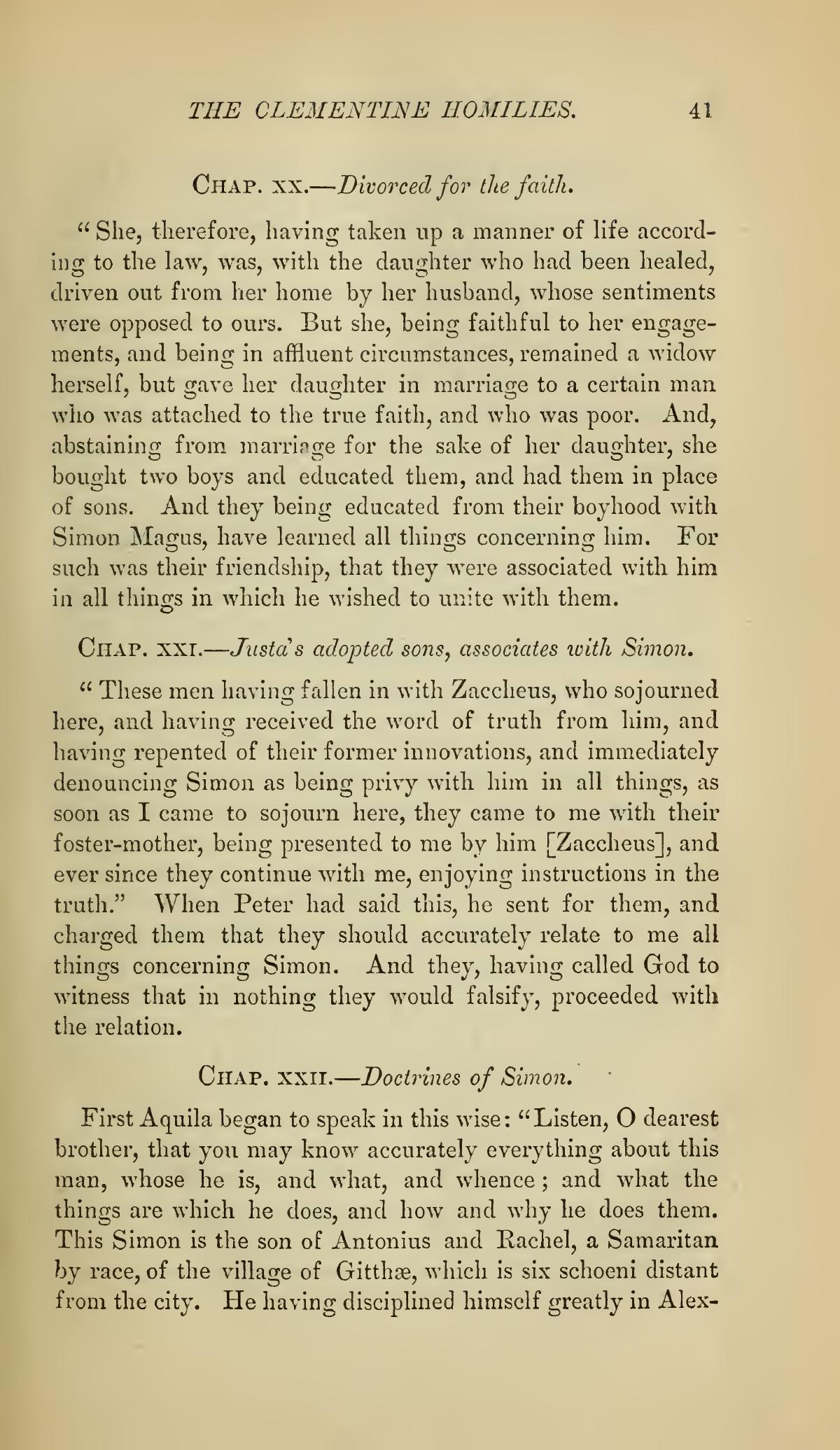
Klemens Vaazları, Roma piskoposu Klemens'in ağzından anlatılan ve Havari Petrus'un yolculuklarını, vaazlarını ve Simon Büyücü ile tartışmalarını konu alan Yunanca bir anlatıdır. Gerçekte 3. ve 4. yüzyıllarda Yahudi-Hristiyan çevrelerde derlenmiştir ve Latince Tanınmalar ile birlikte "Sahte Klemens" külliyatını oluşturur. Bu bölüm Ante-Nicene Christian Library'nin 1870 çevirisinden aktarılmıştır.
Bölüm xx. İman uğruna boşanma.
“Bu nedenle, yasa uyarınca bir yaşam tarzı benimsemiş olan kadın, iyileştirilmiş olan kızıyla birlikte, fikirleri bizimkine karşıt olan kocası tarafından evinden kovuldu. Fakat o, bağlılıklarına sadık kalarak ve varlıklı bir durumda olduğundan, kendisi dul kaldı, ancak kızını gerçek imana bağlı ve yoksul olan bir adamla evlendirdi. Kızı uğruna evlilikten uzak durarak iki oğlan çocuğu satın aldı, onları eğitti ve oğullarının yerine koydu. Bu çocuklar çocukluklarından itibaren Büyücü Simon ile birlikte eğitildikleri için, onunla ilgili her şeyi öğrendiler. Zira dostlukları öyle bir boyuttaydı ki, Simon’un kendileriyle birleşmek istediği her konuda onunla ortak hareket ediyorlardı.
Bölüm xxi. Justa’nın evlatlık oğulları, Simon’un yoldaşları.
“Bu adamlar, burada konaklayan Zakkay ile karşılaşıp ondan hakikat sözünü aldıklarında ve önceki bidatlerinden tövbe edip Simon’un her şeyine vakıf oldukları halde onu derhal ifşa ettiklerinde, ben buraya konaklamaya gelir gelmez, kendilerini bana takdim eden Zakkay ile birlikte koruyucu anneleriyle bana geldiler ve o zamandan beri hakikat öğretilerinden istifade ederek benimle kalmaya devam ediyorlar.” Petrus bunu söyledikten sonra onları çağırttı ve Simon ile ilgili her şeyi bana eksiksiz aktarmalarını emretti. Onlar da hiçbir şeyi tahrif etmeyeceklerine dair Tanrı’yı şahit tutarak anlatmaya başladılar.
Bölüm xxii. Simon’un öğretileri.
Önce Aquila şu şekilde konuşmaya başladı: “Dinle, ey sevgili kardeşim, bu adam hakkında her şeyi, kime ait olduğunu, ne olduğunu, nereden geldiğini, ne gibi işler yaptığını, bunları nasıl ve niçin yaptığını tam olarak bilesin. Bu Simon, şehirden altı skhoinos uzaklıktaki Gittha köyünden, köken olarak Samiriyeli olan Antonius ve Rachel’in oğludur. Kendini İskenderiye’de büyük ölçüde yetiştirmiş, büyüde çok güçlenmiş ve hırslı biri olarak, dünyayı yaratan Tanrı’dan bile daha üstün, yüce bir güç sayılmak istemektedir. Bazen Mesih olduğunu ima ederek kendisine Daimî Olan adını verir. Bu unvanı, her zaman ayakta kalacağını ve bedeninin yıkılmasına yol açacak hiçbir çürüme sebebi bulunmadığını ima etmek için kullanır. Dünyayı yaratan Tanrı’nın En Yüce olduğunu söylemez, ölülerin diriltileceğine de inanmaz. Yeruşalim’i reddeder ve onun yerine Gerizim Dağı’nı koyar. Bizim Mesihimiz yerine kendini ilan eder. Yasanın buyruklarını kendi küstahlığıyla açıklar ve gerçekten bir yargılamanın olacağını söyler, fakat bunu beklemez. Zira Tanrı tarafından yargılanacağına ikna olmuş olsaydı, Tanrı’nın Kendisine karşı saygısızlık etmeye cüret edemezdi. Bu nedenle, onun dini bir örtü olarak kullanarak hakikatin değerlerini bozduğunu bilmeyen ve onun bir şekilde gerçekleşeceğini söylediği umuda ve yargıya sadakatle inanan bazı kişiler mahvolmaktadır.
Bölüm xxiii. Simon Vaftizci’nin bir müridi.
“Fakat dinin öğretileriyle ilgilenmeye başlaması şu şekilde gerçekleşti. Gündüz vaftizcisi olan bir Yahya vardı; o aynı zamanda düzenleme gereği Rabbimiz İsa’nın öncüsüydü. Rabbin, güneşin on iki ayının sayısını taşıyan on iki elçisi olduğu gibi, onun da [Yahya’nın] ayın aylık hesabını tamamlayan otuz önder adamı vardı; bu sayının içinde, bunun dahi ilahi bir anlamdan yoksun kalmaması için Helena adında bir kadın bulunuyordu. Zira bir kadın, erkeğin yarısı sayılarak, tıpkı devri ayın tam seyrini tamamlamayan ayda olduğu gibi, otuzluk sayının eksik kısmını tamamlıyordu. Ancak bu otuz kişinin içinde Yahya tarafından en çok değer verilen ve birincisi Simon idi; Yahya’nın ölümünden sonra onun başa geçememesinin sebebi ise şöyleydi:
Bölüm xxiv. Makam elde etme hileleri.
“Simon büyü uygulamaları için Mısır’da bulunurken ve Yahya öldürülmüşken, önderliği arzulayan Dositheos, Simon’un öldüğünü yalan bir şekilde yaydı ve makama geçti. Fakat Simon çok geçmeden geri dönüp makamı kararlılıkla kendi hakkı olarak sahiplendiğinde, Dositheos ile karşılaştığında makamı talep etmedi; çünkü beklentilerinin ötesinde güce ulaşmış bir adamın bu güçten uzaklaştırılamayacağını biliyordu. Bu yüzden sahte bir dostlukla bir süreliğine Dositheos’un altında ikinci sırada yer almayı kabul etti. Fakat birkaç gün sonra otuz mürit arasındaki yerini alınca, Dositheos’u öğretileri doğru aktarmamakla karalamaya başladı. Bunu da onun doğru aktarmak istememesinden değil, cehaletinden yaptığını söyledi. Bir keresinde Dositheos, Simon’un bu kurnazca suçlamasının birçok kişinin gözündeki itibarını zedelediğini ve onların artık kendisini daimî olan olarak görmediklerini fark ederek öfkeyle mutat toplanma yerine geldi ve Simon’u bularak ona bir değnekle vurdu. Fakat değnek, Simon sanki dumandan ibaretmiş gibi bedeninin içinden geçip gitti. Bunun üzerine şaşkına dönen Dositheos ona, ‘Eğer daimî olan sensen, ben de sana tapınacağım’ dedi. Simon öyle olduğunu söyledi; kendisinin daimî olan olmadığını bilen Dositheos ise yere kapanıp ona tapındı ve kendini yirmi dokuz önderle bir tutarak Simon’u kendi saygın makamına yükseltti; böylece çok geçmeden, Simon ayakta dururken Dositheos yere düşüp öldü.
Bölüm xxv. Simon’un aldatmacası.
“Fakat Simon, Helena ile birlikte dolaşmakta ve gördüğünüz gibi şu ana kadar bile halkı kışkırtmaktadır. Bu Helena’yı en yüksek göklerden dünyaya indirdiğini söylemektedir; onun, her şeyi doğuran varlık ve bilgelik olarak kraliçe olduğunu, Yunanların ve barbarların onun uğruna savaştıklarını ve gözlerinin önünde yalnızca hakikatin bir suretinin bulunduğunu söyler; zira gerçekten hakikat olan o kadın, o zaman en yüce tanrının yanındaydı. Dahası, Yunan efsanelerinden derlenen bu tür şeyleri kurnazca açıklayarak birçok kişiyi aldatmaktadır; özellikle de birçok göze çarpan mucize gerçekleştirdiğinden, bunları büyüyle yaptığını bilmeseydik biz bile aldanabilirdik. Başlangıçta, dinin çıkarlarına zarar vermeden bu tür şeyler yaptığı sürece onun çalışma arkadaşlarıydık; fakat şimdi dindar olanları aldatmaya delice giriştiği için ondan ayrıldık.
Bölüm xxvi. Onun kötülüğü.
“Hatta cinayet işlemeye bile başladı; nitekim dostun dosta açılması gibi bize açıkladığına göre, korkunç büyülerle bir çocuğun ruhunu bedeninden ayırmış, bunu dilediği her şeyi sergilemek için yardımcısı yapmış ve çocuğun bir suretini çizerek uyuduğu iç odaya yerleştirmiştir; ilahi sanatlarla çocuğu bir zamanlar havadan yarattığını, resmini yaptıktan sonra onu tekrar havaya iade ettiğini söylemektedir. Bu işi nasıl yaptığını ise şöyle açıklar: İnsanın ilk ruhunun ısı niteliğine dönüşerek, bir su kabağı misali çevresindeki havayı kendine çekip içine emdiğini, ardından ruhun biçimi içindeyken onu suya dönüştürdüğünü; ruhun yoğunluğu sebebiyle dökülemeyen içindeki havayı kan niteliğine dönüştürdüğünü ve kanı katılaştırarak ete çevirdiğini; böylece et katılaştıktan sonra topraktan değil, havadan meydana gelmiş bir insan ortaya koyduğunu söyler. Böylece yeni tür bir insan yapabileceğine kendini inandırarak, değişimleri tersine çevirdiğini ve onu tekrar havaya iade ettiğini söylemiştir. Bunu başkalarına anlattığında ona inandılar; fakat onun törenlerinde hazır bulunan bizler, dini bir bilinçle ona inanmadık.
Özgün metin (İngilizce)
Chap. xx.—Divorced for the faith.
“She, therefore, having taken up a manner of life according to the law, was, with the daughter who had been healed, driven out from her home by her husband, whose sentiments were opposed to ours. But she, being faithful to her engagements, and being in affluent circumstances, remained a widow herself, but gave her daughter in marriage to a certain man who was attached to the true faith, and who was poor. And, abstaining from marriage for the sake of her daughter, she bought two boys and educated them, and had them in place of sons. And they being educated from their boyhood with Simon Magus, have learned all things concerning him. For such was their friendship, that they were associated with him in all things in which he wished to unite with them.
Chap. xxi.—Justa’s adopted sons, associates with Simon.
“These men having fallen in with Zaccheus, who sojourned here, and having received the word of truth from him, and having repented of their former innovations, and immediately denouncing Simon as being privy with him in all things, as soon as I came to sojourn here, they came to me with their foster-mother, being presented to me by him [Zaccheus], and ever since they continue with me, enjoying instructions in the truth.” When Peter had said this, he sent for them, and charged them that they should accurately relate to me all things concerning Simon. And they, having called God to witness that in nothing they would falsify, proceeded with the relation.
Chap. xxii.—Doctrines of Simon.
First Aquila began to speak in this wise: “Listen, O dearest brother, that you may know accurately everything about this man, whose he is, and what, and whence; and what the things are which he does, and how and why he does them. This Simon is the son of Antonius and Rachel, a Samaritan by race, of the village of Gitthæ, which is six schoeni distant from the city. He having disciplined himself greatly in Alexandria, and being very powerful in magic, and being ambitious, wishes to be accounted a certain supreme power, greater even than the God who created the world. And sometimes intimating that he is Christ, he styles himself the Standing One. And this epithet he employs, as intimating that he shall always stand, and as not having any cause of corruption so that his body should fall. And he neither says that the God who created the world is the Supreme, nor does he believe that the dead will be raised. He rejects Jerusalem, and substitutes Mount Gerizzim for it. Instead of our Christ, he proclaims himself. The things of the law he explains by his own presumption; and he says, indeed, that there is to be a judgment, but he does not expect it. For if he were persuaded that he shall be judged by God, he would not dare be impious towards God Himself. Whence some not knowing that, using religion as a cloak, he spoils the things of the truth, and faithfully believing the hope and the judgment which in some way he says are to be, are ruined.
Chap. xxiii.—Simon a disciple of the Baptist.
“But that he came to deal with the doctrines of religion happened on this wise. There was one John, a day-baptist, who was also, according to the method of combination, the forerunner of our Lord Jesus; and as the Lord had twelve apostles, bearing the number of the twelve months of the sun, so also he [John] had thirty chief men, fulfilling the monthly reckoning of the moon, in which number was a certain woman called Helena, that not even this might be without a dispensational significance. For a woman, being half a man, made up the imperfect number of the triacontad; as also in the case of the moon, whose revolution does not make the complete course of the month. But of these thirty, the first and the most esteemed by John was Simon; and the reason of his not being chief after the death of John was as follows:—
Chap. xxiv.—Electioneering stratagems.
“He being absent in Egypt for the practice of magic, and John being killed, Dositheus desiring the leadership, falsely gave out that Simon was dead, and succeeded to the seat. But Simon, returning not long after, and strenuously holding by the place as his own, when he met with Dositheus did not demand the place, knowing that a man who has attained power beyond his expectations cannot be removed from it. Wherefore with pretended friendship he gives himself for a while to the second place, under Dositheus. But taking his place after a few days among the thirty fellow-disciples, he began to malign Dositheus as not delivering the instructions correctly. And this he said that he did, not through unwillingness to deliver them correctly, but through ignorance. And on one occasion, Dositheus, perceiving that this artful accusation of Simon was dissipating the opinion of him with respect to many, so that they did not think that he was the standing one, came in a rage to the usual place of meeting, and finding Simon, struck him with a staff. But it seemed to pass through the body of Simon as if he had been smoke. Thereupon Dositheus, being confounded, said to him, ‘If you are the standing one, I also will worship you.’ Then Simon said that he was; and Dositheus, knowing that he himself was not the standing one, fell down and worshipped; and associating himself with the twenty-nine chiefs, he raised Simon to his own place of repute; and thus, not many days after, Dositheus himself, while he (Simon) stood, fell down and died.
Chap. xxv.—Simon’s deceit.
“But Simon is going about in company with Helena, and even till now, as you see, is stirring up the people. And he says that he has brought down this Helena from the highest heavens to the world; being queen, as the all-bearing being, and wisdom, for whose sake, says he, the Greeks and barbarians fought, having before their eyes but an image of truth; for she, who really is the truth, was then with the chiefest god. Moreover, by cunningly explaining certain things of this sort, made up from Grecian myths, he deceives many; especially as he performs many signal marvels, so that if we did not know that he does these things by magic, we ourselves should also have been deceived. But whereas we were his fellow-labourers at the first, so long as he did such things without doing wrong to the interests of religion; now that he has madly begun to attempt to deceive those who are religious, we have withdrawn from him.
Chap. xxvi.—His wickedness.
“For he even began to commit murder, as himself disclosed to us, as a friend to friends, that, having separated the soul of a child from its own body by horrid incantations, as his assistant for the exhibition of anything that he pleased, and having drawn the likeness of the boy, he has it set up in the inner room where he sleeps, saying that he once formed the boy of air, by divine arts, and having painted his likeness, he gave him back again to the air. And he explains that he did the deed thus. He says that the first soul of man, being turned into the nature of heat, drew to itself, and sucked in the surrounding air, after the fashion of a gourd; and then that he changed it into water, when it was within the form of the spirit; and he said that he changed into the nature of blood the air that was in it, which could not be poured out on account of the consistency of the spirit, and that he made the blood solidified into flesh; then, the flesh being thus consolidated, that he exhibited a man not [made] from earth, but from air. And thus, having persuaded himself that he was able to make a new [sort of] man, he said that he reversed the changes, and again restored him to the air. And when he told this to others, he was believed; but by us who were present at his ceremonies he was religiously disbelieved.
Bu metin neden önemli
Bu bölüm, Gnostisizmin efsanevi kurucusu sayılan Simon Büyücü'yü, onun Mısır'da büyü öğrenişini, yoldaşı Helena'yı ve kendini Yüce Güç olarak ilan edişini anlatır. Simon'a dair geç antik efsanelerin, sonradan Faust anlatısına kadar uzanan büyücü-filozof imgesinin kaynaklarından biridir. Metin, Gnostik iddiaların erken Hristiyan çevrelerde nasıl algılandığını da gösterir.
Bu eser Gnostisizm Koleksiyonu'nun parçasıdır →
- Kaynak eser
- The Clementine Homilies, Ante-Nicene Christian Library, cilt XVII, Edinburgh, T. & T. Clark, 1870
- Neşir
- MS 3-4. yüzyıl / 1870 (Ante-Nicene Christian Library çevirisi)
- Konum
- II. Vaaz, Simon Büyücü'nün tanıtıldığı bölüm
- Çeviren
- Şira Nur Uysal
- Dijital nüsha
- Internet Archive
Uysal, Ş. N. (Çev.). (2026). Klemens'e Atfedilen Vaazlar: Simon Büyücü. Kadim Kütüphane. https://kadimkutuphane.com/klemens-vaazlari-simon-buyucu@misc{kk_klemens_vaazlari_simon_buyucu,
author = {Uysal, Şira Nur},
title = {{Klemens'e Atfedilen Vaazlar: Simon Büyücü}},
year = {2026},
publisher = {Kadim Kütüphane},
url = {https://kadimkutuphane.com/klemens-vaazlari-simon-buyucu},
note = {Türkçe çeviri, özgün eser: Anonim (Romalı Klemens'e atfedilen)},
}Yeni metinlerden ilk sen haberdar ol
Tam çeviriler, PDF'ler ve yeni eklenen kaynaklar hazırlandıkça e-postana düşsün.