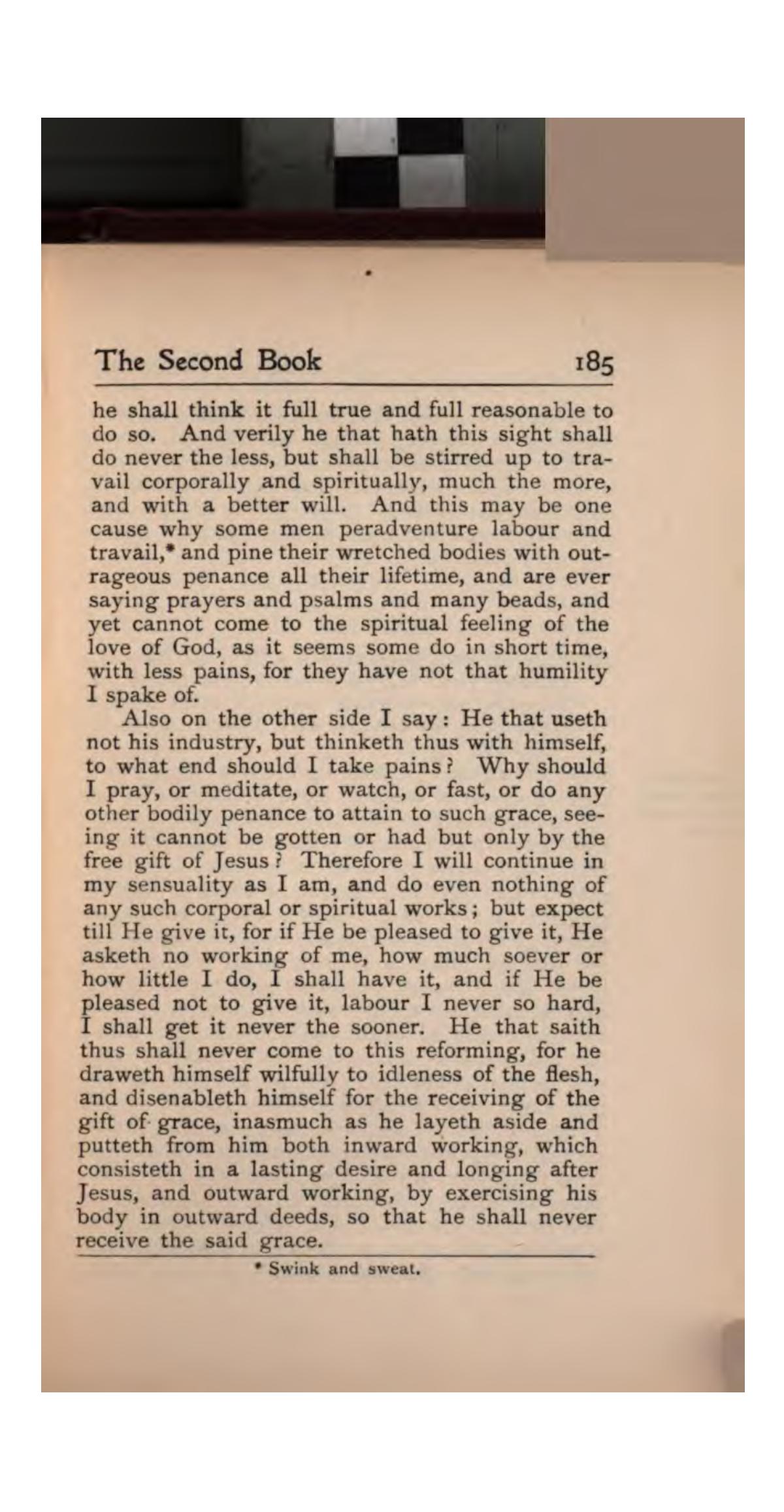
Walter Hilton, 1396'da ölen İngiliz Augustinus kanonudur. Nottinghamshire'daki Thurgarton Manastırı'nda yaşadı ve Orta Çağ İngiltere'sinin en çok okunan ruhani rehberlerinden biri sayılan Kemal Merdiveni'ni yazdı. Eser iki kitaptan oluşur ve içe dönük bir hayatın nasıl yaşanacağını anlatır. Bu bölüm İkinci Kitap'tan alınmıştır ve J. B. Dalgairns'in 1659 baskısına dayanan yayınından aktarılmıştır.
BÖLÜM III
Kudüs'e giden bir Hacı örneğiyle, bu Islahata ulaşmak niyetinde olan ve bu uğurda çalışan bir Ruhun nasıl davranması gerektiğini gösteren, Ruhsal bir Yolculuğa Giriş veya hayırlı bir Başlangıç
YİNE DE bu ıslahata daha çabuk ulaşabileceğin bir çalışma tarzını bilmeyi arzuladığından, bu çalışmada bildiğim en kısa ve en elverişli yardımı elimden geldiğince sana göstereceğim. Bunun nasıl olabileceğini de sana hayırlı bir hacı örneğiyle şu şekilde anlatayım. Kudüs'e gitmek isteyen bir adam vardı ve yolu bilmediği için, oraya giden yolu daha iyi bildiğine inandığı başka bir adamın yanına varıp o şehre ulaşıp ulaşamayacağını sordu. Diğer adam ise büyük zahmet ve meşakkat çekmeden oraya varamayacağını, zira yolun uzun ve tehlikeli olduğunu, azılı hırsızlar ve haydutlarla dolu olduğunu, insanın yolculuğu sırasında başına gelen başka birçok engelin bulunduğunu ve ayrıca oraya varıyormuş gibi görünen pek çok farklı yolun da olduğunu söyledi. Oraya doğru yolculuk eden pek çok insan çoğu zaman öldürülür ya da soyulur, bu yüzden de arzuladıkları o yere ulaşamazlar. Yine de tek bir yol vardır ki her kim o yolu tutar ve ona bağlı kalırsa, kefil olurum ki (dedi) o Kudüs şehrine varacaktır ve sık sık soyulsa, iyice dövülse ve yolculukta çok acı çekse bile asla canını kaybetmeyecek, ne katledilecek ne de ihmalden ölecektir; canı güvende olacaktır. Bunun üzerine hacı şöyle dedi: Yeter ki canım kurtulsun ve arzuladığım o yere varayım, yolda çekeceğim sıkıntı umurumda değil. Bu nedenle gerekli gördüğün şeyleri bana söyle ve öğütle; ben de kesin olarak senin öğüdüne uyacağıma söz veriyorum. O diğer adam cevap verip şöyle dedi: İşte seni doğru yola koyuyorum; yol budur ve sana söylediğim şeyi aklında tutmaya bak. Yolda seni durduracak veya engelleyecek ne görürsen, ne işitirsen veya ne hissedersen hisset, ona takılıp kalma, ona isteyerek rıza gösterme, onunla oyalanma, ona bakma, ondan hoşlanma, ondan korkma; fakat yolunda sebat ederek daima ileri git ve içinden her zaman Kudüs'te olmayı ne kadar çok istediğini düşün ve söyle; çünkü senin bütün arzun ve hasretin odur. Ondan başka hiçbir şeyi arzulama; insanlar seni soysa, malını mülkünü alsa, seni dövse, seninle alay etse, seni hor görse bile, canını güvende tutmak niyetindeysen onların bu yaptıklarına karşı direnme; aksine daha fazla zarar görmemek için gördüğün zarara razı ol ve sanki bütün bunlar hiçbir şeymiş gibi yoluna devam et. Ayrıca eğer insanlar hikâyeler anlatarak seni alıkoymaya çalışırsa ve seni eğlenceye çekmek veya hac yolculuğunu terk ettirmek ya da uzatmak için yalanlarla veya kuruntularla beslerse, onlara kulak asma, onlara karşılık verme ve Kudüs'te olmayı her şeyden çok istediğinden başka bir şey söyleme. Ve eğer insanlar sana hediyeler teklif eder, seni dünyalık mallarla zengin etmek isterlerse onları dinleme, sadece daima Kudüs'ü düşün. Eğer bu yolu tutar ve söylediğim şeyleri yaparsan, canına kefil olurum ki öldürülmeyeceksin, bilakis arzuladığın o yere varacaksın.
Şimdi bunu ruhsal olarak gayemize tatbik edelim: Kudüs, barışın temaşası demektir ve Tanrı'nın kusursuz sevgisindeki tefekkürü simgeler; zira tefekkür, hakiki barış olan Tanrı'nın temaşasından başka bir şey değildir. Öyleyse, eğer hakiki barışın bu mübarek temaşasına ermek ve Kudüs'e doğru hakiki bir hacı olmak istiyorsan, her ne kadar ben orada hiç bulunmamış olsam da gücüm yettiğince seni oraya giden yola koyacağım.
Yürüyeceğin o ana yolun başlangıcı, daha önce söylediğim gibi, alçakgönüllülükle imana ve mukaddes Kilise'nin kanunlarına dayanan İmandaki ıslahtır; zira kesinlikle güven ki daha önce günah işlemiş olsan bile, şayet şimdi mukaddes Kilise'nin kanununa göre Tövbe Sakramenti ile ıslah olduysan, doğru yoldasın demektir. Mademki güvenli yoldasın, gidişinde hız kazanmak ve hayırlı bir yolculuk yapmak istiyorsan, şu iki şeyi sık sık aklında tutman gerekir: Alçakgönüllülük ve Sevgi; ve kendine sık sık şöyle demelisin: Ben bir hiçim, hiçbir şeye sahip değilim, bir tek şey dışında hiçbir şeyi arzulamıyorum. Her ne kadar bu sözler açıkça her zaman düşüncende yer almasa da (zira bu gerekli değildir), niyetinde ve ruhunun daimi alışkanlığında bu sözlerin manasına daima sahip olmalısın. Alçakgönüllülük der ki: Ben bir hiçim, hiçbir şeye sahip değilim; Sevgi der ki: Bir tek şey dışında hiçbir şeyi arzulamıyorum, o da İsa'dır. İsa'nın hatırasıyla iyice pekiştirilmiş bu iki kıpırtı, aklın parmağıyla maharetle vurulduğunda ruhun lirinde güzel bir ahenk meydana getirir; çünkü birine ne kadar alçaktan vurursan, diğeri o kadar yüksek ses verir.
Özgün metin (İngilizce)
CHAPTER III
An Entry or good Beginning of a Spiritual Journey, showing how a Soul should behave herself in intending and working that will come to this Reforming, by example of a Pilgrim going to Jerusalem
NEVERTHELESS, for that thou covetest to know some manner of working by which thou mayest the sooner attain to this reforming, I shall show thee, as well as I can, the shortest and readiest help that I know in this working. And how that may be I shall tell thee by an example of a good pilgrim in this wise. There was a man that would go to Jerusalem, and because he knew not the way he came to another man, who he believed knew the way thither better, and asked him whether he might come to that city, who answered that he could not come thither without great pains and travail, for the way is long and perilous, and full of great thieves and robbers and many other hindrances there be that befall a man in his going, and also there be many several ways as it seemeth leading thitherward. And many men travelling thitherward are oftentimes killed or robbed, and so may not come to that place which they desire. Nevertheless, there is one way, the which whosoever taketh and holdeth to it, I will undertake (saith he) he shall come to that city of Jerusalem, and shall never lose his life, nor be slain, nor die by default, though he should oft be robbed and well beaten, and suffer much pain in the going, yet his life shall be safe. Then said the pilgrim, so I may have my life saved, and come to the place that I covet, I care not what mischief I suffer in going. And therefore, tell and advise me what you think necessary, and I promise you on a certainty that I will follow your counsel. That other man answered and said thus: Lo, I set thee in the right way; this is the way, and see that thou bear in mind that which I tell thee. Whatsoever thou seest, hearest, or feelest, that would stay or hinder thee in the way, stick not at it, willingly consent not to it, abide not with it, behold it not, like it not, fear it not, but still go forward holding on thy way, and ever think and say with thyself that thou fain wouldst be at Jerusalem, for that thou covetest and that thou desirest; and nought else but that, and if men rob thee and spoil thee, beat thee, scorn thee, despise thee, do not thou strive against such their doings, if thou mean to have thy life safe, but be content with the harm thou receivest, and hold on thy way, as if all that were nothing, lest thou receive more harm. Also if men would seek to stay thee by telling tales, and feed thee with lies or conceits to draw thee to merriment, or to forsake or prolong thy pilgrimage, give them a deaf ear and answer them not again, and say naught else but that thou wouldst fain be at Jerusalem. And if men proffer thee gifts, and would make thee rich with worldly goods, listen not to them, but think ever on Jerusalem. And if thou wilt hold this course and do that which I have said, I will undertake for thy life, that thou shalt not be slain, but that thou shalt come to that place that thou desirest.
Now to apply this spiritually to our purpose: Jerusalem is, as much as to say, a sight of peace; and betokeneth contemplation in perfect love of God; for contemplation is nothing else but a sight of God, which is very peace. Then if thou covet to come to this blessed sight of very peace, and be a true pilgrim towards Jerusalem, though it be so that I was never there, nevertheless, as far forth as I can, I shall set thee in the way towards it.
The beginning of the high way, in which thou shalt go, is reforming in Faith, grounded humbly on the faith and on the laws of holy Church as I have said before; for trust assuredly, though you have sinned heretofore, if you be now reformed by the Sacrament of Penance, after the law of holy Church, that thou art in the right way. Now then, since thou art in the safe way, if thou wilt speed in thy going and make a good journey, it behoveth thee to hold these two things often in thy mind: Humility and Love; and often say to thyself, I am nothing, I have nothing, I covet nothing, but one. Thou shalt have the meaning of these words in thine intent, and in the habit of thy soul perpetually, though thou have them not always expressly in thy thought (for that is not necessary). Humility saith, I am nothing, I have nothing; Love saith, I covet nothing, but one, and that is Jesus. These two stirrings well fastened, with the minding of Jesus, make good music in the harp of the soul, when they be cunningly struck upon with the finger of reason; for the lower thou smitest upon the one, the higher soundeth the other.
Bu metin neden önemli
Bu bölümde Hilton, ruhani yolculuğu Kudüs'e giden bir hacının hikâyesiyle anlatır. Yol uzun ve tehlikelidir, ama tek bir doğru yol vardır ve hacı ne olursa olsun yolundan sapmamalıdır. Hilton Kudüs'ü huzurun görüntüsü olarak yorumlar ve yolculuğu alçakgönüllülük ile sevginin birlikte yürütüldüğü bir iç çalışma olarak açıklar. Metin, Orta Çağ İngiltere'sindeki mistik teolojinin ahlaki ve pratik yönünü doğrudan gösterir.
Bu eser Mistik Teoloji Koleksiyonu'nun parçasıdır →
- Kaynak eser
- Walter Hilton, The Scale (or Ladder) of Perfection, J. B. Dalgairns'in 1659 baskısına dayanan yayını, Londra
- Neşir
- 14. yüzyıl sonu / 19. yüzyıl baskısı
- Konum
- II. Kitap, Kudüs'e giden hacının örnek anlatısı
- Çeviren
- Şira Nur Uysal
- Dijital nüsha
- Internet Archive
Uysal, Ş. N. (Çev.). (2026). Hilton, Kemal Merdiveni: Kudüs'e Giden Hacı. Kadim Kütüphane. https://kadimkutuphane.com/hilton-kemal-merdiveni-kudus-hacisi@misc{kk_hilton_kemal_merdiveni_kudus_hacisi,
author = {Uysal, Şira Nur},
title = {{Hilton, Kemal Merdiveni: Kudüs'e Giden Hacı}},
year = {2026},
publisher = {Kadim Kütüphane},
url = {https://kadimkutuphane.com/hilton-kemal-merdiveni-kudus-hacisi},
note = {Türkçe çeviri, özgün eser: Walter Hilton},
}Yeni metinlerden ilk sen haberdar ol
Tam çeviriler, PDF'ler ve yeni eklenen kaynaklar hazırlandıkça e-postana düşsün.