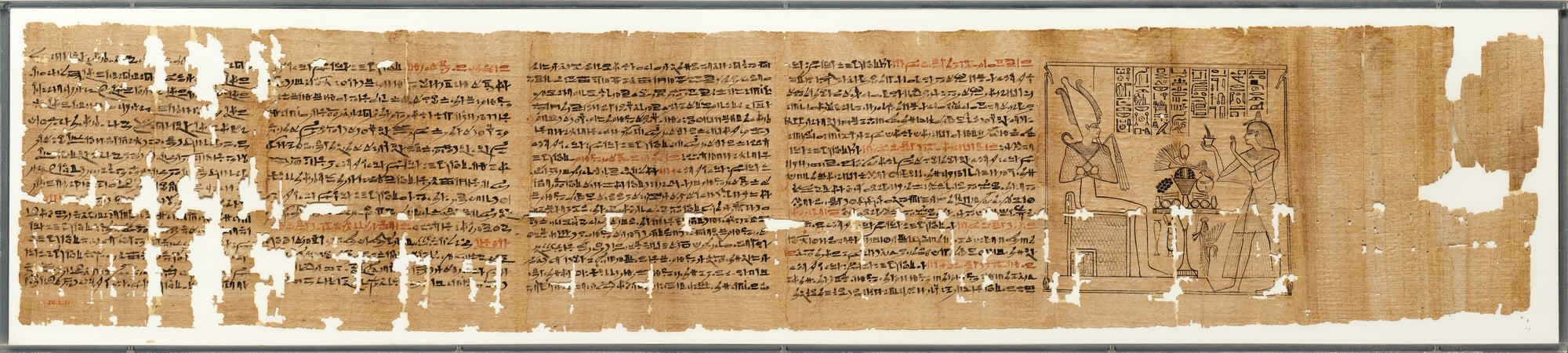
Herodotos, Tarih adlı eserinin ikinci kitabında bütünüyle Mısır'a yönelir ve orada gördüğü ibadetin kadimliği karşısında derin bir hayranlığa kapılır. Rahiplerin olağanüstü dinî titizliğini, kurban edilecek hayvanların nasıl sınandığını, hangi tanrıya hangi hayvanın adandığını, tanrı adlarının Mısır'dan Hellas'a nasıl geçtiğini ve Bubastis'ten Papremis'e altı büyük bayramın nasıl kutlandığını ayrıntılarıyla anlatır. Kutsalın ölçülü ve törensel biçimlerinin kaynağını Nil kıyısında arayan bu anlatı, Batı'nın dinsel hayal gücünün köklerine dair erken bir tanıklıktır.
Mısır hakkında sözü uzatacağım, çünkü orada başka hiçbir ülkede bulunmayan sayısız harika vardır ve gösterdiği eserler de anlatılamayacak kadar büyüktür; bu yüzden ona dair daha çok şey söylenecektir.
Mısırlılar, kendi iklimlerine -ki başka hiçbir ülkeninkine benzemez- ve nehirlerine -ki doğası bütün öbür nehirlerden farklıdır- uygun olarak, hemen her konuda öbür insanlara zıt töre ve adetler kurmuşlardır: kadınları çarşıya çıkıp ticaret yapar, erkekleri evde oturup dokuma dokur; başkaları atkıyı yukarı doğru iterken Mısırlılar aşağı doğru iterler; erkekler yüklerini başlarında, kadınlar omuzlarında taşır; kadınlar ayakta, erkekler çömelerek su döker; ev içinde def-i hacet edip sokakta açıkta yemek yerler, bunun gerekçesi olarak da çirkin fakat zorunlu şeylerin gizlice, çirkin olmayanların ise açıkça yapılması gerektiğini söylerler; hiçbir kadın ne erkek ne de kadın tanrıya kâhinlik etmez, erkekler ise her ikisine de kâhinlik eder; oğullar ana babalarını beslemeye zorlanmaz, istemezlerse yapmazlar, ama kızlar -istemeseler dahi- buna mecburdurlar.
Başka ülkelerin rahipleri saçlarını uzatır, Mısır'da ise başlarını tıraş ederler; başka insanlarda yas tutanlar saçını kısaltır, Mısırlılar ise birileri öldüğünde -daha önce tıraşlı olan- baş ve çene saçlarını uzatmaya bırakırlar; başka insanlar günlük yaşayışlarını hayvanlardan ayrı sürerken Mısırlılar hayvanlarla birlikte yaşar; başkaları buğday ve arpayla beslenirken bunlarla geçinen bir Mısırlı için bu büyük bir ayıptır, onlar ekmeklerini darıdan yaparlar; hamuru ayaklarıyla, kili ise elleriyle -ki gübreyi de elleriyle toplarlar- yoğururlar; başka insanlar, Mısırlılardan öğrenmedikçe, erkeklik uzuvlarını doğanın verdiği haliyle bırakırken Mısırlılar sünnet olur; erkekler iki, kadınlar tek giysi giyer; başkaları yelken halatlarını geminin dışından bağlarken Mısırlılar içeriden bağlar; son olarak yazıda ve çakıl taşlarıyla hesap yaparken Yunanlar eli soldan sağa götürür, Mısırlılar ise sağdan sola -ve böyle yaparken kendilerinin sağa doğru, Yunanların ise sola doğru yazdığını söylerler; iki türlü yazı kullanırlar, birine kutsal, ötekine sıradan derler.
Mısırlılar bütün insanlardan çok daha dindardır ve bu konuda şu adetlere sahiptirler: tunç kadehlerden içer, bunları her gün -yalnız birkaçı değil, hepsi- ovup parlatırlar; her zaman yeni yıkanmış keten giysiler giyerler ve buna özellikle özen gösterirler; güzellikten çok temizliği yeğleyerek temizlik uğruna sünnet olurlar. Rahipler her iki günde bir bütün bedenlerini tıraş ederler, tanrılara hizmet ederken üzerlerinde bit ya da başka pis bir şey bulunmasın diye; rahipler yalnız keten giysi ve papirüs sandalet giyer, başka giysi ya da sandalet giyemezler; günde iki, gece iki kez soğuk suyla yıkanırlar; sayısı neredeyse sonsuz denecek kadar başka dinsel görev de yerine getirirler. Buna karşılık az da olmayan iyilikler görürler, çünkü kendi mallarından hiçbir şey harcamazlar; onlar için kutsal ekmek pişirilir, her gün bol miktarda sığır ve kaz eti gelir, üzüm şarabı da verilir; ama balık tatmalarına izin yoktur. Mısırlılar topraklarına hiç bakla ekmezler, kendiliğinden yetişenleri de ne çiğ yerler ne pişirirler; rahipler ise bu baklagile bakmaya bile katlanamaz, onu pis sayarlar. Her tanrı için tek bir rahip değil birçok rahip vardır, bunlardan biri baş rahiptir, bir rahip öldüğünde yerine oğlu geçer.
Sığır cinsinin erkeklerini Epaphos'a ait sayarlar ve onun için hayvanları şöyle sınarlar: rahip hayvanın üzerinde tek bir siyah kıl bile görürse onu kurbana temiz saymaz; bu iş için görevlendirilmiş bir rahip hayvanı hem ayaktayken hem sırtüstü yatırılmışken inceler, dilini de çekip -başka bir yerde anlatacağım işaretler bakımından- temiz olup olmadığına bakar; kuyruğunun kıllarının doğal biçimde bitip bitmediğine de bakar; bütün bu bakımlardan temizse boynuzlarına papirüs sararak damgalar, üzerine mühür kili sürüp yüzüğünün mührünü basar, ardından hayvanı götürürler. Mühürlenmemiş bir hayvanı kurban edenin cezası ise ölümdür.
Hayvan böyle sınanır; kurban töreninin usulü de şöyledir: mühürlü hayvanı kurban edilecekleri sunağa götürüp ateş yakarlar; sunağın üzerine şarap dökerek hayvanın üzerine akıtır ve tanrıya seslendikten sonra boğazını keser, keserken de başını gövdesinden ayırırlar. Gövdeyi yüzerler, ama başına önce birçok beddua ederler; çarşıları olup aralarında ticaret yapan Yunanlar bulunanlar başı çarşıya götürüp satar, aralarında Yunan bulunmayanlar ise nehre atarlar. Başlara ettikleri beddua şudur: kendilerine ya da bütün Mısır ülkesine gelecek bir kötülük varsa, bu kötülük onun yerine bu başın üzerine gelsin diye yakarırlar. Kurban edilen hayvanların başları ve üzerlerine şarap dökülmesi konusunda bütün Mısırlılar her kurbanda aynı adete uyar; bu adet yüzünden hiçbir Mısırlı ne bu ne başka bir hayvanın başını yemez.
Kurbanların iç organlarını çıkarma ve yakma usulü ise kurbana göre değişir; burada onların en büyük saydıkları ve en büyük şenliği kutladıkları tanrıçaya sunulan kurbanı anlatacağım. Danayı yüzüp beddua ettikten sonra alt bağırsaklarının tümünü çıkarır, ama üst bağırsakları ve yağı bedende bırakırlar; bacaklarını, sağrı ucunu, omuzlarını ve boynunu keserler; sonra hayvanın gövdesinin geri kalanını kutsanmış ekmekler, bal, kuru üzüm, incir, günnük, mür ve daha başka baharatlarla doldurup üzerine bolca zeytinyağı dökerek kurban ederler. Kurbanı oruçlu olarak keserler; kurban yanarken hepsi dövünerek yas tutar, dövünmeyi bitirdiklerinde ise kurbandan yakılmadan kalanı bir şölen olarak önlerine koyarlar.
Sığırların temiz erkekleri -hem yetişkinleri hem buzağıları- bütün Mısırlılarca kurban edilir; dişileri ise kurban edilemez, çünkü onlar İsis'e adanmıştır; zira İsis'in sureti, Yunanların İo'yu resmettiği gibi, inek boynuzlu bir kadın biçimindedir, ve bütün Mısırlılar istisnasız inekleri başka her sığırdan çok daha fazla kutsal sayarlar; bu yüzden ne Mısırlı bir erkek ne de kadın bir Yunanlıyı ağzından öper, onun bıçağını, şişini ya da kazanını kullanmaz, hatta temiz bir hayvanın eti bile bir Yunanlının bıçağıyla kesilmişse tatmaz. Ölen bu tür sığırları şöyle gömerler: dişileri nehre atarlar, erkekleri ise her topluluk kendi kasabasının kenar mahallesinde -yerini belli etmek için bir boynuzu, kimi zaman ikisi de dışarıda kalacak biçimde- gömer; gövdeler çürüyüp vakti geldiğinde, Prosopitis denen adadan -Delta'da bulunan, çevresi dokuz skhoinos olan bir ada- her kente bir tekne gelir. Bu Prosopitis adasında, başka birçok kent yanında, teknelerin sığır kemiklerini almaya geldiği Atarbekhis adlı bir kent vardır, orada bir Afrodit tapınağı kurulmuştur. Bu kentten birçok kişi çeşitli yönlere dağılır, sığırların kemiklerini kazıp çıkardıktan sonra alıp götürürler ve bir araya gelerek hepsini tek bir yerde gömerler. Sığırları gömdükleri gibi öbür evcil hayvanlarını da öldüklerinde gömerler; çünkü onlar için de aynı yasa geçerlidir, onları da öldürmekten sakınırlar.
Teban Zeus'a tapınağı bulunan ya da Teb bölgesinden olan herkes keçi kurban eder, koyundan sakınır; çünkü Mısırlıların hepsi aynı tanrılara aynı ölçüde saygı göstermez -yalnız İsis ile Osiris (Dionysos oldukları söylenir) hepsince eşit saygı görür. Mendes'te tapınağı olan ya da Mendes bölgesinden olanlar ise keçiden sakınıp koyun kurban ederler. Tebliler ve onlara uyarak koyundan sakınanlar bu adetin şu sebeple kurulduğunu anlatır: Herakles, Zeus'u görmeyi ne kadar istese de Zeus görünmek istememiş; sonunda Herakles yalvarmakta o kadar ısrar etmiş ki Zeus şu çareyi bulmuş: bir koçu yüzüp kesik başını önüne tutarak postunu üzerine giymiş ve öyle görünmüş. Bu yüzden Mısırlılar Zeus'un suretini koç yüzlü yaparlar; hem Mısırlılardan hem Etiyopyalılardan gelen, iki dilin karışımı bir dil konuşan Ammonlar da onları örnek alıp aynısını yaparlar; bana kalırsa Ammonlar adlarını da bu tanrıdan almışlardır, çünkü Mısırlılar Zeus'a Amun derler. Tebliler bu yüzden koç kurban etmez, onu kutsal sayarlar; ama yılda bir gün, Zeus bayramında, tek bir koçu aynı şekilde kesip yüzerler ve postuyla Zeus'un suretini örterler, sonra yanına bir Herakles sureti getirirler. Bunun ardından tapınakta bulunan herkes koç için dövünerek yas tutar, sonra onu kutsal bir mezara gömerler.
Herakles'in on iki tanrıdan biri olduğunu duydum; ama Yunanların bildiği öbür Herakles'i Mısır'ın hiçbir yerinde işitemedim. Mısırlıların Herakles adını Yunanlardan almadığını, tersine -Amphitryon'un oğluna bu adı veren- Yunanların Mısırlılardan aldığını gösteren birçok kanıttan en başta geleni şudur: bu Herakles'in ana babası Amphitryon ile Alkmene, soyca ikisi de Mısırlıdır; ayrıca Mısırlılar ne Poseidon'un ne de Dioskuroi'nin adını bildiklerini, bunları öbür tanrılar arasına almadıklarını söylerler; oysa herhangi bir tanrının adını Yunanlardan almış olsalardı, o dönemde de -tıpkı şimdiki gibi- denize açılan gezgin Yunanlar bulunduğuna göre, bu adları Herakles'in adından bile daha çok akılda tutmaları beklenirdi. Gerçekte Herakles çok eski bir Mısır tanrısıdır; kendi söylediklerine göre, on iki tanrının -ki Herakles bunlardan biri sayılır- sekiz tanrıdan doğuşundan Amasis'in tahta çıkışına dek on yedi bin yıl geçmiştir.
Bu konularda elimden geldiğince kesin bir şey öğrenmek isteyerek Fenike'nin Sur kentine de gittim, orada kutsal bir Herakles tapınağı bulunduğunu duymuştum; tapınağın birçok adak eşyasıyla zengince donatıldığını gördüm, özellikle biri saf altından, öteki geceleri parlayan bir zümrüt taşından iki sütun dikkatimi çekti. Tanrının rahipleriyle konuşup tapınaklarının ne zamandır kurulu olduğunu sordum; onların da Yunanlarla anlaşmadığını gördüm, çünkü Sur kurulduğunda tapınağın da kurulduğunu, kentte oturmaya başlayalı iki bin üç yüz yıl geçtiğini söylediler. Sur'da bir başka Herakles tapınağı daha gördüm, ona Thasoslu lakabı veriliyordu; Thasos'a da gittim ve orada, Europa'yı aramaya çıkıp Thasos'u kolonileştiren Fenikelilerin kurduğu bir Herakles tapınağı buldum; bunlar Amphitryon oğlu Herakles'in Hellas'ta doğuşundan tam beş kuşak önce olmuştur. Böylece araştırmalarım Herakles'in eski bir tanrı olduğunu açıkça gösteriyor; bana kalırsa iki Herakles tapınağı kurup birine ölümsüz bir tanrı olarak Olympos lakabıyla kurban sunan, ötekine ise bir kahraman olarak ölülere yapılan türden adaklar sunan Yunanlar en doğrusunu yapmaktadır.
Yunanların düşünmeden anlattığı birçok masal arasında, Herakles hakkında söyledikleri özellikle saçmadır: Mısır'a geldiğinde Mısırlıların onu çelenklerle süsleyip Zeus'a kurban etmek üzere alayla götürdükleri, onun bir süre sessiz kaldığı, ama sunakta kurban edilmeye başlanınca gücünü kullanıp hepsini öldürdüğü söylenir. Bana kalırsa Yunanlar bu masalı anlatırken Mısırlıların doğasını ve adetlerini hiç bilmiyorlar; çünkü domuz, sığırların temiz erkekleri, buzağılar ve kazlar dışında hayvan bile kurban etmesi yasak olan bir halk nasıl insan kurban etsin? Üstelik tek bir kişi -üstelik kendi söyledikleri gibi bir insan- olan Herakles'in binlerce kişiyi öldürmesi doğada nasıl mümkün olsun? Bunları söyledikten sonra, hem tanrılardan hem kahramanlardan bu sözlerim için bağışlanma dileriz.
Andığım Mısırlıların keçi -ister dişi ister erkek- kurban etmemesinin sebebi şudur: Mendesliler Pan'ı sekiz tanrıdan biri sayar (bu sekiz tanrının on iki tanrıdan önce var olduğunu söylerler); ressamlar ve heykeltıraşlar Pan'ın suretini, tıpkı Yunanların yaptığı gibi, keçi yüzlü ve keçi bacaklı yaparlar, onun gerçekten böyle olduğunu değil öbür tanrılara benzediğini düşünerek; ama bu biçimde neden gösterdiklerini söylemeyi yeğlemiyorum. Mendesliler bütün keçileri, dişilerden çok erkekleri sayar (keçi çobanları da öbür çobanlardan daha saygın tutulur), ama keçilerden biri özellikle kutsal sayılır, o öldüğünde bütün Mendes bölgesinde büyük bir yas tutulur; hem keçiye hem Pan'a Mısır dilinde Mendes denir. Üstelik benim yaşadığım dönemde o bölgede bir tekenin bir kadınla açıkça çiftleştiği, bunun herkesin görebileceği biçimde olduğu bir olağanüstülük yaşanmıştır.
Domuz Mısırlılarca iğrenç bir hayvan sayılır: yolda geçerken biri bir domuza dokunacak olsa, hemen elbiseleriyle birlikte nehre girip suya dalar; domuz çobanları ise -yerli Mısırlı olsalar bile- başka herkesten farklı olarak Mısır'daki hiçbir tapınağa giremezler, kimse onlardan birine kızını vermek ya da onlardan birinden kız almak istemez; domuz çobanları ise kendi aralarında evlenip kız alıp verirler. Mısırlılar öbür tanrılara domuz kurban etmeyi doğru bulmaz, yalnız Ay'a ve Dionysos'a, aynı zamanda ve aynı dolunayda, domuz kurban edip etini yerler; bütün öbür bayramlarında domuzdan tiksinirken neden bu bayramda kurban ettiklerine dair Mısırlıların anlattığı bir öykü vardır, bunu biliyorum ama anlatmayı uygun bulmuyorum. Ay'a domuz kurbanı şöyle yapılır: rahip hayvanı kestikten sonra kuyruk ucunu, dalağı ve zarı bir araya getirip hayvanın karnını saran bütün yağla örter, sonra ateşte sunar; geri kalan eti ise kurbanı kestikleri dolunay günü yerler, ondan sonraki hiçbir günde tatmazlar; yoksullar ise, olanakları kıt olduğundan, hamurdan domuz biçimleri yapıp pişirir ve bunları kurban ederler.
Dionysos bayramının arifesinde herkes kendi kapısının önünde bir domuzun boğazını keser, sonra domuzu kendisine satmış olan çobana geri verir; Dionysos bayramının geri kalanını Mısırlılar, koro dansları dışında, hemen her yönden Yunanlar gibi kutlarlar, ama fallos yerine başka bir düzenek icat etmişlerdir: yaklaşık bir arşın boyunda, iplerle oynatılan, kadınların köy köy dolaştırdığı, erkeklik uzvu -bedenin geri kalanından pek de küçük olmayan biçimde- oynatılabilen figürler. Önlerinde bir kaval çalınır, arkalarından Dionysos'u öven şarkılar söylenerek yürünür. Bu uzvun neden doğal olandan büyük yapıldığı ve neden yalnız o kısmın oynatıldığına dair kutsal bir öykü anlatılır.
Bana kalırsa Amytheon oğlu Melampus bu kurban törenlerinden habersiz değildi, tersine onları biliyordu; çünkü Yunanlara Dionysos'un adını, kurban usulünü ve fallos alayını ilk tanıtan odur. Doğrusunu söylemek gerekirse o bunu açıklarken konuyu tam kavratmamış, ondan sonra gelen bilge kişiler daha geniş biçimde anlatmışlardır. Dionysos için taşınan fallosu öğreten Melampus'tur, Yunanlar bunu yapmayı ondan öğrenmiştir. Ben derim ki, Melampus yetenekli bir adam olarak kendine bir kehanet sanatı kurmuş, Mısır'dan öğrendiklerini Yunanlara -bazı küçük değişikliklerle- Dionysos'la ilgili konular başta olmak üzere aktarmıştır: çünkü Mısır'da tanrıya yapılan tapınmanın Yunanlardaki ile rastlantıyla aynı olduğunu söylemeyeceğim, zira öyle olsaydı bu ayinler Yunan tapınmasına özgü olur, sonradan getirilmiş olmazdı; Mısırlıların bu ya da başka herhangi bir adeti Yunanlardan aldığını da söylemeyeceğim; bence en olası olan, Melampus'un Dionysos'a dair bilgileri Surlu Kadmos'tan ve onunla birlikte Fenike'den şimdi Boiotia dediğimiz topraklara gelenlerden öğrenmiş olmasıdır.
Hemen bütün tanrıların adları Hellas'a Mısır'dan gelmiştir; araştırmam bunun Barbarlardan geldiğini gösteriyor, bence en olası olarak da Mısır'dan gelmiştir, çünkü -Poseidon, Dioskuroi ve daha önce söylediğim gibi- Hera, Hestia, Themis, Kharisler ve Nereidler dışında, öbür bütün tanrıların adları Mısırlılarda öteden beri vardır. Burada söylediğim, Mısırlıların kendilerinin düşündüğüdür; adını bilmediklerini söyledikleri tanrılara gelince, bence bunların adlarını Pelasglardan almışlardır, yalnız Poseidon hariç -bu tanrıyı Yunanlar Libyalılardan öğrenmiştir, çünkü Poseidon adını başlangıçtan beri taşıyıp ona hep saygı gösteren, Libyalılardan başka hiçbir halk yoktur. Mısırlıların kahramanlara tapma adeti de yoktur.
Yunanlar bunları ve andığım öbür adetleri Mısırlılardan almıştır; ama Hermes sûretlerini fallosla yapma adetini Mısırlılardan değil Pelasglardan öğrenmişlerdir, bunu Yunanlar arasında ilk benimseyen Atinalılar olmuş, onlardan da öbürlerine geçmiştir; çünkü Atinalılar Yunanlar arasında sayılmaya başladığı sırada Pelasglar onların topraklarında birlikte oturmaya başlamış, işte bu yüzden Yunan sayılmaya başlamışlardır. Pelasglardan alıp Samothrakelilerin uyguladığı Kabeiroi gizemlerine erdirilmiş olan kişi, sözümün anlamını bilir; çünkü Atinalılarla birlikte oturan bu Pelasglar daha önce Samothrake'de yaşıyorlardı, Samothrakeliler gizemlerini onlardan almıştır. Böylece Hermes sûretlerini fallosla yapan ilk Yunanlar, Pelasglardan öğrenerek, Atinalılar olmuştur; Pelasglar bu konuda kutsal bir öykü anlatırlar, bu öykü Samothrake gizemlerinde açıklanır.
Eskiden Pelasglar bütün kurbanlarını tanrılara dua ederek sunarlardı -bunu Dodona'da duyduğumdan biliyorum- ama hiçbirine unvan ya da ad vermezlerdi, çünkü henüz duymamışlardı; onlara "tanrılar" (theous) derlerdi, çünkü her şeyi düzene koyup (thentes) dağıtan varlıklar olduklarını düşünüyorlardı. Sonra, uzun zaman geçtikten sonra, tanrıların adlarını Mısır'dan öğrendiler -Dionysos hariç, onun adını çok daha sonra öğrendiler; bir süre sonra Pelasglar bu adlar konusunda Dodona Kâhinhanesi'ne danıştılar, çünkü bu kutsal yer Yunanlar arasındaki kâhinhanelerin en eskisi sayılır, o dönemde de tek kâhinhaneydi. Pelasglar Dodona'ya Barbarlardan gelen adları benimseyip benimsememeleri gerektiğini sorduklarında, kâhin onlara bu adları kullanmalarını buyurdu. Bundan sonra tanrıların adlarını kullanarak kurban sundular, Yunanlar da bu adları sonradan Pelasglardan aldı;
ama tanrıların her birinin nereden doğduğu, hepsinin başlangıçtan beri var olup olmadığı, nasıl bir biçimde oldukları -bunları sanki dün ya da önceki gün öğrenmişler gibidir: çünkü Hesiodos ile Homeros, bence, benden en çok dört yüz yıl önce yaşamıştır, daha fazla değil; Yunanlara bir tanrılar soyağacı kuran, tanrılara unvanlar veren, aralarında onur ve sanatları paylaştıran, biçimlerini belirleyen bunlardır; bunlardan önce yaşadığı söylenen ozanlar ise bence gerçekte onlardan sonra gelmiştir. Bunların ilk kısmını Dodona'nın kadın kâhinleri, Hesiodos ile Homeros'a dair kısmını ise ben söylüyorum.
Hem Yunanlardaki hem Libya'daki kâhinhaneler konusunda Mısırlılar şu öyküyü anlatır. Teban Zeus'un rahipleri bana, tapınakta görevli iki kadının Fenikeliler tarafından Teb'den kaçırıldığını, bunlardan birinin Libya'ya, ötekinin Yunanlara satıldığını duyduklarını, adı geçen halklar arasında kâhinhaneleri ilk kuranların bu kadınlar olduğunu söylediler; bu öyküyü nasıl bu kadar tam bildiklerini sorduğumda, rahiplerin bu kadınları aramak için büyük bir çaba harcadığını ama bulamadıklarını, sonradan anlattıkları bu öyküyü duyduklarını söylediler.
Bunu Teb'deki rahiplerden duydum; şimdi anlatacağımı ise Dodona'nın kadın kâhinleri söylüyor. Onlara göre Teb'den Mısır'a iki kara güvercin uçmuş, biri Libya'ya, öteki kendi topraklarına gelmiş. İkincisi bir meşe ağacına konup insan sesiyle konuşarak orada bir Zeus kâhinhanesi kurulması gerektiğini söylemiş; bunun tanrılardan gelen bir bildirim olduğunu düşünüp öyle yapmışlar; Libyalılara giden güvercin ise Libyalılara bir Ammon Kâhinhanesi kurmalarını buyurmuş, bu da yine Zeus'a aittir. Dodona'nın kadın kâhinleri -en yaşlıları Promeneia, ondan sonra Timarete, en genci Nikandra- bana bunları anlattı, tapınakta görevli öbür Dodonalılar da onlarla aynı şeyi söyledi.
Bense bu konuda şöyle düşünüyorum: eğer Fenikeliler gerçekten bu kutsal kadınları kaçırıp birini Libya'ya birini Hellas'a sattıysa, sanırım şimdi Hellas -eskiden Pelasgia- denen ülkede bu kadın Thesprotların topraklarına satılmış olmalı; orada köle iken gerçek bir meşe ağacının altında bir Zeus sunağı kurmuş olmalı -Teb'deki Zeus tapınağının bir hizmetkârı olarak geldiği yerde onu anmak istemesi doğaldı; sonra Yunan dilini öğrenince bir kâhinhane kurmuş, sanırım kız kardeşinin de kendisini satan aynı Fenikelilerce Libya'ya satıldığını anlatmıştır.
Üstelik bence Dodonalılar bu kadınlara güvercin dediler, çünkü onlar Barbardı ve konuşmaları kuş sesine benziyordu; bir süre sonra kadın anlaşılır biçimde konuşmaya başlayınca, güvercinin insan sesiyle konuştuğu söylenmiş olmalı; çünkü gerçekten bir güvercin olsaydı insan sesiyle nasıl konuşabilirdi? Güvercinin kara olduğunu söylemeleri de kadının Mısırlı olduğunu gösterir. Mısır'daki Teb'de ve Dodona'da kâhinlik verme biçimleri birbirine hayli benzer, kurbanla fal bakma yöntemi de Mısır'dan gelmedir.
Üstelik büyük toplantılar, alaylar ve tapınaklara yaklaşma törenlerini insanlar arasında ilk kuranlar da gerçekten Mısırlılardır, Yunanlar bunları onlardan öğrenmiştir; buna kanıtım şudur: Mısır'da bu törenler çok eski zamandan beri tutulurken Yunanlardaki daha yeni yerleşmiştir.
Mısırlılar büyük toplantılarını yılda bir kez değil sık sık yaparlar, en büyük coşkuyla Bubastis kentinde Artemis için, ardından Busiris'te İsis için -burada çok büyük bir İsis tapınağı vardır, bu kent Mısır Deltası'nın ortasında yer alır; İsis, Yunan dilinde Demeter'dir- üçüncüsü Sais kentinde Athena için, dördüncüsü Heliopolis'te Güneş (Helios) için, beşincisi Buto kentinde Leto onuruna, altıncısı Papremis kentinde Ares için kutlanır.
Bubastis kentine giderken şöyle yaparlar: erkek ve kadınlar birlikte, her teknede iki cinsten büyük bir kalabalık halinde yol alırlar; kadınlardan kimileri çıngırak çalar, erkeklerden kimileri yolculuk boyunca kaval çalar, geri kalanlar -hem kadın hem erkek- şarkı söyleyip el çırpar; yol boyunca herhangi bir kente rastladıklarında tekneyi kıyıya yanaştırırlar, kadınlardan kimileri anlattığım gibi yapmayı sürdürür, kimileri o kentin kadınlarına yüksek sesle takılır, kimileri dans eder, kimileri ayağa kalkıp giysilerini kaldırır. Bunu nehir boyunca her kentte tekrarlarlar; Bubastis'e vardıklarında büyük kurbanlar keserek bayram yaparlar, o bayramda yılın geri kalanından daha çok üzüm şarabı tüketilir. Yerlilerin anlattığına göre buraya yıldan yıla, çocuklar hariç, yetmiş bin kişiye varan erkek ve kadın toplanır.
Burada böyle yapılır; Busiris kentinde İsis onuruna bayramın nasıl kutlandığını daha önce anlatmıştım: dediğim gibi, kurbandan sonra hepsi -erkek kadın- dövünerek yas tutar, sayıları pek çoktur; ama kimin için dövündüklerini söylemek dinen bana yasaktır. Mısır'da yaşayan Karyalılar bunu Mısırlılardan bile daha ileri götürür, alınlarını bıçakla keserler; böylece yabancı olduklarını, Mısırlı olmadıklarını gösterirler.
Sais kentinde kurban için toplandıklarında, belli bir gece evlerin çevresinde açık havada sayısız kandil yakarlar; bu kandiller tuz ve yağ karışımıyla dolu tabaklardır, fitil kendiliğinden yüzeyde durur ve gece boyunca yanar; bu bayrama Lykhnokaia -Kandil Yakma- denir. Bu büyük toplantıya gelemeyen Mısırlılar da bayram gecesini gözetip kendileri de kandil yakar, böylece yalnız Sais'te değil bütün Mısır'da kandiller yanar; bu geceye neden ışık ve onur verildiğine dair kutsal bir öykü anlatılır.
Heliopolis'e ve Buto'ya yıldan yıla gidip yalnızca kurban sunarlar; Papremis'te ise başka yerlerde olduğu gibi kurban ve tapınma yaparlar, üstelik güneş batmaya başladığında, rahiplerden birkaçı tanrının suretiyle uğraşırken çoğu tapınağın girişinde tahta sopalarla dururlar, bin kişiden fazla adam da adak borcunu yerine getirmek üzere -hepsi tahta sopalarla- karşılarına dizilir; sureti -altınla kaplı küçük bir tahta tapınakçıkta bulunur- bir gün önceden başka kutsal bir binaya taşımışlardır. Suretin yanında kalan birkaç kişi, tapınakçığı ve içindeki sureti taşıyan dört tekerlekli bir arabayı çeker, kapıda duran öbür rahipler onun girmesini engellemeye çalışır, adaklı kişiler tanrının yardımına koşup onlara vurur, öbürleri de kendini savunur. Sopalarla sert bir dövüş çıkar, birbirlerinin kafasını yararlar, bana kalırsa aldıkları yaralardan ölenler bile vardır, ama Mısırlılar kimsenin ölmediğini söyledi. Yerliler bu toplantıyı şu sebeple kurduklarını anlatır: Ares'in anası bu tapınakta yaşarmış, Ares ondan uzakta büyümüş, büyüyünce annesini görmek isteyip oraya gelmiş, annesinin tapınağının hizmetkârları onu daha önce görmediklerinden içeri bırakmamış, uzak tutmuşlar; o da başka bir kentten adamlar getirip tapınağın hizmetkârlarını hırpalayarak içeri girip annesini görmüş. Bu yüzden, derler, bu vuruşma alışverişi Ares'in bayramında bir adet olmuştur.
Tapınaklarda kadınla yatmamayı, kadından ayrıldıktan sonra yıkanmadan tapınağa girmemeyi bir din kuralı haline getiren ilk insanlar Mısırlılardır; çünkü Mısırlılar ve Yunanlar dışında hemen bütün öbür halklar tapınaklarda kadınla yatar, kadından ayrıldıktan sonra yıkanmadan tapınağa girer, çünkü bu bakımdan insanla hayvan arasında bir fark görmezler; hayvanların ve kuşların türlü türlüsünün hem tapınaklarda hem tanrıların kutsal alanlarında çiftleştiğini gördüklerini, bu tanrının hoşuna gitmeseydi hayvanların böyle yapmayacağını söylerler.
Bunlar, benim onaylamadığım bu davranışı böyle savunurlar; ama Mısırlılar dinsel törenlerde, hem başka konularda hem de şunlarda, olağanüstü titizdirler: Libya'yla sınır olmasına karşın Mısır'da yabani hayvan pek bol değildir, ama sahip oldukları hayvanların hepsi -bir kısmı insanlarla birlikte yaşasa da yaşamasa da- kutsal sayılır. Kutsal hayvanların hangi sebeplerle böyle adandığını söylersem tanrılara ilişkin konulara girmiş olurum, ki bundan en çok kaçınmak isterim; değindiğim az şeyi de yalnızca zorunluluktan söyledim. Bu hayvanlar konusunda şöyle bir adet vardır: Mısırlılardan, hem erkek hem kadın, her hayvan türüne ayrı ayrı yem sağlamakla görevli kişiler atanmıştır, bu görev babadan oğula geçer; çeşitli kentlerde oturanlar tanrıya adak sunarken şöyle yaparlar: hayvanın ait olduğu tanrıya adak adadıklarında çocuklarının başını -tümüyle, yarısını ya da üçte birini- tıraş edip saçı gümüşle tartarlar, ne kadar geliyorsa bunu hayvanlara bakan kişiye verirler, o da bu değerde balık kesip hayvanlara yem olarak verir. Hayvanların yiyeceği böyle sağlanmıştır; bu hayvanlardan birini kim öldürürse, bilerek yapmışsa cezası ölümdür, istemeden yapmışsa rahiplerin belirlediği ceza uygulanır; ama bir ibisi ya da şahini -ister isteyerek ister istemeyerek- öldüren kişi mutlaka ölür.
Özgün metin (İngilizce)
Of Egypt however I shall make my report at length, because it has wonders more in number than any other land, and works too it has to show as much as any land, which are beyond expression great: for this reason then more shall be said concerning it.
The Egyptians in agreement with their climate, which is unlike any other, and with the river, which shows a nature different from all other rivers, established for themselves manners and customs in a way opposite to other men in almost all matters: for among them the women frequent the market and carry on trade, while the men remain at home and weave; and whereas others weave pushing the woof upwards, the Egyptians push it downwards: the men carry their burdens upon their heads and the women upon their shoulders: the women make water standing up and the men crouching down: they ease themselves in their houses and they eat without in the streets, alleging as reason for this that it is right to do secretly the things that are unseemly though necessary, but those which are not unseemly, in public: no woman is a minister either of male or female divinity, but men of all, both male and female: to support their parents the sons are in no way compelled, if they do not desire to do so, but the daughters are forced to do so, be they never so unwilling.
The priests of the gods in other lands wear long hair, but in Egypt they shave their heads: among other men the custom is that in mourning those whom the matter concerns most nearly have their hair cut short, but the Egyptians, when deaths occur, let their hair grow long, both that on the head and that on the chin, having before been close shaven: other men have their daily living separated from beasts, but the Egyptians have theirs together with beasts: other men live on wheat and barley, but to any one of the Egyptians who makes his living on these it is a great reproach; they make their bread of maize, which some call spelt; they knead dough with their feet and clay with their hands, with which also they gather up dung: and whereas other men, except such as have learnt otherwise from the Egyptians, have their members as nature made them, the Egyptians practise circumcision: as to garments, the men wear two each and the women but one: and whereas others make fast the rings and ropes of the sails outside the ship, the Egyptians do this inside: finally in the writing of characters and reckoning with pebbles, while the Hellenes carry the hand from the left to the right, the Egyptians do this from the right to the left; and doing so they say that they do it themselves rightwise and the Hellenes leftwise: and they use two kinds of characters for writing, of which the one kind is called sacred and the other common.
They are religious excessively beyond all other men, and with regard to this they have customs as follows:—they drink from cups of bronze and rinse them out every day, and not some only do this but all: they wear garments of linen always newly washed, and this they make a special point of practice: they circumcise themselves for the sake of cleanliness, preferring to be clean rather than comely. The priests shave themselves all over their body every other day, so that no lice or any other foul thing may come to be upon them when they minister to the gods; and the priests wear garments of linen only and sandals of papyrus, and any other garment they may not take nor other sandals; these wash themselves in cold water twice in the day and twice again in the night; and other religious services they perform (one may almost say) of infinite number. They enjoy also good things not a few, for they do not consume or spend anything of their own substance, but there is sacred bread baked for them and they have each great quantity of flesh of oxen and geese coming in to them each day, and also wine of grapes is given to them; but it is not permitted to them to taste of fish: beans moreover the Egyptians do not at all sow in their land, and those which grow they neither eat raw nor boil for food; nay the priests do not endure even to look upon them, thinking this to be an unclean kind of pulse: and there is not one priest only for each of the gods but many, and of them one is chief-priest, and whenever a priest dies his son is appointed to his place.
The males of the ox kind they consider to belong to Epaphos, and on account of him they test them in the following manner:—If the priest sees one single black hair upon the beast he counts it not clean for sacrifice; and one of the priests who is appointed for the purpose makes investigation of these matters, both when the beast is standing upright and when it is lying on its back, drawing out its tongue moreover, to see if it is clean in respect of the appointed signs, which I shall tell of in another part of the history: he looks also at the hairs of the tail to see if it has them growing in the natural manner: and if it be clean in respect of all these things, he marks it with a piece of papyrus, rolling this round the horns, and then when he has plastered sealing-earth over it he sets upon it the seal of his signet-ring, and after that they take the animal away. But for one who sacrifices a beast not sealed the penalty appointed is death.
In this way then the beast is tested; and their appointed manner of sacrifice is as follows:—they lead the sealed beast to the altar where they happen to be sacrificing and then kindle a fire: after that, having poured libations of wine over the altar so that it runs down upon the victim and having called upon the god, they cut its throat, and having cut its throat they sever the head from the body. The body then of the beast they flay, but upon the head they make many imprecations first, and then they who have a market and Hellenes sojourning among them for trade, these carry it to the market-place and sell it, while they who have no Hellenes among them cast it away into the river: and this is the form of imprecation which they utter upon the heads, praying that if any evil be about to befall either themselves who are offering sacrifice or the land of Egypt in general, it may come rather upon this head. Now as regards the heads of the beasts which are sacrificed and the pouring over them of the wine, all the Egyptians have the same customs equally for all their sacrifices; and by reason of this custom none of the Egyptians eat of the head either of this or of any other kind of animal:
but the manner of disembowelling the victims and of burning them is appointed among them differently for different sacrifices; I shall speak however of the sacrifices to that goddess whom they regard as the greatest of all, and to whom they celebrate the greatest feast.—When they have flayed the bullock and made imprecation, they take out the whole of its lower entrails but leave in the body the upper entrails and the fat; and they sever from it the legs and the end of the loin and the shoulders and the neck: and this done, they fill the rest of the body of the animal with consecrated loaves and honey and raisins and figs and frankincense and myrrh and every other kind of spices, and having filled it with these they offer it, pouring over it great abundance of oil. They make their sacrifice after fasting, and while the offerings are being burnt, they all beat themselves for mourning, and when they have finished beating themselves they set forth as a feast that which they left unburnt of the sacrifice.
The clean males then of the ox kind, both full-grown animals and calves, are sacrificed by all the Egyptians; the females however they may not sacrifice, but these are sacred to Isis; for the figure of Isis is in the form of a woman with cow's horns, just as the Hellenes present Io in pictures, and all the Egyptians without distinction reverence cows far more than any other kind of cattle; for which reason neither man nor woman of Egyptian race would kiss a man who is a Hellene on the mouth, nor will they use a knife or roasting-spits or a caldron belonging to a Hellene, nor taste of the flesh even of a clean animal if it has been cut with the knife of a Hellene. And the cattle of this kind which die they bury in the following manner:—the females they cast into the river, but the males they bury, each people in the suburb of their town, with one of the horns, or sometimes both, protruding to mark the place; and when the bodies have rotted away and the appointed time comes on, then to each city comes a boat from that which is called the island of Prosopitis (this is in the Delta, and the extent of its circuit is nine schoines). In this island of Prosopitis is situated, besides many other cities, that one from which the boats come to take up the bones of the oxen, and the name of the city is Atarbechis, and in it there is set up a holy temple of Aphrodite. From this city many go abroad in various directions, some to one city and others to another, and when they have dug up the bones of the oxen they carry them off, and coming together they bury them in one single place. In the same manner as they bury the oxen they bury also their other cattle when they die; for about them also they have the same law laid down, and these also they abstain from killing.
Now all who have a temple set up to the Theban Zeus or who are of the district of Thebes, these, I say, all sacrifice goats and abstain from sheep: for not all the Egyptians equally reverence the same gods, except only Isis and Osiris (who they say is Dionysos), these they all reverence alike: but they who have a temple of Mendes or belong to the Mendesian district, these abstain from goats and sacrifice sheep. Now the men of Thebes and those who after their example abstain from sheep, say that this custom was established among them for the cause which follows:—Heracles (they say) had an earnest desire to see Zeus, and Zeus did not desire to be seen of him; and at last when Heracles was urgent in entreaty Zeus contrived this device, that is to say, he flayed a ram and held in front of him the head of the ram which he had cut off, and he put on over him the fleece and then showed himself to him. Hence the Egyptians make the image of Zeus into the face of a ram; and the Ammonians do so also after their example, being settlers both from the Egyptians and from the Ethiopians, and using a language which is a medley of both tongues: and in my opinion it is from this god that the Ammonians took the name which they have, for the Egyptians call Zeus Amun. The Thebans then do not sacrifice rams but hold them sacred for this reason; on one day however in the year, on the feast of Zeus, they cut up in the same manner and flay one single ram and cover with its skin the image of Zeus, and then they bring up to it another image of Heracles. This done, all who are in the temple beat themselves in lamentation for the ram, and then they bury it in a sacred tomb.
About Heracles I heard the account given that he was of the number of the twelve gods; but of the other Heracles whom the Hellenes know I was not able to hear in any part of Egypt: and moreover to prove that the Egyptians did not take the name of Heracles from the Hellenes, but rather the Hellenes from the Egyptians,—that is to say those of the Hellenes who gave the name Heracles to the son of Amphitryon,—of that, I say, besides many other evidences there is chiefly this, namely that the parents of this Heracles, Amphitryon and Alcmene, were both of Egypt by descent, and also that the Egyptians say that they do not know the names either of Poseidon or of the Dioscuroi, nor have these been accepted by them as gods among the other gods; whereas if they had received from the Hellenes the name of any divinity, they would naturally have preserved the memory of these most of all, assuming that in those times as now some of the Hellenes were wont to make voyages and were sea-faring folk, as I suppose and as my judgment compels me to think; so that the Egyptians would have learnt the names of these gods even more than that of Heracles. In fact however Heracles is a very ancient Egyptian god; and (as they say themselves) it is seventeen thousand years to the beginning of the reign of Amasis from the time when the twelve gods, of whom they count that Heracles is one, were begotten of the eight gods.
I moreover, desiring to know something certain of these matters so far as might be, made a voyage also to Tyre of Phenicia, hearing that in that place there was a holy temple of Heracles; and I saw that it was richly furnished with many votive offerings besides, and especially there were in it two pillars, the one of pure gold and the other of an emerald stone of such size as to shine by night: and having come to speech with the priests of the god, I asked them how long time it was since their temple had been set up: and these also I found to be at variance with the Hellenes, for they said that at the same time when Tyre was founded, the temple of the god also had been set up, and that it was a period of two thousand three hundred years since their people began to dwell at Tyre. I saw also at Tyre another temple of Heracles, with the surname Thasian; and I came to Thasos also and there I found a temple of Heracles set up by the Phenicians, who had sailed out to seek for Europa and had colonised Thasos; and these things happened full five generations of men before Heracles the son of Amphitryon was born in Hellas. So then my inquiries show clearly that Heracles is an ancient god, and those of the Hellenes seem to me to act most rightly who have two temples of Heracles set up, and who sacrifice to the one as an immortal god and with the title Olympian, and make offerings of the dead to the other as a hero.
Moreover, besides many other stories which the Hellenes tell without due consideration, this tale is especially foolish which they tell about Heracles, namely that when he came to Egypt, the Egyptians put on him wreaths and led him forth in procession to sacrifice him to Zeus; and he for some time kept quiet, but when they were beginning the sacrifice of him at the altar, he betook himself to prowess and slew them all. I for my part am of opinion that the Hellenes when they tell this tale are altogether without knowledge of the nature and customs of the Egyptians; for how should they for whom it is not lawful to sacrifice even beasts, except swine and the males of oxen and calves (such of them as are clean) and geese, how should these sacrifice human beings? Besides this, how is it in nature possible that Heracles, being one person only and moreover a man (as they assert), should slay many myriads? Having said so much of these matters, we pray that we may have grace from both the gods and the heroes for our speech.
Now the reason why those of the Egyptians whom I have mentioned do not sacrifice goats, female or male, is this:—the Mendesians count Pan to be one of the eight gods (now these eight gods they say came into being before the twelve gods), and the painters and image-makers represent in painting and in sculpture the figure of Pan, just as the Hellenes do, with goat's face and legs, not supposing him to be really like this but to resemble the other gods; the cause however why they represent him in this form I prefer not to say. The Mendesians then reverence all goats and the males more than the females (and the goatherds too have greater honour than other herdsmen), but of the goats one especially is reverenced, and when he dies there is great mourning in all the Mendesian district: and both the goat and Pan are called in the Egyptian tongue Mendes. Moreover in my lifetime there happened in that district this marvel, that is to say a he-goat had intercourse with a woman publicly, and this was so done that all men might have evidence of it.
The pig is accounted by the Egyptians an abominable animal; and first, if any of them in passing by touch a pig, he goes into the river and dips himself forthwith in the water together with his garments; and then too swineherds, though they be native Egyptians, unlike all others do not enter any of the temples in Egypt, nor is anyone willing to give his daughter in marriage to one of them or to take a wife from among them; but the swineherds both give in marriage to one another and take from one another. Now to the other gods the Egyptians do not think it right to sacrifice swine; but to the Moon and to Dionysos alone at the same time and on the same full-moon they sacrifice swine, and then eat their flesh: and as to the reason why, when they abominate swine at all their other feasts, they sacrifice them at this, there is a story told by the Egyptians; and this story I know, but it is not a seemly one for me to tell. Now the sacrifice of the swine to the Moon is performed as follows:—when the priest has slain the victim, he puts together the end of the tail and the spleen and the caul, and covers them up with the whole of the fat of the animal which is about the paunch, and then he offers them with fire; and the rest of the flesh they eat on that day of full moon upon which they have held the sacrifice, but on any day after this they will not taste of it: the poor however among them by reason of the scantiness of their means shape pigs of dough and having baked them they offer these as a sacrifice.
Then for Dionysos on the eve of the festival each one kills a pig by cutting its throat before his own doors, and after that he gives the pig to the swineherd who sold it to him, to carry away again; and the rest of the feast of Dionysos is celebrated by the Egyptians in the same way as by the Hellenes in almost all things except choral dances, but instead of the phallos they have invented another contrivance, namely figures of about a cubit in height worked by strings, which women carry about the villages, with the privy member made to move and not much less in size than the rest of the body: and a flute goes before and they follow singing the praises of Dionysos. As to the reason why the figure has this member larger than is natural and moves it, though it moves no other part of the body, about this there is a sacred story told.
Now I think that Melampus the son of Amytheon was not without knowledge of these rites of sacrifice, but was acquainted with them: for Melampus is he who first set forth to the Hellenes the name of Dionysos and the manner of sacrifice and the procession of the phallos. Strictly speaking indeed, he when he made it known did not take in the whole, but those wise men who came after him made it known more at large. Melampus then is he who taught of the phallos which is carried in procession for Dionysos, and from him the Hellenes learnt to do that which they do. I say then that Melampus being a man of ability contrived for himself an art of divination, and having learnt from Egypt he taught the Hellenes many things, and among them those that concern Dionysos, making changes in some few points of them: for I shall not say that that which is done in worship of the god in Egypt came accidentally to be the same with that which is done among the Hellenes, for then these rites would have been in character with the Hellenic worship and not lately brought in; nor certainly shall I say that the Egyptians took from the Hellenes either this or any other customary observance: but I think it most probable that Melampus learnt the matters concerning Dionysos from Cadmos the Tyrian and from those who came with him from Phenicia to the land which we now call Boeotia.
Moreover the naming of almost all the gods has come to Hellas from Egypt: for that it has come from the Barbarians I find by inquiry is true, and I am of opinion that most probably it has come from Egypt, because, except in the case of Poseidon and the Dioscuroi (in accordance with that which I have said before), and also of Hera and Hestia and Themis and the Charites and Nereïds, the Egyptians have had the names of all the other gods in their country for all time. What I say here is that which the Egyptians think themselves: but as for the gods whose names they profess that they do not know, these I think received their naming from the Pelasgians, except Poseidon; but about this god the Hellenes learnt from the Libyans, for no people except the Libyans have had the name of Poseidon from the first and have paid honour to this god always. Nor, it may be added, have the Egyptians any custom of worshipping heroes.
These observances then, and others besides these which I shall mention, the Hellenes have adopted from the Egyptians; but to make, as they do, the images of Hermes with the phallos they have learnt not from the Egyptians but from the Pelasgians, the custom having been received by the Athenians first of all the Hellenes and from these by the rest; for just at the time when the Athenians were beginning to rank among the Hellenes, the Pelasgians became dwellers with them in their land, and from this very cause it was that they began to be counted as Hellenes. Whosoever has been initiated in the mysteries of the Cabeiroi, which the Samothrakians perform having received them from the Pelasgians, that man knows the meaning of my speech; for these very Pelasgians who became dwellers with the Athenians used to dwell before that time in Samothrake, and from them the Samothrakians received their mysteries. So then the Athenians were the first of the Hellenes who made the images of Hermes with the phallos, having learnt from the Pelasgians; and the Pelasgians told a sacred story about it, which is set forth in the mysteries in Samothrake.
Now the Pelasgians formerly were wont to make all their sacrifices calling upon the gods in prayer, as I know from that which I heard at Dodona, but they gave no title or name to any of them, for they had not yet heard any, but they called them gods ({theous}) from some such notion as this, that they had set ({thentes}) in order all things and so had the distribution of everything. Afterwards, when much time had elapsed, they learnt from Egypt the names of the gods, all except Dionysos, for his name they learnt long afterwards; and after a time the Pelasgians consulted the Oracle at Dodona about the names, for this prophetic seat is accounted to be the most ancient of the Oracles which are among the Hellenes, and at that time it was the only one. So when the Pelasgians asked the Oracle at Dodona whether they should adopt the names which had come from the Barbarians, the Oracle in reply bade them make use of the names. From this time they sacrificed using the names of the gods, and from the Pelasgians the Hellenes afterwards received them:
but whence the several gods had their birth, or whether they all were from the beginning, and of what form they are, they did not learn till yesterday, as it were, or the day before: for Hesiod and Homer I suppose were four hundred years before my time and not more, and these are they who made a theogony for the Hellenes and gave the titles to the gods and distributed to them honours and arts, and set forth their forms: but the poets who are said to have been before these men were really in my opinion after them. Of these things the first are said by the priestesses of Dodona, and the latter things, those namely which have regard to Hesiod and Homer, by myself.
As regards the Oracles both that among the Hellenes and that in Libya, the Egyptians tell the following tale. The priests of the Theban Zeus told me that two women in the service of the temple had been carried away from Thebes by Phenicians, and that they had heard that one of them had been sold to go into Libya and the other to the Hellenes; and these women, they said, were they who first founded the prophetic seats among the nations which have been named: and when I inquired whence they knew so perfectly of this tale which they told, they said in reply that a great search had been made by the priests after these women, and that they had not been able to find them, but they had heard afterwards this tale about them which they were telling.
This I heard from the priests at Thebes, and what follows is said by the prophetesses of Dodona. They say that two black doves flew from Thebes to Egypt, and came one of them to Libya and the other to their land. And this latter settled upon an oak-tree and spoke with human voice, saying that it was necessary that a prophetic seat of Zeus should be established in that place; and they supposed that that was of the gods which was announced to them, and made one accordingly: and the dove which went away to the Libyans, they say, bade the Libyans to make an Oracle of Ammon; and this also is of Zeus. The priestesses of Dodona told me these things, of whom the eldest was named Promeneia, the next after her Timarete, and the youngest Nicandra; and the other people of Dodona who were engaged about the temple gave accounts agreeing with theirs.
I however have an opinion about the matter as follows:—If the Phenicians did in truth carry away the consecrated women and sold one of them into Libya and the other into Hellas, I suppose that in the country now called Hellas, which was formerly called Pelasgia, this woman was sold into the land of the Thesprotians; and then being a slave there she set up a sanctuary of Zeus under a real oak-tree; as indeed it was natural that being an attendant of the sanctuary of Zeus at Thebes, she should there, in the place to which she had come, have a memory of him; and after this, when she got understanding of the Hellenic tongue, she established an Oracle, and she reported, I suppose, that her sister had been sold in Libya by the same Phenicians by whom she herself had been sold.
Moreover, I think that the women were called doves by the people of Dodona for the reason that they were Barbarians and because it seemed to them that they uttered voice like birds; but after a time (they say) the dove spoke with human voice, that is when the woman began to speak so that they could understand; but so long as she spoke a Barbarian tongue she seemed to them to be uttering voice like a bird: for had it been really a dove, how could it speak with human voice? And in saying that the dove was black, they indicate that the woman was Egyptian. The ways of delivering oracles too at Thebes in Egypt and at Dodona closely resemble one another, as it happens, and also the method of divination by victims has come from Egypt.
Moreover, it is true also that the Egyptians were the first of men who made solemn assemblies and processions and approaches to the temples, and from them the Hellenes have learnt them, and my evidence for this is that the Egyptian celebrations of these have been held from a very ancient time, whereas the Hellenic were introduced but lately.
The Egyptians hold their solemn assemblies not once in the year but often, especially and with the greatest zeal and devotion at the city of Bubastis for Artemis, and next at Busiris for Isis; for in this last-named city there is a very great temple of Isis, and this city stands in the middle of the Delta of Egypt; now Isis is in the tongue of the Hellenes Demeter: thirdly, they have a solemn assembly at the city of Saïs for Athene, fourthly at Heliopolis for the Sun (Helios), fifthly at the city of Buto in honour of Leto, and sixthly at the city of Papremis for Ares.
Now, when they are coming to the city of Bubastis they do as follows:—they sail men and women together, and a great multitude of each sex in every boat; and some of the women have rattles and rattle with them, while some of the men play the flute during the whole time of the voyage, and the rest, both women and men, sing and clap their hands; and when as they sail they come opposite to any city on the way they bring the boat to land, and some of the women continue to do as I have said, others cry aloud and jeer at the women in that city, some dance, and some stand up and pull up their garments. This they do by every city along the river-bank; and when they come to Bubastis they hold festival celebrating great sacrifices, and more wine of grapes is consumed upon that festival than during the whole of the rest of the year. To this place (so say the natives) they come together year by year even to the number of seventy myriads of men and women, besides children.
Thus it is done here; and how they celebrate the festival in honour of Isis at the city of Busiris has been told by me before: for, as I said, they beat themselves in mourning after the sacrifice, all of them both men and women, very many myriads of people; but for whom they beat themselves it is not permitted to me by religion to say: and so many as there are of the Carians dwelling in Egypt do this even more than the Egyptians themselves, inasmuch as they cut their foreheads also with knives; and by this it is manifested that they are strangers and not Egyptians.
At the times when they gather together at the city of Saïs for their sacrifices, on a certain night they all kindle lamps many in number in the open air round about the houses; now the lamps are saucers full of salt and oil mixed, and the wick floats by itself on the surface, and this burns during the whole night; and to the festival is given the name Lychnocaia (the lighting of the lamps). Moreover those of the Egyptians who have not come to this solemn assembly observe the night of the festival and themselves also light lamps all of them, and thus not in Saïs alone are they lighted, but over all Egypt: and as to the reason why light and honour are allotted to this night, about this there is a sacred story told.
To Heliopolis and Buto they go year by year and do sacrifice only: but at Papremis they do sacrifice and worship as elsewhere, and besides that, when the sun begins to go down, while some few of the priests are occupied with the image of the god, the greater number of them stand in the entrance of the temple with wooden clubs, and other persons to the number of more than a thousand men with purpose to perform a vow, these also having all of them staves of wood, stand in a body opposite to those: and the image, which is in a small shrine of wood covered over with gold, they take out on the day before to another sacred building. The few then who have been left about the image, draw a wain with four wheels, which bears the shrine and the image that is within the shrine, and the other priests standing in the gateway try to prevent it from entering, and the men who are under a vow come to the assistance of the god and strike them, while the others defend themselves. Then there comes to be a hard fight with staves, and they break one another's heads, and I am of opinion that many even die of the wounds they receive; the Egyptians however told me that no one died. This solemn assembly the people of the place say that they established for the following reason:—the mother of Ares, they say, used to dwell in this temple, and Ares, having been brought up away from her, when he grew up came thither desiring to visit his mother, and the attendants of his mother's temple, not having seen him before, did not permit him to pass in, but kept him away; and he brought men to help him from another city and handled roughly the attendants of the temple, and entered to visit his mother. Hence, they say, this exchange of blows has become the custom in honour of Ares upon his festival.
The Egyptians were the first who made it a point of religion not to lie with women in temples, nor to enter into temples after going away from women without first bathing: for almost all other men except the Egyptians and the Hellenes lie with women in temples and enter into a temple after going away from women without bathing, since they hold that there is no difference in this respect between men and beasts: for they say that they see beasts and the various kinds of birds coupling together both in the temples and in the sacred enclosures of the gods; if then this were not pleasing to the god, the beasts would not do so.
Thus do these defend that which they do, which by me is disallowed: but the Egyptians are excessively careful in their observances, both in other matters which concern the sacred rites and also in those which follow:—Egypt, though it borders upon Libya, does not very much abound in wild animals, but such as they have are one and all accounted by them sacred, some of them living with men and others not. But if I should say for what reasons the sacred animals have been thus dedicated, I should fall into discourse of matters pertaining to the gods, of which I most desire not to speak; and what I have actually said touching slightly upon them, I said because I was constrained by necessity. About these animals there is a custom of this kind:—persons have been appointed of the Egyptians, both men and women, to provide the food for each kind of beast separately, and their office goes down from father to son; and those who dwell in the various cities perform vows to them thus, that is, when they make a vow to the god to whom the animal belongs, they shave the head of their children either the whole or the half or the third part of it, and then set the hair in the balance against silver, and whatever it weighs, this the man gives to the person who provides for the animals, and she cuts up fish of equal value and gives it for food to the animals. Thus food for their support has been appointed: and if any one kill any of these animals, the penalty, if he do it with his own will, is death, and if against his will, such penalty as the priests may appoint: but whosoever shall kill an ibis or a hawk, whether it be with his will or against his will, must die.
Bu metin neden önemli
Bu bölümler, kutsal olanın biçimlerinin nasıl bir ulustan bir başkasına aktarıldığına dair antik dünyanın en etkili iddialarından birini içerir. Herodotos, Yunan tanrılarının adlarını, kurban törenlerini, fallos alaylarını ve Hermes ile Herakles kültlerini Mısır'a bağlayarak, bir toplumun dinini sıfırdan icat etmediğini, daha eski bir geleneği devraldığını öne sürer. Rahiplerin arınma kuralları, kurbanlık hayvanların mühürlenmesi, kutsal hayvanların beslenmesi ve altı büyük kentte kutlanan bayramlar, Mısır dininin Herodotos'un gözünde ne denli sistemli ve eski olduğunu gösterir. Mit ve kutsal anlatı, böylece durağan bir mülk değil, halklar arasında yolculuk eden ve yeniden biçimlenen canlı bir miras olarak belirir; Mısır ibadetinin kadimliğine yapılan vurgu, sonraki yüzyıllarda Batı düşüncesinin hermetik ve ezoterik damarlarını besleyecek olan o kalıcı fikrin, yani asıl bilgeliğin kaynağının Nil kıyısında yattığı inancının erken çekirdeğidir.
Bu eser Mit ve Kutsal Anlatı Koleksiyonu'nun parçasıdır →
- Kaynak eser
- Herodotos, Tarih (Historiae), İkinci Kitap: Mısır (Euterpe)
- Neşir
- The History of Herodotus, İng. çev. G. C. Macaulay, Macmillan and Co., Londra/New York, 1890 (İkinci Kitap, Euterpe)
- Konum
- İkinci Kitap (Euterpe), 35–65. bölümler: rahiplerin dinî adetleri, kurban kuralları, kutsal hayvanlar, tanrı adlarının kökeni ve altı büyük bayram
- Çeviren
- Şira Nur Uysal
- Dijital nüsha
- Source Library
Uysal, Ş. N. (Çev.). (2026). Mısır'ın Tanrıları ve Tapınma Adetleri. Kadim Kütüphane. https://kadimkutuphane.com/herodotos-misir-dini-tanrilar@misc{kk_herodotos_misir,
author = {Uysal, Şira Nur},
title = {{Mısır'ın Tanrıları ve Tapınma Adetleri}},
year = {2026},
publisher = {Kadim Kütüphane},
url = {https://kadimkutuphane.com/herodotos-misir-dini-tanrilar},
note = {Türkçe çeviri, özgün eser: Herodotos},
}Yeni metinlerden ilk sen haberdar ol
Tam çeviriler, PDF'ler ve yeni eklenen kaynaklar hazırlandıkça e-postana düşsün.