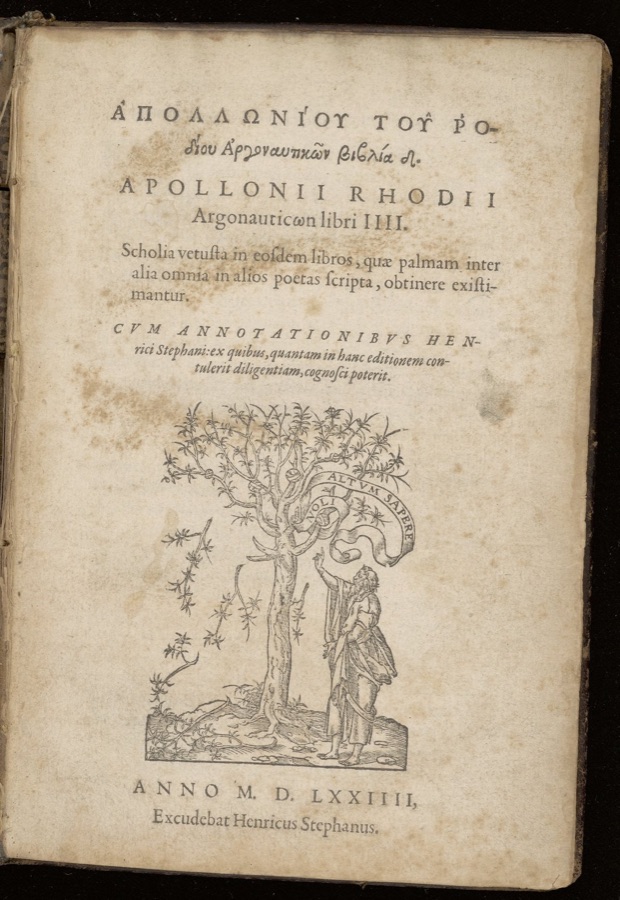
Rodoslu Apollonios Hellenistik çağda kaleme aldığı bu dört kitaplık destanda, Argo gemisinin Altın Post uğruna çıktığı büyük deniz yolculuğunu anlatır. Aşağıdaki pasaj eserin açılış bölümünü (proem) ve onu izleyen Argonautlar kataloğunu kapsar. Ozan sözüne, bütün kadim ozanlar gibi, bir tanrıya yakararak başlar; kehanetin ördüğü kader ağını, tek sandaletli yabancının uğursuz alametini ve Iason'un buz gibi ırmağı geçişini birkaç dizede özetler. Ardından gemiye binecek yiğitleri tek tek adlandırır — Orpheus'tan Herakles'e, İkizler'den Boreas'ın kanatlı oğullarına dek. Burada mit henüz bir maceraya dönüşmeden önce, kutsal bir çağrı, bir yazgı bildirimi ve bir soy kütüğü olarak belirir.
Senden başlayarak ey Phoebus, çok eski çağlarda doğmuş yiğitlerin ünlü işlerini anacağım; onlar ki Kral Pelias'ın buyruğuyla, sağlam oturaklı Argo'yu Pontos'un ağzından ve Karanlık Kayalar'ın arasından geçirip Altın Post'un peşine düştüler.
Zira Pelias şöyle bir kehanet işitmişti: ileride onu iğrenç bir yazgının beklediğini, kentten yalnızca tek sandaletle geldiğini göreceği bir adamın hileleriyle alt edileceğini.
Ve çok geçmeden, senin kehanetine uygun olarak, Iason kışın azgın Anauros ırmağının akıntısını yürüyerek aştı. Sandaletlerinden birini çamurdan kurtardı, ötekini ise suyun gücüne kaptırıp geride bıraktı.
Doğruca Pelias'ın huzuruna vardı; kral o sırada babası Poseidon'a ve öteki tanrılara kutsal bir şölen sunuyordu.
Ne var ki Pelasg Hera'ya hiçbir saygı göstermemişti. Kral onu görür görmez bunu sezdi ve zihninde ona sarp bir yolculuğun ağır sınavını tasarladı; öyle ki Iason denizde ya da yabancılar arasında yurduna dönüşü yitirsin.
Gemiyi, eski ozanların anlattığına göre, Athena'nın yol göstermesiyle Argos inşa etti. Ama şimdi ben yiğitlerin soylarını ve adlarını, uzun deniz yollarını ve serüvenlerinde başardıkları işleri anlatacağım; ilhamımın kaynağı Musalar olsun!
İlkin Orpheus'u analım; onu, söylendiğine göre, Kalliope Trakyalı Oiagros'la evliyken Pimpleia tepesi yakınında doğurmuştu. Denilir ki o, ezgilerinin gücüyle dağların inatçı kayalarını ve ırmakların akışını bile büyülerdi. Bugün dahi Trakya kıyısında Zone'de sıra sıra dizili duran yaban meşeleri o büyünün tanıklarıdır; lirinin cazibesiyle onları Pieria'dan aşağı indirmişti. İşte böyle biriydi Orpheus; Kheiron'un buyruğuna uyarak, Aison oğlu onu yol arkadaşlarından biri olmaya çağırdı — Bistonia Pieria'sının hükümdarı Orpheus'u.
Hemen ardından Asterion geldi; onu Kometes, çağlayan Apidanos'un sularının kıyısında dünyaya getirmişti; Phylleion dağı yakınındaki Peiresiai'de otururdu, güçlü Apidanos'la parlak Enipeus ırmaklarının uzaktan gelip birleştiği yerde.
Onların ardından Larisa'dan Eilatos oğlu Polyphemos geldi; bir zamanlar güçlü Lapithler arasında, Kentaurlara karşı silahlandıklarında gençliğinde savaşmıştı; şimdi uzuvları yaşla ağırlaşmıştı, ama savaşçı ruhu eskisi gibi hâlâ dipdiriydi.
Iphiklos da Phylake'de geride kalmadı — Aison oğlunun dayısıydı; çünkü Aison, Phylakos'un kızı Alkimede'yle evlenmişti; bu akrabalık onu da orduya katılmaya çağırıyordu.
Koyunlarıyla zengin Pherai'nin beyi Admetos da Khalkodon dağının eteklerinde kalmadı.
Alope'de de Hermes'in oğulları kalmadı — bereketli topraklarda hüner ve kurnazlıkta usta Erytos ile Ekhion; yola çıkarken onlara üçüncü olarak akrabaları Aithalides katıldı; onu Amphrysos ırmağı kıyılarında, Phthia'lı Myrmidon'un kızı Eupolemeia doğurmuştu; öteki ikisi ise Menetes'in kızı Antianeira'dan gelmişti.
Zengin Gyrton'dan Kaineus oğlu Koronos geldi, yiğit biriydi, ama babasından yiğit değildi. Çünkü ozanlar anlatır ki Kaineus, henüz canlıyken, Kentaurların elinde yok oldu; diğer beylerden ayrı, tek başına onları bozguna uğrattığında, onlar ona karşı toplanıp ne eğebildiler ne öldürebildiler onu; yenilmez ve sarsılmaz biçimde koca çam gövdelerinin çöküşü altında ezilerek yerin altına geçti.
Titaresia'lı Mopsos da geldi; ona kuş falı sanatını herkesten önce Leto'nun oğlu öğretmişti; ve Ktimenos oğlu Eurydamas; Ksynia gölü yakınındaki Dolopia'lı Ktimene'de otururdu.
Ayrıca Aktor, oğlu Menoitios'u Opus'tan gönderdi, beylere eşlik etsin diye.
Eurytion ve güçlü Eribotes de katıldı — biri Teleon'un, öteki Aktor oğlu Iros'un oğluydu; Teleon'un oğlu ünlü Eribotes, Iros'unki ise Eurytion'du. Üçüncüsü olarak Oileus onlara katıldı, yürekte eşsiz ve kaçan düşmana saldırmada usta, saflar dağıldığında.
Euboia'dan sefere hevesli Kanthos geldi, onu Abas oğlu Kanethos göndermişti; ama Kerinthos'a dönmesi yazgısında yoktu. Çünkü kader onu ve kâhinlikte usta Mopsos'u, Libya'nın en uzak ucunda dolaşıp yok olmaya mahkûm etmişti. Zira ölümlülerin başına gelmeyecek kötülük yoktur — onları Kolkhis'ten, güneşin batışıyla doğuşu arasındaki uzaklık kadar uzak olan Libya'da gömdüler.
Ona Oikhalia'nın bekçileri Klytios ile Iphitos katıldı, acımasız Eurytos'un oğulları — o Eurytos ki, Uzaktan Vuran tanrı ona yayını armağan etmişti; ama bu armağandan sevinç duymadı, çünkü kendi isteğiyle armağanı verenle bile yarışa kalkıştı.
Onların ardından Aiakos'un oğulları geldi, ama birlikte değil, aynı yerden de değil; çünkü kardeşleri Phokos'u akılsızca öldürdüklerinde Aigina'dan uzağa sürgüne gitmişlerdi. Telamon Attika adasında yaşıyordu; Peleus ise ayrılıp Phthia'da yurt tuttu.
Onların ardından Kekropia'dan savaşçı Boutes geldi, yiğit Teleon'un oğlu, ve kızılcık mızraklı Phaleros. Babası Alkon onu yolladı; oysa yaşlılığında ona bakacak başka oğlu yoktu. Ama sevgili biricik oğlunu, yiğitler arasında parlasın diye gönderdi. Theseus'a gelince — Erekhtheus'un bütün oğullarını geride bırakan o kişi — görünmez bir bağ onu Tainaron toprağının altında tutuyordu, çünkü Peirithoos'la birlikte o yola düşmüştü; kuşkusuz ikisi de gelseydi, herkes için bu emeğin sonunu kolaylaştırırlardı.
Hagnias oğlu Tiphys, Thespialıların Siphai halkını bıraktı; geniş denizde yükselen dalgayı önceden sezmede usta, güneşten ve yıldızlardan fırtınalı rüzgârları ve yelken açma zamanını çıkarmada usta biriydi. Bizzat Tritonia Athena onu beylerin arasına katılmaya yüreklendirmişti, o da aralarına hoş bir yoldaş olarak geldi. Athena'nın kendisi de hızlı gemiyi biçimlendirmişti; onunla birlikte Arestor oğlu Argos da onu Athena'nın öğütleriyle inşa etti. Bu yüzden gemi, kürekle denizi sınayan bütün gemilerin en üstünü oldu.
Onların ardından Araithyrea'dan Phlias geldi; babası Dionysos'un lütfuyla, Asopos'un pınarları yanındaki yurdunda bolluk içinde yaşardı.
Argos'tan Bias'ın oğulları Talaos ile Areios geldi, ve güçlü Leodokos; hepsini Neleus'un kızı Pero doğurmuştu; onun uğruna Aiolos soyundan Melampus, Iphiklos'un ağılında ağır bir çile çekmişti.
Yürekli Herakles'in de Aison oğlunun ateşli çağrısını görmezden geldiğini sanmıyoruz. Beylerin toplandığı haberini duyduğunda, Lampeia çalılıklarında ve engin Erymanthos bataklığı yakınında beslenen yaban domuzunu canlı canlı taşıdığı yoldan Arkadia'dan Lyrkeia Argos'una ulaşmıştı; zincire vurduğu domuzu Mykenai'nin pazar yeri girişinde koca omuzlarından indirdi ve kendi isteğiyle, Eurystheus'un buyruğuna karşın yola koyuldu; yanında ise gençliğinin baharındaki yiğit yoldaşı Hylas vardı, oklarını taşımak ve yayını korumak için.
Ardından tanrısal Danaos soyundan bir filiz, Nauplios geldi. O, Naubolos oğlu Klytonaios'un oğluydu; Naubolos, Lernos'un oğluydu; Lernos ise, bildiğimiz kadarıyla, Nauplios oğlu Proitos'un oğluydu; ve bir zamanlar Danaos'un kızı, Poseidon'la evli Amymone, deniz hünerinde herkesi geride bırakan Nauplios'u doğurmuştu.
Argos'ta yaşayanların en sonuncusu olarak Idmon geldi; çünkü kendi yazgısını fal yoluyla öğrenmiş olsa da, halkı onun güzel şöhretini kıskanmasın diye geldi. Aslında Abas'ın oğlu değildi; onu, ünlü Aiolidler arasında sayılsın diye, bizzat Leto'nun oğlu dünyaya getirmişti ve ona kâhinlik sanatını — kuşlara kulak vermeyi ve yanan kurbanın işaretlerini okumayı — kendisi öğretmişti.
Ayrıca Aitolialı Leda, Sparta'dan güçlü Polydeukes'i ve hızlı ayaklı atları dizginlemede usta Kastor'u gönderdi; bu sevgili oğullarını Tyndareos'un evinde bir doğumda dünyaya getirmişti; gidişlerine engel olmadı, çünkü Zeus'un gelinine yakışır düşünceler taşıyordu.
Apharos'un oğulları, Lynkeus ile gururlu Idas, Arene'den geldi, ikisi de büyük güçleriyle övünürdü; Lynkeus üstelik en keskin görüşle de öne çıkardı — eğer o kahramanın yerin altını bile kolayca görebildiğine dair söylenti doğruysa.
Onlarla birlikte Neleusoğlu Periklymenos da yola çıktı, Pylos'ta doğan tanrısal Neleus'un bütün oğullarının en büyüğü; Poseidon ona sınırsız güç bahşetmiş ve savaşın en can alıcı anında, arzuladığı her biçime bürünebilme yetisini vermişti.
Ayrıca Arkadia'dan, Aleos'un iki oğlu Amphidamas ile Kepheus geldi — Tegea'da ve Apheidas'ın topraklarında otururlardı; üçüncü olarak Ankaios onlara katıldı, babası Lykurgos onu göndermişti, ikisinden de büyük kardeşleri. Ama o, yaşlanmakta olan Aleos'a bakmak için kentte kalmıştı, oğlunu ise kardeşlerine katılsın diye vermişti. Ankaios bir Mainalos ayısının postuna bürünmüş, sağ elinde koca iki ağızlı bir balta sallayarak yola çıktı. Çünkü büyükbabası, belki yolculuğunu bir şekilde durdurabilir diye, zırhını evin en gizli köşesine saklamıştı.
Augeias de geldi; halkın anlattığına göre Helios'un oğluydu; Elisliler üzerine, zenginliğiyle övünerek hükmederdi; Kolkhis topraklarını ve Kolkhislilerin hükümdarı Aietes'in kendisini görmeyi büyük bir istekle arzuluyordu.
Hyperasios'un oğulları Asterios ile Amphion, Akhaia'lı Pellene'den geldi; onu bir zamanlar dedeleri Pelles, Aigialos'un sırtlarında kurmuştu.
Onların ardından Tainaron'dan Euphemos geldi, insanların en hızlı ayaklısı, onu güçlü Tityos'un kızı Europe, Poseidon'a doğurmuştu. Gri denizin dalgalarının üzerinde koşardı da hızlı ayakları ıslanmazdı; yalnız ayak parmaklarının uçlarını suya değdirerek sulu yol üzerinde taşınırdı.
Evet, Poseidon'un iki oğlu daha geldi: biri Erginos, şanlı Miletos'un kalesinden ayrılan; öteki gururlu Ankaios, Hera'nın İmbrasos kıyısındaki tapınağının bulunduğu Parthenia'dan ayrılan; ikisi de deniz hünerinde ve savaşta becerileriyle övünürdü.
Onların ardından Kalydon'dan Oineus'un oğlu güçlü Meleagros geldi, ve Laokoon — Laokoon, Oineus'un aynı anneden olmayan kardeşiydi, çünkü onu bir cariye doğurmuştu; şimdi yaşlanmakta olan Oineus, oğlunu korusun diye onu gönderdi: böylece daha genç bir delikanlı olan Meleagros, yiğitlerin cesur topluluğuna katıldı. Sanırım Herakles dışında ondan üstün kimse gelmemişti — eğer bir yıl daha Aitolialılar arasında büyüyüp beslenmiş olsaydı, belki o bile geçilemezdi. Evet, dayısı da, ister cirit ister göğüs göğüse dövüşte usta Thestios oğlu Iphiklos da, yolda ona eşlik etti.
Onunla birlikte, adıyla Olenoslu Lernos'un oğlu sayılan ama gerçekte Hephaistos'tan doğma Palaimonios geldi; bu yüzden ayaklarından sakattı, ama ne bedeninin gücünü ne yürekliliğini kimse küçümsemeye cesaret edemezdi. Bu yüzden bütün beyler arasında sayıldı, Iason'a şeref kazandırarak.
Phokisliler arasından, Ornytos oğlu Naubolos'un soyundan gelen Iphitos geldi; bir zamanlar Iason, yolculuğu hakkında bir yanıt almak için Pytho'ya gittiğinde onun konuğu olmuştu; orada Iphitos onu kendi evinde ağırlamıştı.
Sonra Boreas'ın oğulları Zetes ile Kalais geldi; onları bir zamanlar Erekhtheus'un kızı Oreithyia, Trakya'nın kışlık sınırında Boreas'a doğurmuştu; Trakyalı Boreas onu Kekropia'dan, Ilissos ırmağı kıyısında dans ederken kapıp götürmüştü. Onu uzaklara taşıyıp, Sarpedon Kayası denen yere, Erginos ırmağı yakınına götürdü, koyu bulutlara sarıp isteğine boyun eğdirdi. İşte orada, kanatlarını ayak bileklerinde her iki yanda titretiyorlardı, yükselirken görülmeye değer bir harika olarak, altın pullarla parıldayan kanatlar; ve sırtlarının çevresinde, başlarının ve boyunlarının tepesinden aşağı, bir o yana bir bu yana, koyu renkli saçları rüzgârda savruluyordu.
Hayır, güçlü Pelias'ın oğlu Akastos'un bile yiğit babasının sarayında kalmaya hiç niyeti yoktu, ne de tanrıça Athena'nın yardımcısı Argos'un; onlar da orduya katılmaya hazırdı.
İşte Aison oğluna katılmak üzere toplanan yardımcılar bunlardı.
Özgün metin (İngilizce)
Bu metin neden önemli
Argonautika'nın açılışı, kadim epik geleneğin en belirgin özelliğini taşır: söz bir tanrıya adanmadan başlamaz. Ozan Apollon'a yakararak hem esin diler hem de anlatısını kutsal bir düzene bağlar. Tek sandaletli adam alameti, kehanetin insan iradesini nasıl önceden kuşattığını gösteren klasik bir yazgı motifidir. Iason'un ırmağı geçerken sandaletini kaybetmesi ise sıradan bir kaza değil, tanrısal öngörünün sessizce gerçekleşmesidir. Böylece Altın Post yolculuğu daha ilk dizelerde bir serüven olmaktan çok, mit ile kutsalın iç içe geçtiği bir yazgı anlatısı olarak kurulur. Bu açılışı izleyen Argonautlar kataloğu ise destan geleneğinin bir başka klasik aracıdır: Homeros'un gemiler kataloğu gibi, Apollonios da yolculuğa çıkacak her yiğidi soyu, yurdu ve özel bir nitelikle anarak topluluğa tek tek can verir. Orpheus'un büyülü ezgisinden Herakles'in gücüne, Boreas'ın kanatlı oğullarından Lynkeus'un keskin görüşüne dek her isim, sonraki kitaplarda önemli bir rol üstlenecek bir güç ya da hüneri önceden haber verir.
Bu eser Mit ve Kutsal Anlatı Koleksiyonu'nun parçasıdır →
- Kaynak eser
- Apollonii Rhodii Argonautica (Rodoslu Apollonios, Argonautika)
- Neşir
- Henri II Estienne baskısı, Yunanca metin ve scholia ile, 1574
- Konum
- Birinci Kitap: açılış (proem) ve Argonautlar kataloğu — Yunanca metinde yaklaşık 1-233. dizeler; eserin dört kitaplık yapısının yalnızca ilk kesiti. Argonautika dört kitaptır, bu sayfa yalnızca bu kısmı içerir; eserin geri kalanını kapsamaz.
- Çeviren
- Şira Nur Uysal
- Dijital nüsha
- Source Library
Uysal, Ş. N. (Çev.). (2026). Argonautika: Altın Post Uğruna Yolculuğun Başlangıcı. Kadim Kütüphane. https://kadimkutuphane.com/apollonios-argonautika-altin-post-yolculugu@misc{kk_apollonios_argonautika,
author = {Uysal, Şira Nur},
title = {{Argonautika: Altın Post Uğruna Yolculuğun Başlangıcı}},
year = {2026},
publisher = {Kadim Kütüphane},
url = {https://kadimkutuphane.com/apollonios-argonautika-altin-post-yolculugu},
note = {Türkçe çeviri, özgün eser: Rodoslu Apollonios (yay. haz. Henri II Estienne)},
}Yeni metinlerden ilk sen haberdar ol
Tam çeviriler, PDF'ler ve yeni eklenen kaynaklar hazırlandıkça e-postana düşsün.